MindMap Gallery Whole learning and partial learning
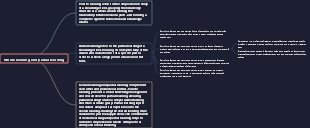
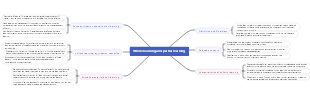
This is a mind map about overall learning and partial learning. It tells stories about overall learning and partial learning. If you are interested in the story of overall learning and partial learning, you are welcome to collect and like this mind map~
Edited at 2021-12-10 09:00:19This is a mind map about bacteria, and its main contents include: overview, morphology, types, structure, reproduction, distribution, application, and expansion. The summary is comprehensive and meticulous, suitable as review materials.

This is a mind map about plant asexual reproduction, and its main contents include: concept, spore reproduction, vegetative reproduction, tissue culture, and buds. The summary is comprehensive and meticulous, suitable as review materials.
This is a mind map about the reproductive development of animals, and its main contents include: insects, frogs, birds, sexual reproduction, and asexual reproduction. The summary is comprehensive and meticulous, suitable as review materials.
This is a mind map about bacteria, and its main contents include: overview, morphology, types, structure, reproduction, distribution, application, and expansion. The summary is comprehensive and meticulous, suitable as review materials.
This is a mind map about plant asexual reproduction, and its main contents include: concept, spore reproduction, vegetative reproduction, tissue culture, and buds. The summary is comprehensive and meticulous, suitable as review materials.
This is a mind map about the reproductive development of animals, and its main contents include: insects, frogs, birds, sexual reproduction, and asexual reproduction. The summary is comprehensive and meticulous, suitable as review materials.
Whole learning and partial learning
Overall Learning Overview
Holistic learning refers to learning a knowledge area or topic from a comprehensive perspective.
Holistic learning focuses on the overall grasp of knowledge and studies the inner connections and commonalities of things.
Holistic learning can improve the systematic understanding and application ability of knowledge.
Holistic learning is suitable for situations where complex problems are explored and knowledge is comprehensively applied.
Partial study overview
Partial learning refers to learning a knowledge area or topic from a partial perspective.
Part of the study focuses on the refinement and specialization of knowledge, and in-depth study of the specific details and peculiarities of things.
Partial learning can improve in-depth understanding of knowledge and professional application capabilities.
Part of the study is for fine studies and specialization in professional areas.
Characteristics of holistic learning
Emphasis on the interconnection between knowledge and overall cognition.
Through induction and summary, master the general framework of knowledge.
Promote systematic understanding and creative expansion of knowledge.
Focus on interdisciplinary integration and the cultivation of knowledge transfer capabilities.
Some characteristics of learning
Emphasize the details and professionalism of knowledge.
In-depth study of specific aspects of knowledge through analysis and practice.
Promote in-depth understanding of knowledge and improvement of professional application capabilities.
Pay attention to the in-depth cultivation of domain knowledge and the cultivation of professional skills.
The relationship between overall learning and partial learning
Overall learning and partial learning are not antagonistic, but complementary.
Overall learning and partial learning can complement each other and improve learning effects.
During the learning process, you can flexibly choose overall learning and partial learning methods according to your needs.
Whole learning and partial learning interact to promote the overall development of knowledge.
Applicable scenarios for overall learning and partial learning
For learners who are new to a new field, holistic learning helps establish a basic knowledge framework.
Holistic learning can provide a global perspective in situations that require comprehensive analysis of complex problems.
When it comes time to delve deeper into a field or profession, partial study can deepen your understanding of details and specificities.
After mastering basic knowledge, some studies can provide in-depth expansion and specialized application of knowledge.
Learning Strategies for Whole Learning and Partial Learning
In overall learning, methods such as concept mapping, comprehensive reading, and overall thinking can be used.
Detail-oriented and case-specific learning materials and practical inquiry may be used as part of the learning.
Often combine overall learning and partial learning, and comprehensively use different learning strategies to improve learning effects.
Flexibly choose the learning methods of overall learning and partial learning according to different learning goals and tasks.
The value and significance of overall learning and partial learning
Holistic learning can improve learners' systematic thinking and comprehensive analysis skills, and help solve complex problems.
Partial learning can deepen the understanding and research of knowledge and improve professional abilities and application levels.
Overall learning and partial learning complement each other and can cultivate learners' diverse thinking and comprehensive qualities.
Holistic learning and partial learning jointly promote knowledge innovation and social development.
Summarize