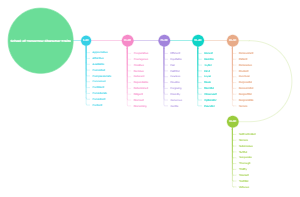
A Timeline of the Department of Foreign Affairs (DFA) in the Philippines: From Emilio Aguinaldo to 2023
This timeline traces the evolution of the Department of Foreign Affairs (DFA) in the Philippines, highlighting key milestones and pivotal figures starting with President Emilio Aguinaldo's establishment of the department in 1898. It continues through the 20th century and concludes with a focus on the DFA's activities in 2023.
The First Philippine Republic: A New Nation's Foreign Affairs
- 1898: President Emilio Aguinaldo appoints Apolinario Mabini as the first Secretary of Foreign Affairs for the newly declared First Philippine Republic on June 23. [1] The DFA was among the first government departments established, reflecting the importance of international recognition for the fledgling nation. Mabini faces the challenge of establishing diplomatic relations with friendly countries, relying on members of the Hong Kong Junta, a group of Filipino exiles, to serve as envoys. [1]
The American Era: Transition and Post-War Reconstruction
- 1898-1946: The Philippines undergoes a period of colonial rule under the United States. [1]
- 1942-1944: The country experiences Japanese occupation. [1]
- 1946: The Philippines regains independence on July 4, including full control of foreign affairs and diplomatic matters. [1] Commonwealth Act No. 732 is passed, formally creating the Department of Foreign Affairs. [1] President Manuel Roxas issues Executive Order No. 18 on September 16, outlining the DFA's organization and operation. [1] The DFA's initial tasks focus on post-war rehabilitation, formulating policies for investment promotion, and establishing diplomatic relations with other countries. [1]
The Post-War Years: Global Engagement and Institution Building
- 1946: The DFA plays a key role in concluding the RP-US Mutual Defense Treaty and the Laurel-Langley Agreement, fostering balanced trade and military relations with the United States. [1] The DFA becomes a founding member of the United Nations and contributes to drafting the Universal Declaration of Human Rights. [1] The DFA helps forge the General Agreement on Tariffs and Trade (GATT). [1]
- 1952: Carlos P. Romulo is elected as the first Asian president of the UN General Assembly, marking a peak in the Philippines' dynamic participation in global affairs. [1] President Elpidio Quirino pushes for the passage of the Foreign Service Act of 1952 (Republic Act No. 708) in June, recognizing the importance of foreign relations. [1] The DFA focuses on institution building, closer engagement with Asian neighbors, and increasing Philippine global linkages. Raul S. Manglapus, as Undersecretary of Foreign Affairs under the Magsaysay administration, introduces foreign service officer examinations to professionalize the foreign service and improve recruitment and selection. [1]
The Marcos Years: Policy Innovations and Challenges
- 1965-1986: The Marcos administration sees policy innovations but also difficulties stemming from the excesses of martial law. [1] President Ferdinand Marcos redefines foreign policy as safeguarding territorial integrity and national dignity, emphasizing regional cooperation and collaboration. [1]
- 1967: The Philippines launches the Association of Southeast Asian Nations (ASEAN), a regional association with other Southeast Asian countries. [1]
- 1975-1976: President Marcos normalizes economic and diplomatic ties with China and the USSR, visiting both countries. [1]
- 1970s: The DFA promotes trade and investments, actively hosts international meetings, and participates in the Non-Aligned Movement. [1]
- 1976: The Foreign Service Institute is established to provide in-house training for foreign service personnel. [1]
The Post-Marcos Era: Democracy, Regional Integration, and Overseas Filipinos
- 1986: The EDSA Revolution restores a democratic government under President Corazon Aquino. [1] The DFA resumes development diplomacy, actively pursuing opportunities abroad in trade, investment, finance, technology, and aid. [1]
- 1989: The Philippines becomes a founding member of the Asia-Pacific Economic Cooperation (APEC) in November and actively participates in regional efforts to establish the ASEAN Free Trade Area. [1]
- 1990s: More diplomatic missions are established in the Middle East to strengthen ties with Arab states and address the growing needs of Overseas Filipino Workers (OFWs) in the region. [1]
- 1991: The Philippine Senate votes against extending the RP-US Military Bases Agreement, ending the decades-long presence of the US military at Subic Bay and Clark Field. [1] President Aquino signs the new Foreign Service Act of 1991 (R.A. 7157), reorganizing the department geographically and strengthening the foreign service. [1]
- 1992-1998: The Ramos administration prioritizes national security, economic diplomacy, protection of OFWs, and projecting a positive image of the Philippines abroad. [1]
- 1995: The Migrant Workers and Overseas Filipinos Act of 1995 (R.A. 8042) strengthens protection for Filipino workers abroad, establishing a legal assistance fund, an assistance-to-nationals fund, and a legal assistant for migrant workers' affairs within the DFA. [1]
- 1996: The Philippines hosts the APEC Leaders' Summit, resulting in the Manila Action Plan for APEC 1996 (MAPA '96). [1]
- 1998: The DFA hosts the ASEAN Ministerial Meeting and undertakes confidence-building measures with China regarding the South China Sea issue. [1]
- 1999: The DFA plays a major role in forging a Visiting Forces Agreement with the United States, which is approved by the Senate. [1]
The 21st Century: Continued Focus on Economic Diplomacy, Security, and OFWs
- 2001: President Gloria Macapagal Arroyo pursues a foreign policy based on nine realities, including the importance of ASEAN, the protection of the environment, and the role of OFWs in the country's economic and social stability. [1]
- 2001-present: The DFA continues to be guided by three fundamental pillars of Philippine foreign policy: preservation and enhancement of national security, promotion of economic security, and protection of the rights and welfare of Filipinos overseas. [1]
- 2023: The DFA considers this year one of its busiest, with 65 bilateral meetings and 45 political consultations held. [4] The DFA processed over 3 million passports and issued over 518,000 apostille certificates. [4] The DFA issued over 190,000 visas. [4] The DFA filed 60,471 civil registry documents. [4] The DFA provided assistance to 7,346 overseas Filipino workers and repatriated 5,043 Filipinos. [4]
The DFA's history reflects the Philippines' journey from a newly independent nation to a significant player on the global stage. The department has consistently adapted to changing geopolitical landscapes, prioritizing national security, economic prosperity, and the welfare of Filipinos abroad. Its evolution showcases the Philippines' commitment to international cooperation, regional integration, and the protection of its citizens worldwide.
The DFA's activities in 2023 demonstrate its continued focus on these priorities, with a particular emphasis on passport processing, visa issuance, and providing assistance to OFWs. The department's commitment to these areas will likely continue to shape its activities in the years to come.
 Wondershare EdrawMind