1800-1870
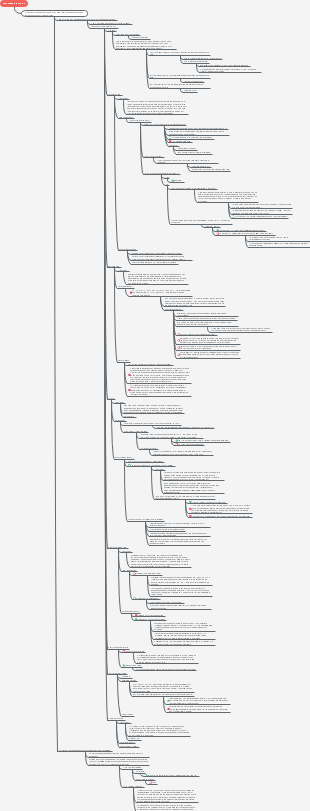
• Level of carbon dioxide gas (CO2) in the atmosphere, as later measured in ancient ice, is about 290 ppm (parts per million).
• Mean global temperature (1850-1890) is roughly 13.6°C.
1945
• U.S. Office of Naval Research begins generous funding of many fields of science, some of which happen to be useful for understanding climate change.
1967
• International Global Atmospheric Research Program established, mainly to gather data for better short-range weather prediction, but including climate.
• Manabe and Wetherald make a convincing calculation that doubling CO2 would raise world temperatures a couple of degrees.
1969
• Nimbus III satellite begins to provide comprehensive global atmospheric temperature measurements.
1976
• Studies show that CFCs (1975) and also methane and ozone (1976) can make a serious contribution to the greenhouse effect.
1979
• World Climate Research Programme launched to coordinate international research.
1981
• Some scientists predict greenhouse warming "signal" should become visible around the year 2000.
1985
• Antarctic ice cores show that CO2 and temperature went up and down together through past ice ages, pointing to powerful feedbacks.
1988
• News media coverage of global warming leaps upward following record heat and droughts plus statements by Hansen.
• Ice-core and biology studies confirm living ecosystems give climate feedback by way of methane, which could accelerate global warming.
1991
• Global warming skeptics claim that 20th-century temperature changes followed from solar influences. (The solar-climate correlation would fail in the following decade.)
1997
• International conference produces Kyoto Protocol, setting targets for industrialized nations to reduce greenhouse gas emissions if enough nations sign onto a treaty (rejected by U.S. Senate in advance).
1998
• A "Super El Niño" makes this an exceptionally warm year, equaled in later years but not clearly exceeded until 2014. Borehole data confirm extraordinary warming trend.
2000
• Global Climate Coalition dissolves as many corporations grapple with threat of warming, but oil lobby convinces US administration to ignore the problem.
2001
• Third IPCC report states baldly that global warming, unprecedented since the end of the last ice age, is "very likely," with highly damaging future impacts and possible severe surprises. Effective end of debate among all but a few scientists.
2005
• Kyoto treaty goes into effect, signed by major industrial nations except US. Work to retard emissions accelerates in Japan, Western Europe, US regional governments and corporations.
• European Union initiates "cap and trade" market to reduce emissions.
• Hurricane Katrina and other major tropical storms spur debate over impact of global warming on storm intensity.
2009
• Many experts warn that damage from climate change is arriving at a faster pace than was anticipated just a few years earlier.
• Excerpts from stolen e-mails of climate scientists fuel public skepticism.
• Studies find total carbon emitted determines global temperature; the "budget" for avoiding dangerous heating is mostly used up.
• Copenhagen conference fails to negotiate binding agreements: end of hopes of avoiding severe future climate change.
2015
• Researchers find collapse of West Antarctic ice sheet may be irreversible, bringing meters of sea-level rise over future centuries.
• Rise of methane in atmosphere accelerates, threatening dangerous feedbacks.
• Paris Agreement: nearly all nations pledge to set their own targets for greenhouse gas cuts and to report their progress.
2018
• IPCC report on 1.5°C warming says that to avoid dangerous climate change, the world’s greenhouse gas emissions must be in sharp decline by 2030.
2019
• Increasing disasters (tropical cyclones, wildfires, etc.) join scientists' warnings to spur public demonstrations and civil disobedience.
2024
• Mean global temperature (five-year average) is 14.9°C, the highest in tens of thousands of years. Level of CO2 in the atmosphere is 425 ppm, the highest in millions of years.
 Wondershare EdrawMind