MindMap Gallery 3.1 Numeration System
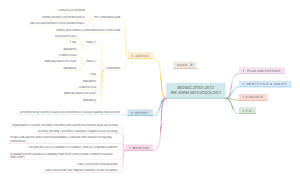
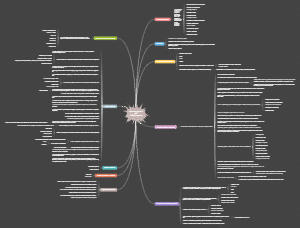
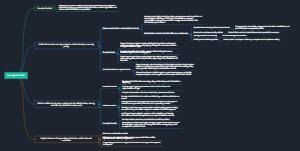
This is a mind map about Ch 3.1 Numeration System,Main content: Unit, Long, Flat, Carton,Base 10 place value,Mayan,Egyptian,Roman,Babylonian Cuneiform Numeration system.
Edited at 2024-09-05 00:07:10Ch 3.1 Numeration System
Babylonian Cuneiform Numeration system
The Babylonian Cuneiform Numeration system was used by the ancient civilization of Babylonia to represent numbers using a combination of symbols and wedges on clay tablets .
This system was based on a sexagesimal (base60) system, with different symbols representing powers of 60 .
The Babylonian Cuneiform Numeration system was highly sophisticated and allowed for complex calculations and measurements to be made .
It was primarily used by scribes and craftsmen for recording transactions, documenting architectural plans, and performing mathematical calculations .
The numerical symbols of this system have been found on numerous cuneiform tablets and continue to provide valuable insights into ancient Babylonian society.
Roman
1. Roman numerals originated in ancient Rome and are still used today in certain contexts, such as clock faces and book chapters .
2. The Roman numeral system uses combinations of letters to represent numbers, with specific rules for combining and subtracting values .
3. The number 3.1 represents the third chapter in a book or document, section 1 .
4. Understanding the Roman numeration system is essential for deciphering historical dates and understanding ancient texts .
5. Roman numerals are often taught in schools as a way to introduce students to different number systems and improve critical thinking skills .
6. The Roman numeral for 3 is represented by the letter 'III .'
7. The dot above or next to a Roman numeral can indicate multiplication by 1,000 .
8. Ch 3.1 Numeration System provides an indepth explanation of the Roman numeration system and its significance in various fields of study.
Egyptian
1. Ancient Egyptians developed a numeration system known as Hieratic script, which featured symbols representing different numbers .
2. The Egyptian numeration system utilized a decimal system, with individual symbols used to represent powers of ten .
3. Hieratic script was widely used for recordkeeping and calculations in ancient Egypt, including in areas such as accounting and trade .
4. The careful organization and understanding of the Egyptian numeration system allowed for precise calculations and recordkeeping in various fields of life .
5. The Egyptian numeration system laid the foundation for future developments in mathematics, including the later adoption of a similar system by the ancient Greeks .
6. The Hieratic script numeration system played a crucial role in ancient Egyptian culture, allowing the civilization to accurately measure and document aspects of their daily lives .
7. The legacy of the Egyptian numeration system can still be seen today in our modern decimal system, as well as in the continuation of hieroglyphic numerals in some traditional cultural practices.
Mayan
1. The Mayans developed a sophisticated numeration system .
2. Their system was based on a combination of dots and bars .
3. The dots represented the numbers 14, while the bars represented the numbers 519 .
4. The number zero was represented by a shelllike symbol .
5. This numeration system allowed the Mayans to perform complex mathematical calculations .
6. It was also used for recording historical events and astronomical calculations .
7. The Mayan numeration system was a significant advancement in mathematical knowledge .
8. Today, we can appreciate the Mayan's contribution to numeration systems and their understanding of mathematics.
Base 10 place value
1. In the base 10 place value system, each digit has a specific value determined by its position. It starts with ones, then tens, hundreds, thousands, and so on .
2. Understanding base 10 place value is crucial for performing calculations and representing numbers accurately .
3. The concept of place value allows us to easily express large numbers by grouping digits together .
4. Place value also helps in comparing and ordering numbers, as each digit represents a different power of 10 .
5. The base 10 place value system is widely used because humans typically have ten fingers, making it intuitive for counting and representing quantities .
6. By using place value, we can break down numbers into their constituent parts, making calculations and problemsolving more manageable .
7. In the base 10 system, the value of each digit depends on its position relative to the decimal point, which allows for precise representation of decimal fractions .
8. Place value is a fundamental concept in the numeration system, and mastering it provides a solid foundation for further mathematical understanding.

Unit, Long, Flat, Carton
Unit= 1, Long = 10
Flat=100, Carton = 1000
Floating Topic
Floating Topic