MindMap Gallery The development of Six Sigma management
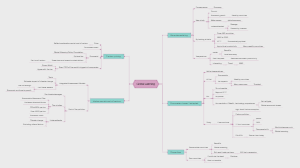
This is a mind map about the development of Six Sigma management, including the evolution of quality concepts, The development stages of quality management, the contributions of quality masters, the origin and development of Six Sigma management, etc.
Edited at 2024-02-16 02:14:451.1 Development of Six Sigma Management
The evolution of the quality concept
Quality: The degree to which a set of inherent characteristics meets requirements. (ISO9000:2000)
The evolution of the subject in the concept of quality: the quality of what
product quality
service quality
Process quality (work quality)
Involving 5M1E, reflecting: Q (physical quality), C (cost), D (delivery), E (environment), S (safety) and other comprehensive quality.
System quality
The quality of the management system is also called management quality and operation quality.
The evolution of objects in the concept of quality: quality that meets what requirements
conformity quality
If the requirements of the standard or specification are met, it is qualified; otherwise, it is unqualified.
serviceability quality
Quality is the degree to which customer requirements are met
Comprehensive quality that satisfies customers and relevant parties
Great quality concept to satisfy customers, shareholders, employees, suppliers, Partners, society and other stakeholders
Development stages of quality management
Quality inspection stage
Representative: Taylor (Father of Scientific Management)
main feature
Check afterwards
For the first time, quality inspection is separated from the production process as a management function.
Two main questions
post hoc test
post mortem
Check all
the cost is too high
Before World War II
Statistical quality control stage
Representatives: Shewhart (statistical process control SPC), Dodge, Romig (sampling inspection) Fisher: Proposed theories such as variance analysis and experimental design based on farmland experiments
Features: Combining mathematical statistical methods with quality management, developing from post-process control to process control. Form a management method that combines preventive quality control with post-event inspection.
1940s and 1950s
total quality management stage
Representative: Feigenbaum
Total quality management stage (TQC): In order to be able to operate at the most economical level and taking into account adequate Under the premise of meeting customer needs, market research, design, production and service are carried out to integrate all departments of the enterprise. The development quality, quality maintenance and quality improvement activities form an effective system.
Company-wide Quality Control (CWQC)
Quality Control Group (QCC) Method
Taguchi method
5S management
tidy
Rectify
clean
clean
Literacy
Total Productive Maintenance (TPM)
Quality Function Deployment (QFD)
Toyota Production System (TPS)
Crosby "Quality is Free - The Art of Determining Quality"
Do it right the first time
Zero Defects: Four Basic Principles
Clarify needs
Take precautions
Get it right the first time
scientific measurement
Beginning in the 1960s
Contributions of quality masters
Shewhart
Established the statistical process control (SPC) theory
Two important principles
Variation is inevitable
causes of variation
accidental cause
System reasons
A single observation can hardly form the basis for objective decision-making
Create PDCA (Plan-Execute-Check-Dispose)
Deming
85% of the causes of inefficiency and poor quality lie in the company's management system, while only 15% are caused by employees
Use statistical quality control (SQC) to identify special and chance causes of variation
Developed the PDCA cycle (Deming cycle)
14 key points of quality management
Develop goals and implementation plans to improve products and services, and strive to outperform competitors
Adopt new quality management ideas
Stop relying on extensive inspections to improve quality
Don’t choose a supplier based on price alone, aim for the lowest total cost
Identify problems and work to improve the work system
Adopt modern on-the-job training methods
Improve leadership skills and adopt new leadership methods
Eliminate employee fear
Break departmental blockades and advocate teamwork among product design, sales, production and other departments
Eliminate those slogans, exhortations and goals that require employees to achieve zero defects and high productivity levels. Low quality and low productivity are caused by the system. success rather than an employee problem
Abolish work quotas and replace them with strengthening leadership functions
Remove barriers that prevent employees from taking pride in the quality of their work
Establish a lively education and self-improvement program
Establish a mechanism that enables senior managers to push each employee to work hard according to the above 13 items
Zhulan
"Julan Quality Manual"
Quality means those product characteristics that satisfy the customer's needs and thereby satisfy the customer
Quality means freedom from defects, i.e. those that would require duplication of work (rework) or lead to field failure, Errors such as customer dissatisfaction and customer complaints
To obtain quality, it is best to start by establishing the vision, policies and goals of the organization. The transformation of target project results (enabling quality to be achieved) is carried out through the management process.
Quality Management Trilogy
quality planning
QC
quality improvement
Ishikawa Kaoru
Inventor of fishbone diagram (cause and effect diagram, Ishikawa diagram)
One of the founders of the Quality Control Group (QCC)
Promote company-wide quality control (CWQC)
Quality management in which all departments participate, that is, personnel in all departments of the enterprise learn and participate in quality management
Quality management involves the participation of all employees, that is, the company’s managers, directors, department heads, functional staff, work squad leaders, All personnel, including operators and salespeople, participate, and this extends to suppliers and agents.
Comprehensive quality management, that is, focusing on quality management, while promoting cost management (profit, price management), Quantity management (output, sales volume, inventory management), delivery time management
Taguchi Genichi
Founder of Taguchi Method
Four major technologies
Off-line quality control
In-line quality control
Measurement management technology
experimental design technology
Proposed the concept of quality loss function (QLF), unified the concepts of quality and economy, and laid the foundation for quantitative statistical analysis of quality fluctuations.
Proposed the concept of signal-to-noise ratio (SNR), enriched experimental design technology with new content, and opened up new ways to solve problems such as dynamics, robustness and measurement errors of products or production processes.
Proposed the idea of three-stage design in the new product development process
system design
Parametric design
Tolerance design
The origin and development of Six Sigma management
The Origin of Six Sigma Management
In 1980, the Galvin Working Group and Sarndelei’s four-point plan
global competitiveness
participatory management
quality improvement
Motorola Training and Education Center
In 1987, Motorola fully implemented Six Sigma.
Michael Harry, Bill Smith and Richard Schroeder are the most important founders of Six Sigma
Promotion of Six Sigma Management
AlliedSignal, General Electric GE
Developed from the original quality goal into a management model
The original focus of solving quality problems has been expanded to the optimization design and system improvement of the organization's overall business process.
From the emphasis on statistical technology to the integration of lean production, balanced scorecard, concurrent engineering and other theories and methods
New developments in Six Sigma management
Develop into a set of management concepts and systematic methods that can enable the organization to continuously improve, enhance comprehensive leadership capabilities, continuously improve customer satisfaction and business performance, and bring huge profits.
New Six Sigma is a leadership management program, a method of overall business improvement, which solves the problem of managers The dilemma faced
To achieve short-term financial goals through rapid business improvement projects
It is necessary to accumulate capabilities for future development in terms of key talents and core processes.
Leadership Principles of the New Six Sigma Approach
Integrate
transfer
accelerate
control
Three important characteristics of Six Sigma development
Integration of Six Sigma and Lean Production (Lean Six Sigma)
The maturity of Six Sigma design
Extensive implementation of Six Sigma in the service industry