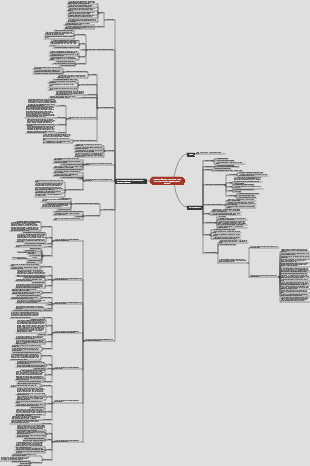
MindMap Gallery Summary of the condensed version of Psychological Self-Healing Techniques That Benefit a Lifetime
This is a mind map summarizing the simplified version of "Psychological Self-Healing Techniques That Benefit a Lifetime". Everyone is his or her own psychiatrist. In the face of mental illness, people should rely on their own strength to cure it and learn to adapt psychologically and help themselves.
Edited at 2024-10-25 23:05:16Rumi: 10 dimensions of spiritual awakening. When you stop looking for yourself, you will find the entire universe because what you are looking for is also looking for you. Anything you do persevere every day can open a door to the depths of your spirit. In silence, I slipped into the secret realm, and I enjoyed everything to observe the magic around me, and didn't make any noise. Why do you like to crawl when you are born with wings? The soul has its own ears and can hear things that the mind cannot understand. Seek inward for the answer to everything, everything in the universe is in you. Lovers do not end up meeting somewhere, and there is no parting in this world. A wound is where light enters your heart.
Chronic heart failure is not just a problem of the speed of heart rate! It is caused by the decrease in myocardial contraction and diastolic function, which leads to insufficient cardiac output, which in turn causes congestion in the pulmonary circulation and congestion in the systemic circulation. From causes, inducement to compensation mechanisms, the pathophysiological processes of heart failure are complex and diverse. By controlling edema, reducing the heart's front and afterload, improving cardiac comfort function, and preventing and treating basic causes, we can effectively respond to this challenge. Only by understanding the mechanisms and clinical manifestations of heart failure and mastering prevention and treatment strategies can we better protect heart health.
Ischemia-reperfusion injury is a phenomenon that cellular function and metabolic disorders and structural damage will worsen after organs or tissues restore blood supply. Its main mechanisms include increased free radical generation, calcium overload, and the role of microvascular and leukocytes. The heart and brain are common damaged organs, manifested as changes in myocardial metabolism and ultrastructural changes, decreased cardiac function, etc. Prevention and control measures include removing free radicals, reducing calcium overload, improving metabolism and controlling reperfusion conditions, such as low sodium, low temperature, low pressure, etc. Understanding these mechanisms can help develop effective treatment options and alleviate ischemic injury.
Rumi: 10 dimensions of spiritual awakening. When you stop looking for yourself, you will find the entire universe because what you are looking for is also looking for you. Anything you do persevere every day can open a door to the depths of your spirit. In silence, I slipped into the secret realm, and I enjoyed everything to observe the magic around me, and didn't make any noise. Why do you like to crawl when you are born with wings? The soul has its own ears and can hear things that the mind cannot understand. Seek inward for the answer to everything, everything in the universe is in you. Lovers do not end up meeting somewhere, and there is no parting in this world. A wound is where light enters your heart.
Chronic heart failure is not just a problem of the speed of heart rate! It is caused by the decrease in myocardial contraction and diastolic function, which leads to insufficient cardiac output, which in turn causes congestion in the pulmonary circulation and congestion in the systemic circulation. From causes, inducement to compensation mechanisms, the pathophysiological processes of heart failure are complex and diverse. By controlling edema, reducing the heart's front and afterload, improving cardiac comfort function, and preventing and treating basic causes, we can effectively respond to this challenge. Only by understanding the mechanisms and clinical manifestations of heart failure and mastering prevention and treatment strategies can we better protect heart health.
Ischemia-reperfusion injury is a phenomenon that cellular function and metabolic disorders and structural damage will worsen after organs or tissues restore blood supply. Its main mechanisms include increased free radical generation, calcium overload, and the role of microvascular and leukocytes. The heart and brain are common damaged organs, manifested as changes in myocardial metabolism and ultrastructural changes, decreased cardiac function, etc. Prevention and control measures include removing free radicals, reducing calcium overload, improving metabolism and controlling reperfusion conditions, such as low sodium, low temperature, low pressure, etc. Understanding these mechanisms can help develop effective treatment options and alleviate ischemic injury.
Summary of the condensed version of "Psychological Self-Healing Techniques That Benefit a Lifetime"
1. Mental health
1. Depression can easily lead to cancer
2. Abnormal psychological properties
⑴. Situational: recurring, various firsts, exciting situations
⑵. Occasional
⑶.No pathological changes
3. Maintain mental health
⑴. Think more of others
⑵.Do more good deeds
2. Psychological suggestion
1. Awaken the subconscious mind
⑴. In religion, devout prayers or wishes
⑵. Construct mental images: goals (and the joy and happiness after achievement), pictures (successful scenes)
2. Psychological suggestion
I must succeed
I will definitely be cured
I believe everything will go well
3. Stimulation method
⑴. Auditory stimulation method: shout a few times
⑵.Visual stimulation method: hang a dream board in the room
⑶. Intentional stimulation method: successful scene imagery
4. Focus on the method or process of solving the problem, not the problem itself
3. Abnormal psychological personality disorder
1. Classification
⑴.Narcissism: Excessive self-evaluation/exaggerated self-esteem
⑵.Paranoia: stubborn and rigid, sensitive and suspicious, narrow-minded
⑶.Interpersonal sensitivity
⑷.Self-isolation: little or no social activities
⑸. Social phobia: excessive fear of other people’s gaze and fear of social interaction
⑹. Love boredom: loneliness, monotonous life, lack of emotional communication, loss of attraction
⑺. Marriage phobia: Marriage is the beginning of the second half of a person's life. It is not easy to accept the reality of changing life status in a few days.
2. Treatment and correction
⑴. Exposure therapy: do what you are afraid of, avoid what you are afraid of, and welcome what you are afraid of.
⑵. Exercises to overcome shyness: stand on both feet steadily, then gently lift the heels, hold for a few seconds and then put them down, repeat 30 times each time, do this two or three times a day
⑶.Care for others/ask for help from others
4. Mild psychological disorders
1. Inferiority
⑴. Overwhelming pride: Excessive inferiority manifested in excessive self-esteem
⑵.Vicious cycle: failure-inferiority-anxiety-distraction-failure
⑶. Overcome: associate and recall early experiences and analyze the reasons
2. Suspicion
⑴. Don’t know how to think about problems from other people’s perspective
⑵. Positive self-suggestion: They did this for my own good. Their behavior was well-intentioned and not malicious. I was overthinking it. I should express my gratitude to them.
3. Jealousy
⑴. Four major aspects of jealousy: reputation, status, money, love
⑵.Vanity is a distorted self-esteem
4. Vanity
⑴. Moderate vanity promotes the development and prosperity of the national economy in terms of production and consumption.
⑵. Performance: material comparison, spiritual jealousy
⑶.overcome
①.Honesty and integrity
②.Psychological training: Use the rubber band on your wrist to bounce yourself
5. Complain
⑴. Complain about one’s misfortune
⑵. Ah Q spirit: not facing up to one’s own shortcomings and incompetence, belittling others/beautifying oneself, superficially accepting the status quo
6. Anger
⑴. Reasons why people will be angry to death: tachycardia (especially people with high blood pressure and heart disease), causing arrhythmia, or myocardial infarction
⑵. The psychological process of anger: cognition, emotion, external behavioral manifestations, and whether the target is correct or not
⑶.overcome
①. Healthy anger: Analyze the cause, focus on the situation rather than the person
②. Verbal hint: Don’t be a victim of impulse, deal with it later, it’s no big deal
③. Clarify the cause of the conflict, find out the key points of the disagreement, clarify the attribution of responsibilities, and find a better solution.
7. Troubles
⑴.Change your mind
①.Don’t worry about trivial matters or get entangled with villains. There are more important things waiting for you.
②. Treating stress as a challenge will be more beneficial to people’s physical and mental health
⑵.Overcome
①. Next time you go home, you might as well say to yourself: Get rid of your worries when you enter, and remember to take happiness home.
②. Practice smiling several times a day and say more words that make you feel happy.
③. Keep a trouble diary. Get up 10 minutes early every day and fill three pages with your feelings. Do not revise or reread it afterwards. After a while, when you express your troubles, you will find that your mind becomes clearer. can also better deal with these problems
8. Anxiety
⑴. Negative physical and mental changes in severe cases
①. Feeling of dying: fear of dying soon
②.Panic attack: inexplicable fear
③. Feeling of mental breakdown: feeling out of control, worrying that one will go "crazy" and causing fear and anxiety
⑵.Control anxiety
①. Stop: Say "stop" immediately
②.Find the reason
③.Divert attention
④.Control breathing
9. Melancholy
⑴. Face up to depression
①.Depression is a mental illness that everyone can suffer from
②.Depression can be cured
③. Depression is probably a good thing for your development
⑵. The therapeutic effects of drugs and electroconvulsive therapy appear within 4 to 6 weeks, while the effects of psychotherapy appear after 6 to 8 weeks.
10. Pessimism
⑴.Taking a positive view
①.Success is attributed to one’s own efforts
②. Pay attention to your own advantages
③.Everything has its pros and cons, look at the world from another angle
④. Firm belief: When life throws us a problem, it will definitely give us a solution to the problem at the same time.
⑵. Optimism and pessimism comparison table
①. Draw a vertical line on a large white paper, divide it into two columns, write optimism on the left and pessimism on the right, and then stick it on the bedside
②. Before going to bed every day, write down your optimistic and pessimistic feelings truthfully in the left and right columns of the table. After writing them all, cross out the pessimistic parts one by one with a black pen, and at the same time drive out the pessimistic feelings from your heart. Then look at the optimistic part and read it out loud once
11. Fear
⑴. Cultivate countervailing forces: courage, trust, knowledge, power, hope, submission, faith, love
⑵. Psychotherapy
①.Behavioral therapy: systematic desensitization/slow exposure: planned exposure to people, things or situations that cause fear, and even if fear is temporarily produced, one must endure and adapt.
②.Cognitive therapy: explanation and guidance
⑶.Change cognition
①.Accept fear as a part of life
②.The sky will not fall down
5. Challenges
1. Frustration
⑴. Today's teenagers have been living in a service environment for a long time. From entering elementary school to going to college and choosing a job, their parents bear the pressure. Therefore, they have little experience of various difficulties, lack endurance, and do not have strong willpower. Will is broken once it encounters setbacks
⑵. Treat setbacks and opportunities rationally: learning, testing, tempering
⑶. Hint to yourself: This is the time to test me, and it is the time to reflect the true nature of my life.
2. Pressure
⑴. Don’t lose your temper: When you want to scold someone, you should try to restrain it for a while, put it off until tomorrow, and use the suppressed energy to do something meaningful.
⑵.Taking a break from the busy schedule
①. Be focused when working and studying, and have fun when playing.
②. There should be a proper combination with leisure. You can’t be exhausted when you are busy, and unbearable when you are free.
6. Cultivation of mind
1. Tolerance
⑴. On the basis of non-principles: be tolerant of yourself, repay evil with kindness, and focus on the overall situation
⑵. Do not accommodate or give in to evil people, nor encourage and condone selfishness.
2. Mind
⑴.Peace of mind
①.A plain happy life and real success
②. A stable job, a harmonious family, a healthy body, and close friends
③. Seek a balance of more than what is lacking and more than what is inferior, cherish what you have, and stay away from the troubles of desire.
⑵.Soul detoxification: reading, drinking tea, swimming, fishing, painting, listening to music, drinking, and wandering in nature