 Wondershare EdrawMind
MindMap Gallery Summary of Emotional Self-Healing 5 Ways to Get Rid of Anxiety, Stress and Negative Emotions
- 15
- 1
- 1
Summary of Emotional Self-Healing 5 Ways to Get Rid of Anxiety, Stress and Negative Emotions
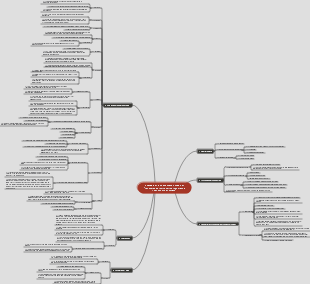
This is a mind map about the summary of "Emotional Self-Healing: 5 Ways to Get Rid of Anxiety, Stress and Negative Emotions". This book provides a scientifically proven and efficient "five-step psychological management method" designed to help readers Find and eliminate the sources of anxiety, stress, and negative emotions in your life, quickly escape daily spirals of control, and experience dramatic improvements in your mental and physical health. The author emphasizes that psychological management is a skill that needs to be continuously learned and improved from childhood to adulthood. Learning and mastering a new set of psychological management methods can help to cope with and solve a variety of challenges.
Edited at 2024-10-27 22:55:31
- Fortpflanzungssystem
Diese Vorlage zeigt die Struktur und Funktion des Fortpflanzungssystems in Form einer Mind Map. Es führt die verschiedenen Komponenten der internen und externen Genitalien ein und sortiert das Wissen eindeutig aus, um Ihnen dabei zu helfen, mit den wichtigsten Wissenspunkten vertraut zu werden.
- Interpretation und Zusammenfassung des Beziehungsfeldes E-Book
Dies ist eine Mind Map über die Interpretation und Zusammenfassung des Beziehungsfeldes E-Book, des Hauptinhalts: Überblick über die Essenzinterpretation und Übersicht über das Feld E-Book. "Relationship Field" bezieht sich auf das komplexe zwischenmenschliche Netzwerk, in dem ein Individuum andere durch spezifische Verhaltensweisen und Einstellungen beeinflusst.
- Buchhaltungsbücher und Buchhaltungsunterlagen
Dies ist eine Mind Map über Buchhaltungsbücher und Buchhaltungsunterlagen.
Summary of Emotional Self-Healing 5 Ways to Get Rid of Anxiety, Stress and Negative Emotions
- Fortpflanzungssystem
Diese Vorlage zeigt die Struktur und Funktion des Fortpflanzungssystems in Form einer Mind Map. Es führt die verschiedenen Komponenten der internen und externen Genitalien ein und sortiert das Wissen eindeutig aus, um Ihnen dabei zu helfen, mit den wichtigsten Wissenspunkten vertraut zu werden.
- Interpretation und Zusammenfassung des Beziehungsfeldes E-Book
Dies ist eine Mind Map über die Interpretation und Zusammenfassung des Beziehungsfeldes E-Book, des Hauptinhalts: Überblick über die Essenzinterpretation und Übersicht über das Feld E-Book. "Relationship Field" bezieht sich auf das komplexe zwischenmenschliche Netzwerk, in dem ein Individuum andere durch spezifische Verhaltensweisen und Einstellungen beeinflusst.
- Buchhaltungsbücher und Buchhaltungsunterlagen
Dies ist eine Mind Map über Buchhaltungsbücher und Buchhaltungsunterlagen.
- Recommended to you
- Outline
Summary of the condensed version of Psychological Self-Healing Techniques That Benefit a Lifetime
- 193
- 4
- 1

Summary of "Emotional Self-Healing: 5 Ways to Get Rid of Anxiety, Stress and Negative Emotions"
Preface
Solution: Symptom-centered → Unique experience-centered (unique)
Part One Why and How
1. Shortened life span
1. Despair and mental health
2. Lifestyle: suicide, alcoholism, drug abuse
3. Threats to health: epidemics, climate change, environmental pollution
2. Ignoring experience
1. Only focus on physiological phenomena
2. Neuroreductionism: Labeling and diagnosis required
3. Neuroplasticity
1. Capture and edit: ideas and reactions
2. Psychological activities: thinking → feeling → choosing → them
4. Five-step method of psychological management
1. Collect information
⑴. Understand, listen and observe: thoughts and feelings
⑵. Emotions will eventually pass. There is no need to let them affect your subsequent actions or thoughts.
2. Recall
⑴. Discuss and understand the deeper meaning behind the other person’s words and deeds: What are they experiencing? How painful are they? What made them react this way? Don’t absorb their negative energy, don’t let it become a part of your brain
⑵.Objectify the situation
3. Writing
⑴. Keep a diary on your laptop or smartphone
⑵.Write down what others said, how you responded, or how you want to respond.
4. Review
⑴.Reanalyze and check what you have written
⑵.Talk to others
5. Active extension
⑴. Apply what you have learned in concrete ways
⑵.Ask others what you can do for them
⑶.Listen to them expressing their emotions
5. The impact of psychological confusion on DNA
1. Negative stress → shortened telomeres → harmful to the body and mind → physiological aging
2. Telomeres are structures located at the ends of chromosomes. Once telomeres wear out, cells will age faster and it will be difficult to effectively maintain health.
3. Deep sleep→delta wave→telomerase growth hormone→maintain cell health
6. Autonomy
1. Enhanced autonomy → Enhanced awareness (no longer care so much about what others think of you) → Ability to regulate negative thoughts → Reduce negative stress
2. Your story is unique and deserves to be heard. Learn to tell your own story, and you can heal your own psychology and life
7. Psychological suggestion
1. All this will pass
2. Acceptance: Even though I may not understand these problems, we can still deal with them and move on.
3. Coping with uncertainty: Although things are full of uncertainty, I can handle it. Although I have never been in this situation, I can handle it. There are always uncertain times in life, and I can handle them. I don't know what's going to happen, but I can handle it
4. Be happy with negative feelings: Now you realize you can change these thoughts
8. Psychology
1. Psychological activities: thinking, feeling, choosing
2. Memory: information memory, emotional memory, physiological memory
3. Experience can change gene structure and activity, not gene sequence.
4. What we pay attention to (thoughts, opinions, words, attitudes) will grow because we will provide it with energy (photons)
9. Psychological management
1. I always feel very stressed during the day → I don’t take the time to organize my thoughts or restart my brain → My sleep at night is affected
2. Spend time every day thinking quietly.
3. When you wake up in the morning, you should adjust your psychology to a suitable thinking space instead of checking social media or paying attention to the news.
⑴. Use the 30-90 second rule to record all my thoughts when I first wake up in the morning.
⑵. Make up your mind to move in the direction you want - useful mindset statement hints
I regulate my thoughts, feelings, and choices every day to help improve intelligence, prevent cognitive decline, and reboot brain energy levels
Today I will not allow any thoughts to wander unchecked in my mind. I will carefully capture my thoughts
I pay attention to the words I say and remind myself that they reflect my mental state
I am the creator of my emotions, so I can control my emotions. The cause of my emotions has nothing to do with me, but I am responsible for the expression of them
I no longer feel angry at people who hurt me, I work on forgiving them because holding onto grudges and continuing to hate is damaging to my brain and mental health
I will remember that happiness is not an end goal but a part of the life cycle. Often, happiness comes from accepting the hardships, fears, and pain that life throws at me. This acceptance comes from deep within me and it brings me peace. happiness is a choice
I will always remind myself that anything worthwhile takes time
In any situation, I try to be open to possibilities. It doesn't matter if things don't go the way I thought they would. Many attempts will lead to many failures, but failure is the mother of success
I will always be grateful instead of focusing on what is wrong with my life
I was born for self-improvement, not competition. When I feel the need to compete or compare myself to others, I remind myself that we need each other and appreciate each other’s differences
Today, I will make an effort to reach out to others because I know it will help me too. Helping others helps clear my own thinking space, especially when I encounter difficulties.
Today I am going to make stress work for me, not against me. I know my stress response helps me focus and think clearly and flexibly
I am mindful of my expectations because expectations can have positive or negative effects on my neurophysiology
I know that I have the ability to choose, and the choices I make will change the structure of the brain, even affecting the genetic level. Today, I will make a choice and make sure the outcome is in a positive direction because I am in control of the process
Part 2 Practical application of the five-step method of psychological management
1. Basic principles
1. Accept
⑴. Acknowledge: Emotions, negative thoughts, trauma, and past experiences are not labels attached to you. For example, you are challenging shame, not that you are the shame itself
⑵. Accept the fact: pain cannot be negotiated. The pain will eventually pass, even if you feel like it's so far away now
⑶.Always remember: you are not alone. When you reach out for help, your loved ones will give you love and support, and you deserve that.
⑷.Remind yourself: Although you have been plagued by fear or uncertainty, you have overcome difficulties in the past.
⑸.Remember: The painful part of life will not last forever. The sooner you learn to accept it, the sooner you'll be free of it
⑹. The most exciting thing: Once you accept something painful, the pain will gradually weaken and continue to change (even if you don’t feel the change yet)
2. Reconstruction
⑴. Examine the reasons that led to the thought: information, emotions/feelings/experiences, choices
⑵. Do not ignore or suppress everything you have experienced, but respect the growth that past experiences have brought to you, and integrate this change into your daily life
2. Five-step method for psychological management questioning
1. Collect information
⑴.What do you feel through the five senses?
⑵.What information is contained in the thoughts pouring into the conscious level from the subconscious level at this moment? Notice how many ideas there are and what they are
⑶. What feelings are brought about by the information contained in thoughts?
2. Recall
⑴.What did my body experience when I recalled this thought?
⑵.What is the information about this idea? Try to describe this information in as much detail as possible by answering questions with special interrogative words ("who", "what", "when", "where", "why", "how")
⑶. What feelings are related to the information in this idea?
3. Writing
4. Review
⑴.What did my body experience? Are there any rules? How does this relate to the message and feeling of that negative thought?
⑵.What patterns are there in the information in my mind? How can this information be reconstructed?
⑶. What feelings are associated with the negative thought information? What patterns do I see? How can these feelings be reframed?
5. Active extension
⑴.What warning signs does my body feel?
⑵.What is the information after my reconstruction?
⑶. How do I feel after refactoring?
3. Guided neuroplasticity practices
1. Self-regulation
⑴.Be aware of the following matters and adjust them
①. Your own psychological activities at a certain moment: thinking, feeling, choosing
②. Your long-term thoughts and memories embedded in them: physiological memory, emotional memory, information memory
③.Communication with others and its impact on yourself and others
⑵. Notice the impact of your thoughts, words, and tone on yourself, and ask yourself why you do what you do, so as to figure out the thoughts behind your actions.
2. The 30-90 second rule - "regret zone"
⑴. Do some deep abdominal breathing, at least 10 times
⑵.Go into a different room and shout as loudly as possible for as long as possible
⑶. Do some physical activities, such as: sprinting, jumping, burpees
⑷. In your imagination, shrink the person in front of you to the size of an ant.
3. Quantum Zeno effect
Every time you have a negative thought, think of it as a reminder to think of three positive things in your life: three things to be proud of, three things to be grateful for, three things to be happy about, and three things to be beautiful about wait
4. Advantages of multiple perspectives
Observe your thoughts "outside of yourself": what you say, do, think, feel, choose, body language, intentions
5. Imagination: box method, window method, rewind method, armor method
⑴.Box method
If someone makes you unhappy or disrespects you, imagine that you can put them in a box. Once they're in that box, even if you're looking at them or sitting next to them, you're blind to them and deaf to what they're saying. This allows you to temporarily isolate yourself from them, giving yourself a separate mental space to catch your breath and decide how to respond next.
⑵.Window method
Imagine a huge building with lots of windows, most of which are sealed. Put the negative thought that is bothering you into one of the windows and imagine that you are standing outside the window looking in. You can't climb into the window because it's inaccessible, but you can control anything in the window. Where you stand outside the window is always safe and nothing in the window can harm you. Whenever you're ready, you can process and reconstruct what's inside the window. With the help of the five steps of psychological management, you can stand at a safe distance and intuitively see the scene changes in the window
⑶.Rewind method
Imagine you are watching yourself in a movie. You can control every scene in this movie, and you can replay and edit each scene using the five-step method of psychological management. When you pause, you accept your problem; when you rewind, you process what is happening; when you play back, you reconstruct your thoughts.
⑷.Armor method
It can effectively prevent other people's bad words from hurting you. It helps to create a mental boundary for you so that your mental space remains safe. Imagine that you are wearing a suit of armor. When those evil words attack you, instead of hurting you, they will bounce back to those evil people. You don’t have to pay attention to or accept negative words, just block them out
6. Close your eyes and focus on the big picture first.
⑴. Look at the impact of what you have achieved and ask yourself these questions: What is the main purpose of my next action? How can I do this effectively so that it has an impact? How hard am I prepared to work to achieve this goal? What results do I want to see?
⑵. If it is a healthy thought, it is good to pay attention to its details, but if it is a negative thought, it is not so good.
4. Discomfort zone
1. Awareness area: “I can’t explain clearly, but I always feel like something is wrong.”
2. Stress zone: "I feel a surge of adrenaline, my heart beats faster, and something is really wrong."
3. Emotional attitude area: "I am very alert and feel like I am being pushed into a corner. I am very uncomfortable."
4. Coming to the Choice Area: "This is my current decision and I'm happy with it; I won't take action until I feel comfortable and calm." "This situation requires careful analysis and I need to stop and take the time to think it over." "
5. Exercise your brain with the five-step method of psychological management
1. Gather information: books, magazine articles, news feeds, videos, audiobooks
2. Recall: question (time/place/cause/result), answer (read aloud/repeat), discuss (retell/explain)
3. Writing: Information selected in the previous step
4. Review: organize → compare → check (logic/coherence) → add (pictures/symbols/colors) → easy to remember
5. Active extension: play the role of teacher and teach as learning
6. Use the five-step method of psychological management to heal negative trauma
1. Gather information: Pay attention to those thoughts and your body’s stress response
2. Recall: out-of-control emotions, negative behaviors, and performance that affects decision-making
3. Writing: Three positive and optimistic perspectives
4. Review
5. Active extension: take initiative - tips
⑴.Possibility thinking: looking for multiple solutions or ways to solve problems
⑵. Increase the time distance: Take a long-term view, expand your horizons, and imagine yourself traveling to an hour, a day, a week, or a year after the event. What will the current situation be like? What will be the difference between the future and now? What lessons will you learn? What will happen to us? What advice would you give to someone facing a similar problem?
⑶. View the present from a historical perspective: regard the current emergencies as part of one’s life history
⑷.Think about the movies/TV shows/books that resonate with us: plots, sentences, symbols
7. Improve your connections
1. Improve interpersonal relationships and overcome loneliness
⑴. Attend a fitness class
⑵. Volunteer at a church, community center, or local non-profit organization
⑶. See a psychologist or other mental health professional
⑷. Focus on the current relationship: care about what they are interested in, write them a letter, call them, put down the device when you are together, and listen to each other
⑸.Join a club or form a club
2. Actively integrate into the group
⑴. Take the initiative to help others: listen, embrace, and encourage
⑵. Send an email or text message to tell them you miss them. Invitation to lunch or dinner
⑶.Don’t eat alone
⑷.Greet them with a smile instead of staring at the floor or your phone
8. Use the five-step method of psychological management to get rid of bad habits and develop good habits
1. Use the five-step method of psychological management to psychologically manage bad habits.
⑴.Collect information
Think about the impact of your usual actions on others
Do you have any habits that might annoy, upset, or panic your loved ones, family members, or co-workers? Have you ever done something that went against your will and damaged your mental health, but you still had to do it? Is this the kind of thing that you have to do but have no choice about? What are the subconscious informational, emotional, and physical warning signs that you feel when you think about this bad habit, or when you become aware of it and notice that it upsets others or yourself?
⑵.Recall
Use the advantages of multiple perspectives to reflect
Do you think your own bad habits are the leading cause of damage to your relationships? How do bad habits affect you? Do you think it is necessary to change it? Why? Are there any incentives? Are your bad habits making others irritated, anxious, or upset? Have you ever done something that is harmful to your mental health, but you still insist on doing it, or something that you have to do but have no choice but to do?
⑶.Writing
Write down the answers to the above questions
⑷. Review
Find bad habits: triggers, patterns, common themes, common reactions
⑸.Active extension
Regarding this bad habit,
Its physiological trigger is __________.
The new information I want to tell myself is __________.
My new feeling is __________.
Now, let’s fill in the blanks:
When I feel the physical trigger of __________, I tell myself __________ and choose the feeling of __________.
It can also be simpler, such as:
When I start to feel __________, I
2. Use the five-step method of psychological management to get rid of the bad habit of pleasing others.
⑴.Collect information
Think about times you have pleased others and notice emotions and feelings
What were your thoughts and feelings at that time? What are you thinking and feeling right now?
⑵.Recall
Ask yourself: Why do you say “yes” when you want to say “no”? What happened after you said "yes"? How do you feel? Is this helpful or harmful to you? When do you most want to please others? In what scene, situation or environment? Who do you most want to please? Why? What if you say "no"? Why don't you dare say "no"? Are you trying to hide an insecurity? Are you afraid of being alone?
⑶.Writing
Write down your thoughts on the above questions
Are there any triggers or patterns for these problems? Can you answer these questions in more depth?
⑷. Review
Check what you have written
Are there any triggers or patterns? Can you give more insightful answers to some of these questions? How would you look at this issue from a new perspective and restructure your behavior and speech so that you are no longer trying to please others?
⑸.Active extension
Spend more time practicing the five steps of psychological management to increase your self-esteem
Write a memo and pay special attention to how many times in a day you agree to do something that you don’t want to do.
3. Use the five-step method of psychological management to get rid of the bad habit of rumination.
⑴.Collect information
Make yourself aware of past experiences of rumination
What physical and psychological warning signs have you noticed? How are you feeling mentally and physically right now?
⑵.Recall
Why do you feel this way? What motivates you to overthink? What are you overthinking? Are your thoughts based on facts or assumptions? How do you deal with overthinking?
⑶.Writing
⑷. Review
Have you observed any triggers or patterns? Can you dig a little deeper into some of the questions and answers? What assumptions did you notice?
⑸.Active extension
Do some physical activity immediately, such as sprinting or dancing
4. Use the five-step method of psychological management to develop better interpersonal communication habits?
⑴.Collect information
Do you feel lonely? Does being alone make you feel bad? When are you in your worst mood, when you are alone or when you are with others and they distance you and belittle you, making you feel lonely? In addition, think about whether you are willing to take the initiative to communicate with those around you
⑵.Recall
Think about why you feel this way
Why do you take the initiative to communicate with others? If you took the initiative to communicate with others, how would you do it? Does your approach work? What is the difference between simply being yourself and being an actively engaged self? When do you feel happy, when you do things for yourself or for others? What was the happiest moment in your life? Who are you with during these moments? Do you avoid connecting with others because you feel like you’re not good enough? Do you feel like you need to be "on" all the time when you're with other people? Why? Could it be that people-pleasing behavior is keeping you from forming deeper, meaningful relationships with others?
⑶.Writing
write the answer
⑷. Review
How can you listen to others better? How can you step out of your own world and become part of a group? Can you help others by giving away food, helping with childcare, etc.?
How do you function within your own group? Can you have in-depth discussions with interesting people, challenge yourself and really open up? How to make integrating into a group a way of life? What patterns did you notice?
⑸.Active extension
Choose one or two of the answers you wrote in the review steps and get started today
Commit to communicating meaningfully with others in this way or new ways every day (even if it’s just texting someone to say you miss them, that counts)
5. Use the five-step method of psychological management to prepare for bedtime
⑴.Collect information
Collect information about your mental space before going to bed
Is your mental space chaotic or organized? Still a little organized? How do you feel physically and mentally? What moments of the day stand out for you? How did you feel about the day overall? What did you learn new today? Is there anything in particular about this day that makes you happy, sad, or anxious?
⑵.Recall
As you prepare for bed, recall the information and emotions contained in these thoughts. What thoughts do you wish you had in your mind before going to bed?
Ignoring or suppressing problems can lead to cognitive dissonance, which can disrupt your sleep and make you feel bad the next day
⑶.Writing
write down your thoughts
⑷. Review
Write a short sentence and review what you have written
For example: "I know this problem is big, but I know I will find a solution. I may not be able to find a solution right now, but worrying about it will only make it worse." Write what you have written now Read it once. Have you ever noticed any thought patterns that appear multiple times throughout the day? What impact does this mindset have on your work or interpersonal communication? Have you spent enough time thinking? If you did get into an argument with someone or feel stressed, why?
⑸.Active extension
Write a list at night of what you did and didn’t do today
6. Use the five-step method of psychological management to improve eating habits
⑴.Collect information
What did you eat today? What did you eat this week?
How do you feel physically and mentally when you eat or buy groceries?
⑵.Recall
Think about the food, meals, and ingredients in your refrigerator, pantry, and shopping list. Are they real food (fresh and nutritious)? Do you eat when you are stressed, angry, or upset? How does eating at this time make you feel? Do you want to eat real food? Why did you choose to cook this food? How do you slowly integrate more real food into your life?
What is your relationship with food? Is it healthy? How do you feel after eating? Why do you feel the need to count calories? Why do certain foods or meals affect you? Do you care about food and eating just enough or too much?
⑶.Writing
Write down your current food choices and the answers to the questions
Write down what you ate, when you ate it, how you ate it, and how you felt physically and mentally before and after eating.
⑷. Review
Have you noticed any patterns?
What do you want to eat? Why eat? Where will you buy food? Do you eat when you are stressed, angry or upset? How do you feel when you eat? Have you ever deceived yourself in the previous step of writing? What foods should you try to avoid? Which food do you eat more? What are your favorite ways to cook? What can you teach children about food and eating?
⑸.Active extension
Take action today, but start small: How can you change one of your meals today so that it becomes “real food”? Or you could open your pantry or refrigerator and throw out those "food analogues"
7. Use the five-step method of psychological management to develop healthy exercise methods
⑴.Collect information
How do you feel physically and mentally before and after exercise? When do you exercise best? When is the worst time? What is your overall attitude and feelings about exercise?
⑵.Recall
Why don't you want to exercise? Do you use exercise as a pastime or as a way to try to take control of your life? Why do you feel like this before or after a workout? What can you do to make exercise a sustainable habit in your life? What information about exercise might serve as motivation for you to keep going?
List a range of benefits of exercise. Think about what exercise you enjoy and see how you can incorporate it into your life. What simple exercises can you do right now?
Exercise is simply movement. Taking a walk or cleaning the house is also a good way to exercise
⑶.Writing
Develop an action plan that is organized and fun
Record your: thoughts, feelings, actions, reactions
⑷. Review
If you already have an exercise routine, what else can you add to it? If you don’t have an exercise plan, when will you start? What motivates you to exercise? Is there room for improvement? How does exercise make you feel? How do you keep this momentum going? What patterns did you notice?
Check your thoughts while exercising, as negative thoughts can counteract the effects of exercise on fighting depression or anxiety
Participate in exercise with a positive attitude and observe changes in your mood
⑸.Active extension
①.Get moving now! Take action today, never put it off until tomorrow, next week or next month
②.Small suggestions
Start exercising with the thought: This will be good for me, it will calm me down, and it will make me feel better physically and mentally. This is another way I use to clear my cluttered mind
See what you like and what you don’t like
Take a walk every day
Do aerobics, take the stairs