MindMap Gallery Modern analysis methods for materials (Raman, XPS, DSC)
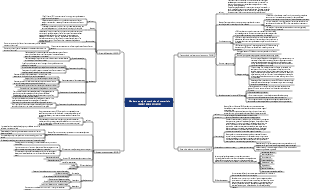
This is a mind map about modern material analysis methods (Raman XPSDSC). The main contents include: Differential Scanning Calorimetry (DSC), X-ray Photoelectron Spectroscopy (XPS), and Raman.
Edited at 2024-10-25 15:16:09Rumi: 10 dimensions of spiritual awakening. When you stop looking for yourself, you will find the entire universe because what you are looking for is also looking for you. Anything you do persevere every day can open a door to the depths of your spirit. In silence, I slipped into the secret realm, and I enjoyed everything to observe the magic around me, and didn't make any noise. Why do you like to crawl when you are born with wings? The soul has its own ears and can hear things that the mind cannot understand. Seek inward for the answer to everything, everything in the universe is in you. Lovers do not end up meeting somewhere, and there is no parting in this world. A wound is where light enters your heart.
Chronic heart failure is not just a problem of the speed of heart rate! It is caused by the decrease in myocardial contraction and diastolic function, which leads to insufficient cardiac output, which in turn causes congestion in the pulmonary circulation and congestion in the systemic circulation. From causes, inducement to compensation mechanisms, the pathophysiological processes of heart failure are complex and diverse. By controlling edema, reducing the heart's front and afterload, improving cardiac comfort function, and preventing and treating basic causes, we can effectively respond to this challenge. Only by understanding the mechanisms and clinical manifestations of heart failure and mastering prevention and treatment strategies can we better protect heart health.
Ischemia-reperfusion injury is a phenomenon that cellular function and metabolic disorders and structural damage will worsen after organs or tissues restore blood supply. Its main mechanisms include increased free radical generation, calcium overload, and the role of microvascular and leukocytes. The heart and brain are common damaged organs, manifested as changes in myocardial metabolism and ultrastructural changes, decreased cardiac function, etc. Prevention and control measures include removing free radicals, reducing calcium overload, improving metabolism and controlling reperfusion conditions, such as low sodium, low temperature, low pressure, etc. Understanding these mechanisms can help develop effective treatment options and alleviate ischemic injury.
Rumi: 10 dimensions of spiritual awakening. When you stop looking for yourself, you will find the entire universe because what you are looking for is also looking for you. Anything you do persevere every day can open a door to the depths of your spirit. In silence, I slipped into the secret realm, and I enjoyed everything to observe the magic around me, and didn't make any noise. Why do you like to crawl when you are born with wings? The soul has its own ears and can hear things that the mind cannot understand. Seek inward for the answer to everything, everything in the universe is in you. Lovers do not end up meeting somewhere, and there is no parting in this world. A wound is where light enters your heart.
Chronic heart failure is not just a problem of the speed of heart rate! It is caused by the decrease in myocardial contraction and diastolic function, which leads to insufficient cardiac output, which in turn causes congestion in the pulmonary circulation and congestion in the systemic circulation. From causes, inducement to compensation mechanisms, the pathophysiological processes of heart failure are complex and diverse. By controlling edema, reducing the heart's front and afterload, improving cardiac comfort function, and preventing and treating basic causes, we can effectively respond to this challenge. Only by understanding the mechanisms and clinical manifestations of heart failure and mastering prevention and treatment strategies can we better protect heart health.
Ischemia-reperfusion injury is a phenomenon that cellular function and metabolic disorders and structural damage will worsen after organs or tissues restore blood supply. Its main mechanisms include increased free radical generation, calcium overload, and the role of microvascular and leukocytes. The heart and brain are common damaged organs, manifested as changes in myocardial metabolism and ultrastructural changes, decreased cardiac function, etc. Prevention and control measures include removing free radicals, reducing calcium overload, improving metabolism and controlling reperfusion conditions, such as low sodium, low temperature, low pressure, etc. Understanding these mechanisms can help develop effective treatment options and alleviate ischemic injury.
Modern analysis methods for materials (Raman/XPS/DSC)
Raman
Raman Scattering: The phenomenon in which the emission frequency of light waves changes after they are scattered
Rayleigh Scattering: Light waves that are scattered have the same wavelength (color) as the incident light
Raman spectrum characteristics:
The Raman spectrum of water is weak → the aqueous solution system is suitable for detection and has high sensitivity; the excitation light source generally requires a light source with good monochromaticity → the Raman effect is enhanced
In the Raman spectrum with wave number as the variable, the Stokes lines and anti-Stokes lines are symmetrically distributed on both sides of the Rayleigh scattering line (gaining or losing the energy of one vibrational quantum)
Stokes lines are stronger than anti-Stokes lines
Usually, the Raman shift is taken as the abscissa and the Raman light intensity is taken as the ordinate.
Raman spectrum information:
Peak intensity: concentration
Peak position: functional group, structure, stoichiometric analysis
Spectral peak displacement: stress/strain, deformation
Peak ratio: relative concentration
Polarization: crystal orientation
Sample requirements: There are no special requirements for the status and transparency of the sample
Disadvantages of Raman analysis: susceptible to interference, introduction of substances can easily cause errors
X-ray photoelectron spectroscopy (XPS)
Basic principles:
When a beam of photons irradiates the surface of the sample, the photon can be absorbed by the electrons in the atomic orbit of a certain element in the sample, causing the electrons to break away from the atomic nucleus and be emitted from the interior of the atom with a certain kinetic energy, becoming free. The photoelectrons, and the atom itself becomes an excited ion.
Must be tested in vacuum environment
XPS is a surface analysis technology. If the vacuum degree is poor, the sample surface is easily covered by residual gas molecules → it is difficult to obtain real information on the sample surface.
Photoelectron energy is weak. If the vacuum degree is poor → photoelectrons are prone to collision with residual gas molecules and lose energy.
application
Elemental and chemical state analysis
Elemental characteristic peaks (chemical shifts) → determine the elements present on the solid surface of the sample (and which compounds the element exists in)
Perform a full scan across the entire photoelectron energy range → determine the presence of elements in the sample
Perform a narrow scan of the selected spectrum → determine the chemical state
Quantitative analysis
chemical structure analysis
advantage
Non-destructive analysis method (sample is not decomposed by X-rays)
Ultra-trace analysis technology (small amount of sample required)
Trace analysis method (high absolute sensitivity) [but high relative sensitivity, can only detect components with more than 0.1% content in the sample]
Differential Scanning Calorimetry (DSC)
Differential calorimetry measures the temperature difference (the relationship between temperature and enthalpy change cannot be established), and differential scanning calorimetry measures the energy difference.
principle:
DSC refers to a technology that controls the temperature changes of a sample and a reference substance according to a certain program, and measures the difference in heat flow input to the two substances as a temperature relationship.
The holder part of the sample and reference material is combined with the heating furnace to form a DSC device through a thermal resistance and a heat soaking block (heat bath). Corresponding to the heating (or cooling) speed, a certain amount of heat is transferred from the bottom of the sample container to the sample and reference material placed in the furnace through thermal conduction. At this time, the heat flow into the sample is proportional to the temperature difference between the heating block and the bracket.
Compared with the sample, the soaking block has a large heat capacity. Therefore, when the sample undergoes thermal changes, it can absorb (compensate) the cooling or heating caused by the thermal changes, thereby maintaining the temperature difference between the sample and the reference. Stablize. Therefore, the heat difference between the sample and the reference material per unit time is proportional to the temperature difference between the two supports. By using a substance with known heat and pre-correcting the relationship between the temperature difference and the heat, the heat of the unknown sample can be measured.
Power compensated DSC
What is measured is the energy difference required to maintain the sample and reference material at the same temperature → the enthalpy change of the reaction sample
excellent:
Precise temperature control and measurement
Faster response time and cooling speed
High resolution
lack;
With the internal heating method, the baseline drifts very much after being used for a long time. There are two furnaces, one side is the sample and the other side is the blank. The two furnaces are asymmetrical.
Thermal flow DSC (quantitative DTA)
Under the same power given to the sample and the reference product, measure the temperature difference between the two ends of the sample and the reference product.
excellent:
Baseline stable
High sensitivity
DSC curve (taking the rate of heat absorption or release of the sample (dH/dt or Φ) as the ordinate and temperature (T) or time (t) as the abscissa)
Upward (positive value) is the endothermic peak of the sample [melting, decomposition, desorption]
Downward (negative value) is the exothermic peak [crystallization, oxidation, solidification]
The area enclosed by the peaks or valleys in the curve represents the change in heat
application
Determination of sample enthalpy change
Determination of specific heat capacity of samples