MindMap Gallery Modern analysis methods of materials (SEM, TEM, XRD, EDS)
Modern analysis methods for materials include transmission electron microscopy (TEM), scanning electron microscopy (SEM), X-ray diffraction (XRD), and energy dispersive spectrometer (EDS).
Edited at 2024-10-25 15:15:45Rumi: 10 dimensions of spiritual awakening. When you stop looking for yourself, you will find the entire universe because what you are looking for is also looking for you. Anything you do persevere every day can open a door to the depths of your spirit. In silence, I slipped into the secret realm, and I enjoyed everything to observe the magic around me, and didn't make any noise. Why do you like to crawl when you are born with wings? The soul has its own ears and can hear things that the mind cannot understand. Seek inward for the answer to everything, everything in the universe is in you. Lovers do not end up meeting somewhere, and there is no parting in this world. A wound is where light enters your heart.
Chronic heart failure is not just a problem of the speed of heart rate! It is caused by the decrease in myocardial contraction and diastolic function, which leads to insufficient cardiac output, which in turn causes congestion in the pulmonary circulation and congestion in the systemic circulation. From causes, inducement to compensation mechanisms, the pathophysiological processes of heart failure are complex and diverse. By controlling edema, reducing the heart's front and afterload, improving cardiac comfort function, and preventing and treating basic causes, we can effectively respond to this challenge. Only by understanding the mechanisms and clinical manifestations of heart failure and mastering prevention and treatment strategies can we better protect heart health.
Ischemia-reperfusion injury is a phenomenon that cellular function and metabolic disorders and structural damage will worsen after organs or tissues restore blood supply. Its main mechanisms include increased free radical generation, calcium overload, and the role of microvascular and leukocytes. The heart and brain are common damaged organs, manifested as changes in myocardial metabolism and ultrastructural changes, decreased cardiac function, etc. Prevention and control measures include removing free radicals, reducing calcium overload, improving metabolism and controlling reperfusion conditions, such as low sodium, low temperature, low pressure, etc. Understanding these mechanisms can help develop effective treatment options and alleviate ischemic injury.
Rumi: 10 dimensions of spiritual awakening. When you stop looking for yourself, you will find the entire universe because what you are looking for is also looking for you. Anything you do persevere every day can open a door to the depths of your spirit. In silence, I slipped into the secret realm, and I enjoyed everything to observe the magic around me, and didn't make any noise. Why do you like to crawl when you are born with wings? The soul has its own ears and can hear things that the mind cannot understand. Seek inward for the answer to everything, everything in the universe is in you. Lovers do not end up meeting somewhere, and there is no parting in this world. A wound is where light enters your heart.
Chronic heart failure is not just a problem of the speed of heart rate! It is caused by the decrease in myocardial contraction and diastolic function, which leads to insufficient cardiac output, which in turn causes congestion in the pulmonary circulation and congestion in the systemic circulation. From causes, inducement to compensation mechanisms, the pathophysiological processes of heart failure are complex and diverse. By controlling edema, reducing the heart's front and afterload, improving cardiac comfort function, and preventing and treating basic causes, we can effectively respond to this challenge. Only by understanding the mechanisms and clinical manifestations of heart failure and mastering prevention and treatment strategies can we better protect heart health.
Ischemia-reperfusion injury is a phenomenon that cellular function and metabolic disorders and structural damage will worsen after organs or tissues restore blood supply. Its main mechanisms include increased free radical generation, calcium overload, and the role of microvascular and leukocytes. The heart and brain are common damaged organs, manifested as changes in myocardial metabolism and ultrastructural changes, decreased cardiac function, etc. Prevention and control measures include removing free radicals, reducing calcium overload, improving metabolism and controlling reperfusion conditions, such as low sodium, low temperature, low pressure, etc. Understanding these mechanisms can help develop effective treatment options and alleviate ischemic injury.
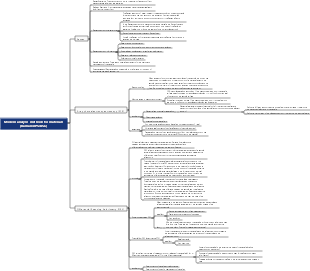
Modern analysis methods of materials (SEM\TEM\XRD\EDS)
Transmission electron microscopy (TEM)
definition:
Transmission Electron Microscope (TEM) is a microscope that transmits an accelerated and concentrated electron beam onto a very thin sample. The electrons collide with atoms in the sample and change direction, thereby producing solid angle scattering. The scattering angle is related to the density and thickness of the sample → it can form images with varying brightness and darkness. The image is magnified and focused and displayed on the microscope of the imaging device (such as fluorescent screen, film and photosensitive coupling components, etc.).
Features: Transmission electron microscopy has high spatial resolution and is particularly suitable for the analysis of powder materials.
① The amount of sample used is small, not only the morphology, particle size, and distribution of the sample can be obtained, but also the elemental composition and phase structure information of a specific area can be obtained
② It is more suitable for morphology analysis of nanopowder samples, but the particle size should be less than 300 nm, otherwise the electron beam cannot penetrate
③For analysis of bulk samples, transmission electron microscopy generally requires thinning of the sample.
Principle and structure:
① TEM is an electronic optical instrument that uses electrons with extremely short wavelengths as the illumination source and uses an electromagnetic lens to focus the electrons passing through the sample to form an image.
② TEM can directly observe the internal structure of the material at the atomic scale, and can also conduct electron diffraction analysis of the crystal structure of the material to obtain the physical phase and crystal structure information of the material.
③TEM can be configured with X-ray energy spectroscopy (EDS), electron energy loss spectroscopy (EELS) and other accessories for measuring micro-area components.
Structure, imaging principle
The biggest features of TEM: electron microscopy and electron diffraction pattern
Structure: lighting system, imaging system, observation and recording system
Imaging principle:
Absorption image: When electrons hit a sample with high mass and density, the main phase formation effect is scattering. Places with large mass thickness on the sample have a large scattering angle for electrons, fewer electrons pass through, and the brightness of the image is darker. Early transmission electron microscopes were based on this principle
Diffraction image: After the electron beam is diffracted by the sample, the amplitude distribution of the diffraction wave at different positions of the sample corresponds to the different diffraction capabilities of each part of the crystal in the sample. When a crystal defect occurs, the diffraction capability of the defective part is different from that of the complete area, thus causing the diffraction wave The amplitude distribution is uneven, reflecting the distribution of crystal defects.
Phase image: When the sample is thinner than 100Å, electrons can pass through the sample, the amplitude change of the wave can be ignored, and the imaging comes from the phase change.
Sample requirements for traditional TEM testing
① The sample should be thin enough, the size of the powder sample should be less than 0.2 microns, and the thickness of the film sample should be less than 0.1 microns.
② Can remain stable in high vacuum
③Do not contain moisture or other volatile substances. Samples containing moisture or other volatile substances should be dried and removed first.
④ Avoid magnetic particles, or demagnetize the magnetic sample in advance to avoid the electron beam being affected by the magnetic field during observation
Scanning electron microscope (SEM)
definition:
Scanning Electron Microscope (SEM) is an electron microscope that uses a focused electron beam to scan the surface of a sample to produce an image of the sample surface. It is mainly used to observe the surface morphology of objects. It can directly observe the structure of the sample surface, and can also observe the sample from various angles. The sample preparation process is simple.
composition:
Vacuum systems, electron beam systems, and imaging systems
How it works:
The electron beam emitted by the electron gun is concentrated by the magnetic lens system under the action of accelerating voltage to form an electron beam with a diameter of 5 nm, which is focused on the sample surface. Under the action of the deflection coil between the second condenser lens and the objective lens, the electron beam scans the sample in a raster shape, and the electrons interact with the sample to generate signal electrons. These signal electrons are collected by the detector and converted into electrical signals, which are then processed to form a surface image of the sample.
Scanning electron microscopes use scanning electron beams as illumination sources to convey the characteristics of the material structure through various information generated by the interaction between incident electrons and matter. The interaction between incident electrons and matter is the physical basis for scanning electron microscope imaging and applications.
Incident electrons interact with matter
scattering phenomenon
Elastic scattering: During the scattering process, the incident electron only changes direction, and its total kinetic energy basically remains unchanged.
Inelastic scattering: The kinetic energy and direction of the incident electron change during the scattering process
Various physical signals generated by incident electron excitation: High-energy electrons are incident on a solid sample and undergo elastic and inelastic scattering processes with the atomic nucleus and extranuclear electrons, which will excite the solid sample to produce various physical signals.
backscattered electrons
secondary electrons
Absorb electrons
transmitted electrons
Characteristic X-rays
Auger electron
cathodofluorescence
electron beam induced electrical effect
SEM sample preparation
Conductive material: Specify the size requirements and paste it on the copper or aluminum sample holder with conductive glue
Samples with poor conductivity or insulation: (due to charge accumulation under the action of the electron beam, which affects the shape of the incident electron beam spot and the movement trajectory of the secondary electrons emitted by the sample, resulting in a decrease in image quality) spraying is required after pasting onto the sample holder. Conductive layer plating treatment
Energy spectrometer (EDS)
definition:
Energy dispersive spectroscopy (EDS) is a type of micro-beam analysis that determines the type and content of elements in the sample by measuring the X-ray energy generated by the interaction between the electron beam and the sample.
Microbeam analysis is a technique for analyzing tiny samples or areas that involves the use of high-energy beams (such as electrons, ions, or photons) to obtain information about the chemical composition, structure, and physical properties of the sample
Features: (The two most important considerations in microbeam analysis are spatial resolution and detection limit)
High spatial resolution: capable of analyzing very small areas, down to the nanometer or even atomic level
Elemental analysis: Determining the presence and concentration of various elements in a sample
Structural analysis: study the crystal structure, micromorphology, etc. of the sample
Surface analysis: analyzing the composition and properties of the sample surface
EDS data output: usually an energy spectrum diagram
The energy spectrum shows energy on the abscissa and intensity or counts on the ordinate.
It shows the distribution of photons or electrons at different energies, which can reflect the characteristic energy peaks of elements in the sample.
EDS data can also include quantitative analysis results (content percentage of elements, etc.), as well as element distribution maps (line scans and surface scans)
Common EDS quantitative analysis methods include:
Standard sample method
Standardless method
EDS spectral artifacts:
internal fluorescence peak
He Feng
escape peak
Analysis mode:
Point analysis:
Detection of chemical composition in micro-regions of materials
High detection accuracy
For particle analysis, particle internal analysis
Line analysis:
The distribution of elements on a line
Commonly used in structural element analysis
face analysis;
Distribution of elements within the selection range
The more obvious the element distribution color → the higher the element distribution
X-ray diffraction (XRD)
definition:
X-Ray Diffraction (XRD) is the main method for studying the physical phase and crystal structure of substances.
When a substance (crystalline or non-crystalline) is subjected to diffraction analysis, the substance is irradiated by Substances produce unique diffraction patterns
Features:
No damage to the sample, no pollution, fast, high measurement accuracy, and can obtain a large amount of information about the integrity of the crystal
Basic principles:
When a beam of monochromatic X-rays is incident on a crystal, since the crystal is composed of regularly arranged unit cells of atoms, and the distance between these regularly arranged atoms is of the same order of magnitude as the wavelength of the incident X-rays, the X-rays scattered by different atoms Interference produces strong X-ray diffraction in certain special directions. The orientation and intensity of the diffraction lines in space are closely related to the crystal structure.
Diffraction pattern characteristics→different crystals have different diffraction patterns
The distribution pattern of diffraction lines is determined by the size, shape and orientation of the unit cell.
The intensity of the diffraction lines depends on the species of atoms and their positions in the unit cell
application
Physical phase analysis:
Qualitative analysis: Compare the measured lattice plane spacing and diffraction intensity of the material with the diffraction data of the standard phase to determine the phase present in the material.
Quantitative analysis: Determine the content of each phase in the material based on the intensity of the diffraction pattern
Determination of crystallinity:
Crystallinity is defined as the ratio of the weight of the crystalline part to the total weight of the sample.
Amorphous materials (crystallinity directly affects the properties of the material)
Determination of crystallinity based on the area of the diffraction pattern of the crystalline phase and the area of the amorphous phase
Precise measurement of lattice parameters:
Precise determination of lattice parameters → commonly used in the determination of solid solubility curves of phase diagrams
Changes in solubility often cause changes in lattice constants
Precise determination of the lattice constant can obtain the number of atoms per unit cell, thereby determining the type of solid solution
Calculate useful physical constants such as density and expansion coefficient
Characterization of nanomaterial particle size:
The particle size of nanomaterials is closely related to their properties
Due to the small particles, nanomaterials can easily form aggregates, and the use of ordinary particle size analyzers will often give erroneous data/ The average particle size of nanoparticles can be determined using the X-ray diffraction linewidth method (Scherrer method)
Determination of crystal orientation and texture
Find the positional relationship between the crystallographic orientation in the crystal sample and the external coordinate system of the sample → Determination of crystal orientation is also called single crystal orientation
The X-ray diffraction method can be used to accurately orient single crystals and obtain information on the internal microstructure of the crystals.