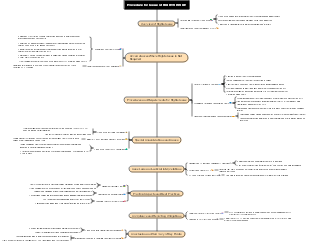
MindMap Gallery Strategic Financial Thinking for Corporate Compliance Officers
The strategic financial thinking of corporate compliance officers means that while ensuring that companies comply with laws and regulations, they use financial thinking to formulate strategic plans to optimize corporate resource allocation and risk management. This kind of thinking integrates financial analysis methods such as value thinking, strategic map thinking, and cyclical thinking. Through value chain analysis, countercyclical investment and other means, it identifies the core competitive advantages of enterprises, optimizes cost structures, and improves profitability. Corporate compliance officers use strategic financial thinking to not only ensure that companies operate stably within the legal framework, but also to promote long-term corporate development through financial strategies, achieve strategic goals, and enhance the company's market competitiveness.
Edited at 2024-10-17 22:16:59Rumi: 10 dimensiones del despertar espiritual. Cuando dejes de buscarte, encontrarás todo el universo porque lo que estás buscando también te está buscando. Cualquier cosa que haga perseverar todos los días puede abrir una puerta a las profundidades de su espíritu. En silencio, me metí en el reino secreto, y disfruté todo para observar la magia que me rodea y no hice ningún ruido. ¿Por qué te gusta gatear cuando naces con alas? El alma tiene sus propios oídos y puede escuchar cosas que la mente no puede entender. Busque hacia adentro para la respuesta a todo, todo en el universo está en ti. Los amantes no terminan reuniéndose en algún lugar, y no hay separación en este mundo. Una herida es donde la luz entra en tu corazón.
¡La insuficiencia cardíaca crónica no es solo un problema de la velocidad de la frecuencia cardíaca! Es causado por la disminución de la contracción miocárdica y la función diastólica, lo que conduce al gasto cardíaco insuficiente, lo que a su vez causa congestión en la circulación pulmonar y la congestión en la circulación sistémica. Desde causas, inducción a mecanismos de compensación, los procesos fisiopatológicos de insuficiencia cardíaca son complejos y diversos. Al controlar el edema, reducir el frente y la poscarga del corazón, mejorar la función de comodidad cardíaca y prevenir y tratar causas básicas, podemos responder efectivamente a este desafío. Solo al comprender los mecanismos y las manifestaciones clínicas de la insuficiencia cardíaca y el dominio de las estrategias de prevención y tratamiento podemos proteger mejor la salud del corazón.
La lesión por isquemia-reperfusión es un fenómeno que la función celular y los trastornos metabólicos y el daño estructural empeorarán después de que los órganos o tejidos restauren el suministro de sangre. Sus principales mecanismos incluyen una mayor generación de radicales libres, sobrecarga de calcio y el papel de los leucocitos microvasculares y. El corazón y el cerebro son órganos dañados comunes, manifestados como cambios en el metabolismo del miocardio y los cambios ultraestructurales, disminución de la función cardíaca, etc. Las medidas de prevención y control incluyen eliminar los radicales libres, reducir la sobrecarga de calcio, mejorar el metabolismo y controlar las condiciones de reperfusión, como baja sodio, baja temperatura, baja presión, etc. Comprender estos mecanismos puede ayudar a desarrollar opciones de tratamiento efectivas y aliviar las lesiones isquémicas.
Rumi: 10 dimensiones del despertar espiritual. Cuando dejes de buscarte, encontrarás todo el universo porque lo que estás buscando también te está buscando. Cualquier cosa que haga perseverar todos los días puede abrir una puerta a las profundidades de su espíritu. En silencio, me metí en el reino secreto, y disfruté todo para observar la magia que me rodea y no hice ningún ruido. ¿Por qué te gusta gatear cuando naces con alas? El alma tiene sus propios oídos y puede escuchar cosas que la mente no puede entender. Busque hacia adentro para la respuesta a todo, todo en el universo está en ti. Los amantes no terminan reuniéndose en algún lugar, y no hay separación en este mundo. Una herida es donde la luz entra en tu corazón.
¡La insuficiencia cardíaca crónica no es solo un problema de la velocidad de la frecuencia cardíaca! Es causado por la disminución de la contracción miocárdica y la función diastólica, lo que conduce al gasto cardíaco insuficiente, lo que a su vez causa congestión en la circulación pulmonar y la congestión en la circulación sistémica. Desde causas, inducción a mecanismos de compensación, los procesos fisiopatológicos de insuficiencia cardíaca son complejos y diversos. Al controlar el edema, reducir el frente y la poscarga del corazón, mejorar la función de comodidad cardíaca y prevenir y tratar causas básicas, podemos responder efectivamente a este desafío. Solo al comprender los mecanismos y las manifestaciones clínicas de la insuficiencia cardíaca y el dominio de las estrategias de prevención y tratamiento podemos proteger mejor la salud del corazón.
La lesión por isquemia-reperfusión es un fenómeno que la función celular y los trastornos metabólicos y el daño estructural empeorarán después de que los órganos o tejidos restauren el suministro de sangre. Sus principales mecanismos incluyen una mayor generación de radicales libres, sobrecarga de calcio y el papel de los leucocitos microvasculares y. El corazón y el cerebro son órganos dañados comunes, manifestados como cambios en el metabolismo del miocardio y los cambios ultraestructurales, disminución de la función cardíaca, etc. Las medidas de prevención y control incluyen eliminar los radicales libres, reducir la sobrecarga de calcio, mejorar el metabolismo y controlar las condiciones de reperfusión, como baja sodio, baja temperatura, baja presión, etc. Comprender estos mecanismos puede ayudar a desarrollar opciones de tratamiento efectivas y aliviar las lesiones isquémicas.
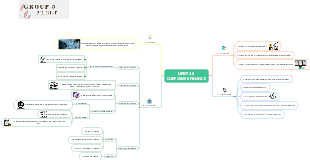
Strategic Financial Thinking for Corporate Compliance Officers
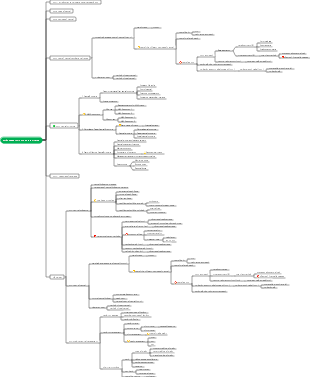
value thinking
Value Chain Analysis
It was proposed in "Competitive Advantage" by Mike Porter, a professor at Harvard Business School in the United States in 1985.
corporate competitive strategy
low cost strategy
differentiation strategy
Value-adding activities inside and outside the enterprise
basic activities
Raw material supply
Production and processing
Finished product storage and transportation
Marketing
After-sales service
supportive activities
Procurement management of enterprise investment
technology development
human resources management
enterprise infrastructure
A strategy for companies to obtain excess profits that exceed industry average profit levels
cost leadership
Unconventional
Target aggregation
Source of competitive advantage: Enterprises have many separate activities in design, production, marketing, delivery and other processes and auxiliary processes.
The key to value thinking
The concept of “capital value”.
The essence and core essence is to operate all resources with value-added potential as capital.
Promote resource assetization, asset capitalization, capital securitization and financialization, so that capital can circulate, realize and add value.
Application of value thinking
traditional manufacturing
Today’s new economy and new business formats
It is reflected in corporate social responsibility and green ecological performance concept.
measure of value
financial indicators
Yield
return on assets
non-financial indicators
Brand influence
customer satisfaction
value creation
Ways to create value
Optimize cost structure
Reduce waste
Improve efficiency
Innovative products and services
market research
Innovation management
value creation strategy
market positioning
Target market analysis
Competitive advantage building
Resource allocation
capital investment
human resources management
value delivery
internal delivery
Organizational structure optimization
process reengineering
Clear rights and responsibilities
Cultural construction
Value communication
staff training
external delivery
customer relationship management
Customer feedback mechanism
Increased customer loyalty
market communication
Brand promotion
product promotion
value protection
risk management
Risk identification
internal audit
external regulation
Risk control
risk assessment
risk response strategies
Legal Compliance
Compliance
Laws and regulations updates
Compliance training
Intellectual property protection
Patent application
Trademark registration
value assessment
Regular assessment
financial report analysis
profit analysis
Balance Sheet Analysis
performance evaluation
KPI setting
performance feedback
Continuous improvement
improvement plan
Problem identification
Solution development
Effect monitoring
Improve performance tracking
Adjust optimization measures
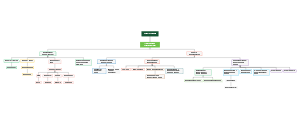
strategic map thinking
Principle: Taking the most important financial level, customer level, internal process level, and learning and growth level of the enterprise as the core, a corporate strategic cause and effect diagram is drawn by analyzing the interrelationships of these four levels of goals.
Core: Entrepreneurs, managers, corporate compliance officers, accountants, etc., plan the overall corporate plan from multiple levels, including finance, customers, processes, culture and their relationships.
four dimensions
finance
Measurements using traditional financial performance indicators, such as return on investment, reflect the results of corporate strategy implementation.
This can only be achieved if the target customers are satisfied.
Emphasizing the long-term nature of shareholder value, shareholder value is divided into
productivity strategy
Practices that consider the short-term financial results of a business, such as reducing costs and accelerating asset turnover.
growth strategy
Emphasize the realization of long-term financial results of the enterprise, such as focusing on improving customer value and increasing revenue opportunities.
client
Define target customer value propositions from the aspects of products, services, customer relationships, etc. The core is the coordination of corporate behavior and customer value propositions.
The customer value proposition describes how to increase sales and customer satisfaction.
The measurement indicators of the customer dimension are mainly customer satisfaction, customer retention rate, customer acquisition rate, customer profitability, market share and customer share.
internal process
Identified a small number of key processes that have the greatest impact on strategy
Operation management process
To produce and provide products and services to customers.
Content: Identify suppliers, obtain raw materials, make raw materials into products, distribute to customers, provide services, and manage risks.
Customer management process
Used to improve customer value, expand and deepen relationships with target customers, and align with customer dimensions.
Content: Selecting customers, acquiring customers, retaining customers and nurturing customer relationships.
innovation process
Used to acquire new markets and new customers, in line with the learning and growth dimension.
Content: Identify new product and service opportunities, manage the R&D portfolio, design and develop new products and services, and bring new products and services to market.
Regulations write social processes
Create a business environment for enterprises and shoulder the social responsibilities of corporate citizens.
Content: Environmental protection, safety and health, employee employment, community investment.
Create and communicate customer value proposition.
Learn and grow
Three types of intangible assets that support strategy and corporate value creation were identified
human capital
information capital
organizational capital
Three types of intangible assets are the basis for supporting strategy implementation.
Steps to draw a strategy map
1||| Determine the strategic statement based on the company's strategic choices.
2||| Clearly describe the overall company goals.
3||| Determine the focus of the company's financial growth based on the company's strategic statement.
4||| Determine the customer value proposition for the market.
5||| Identify those internal processes that have the greatest impact on attracting and retaining customers in target markets and achieving financial target growth.
6||| Determine how to close the gap between the capabilities of existing people, technology systems and culture and the capabilities required to achieve breakthrough strategic goals to meet the needs of key internal processes and customer value initiatives.
7||| According to the company's strategic priorities, strategic measurement indicators at each level are determined by combining strategies at the financial, customer, internal management, learning and growth levels.
8||| Secondly decompose the strategic map, establish sub-maps, and gradually implement performance goals and strategic actions to departments and individuals.
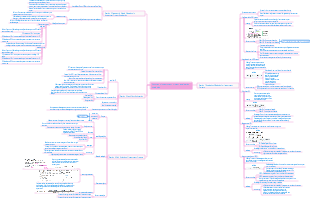
cyclical thinking
The economic cycle refers to the regular expansion and contraction of economic activities along the overall trend of economic development. It is the alternation or cyclical fluctuation of expansion and contraction of national income or overall economic activity.
It is divided into four stages: prosperity (peak), recession, depression (trough), and recovery (expansion).
After the economic recession, the company's products are unsaleable, the company's operating conditions deteriorate, dividends and dividends are reduced, and the stock price drops.
When the economy recovers, the sales of the company's products begin to increase, the company's operating conditions improve, the company pays dividends and dividends, and the stock price gradually rebounds.
When the economy reaches prosperity, corporate profits are good, dividends and bonuses increase, and stock prices rise sharply.
It manifests itself as the “bottom-buying” mentality in corporate investment and financing.
Countercyclical (internal) investing
Countercyclical (outside) mergers and acquisitions
Recruiting talented people during low times
Increase investment in R&D and new product development
The value of cycle thinking
Countercyclical investments should be carried out under a clear strategy and pursue strategic investments without seeking short-term arbitrage.
Countercyclical investment is a capital strategy, and its implementation must ensure the security of the capital chain of existing businesses. Positive free cash flow (FCF) is the determinant of a company's intrinsic value and the ultimate guarantee of its debt solvency.
Taking advantage of the economic downturn to implement the "active action" strategy, "anti-market expansion" and "sell high, buy low", the criterion is the long-term profit potential of the assets.
cycle management
Develop a cyclical strategy
Coping with economic cycles
Expansion and contraction strategies
Fund Management and Financing
Optimize product cycle
Product life cycle management
Innovation and iteration
Risk control
Risk identification and assessment
market risk
credit risk
Risk Mitigation Measures
Diversified investment
Insurance and Hedging Strategies
periodic financial planning
Budgeting
periodic budget adjustments
Adjust your budget to the economic cycle
Adjust the budget according to the business cycle
Flexibility and adaptability
Establish a flexible budget system
Budget adjustments to adapt to market changes
cash flow management
cyclical cash flow forecasts
revenue forecast
Spending Forecast
Liquidity management
Maintain adequate cash reserves
Optimize accounts receivable and payable
periodic performance review
Periodic analysis of performance indicators
Choose appropriate performance indicators
financial indicators
non-financial indicators
periodic performance review
Compare to industry standards
Compare with historical data
performance improvement measures
Identify performance gaps
Analyze the reasons
Develop an improvement plan
Implement performance improvements
Adjust business processes
Optimize resource allocation
Periodic compliance monitoring
Compliance risk identification
Periodic Compliance Risk Assessment
Legal and regulatory changes
Internal policy update
Compliance risk monitoring mechanism
Create a risk database
Regular audits and inspections
Compliance improvement strategies
Employee training and awareness raising
Regular compliance training
Compliance culture promotion
Technology and process optimization
Introducing compliance management software
Optimize compliance process design