MindMap Gallery Corporate Finance CFA
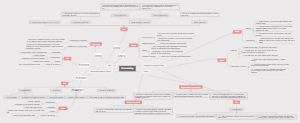
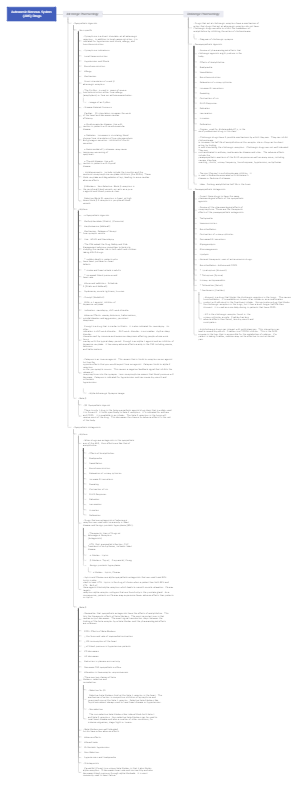
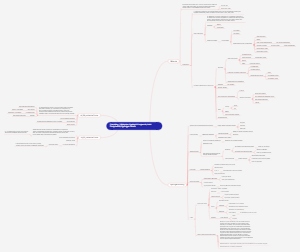
This is a mind map about CFA in corporate finance. Corporate finance is an important area that helps companies make wise financial decisions to maximize value and achieve long-term sustainable development.
Edited at 2023-12-25 10:56:34This is a mind map about bacteria, and its main contents include: overview, morphology, types, structure, reproduction, distribution, application, and expansion. The summary is comprehensive and meticulous, suitable as review materials.
This is a mind map about plant asexual reproduction, and its main contents include: concept, spore reproduction, vegetative reproduction, tissue culture, and buds. The summary is comprehensive and meticulous, suitable as review materials.
This is a mind map about the reproductive development of animals, and its main contents include: insects, frogs, birds, sexual reproduction, and asexual reproduction. The summary is comprehensive and meticulous, suitable as review materials.
This is a mind map about bacteria, and its main contents include: overview, morphology, types, structure, reproduction, distribution, application, and expansion. The summary is comprehensive and meticulous, suitable as review materials.
This is a mind map about plant asexual reproduction, and its main contents include: concept, spore reproduction, vegetative reproduction, tissue culture, and buds. The summary is comprehensive and meticulous, suitable as review materials.
This is a mind map about the reproductive development of animals, and its main contents include: insects, frogs, birds, sexual reproduction, and asexual reproduction. The summary is comprehensive and meticulous, suitable as review materials.
Corporate Finance
Chapter 2 Cash Flow, Asset Balance, Income Statement
Liquidity: How quickly and easily an asset can be converted into cash
In the asset structure, creditors have priority to claim the company's cash flow, and shareholders have the right to claim the residual value.
Cash flow from assets = Cash flow to bondholders Cash flow from shareholders
Cash flow from assets CFFA = OCF - NCS net capital expenditure - net working capital change △NWC
OCF=EBIT D-T
NWC=end of period FC-beginning of period FC D
△NCS=Net working capital at the end of the period - Beginning of the period
Cash flow to creditors = Interest expense – Net new borrowing
Cash flow to shareholders = dividend payment – net amount of new shares issued
Chapter 6 Annuity Calculation
multi-period cash flow
Final value calculation: FV=PV(1 R)∧n
subtopic
Present value formula PV=C/(1 R)∧n
perpetuity
Present value formula: PV=C/r (1-1/(1 r)∧n)
(1-1/(1 r)∧n)/r annuity present value interest factor
Final value formula: FV=C/R((1 R)∧n-1)
Perpetual Growth Annuity
PV=C/(R-g)
EAR and APR
EAR=(1 APR/m)∧m-1 annual interest rate
APR=m((1 EAR)∧(1/m)-1)
Chapter 7 Interest Rates and Bond Valuation
bond
Bond value=face value face value
Interest rates have a direct impact on bond prices. When the market When interest rates are on the market, bond prices fall; when market interest rates fall, bond prices rise.
NOTE: WHY
Yield to maturity = [annual interest income face value - purchase price - number of years to maturity] / buyer
Bond value=C/r[1-1/(1 r)^t] FV/(1 r)^t
Interest Rate Risk
price risk
reinvestment risk
income
Current income = annual interest/price
Maturity income = current yeild capital gain yeild (capital gain)
Government Bonds
Federal Government Bonds/Municipal Bonds
Real interest rate: interest rate after inflation Nominal interest rate: interest rate without inflation
Fisher's formula 1 R=(1 r)(1 h) R is the nominal interest rate r is the real interest rate h is expected inflation
term structure
Chapter 8 Stock Valuation
common stock estimates
cash flow
P0=[D P1]/1 R
P0=D1/(1 R) D2/(1 R)^2 .... Pn/(1 R)^n
The stock price can be expressed as the present value moving towards infinity from a certain period Stock price is the present value of future dividends
Several special cases
zero growth
P0=D/R
Steady growth
P0=D1/R-g
required rate of return
R=D1/P0 g [R is the necessary rate of return]
R = dividend yield capital gains
multiplier estimation method
PE ratio is the earnings per share of the previous year in the first year of junior high school
Dynamic P/E ratio: 1-b/R-g
Static P/E ratio: (1-b)(1 g)/R-g
Chapter 9 Net Present Value and Other Investment Estimations
Net present value (NPV) The difference between an investment’s market value and its cost
Estimated net present value
1. Discounted cash flow valuation method
NPV = present value of all future cash flows - initial investment amount
NPV=PV-C0=∑Ct/(1 r)^t-C0
payback period rule The time it takes to recoup our initial investment
PB=[Number of years in which cumulative net cash flow has been positive]-1 [Absolute value of cumulative cash flow in the previous year/current year’s cash flow]
discounted payback period When the sum of discounted cash flows equals the initial investment, the length of time
∑Ct/(1 r)^t=C0
average accounting rate of return
Average accounting rate of return: average net profit/average book value
Average book value = [initial investment project net residual value]/2
Internal Rate of Return (IRR)
NPV=0: ∑CFi/(1 IRR)ⁱ=CF0
IRR=i1 (i2-i1)|NPV|/(|NPV1| |NPV2|
Chapter 16 Capital Costs and Long-Term Financial Policy
Financial leverage: a company's reliance on debt
DEL (financial leverage factor)=△EPS/EPS/△EBIT/EBIT=EBIT/EBIT-interest
Pay attention to critical EBIT
After using financial leverage, EPS is more sensitive to changes in EBIT
The effect of a company's financial leverage depends on the company's EBIT
operating leverage
Operating leverage measure DOL=△OCF/OCF/△Q/Q=1 FC/OCF
DOL=△EBIT/EBIT/△Q/Q=Q(P-VC)/Q(P-VC)-FC=S-TVC/S-TVC-FC
1FC/EBITorOCF
Total financial leverage
DTL=DOL*DFL=%△EPS/%△sale=S-TVC/S-TVC-FC-1
Capital Structure
MM first theory and second theory
No tax
first theory
Vl=Vu
second theory
Re=Ra (Ra-Rd)*(D/E)
Ra=Rwacc=【D/D E】Rd 【E/D E】Re
Nothing to do with the pie chart model Nothing to do with financial leverage
subtopic
There is tax
First theorem
Interest tax shield=(Td*D*Rd)/Rd=Tc*D
Vl=Vu Tc*D
Vu=EBIT*(1-Tc)/Ru(capital cost)
second theorem
WACC=(E/V)*Re (D/V)*Rd*(1-Tc)
Re=Ru (Ru-Rd)*(D/E)*(1-Tc)
V=E D
bankruptcy costs
indirect, direct, agency costs
optimal capital structure
Static capital structure theory (capital and operations are fixed)
The tax shield generated by each dollar of additional debt is exactly the cost of the increased probability of financial distress.
pie chart model
pecking order
Prefer internal financing
Chapter 14 Capital Cost
capital cost
Weighted average cost of capital: WACC=Wd[Kd(1-t)] Wps[Kps] WceKs
Wd represents the weight of debt; Wps represents the weight of preferred stock; Wce represents the weight of common equity.
Kd=cost of debt using yield to maturity and debt reting approach
Ks is the cost of equity
Dividend growth model DDM model
P0=D1/(Ks-g) ;D1/(Re-g); Re=D1/Po g
DDM method
Ks=bond yield risk premium
CPAM method
Re=Rf βe(Rm-Rf)
Rf risk-free rate
Rm-Rf is the market risk premium
β is the systematic risk of an asset relative to the average asset
Cost of Debt: The rate of return required by a company’s creditors for new borrowings
βassert=βdWd βeWe; Wd=E/E (1-t)D β*a=βe[1/(1 (1-t)D/E)] βnewe=β*a[1 (1-t*)D*/E*] D*,E* represent new debt and equity
CPAM method: CRP is the urban risk premium
Kce=Rf β[Rm-Rf cRP]
CRP = sovereign bond return [annual standard deviation of new country stock index/annualized standard deviation of developed country sovereign bond market]
preferred stock cost
Rp=D/P0
Weighted average cost and business valuation
No debt, suitable for CFFA/CFA*
CFA*=EBIT (1-Tc) Depreciation-change in NWC-capital spending
V0=CFA*/(WACC-g) VO company’s current value
Vt=CFAt 1/(WACC-g) The value of the company at time t
marginal cost of capital
break point
issuance cost
Basic method: fa=(E/V)fe (D/V)fd; Actual cost including issuance costs: raised funds/(1-fa)
Issuance costs and NPV
WACC=(E/V)Re (D/V)Rd(1-Tc) PV=C/WACC NPV=PV-C
Chapter 13
risk premium
Take risks and you'll be rewarded
Systemic risk (the systematic risk principle)
Market risk (GDP, interest rates)
The expected return on an asset depends on systematic risk
unsystematic risk
Unique risks/specific risks
expected return
E(R)=∑PiRi
Risk premium = E (R) - risk-free rate of return
Risk-free rate of return: no risk of default
variance
∑Pi(Ri-∑PiRi)^2
portfolio
E(Rp)=∑WiE(RJ)
The risk-return trade-off of a portfolio is related by the portfolio's expected return to its standard deviation
variance
ERp=w1R1…WiRi
σ^2=∑Pi(Ri-∑ERiWi)
Total reward = expected return unexpected return
Unexpected returns = systematic risk unsystematic risk
efficient market
declare
Decentralized
Measuring Systemic Risk
Beta coefficient β
The larger β, the greater the systemic risk
Risk-reward ratio = [E(Ra)-Ra]/βa=risk premium/beta coefficient (slope)
capital asset pricing model
E(Ri)=Rf [E(Rm)-Rf]×βi
expected rate of return on a specific asset
pure time value of money
The rewards of taking systemic risk
Systemic risk size
Chapter 11 Project Analysis and Estimation
Predictive analytics
Sensitivity analysis
Simulation analysis
Break-even analysis
fixed cost
Variable costs
marginal cost
total cost
TC=VCFC
Accounting break-even point analysis
Project net profit=0
NI=0=(sales-VC-FC-D)(1-T)
Q=FC D/P-V
Cash flow balance point OCF=0
Q=FC OCF/P-V
financial balance point
NPV=0
Finance>Accounting>Cash Flow
Chapter 10 Capital Investment Decisions
Sunk costs
Costs that have been paid, or debts that have been incurred that need to be repaid
opportunity cost
Give up A and gain the interest in B
collateral effects
negative side effects
net operating cost
Financing costs
depreciation
MACS
Once the taxable life of an asset is determined, depreciation is calculated each year by multiplying the asset by a fixed percentage.
additional depreciation
book value vs. market value
Book value=initial cost -accoumulated depreciation After-tax salvage=salvage-T*(salvage-book value at time of sale)
Maker value-t(Marker Value-Book value)=After-tax Salvage
Direct depreciation and accumulated depreciation
Cash flow interpretation
Total cash flow =OCF △NWC-capital expenditure
OCF=EBIT-T D
INOCF=SaIT NWCInV-T(SaiT-BT)BT (book value of fixed capital)
Capital expenditure = net fixed capital depreciation
Find OCF method
Bottow-up approachbottom-up approach
net income=EBIT-Tax
OCF=net income D
top-down approach
OCF=Sale-Cost-tax
tax shield approach
OCF=(Sale-Cost)*(1-Tc) D*T
OCF=EBIT D-T
Discounted Cash Flow Analysis
Replacement project
initial outiay=FclnV NWClnV-[salo-(salo-B0)T] for the after-tax net residual value of the old assets
Incremental operating cash flow: △CF= (△S-△C) (1-T) △D*T (depreciation of new equipment - depreciation of old equipment)
Set bid price
Evaluate alternative equipment with different lifetimes
EAC equivalent annual cost: by discounting future cash flows to present value
M&A Valuation
Corporate Finance
Chapter 2 Cash Flow, Asset Balance, Income Statement
Liquidity: How quickly and easily an asset can be converted into cash
In the asset structure, creditors have priority to claim the company's cash flow, and shareholders have the right to claim the residual value.
Cash flow from assets = Cash flow to bondholders Cash flow from shareholders
Cash flow from assets CFFA = OCF - NCS net capital expenditure - net working capital change △NWC
OCF=EBIT D-T
NWC=end of period FC-beginning of period FC D
△NCS=Net working capital at the end of the period - Beginning of the period
Cash flow to creditors = Interest expense – Net new borrowing
Cash flow to shareholders = dividend payment – net amount of new shares issued
Chapter 6 Annuity Calculation
multi-period cash flow
Final value calculation: FV=PV(1 R)∧n
subtopic
Present value formula PV=C/(1 R)∧n
perpetuity
Present value formula: PV=C/r (1-1/(1 r)∧n)
(1-1/(1 r)∧n)/r annuity present value interest factor
Final value formula: FV=C/R((1 R)∧n-1)
Perpetual Growth Annuity
PV=C/(R-g)
EAR and APR
EAR=(1 APR/m)∧m-1 annual interest rate
APR=m((1 EAR)∧(1/m)-1)
Chapter 7 Interest Rates and Bond Valuation
bond
Bond value=face value face value
Interest rates have a direct impact on bond prices. When the market When interest rates are on the market, bond prices fall; when market interest rates fall, bond prices rise.
NOTE: WHY
Yield to maturity = [annual interest income face value - purchase price - number of years to maturity] / buyer
Bond value=C/r[1-1/(1 r)^t] FV/(1 r)^t
Interest Rate Risk
price risk
reinvestment risk
income
Current income = annual interest/price
Maturity income = current yeild capital gain yeild (capital gain)
Government Bonds
Federal Government Bonds/Municipal Bonds
Real interest rate: interest rate after inflation Nominal interest rate: interest rate without inflation
Fisher's formula 1 R=(1 r)(1 h) R is the nominal interest rate r is the real interest rate h is expected inflation
term structure
Chapter 8 Stock Valuation
common stock estimates
cash flow
P0=[D P1]/1 R
P0=D1/(1 R) D2/(1 R)^2 .... Pn/(1 R)^n
The stock price can be expressed as the present value moving towards infinity from a certain period Stock price is the present value of future dividends
Several special cases
zero growth
P0=D/R
Steady growth
P0=D1/R-g
required rate of return
R=D1/P0 g [R is the necessary rate of return]
R = dividend yield capital gains
multiplier estimation method
PE ratio is the earnings per share of the previous year in the first year of junior high school
Dynamic P/E ratio: 1-b/R-g
Static P/E ratio: (1-b)(1 g)/R-g
Chapter 9 Net Present Value and Other Investment Estimations
Net present value (NPV) The difference between an investment’s market value and its cost
Estimated net present value
1. Discounted cash flow valuation method
NPV = present value of all future cash flows - initial investment amount
NPV=PV-C0=∑Ct/(1 r)^t-C0
payback period rule The time it takes to recoup our initial investment
PB=[Number of years in which cumulative net cash flow has been positive]-1 [Absolute value of cumulative cash flow in the previous year/current year’s cash flow]
discounted payback period When the sum of discounted cash flows equals the initial investment, the length of time
∑Ct/(1 r)^t=C0
average accounting rate of return
Average accounting rate of return: average net profit/average book value
Average book value = [initial investment project net residual value]/2
Internal Rate of Return (IRR)
NPV=0: ∑CFi/(1 IRR)ⁱ=CF0
IRR=i1 (i2-i1)|NPV|/(|NPV1| |NPV2|
Chapter 16 Capital Costs and Long-Term Financial Policy
Financial leverage: a company's reliance on debt
DEL (financial leverage factor)=△EPS/EPS/△EBIT/EBIT=EBIT/EBIT-interest
Pay attention to critical EBIT
After using financial leverage, EPS is more sensitive to changes in EBIT
The effect of a company's financial leverage depends on the company's EBIT
operating leverage
Operating leverage measure DOL=△OCF/OCF/△Q/Q=1 FC/OCF
DOL=△EBIT/EBIT/△Q/Q=Q(P-VC)/Q(P-VC)-FC=S-TVC/S-TVC-FC
1FC/EBITorOCF
Total financial leverage
DTL=DOL*DFL=%△EPS/%△sale=S-TVC/S-TVC-FC-1
Capital Structure
MM first theory and second theory
No tax
first theory
Vl=Vu
second theory
Re=Ra (Ra-Rd)*(D/E)
Ra=Rwacc=【D/D E】Rd 【E/D E】Re
Nothing to do with the pie chart model Nothing to do with financial leverage
subtopic
There is tax
First theorem
Interest tax shield=(Td*D*Rd)/Rd=Tc*D
Vl=Vu Tc*D
Vu=EBIT*(1-Tc)/Ru(capital cost)
second theorem
WACC=(E/V)*Re (D/V)*Rd*(1-Tc)
Re=Ru (Ru-Rd)*(D/E)*(1-Tc)
V=E D
bankruptcy costs
indirect, direct, agency costs
optimal capital structure
Static capital structure theory (capital and operations are fixed)
The tax shield generated by each dollar of additional debt is exactly the cost of the increased probability of financial distress.
pie chart model
pecking order
Prefer internal financing
Chapter 14 Capital Cost
capital cost
Weighted average cost of capital: WACC=Wd[Kd(1-t)] Wps[Kps] WceKs
Wd represents the weight of debt; Wps represents the weight of preferred stock; Wce represents the weight of common equity.
Kd=cost of debt using yield to maturity and debt reting approach
Ks is the cost of equity
Dividend growth model DDM model
P0=D1/(Ks-g) ;D1/(Re-g); Re=D1/Po g
DDM method
Ks=bond yield risk premium
CPAM method
Re=Rf βe(Rm-Rf)
Rf risk-free rate
Rm-Rf is the market risk premium
β is the systematic risk of an asset relative to the average asset
Cost of Debt: The rate of return required by a company’s creditors for new borrowings
βassert=βdWd βeWe; Wd=E/E (1-t)D β*a=βe[1/(1 (1-t)D/E)] βnewe=β*a[1 (1-t*)D*/E*] D*,E* represent new debt and equity
CPAM method: CRP is the urban risk premium
Kce=Rf β[Rm-Rf cRP]
CRP = sovereign bond return [annual standard deviation of new country stock index/annualized standard deviation of developed country sovereign bond market]
preferred stock cost
Rp=D/P0
Weighted average cost and business valuation
No debt, suitable for CFFA/CFA*
CFA*=EBIT (1-Tc) Depreciation-change in NWC-capital spending
V0=CFA*/(WACC-g) VO company’s current value
Vt=CFAt 1/(WACC-g) The value of the company at time t
marginal cost of capital
break point
issuance cost
Basic method: fa=(E/V)fe (D/V)fd; Actual cost including issuance costs: raised funds/(1-fa)
Issuance costs and NPV
WACC=(E/V)Re (D/V)Rd(1-Tc) PV=C/WACC NPV=PV-C
Chapter 13
risk premium
Take risks and you'll be rewarded
Systemic risk (the systematic risk principle)
Market risk (GDP, interest rates)
The expected return on an asset depends on systematic risk
unsystematic risk
Unique risks/specific risks
expected return
E(R)=∑PiRi
Risk premium = E (R) - risk-free rate of return
Risk-free rate of return: no risk of default
variance
∑Pi(Ri-∑PiRi)^2
portfolio
E(Rp)=∑WiE(RJ)
The risk-return trade-off of a portfolio is related by the portfolio's expected return to its standard deviation
variance
ERp=w1R1…WiRi
σ^2=∑Pi(Ri-∑ERiWi)
Total reward = expected return unexpected return
Unexpected returns = systematic risk unsystematic risk
efficient market
declare
Decentralized
Measuring Systemic Risk
Beta coefficient β
The larger β, the greater the systemic risk
Risk-reward ratio = [E(Ra)-Ra]/βa=risk premium/beta coefficient (slope)
capital asset pricing model
E(Ri)=Rf [E(Rm)-Rf]×βi
expected rate of return on a specific asset
pure time value of money
The rewards of taking systemic risk
Systemic risk size
Chapter 11 Project Analysis and Estimation
Predictive analytics
Sensitivity analysis
Simulation analysis
Break-even analysis
fixed cost
Variable costs
marginal cost
total cost
TC=VCFC
Accounting break-even point analysis
Project net profit=0
NI=0=(sales-VC-FC-D)(1-T)
Q=FC D/P-V
Cash flow balance point OCF=0
Q=FC OCF/P-V
financial balance point
NPV=0
Finance>Accounting>Cash Flow
Chapter 10 Capital Investment Decisions
Sunk costs
Costs that have been paid, or debts that have been incurred that need to be repaid
opportunity cost
Give up A and gain the interest in B
collateral effects
negative side effects
net operating cost
Financing costs
depreciation
MACS
Once the taxable life of an asset is determined, depreciation is calculated each year by multiplying the asset by a fixed percentage.
additional depreciation
book value vs. market value
Book value=initial cost -accoumulated depreciation After-tax salvage=salvage-T*(salvage-book value at time of sale)
Maker value-t(Marker Value-Book value)=After-tax Salvage
Direct depreciation and accumulated depreciation
Cash flow interpretation
Total cash flow =OCF △NWC-capital expenditure
OCF=EBIT-T D
INOCF=SaIT NWCInV-T(SaiT-BT)BT (book value of fixed capital)
Capital expenditure = net fixed capital depreciation
Find OCF method
Bottow-up approachbottom-up approach
net income=EBIT-Tax
OCF=net income D
top-down approach
OCF=Sale-Cost-tax
tax shield approach
OCF=(Sale-Cost)*(1-Tc) D*T
OCF=EBIT D-T
Discounted Cash Flow Analysis
Replacement project
initial outiay=FclnV NWClnV-[salo-(salo-B0)T] for the after-tax net residual value of the old assets
Incremental operating cash flow: △CF= (△S-△C) (1-T) △D*T (depreciation of new equipment - depreciation of old equipment)
Set bid price
Evaluate alternative equipment with different lifetimes
EAC equivalent annual cost: by discounting future cash flows to present value
M&A Valuation