MindMap Gallery IPQC team leader’s daily work arrangements and plans
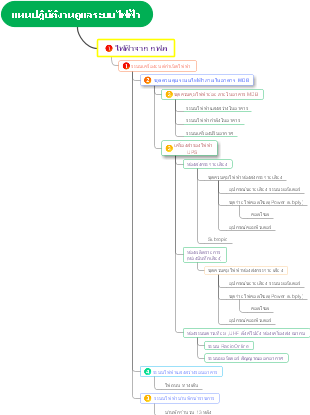
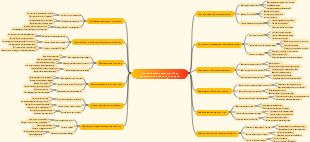
This is a mind map about the daily work arrangements and plans of the IPQC team leader, including morning meeting deployment, regular inspections, first article inspection, patrol inspection, importance of first article inspection, employee skill improvement, etc.
Edited at 2024-10-14 12:18:46In order to help everyone use DeepSeek more efficiently, a collection of DeepSeek guide mind map was specially compiled! This mind map summarizes the main contents: Yitu related links, DS profile analysis, comparison of DeepSeek and ChatGPT technology routes, DeepSeek and Qwen model deployment guide, how to make more money with DeepSeek, how to play DeepSeek, DeepSeek scientific research Application, how to import text from DeepSeek into MindMaster, the official recommendation of DeepSeek Wait, allowing you to quickly grasp the essence of AI interaction. Whether it is content creation, plan planning, code generation, or learning improvement, DeepSeek can help you achieve twice the result with half the effort!
This is a mind map about DeepSeek's 30 feeding-level instructions. The main contents include: professional field enhancement instructions, interaction enhancement instructions, content production instructions, decision support instructions, information processing instructions, and basic instructions.
This is a mind map about a commercial solution for task speech recognition. The main content includes: text file content format:, providing text files according to the same file name as the voice file.
In order to help everyone use DeepSeek more efficiently, a collection of DeepSeek guide mind map was specially compiled! This mind map summarizes the main contents: Yitu related links, DS profile analysis, comparison of DeepSeek and ChatGPT technology routes, DeepSeek and Qwen model deployment guide, how to make more money with DeepSeek, how to play DeepSeek, DeepSeek scientific research Application, how to import text from DeepSeek into MindMaster, the official recommendation of DeepSeek Wait, allowing you to quickly grasp the essence of AI interaction. Whether it is content creation, plan planning, code generation, or learning improvement, DeepSeek can help you achieve twice the result with half the effort!
This is a mind map about DeepSeek's 30 feeding-level instructions. The main contents include: professional field enhancement instructions, interaction enhancement instructions, content production instructions, decision support instructions, information processing instructions, and basic instructions.
This is a mind map about a commercial solution for task speech recognition. The main content includes: text file content format:, providing text files according to the same file name as the voice file.
IPQC team leader’s daily work arrangements and plans personal resource management
Morning meeting deployment
Summary of abnormal problem points
Review of yesterday’s issues
Review the key quality issues that occurred in yesterday's production, including the specific number and type of defective products, analyze the number and type of defective products, and the initial corrective measures that have been taken, and discuss their room for improvement.
Today’s key tasks
Clarify the focus of the day's inspection, determine the quality control points that require special attention during the production process, and ensure that key links meet standards to prevent potential problems from occurring.
Assign team members tasks
According to the professional skills and workload of team members, inspection tasks are reasonably allocated to ensure that each area is assigned a dedicated person to improve work efficiency.
Emphasis on collaboration and communication
Encourage information sharing and instant communication among team members to quickly respond and solve unexpected quality problems and maintain a smooth production process.
Analysis of recent batch defects
Summarize batch adverse events in the recent period, identify processes and causes with high incidence of problems, discuss their long-term impact on production quality, and formulate special improvement plans.
Check regularly
Testing tool calibration: Ensure the accuracy of testing tools and perform regular calibration to maintain the consistency and reliability of product quality.
Operating specifications: Ensure that each employee is familiar with and abides by the operating procedures, conduct regular operating process training, improve the level of operational standardization, and reduce human errors.
Accident prevention measures: Implement regular equipment inspections and maintenance, establish emergency response plans, improve employees' emergency handling capabilities through simulation drills, and ensure rapid and effective response when accidents occur.
first article inspection
Before the first article is produced, the product drawings and process documents are checked according to the company's process specifications, and the production equipment and process parameters are set correctly to ensure that the first article production meets the design requirements.
Record inspection results: Record the inspection data of key indicators such as size, appearance, performance, etc. of the first product in detail to form a complete inspection report to ensure traceability
Exception handling process: When a deviation is found in the first product, the exception handling program is immediately launched to analyze the cause and formulate corrective measures to prevent the same problem from occurring in mass production.
Tour inspection
Regular inspections of production lines: Ensure at least three comprehensive inspections per shift, focusing on the operating specifications of key processes and equipment operating status to prevent potential quality risks.
Record production data: Record key data such as output, yield, and abnormal conditions in detail, and use the real-time monitoring system for data synchronization to quickly analyze production efficiency and product quality.
Immediate feedback on quality problems: Once quality abnormalities are discovered, relevant processes will be stopped immediately, the quality management department and technical team will be notified to intervene, and corrective measures will be formulated and implemented to prevent the problem from expanding.
The importance of first article inspection
Prevent batch defects
First-piece inspection can effectively prevent the occurrence of batch defects. Through the first inspection, it is confirmed that the product meets the quality standards and prevents unqualified products from flowing into the next production link.
Ensure production quality consistency
Through careful inspection of the first product, we ensure quality consistency in subsequent production processes and reduce quality problems caused by process deviations.
Improve production efficiency
Timely discover and correct problems in the production process to reduce rework and scrap rates, improve production efficiency and reduce production costs.
Problem logging and tracking
Record the problems discovered in detail, including time, location, people involved and the nature of the problem, track the implementation of problem rectification measures, and evaluate the rectification effect.
Improve plan development
In response to quality problems in the production process, detailed improvement measures are formulated, such as optimizing processes, updating equipment, improving employee skill training, etc., to ensure the feasibility and effectiveness of the plan.
Employee skills improvement
Regular training plan
Develop periodic skills training courses covering basic knowledge and practical exercises to ensure that employee skills are updated in sync with industry development.
Operation skills assessment
Implement a regular skills assessment mechanism to assess employees' practical application abilities through simulated operations and case analysis, provide timely feedback and provide improvement suggestions.
New employee orientation
Establish a mentor system, where experienced old employees will lead new employees to quickly integrate into the team, impart practical skills, and accelerate the growth process of new employees.
Quality problem analysis
root cause investigation
Conduct in-depth analysis of the root causes of quality problems, and use tools such as fishbone diagrams to identify potential influencing factors to ensure accurate problem location.
Develop preventive measures
Based on the findings, targeted preventive measures are developed, including process optimization, employee training, and technology upgrades, to prevent the problem from recurring.
Continuous improvement proposals
Propose suggestions for continuous improvement, such as regular quality reviews, introducing new technology monitoring methods and establishing feedback mechanisms to promote the improvement of the quality management system.
Summary of the day’s work
Completion review
Summarize the completion progress of each task for the day, including projects that have reached standards and links that need to be optimized.
Problems encountered and solutions
List key issues and provide targeted solutions, emphasizing the efficiency and effectiveness of problem handling.
Tomorrow’s job preview
Briefly describe the focus of the next day's work, including expected goals and strategies to be adopted.
Data compilation and reporting
Quality data summary
Collect key quality indicators in the production process on that day, including but not limited to product qualification rate, quantity and type of defective products, and related trend analysis.
Exception case archive
Record and classify quality abnormal events that occurred on that day in detail, including problem description, cause analysis, temporary countermeasures and long-term improvement measures to ensure the integrity and traceability of information.
Prepare reports to superiors
Based on the summarized data and archived abnormal cases, prepare concise and clear reporting materials with highlighted key points. Problem points, improvement measures and expected results allow management to quickly grasp the situation and make decisions.
instant feedback
On-site guidance and correction
Immediately point out operational deviations and provide correct demonstrations to ensure that the production process complies with standard specifications and reduce defective products.
Record problem details
Record the discovered problems in detail, including time, location, people involved and the nature of the problem, to provide accurate data support for subsequent analysis and improvement.
Track rectification effects
Supervise and record the implementation of problem rectification measures, evaluate the rectification effects, and ensure continuous improvement of the quality management system.
Determine daily work priorities
According to the four-quadrant rule, prioritize important and urgent tasks and allocate time and energy reasonably.
Information sharing channels established
Establish effective information sharing channels, such as WeChat groups or mailing lists, to ensure that quality issues and production information can be quickly communicated to every team member.