MindMap Gallery Classification of substances (1)
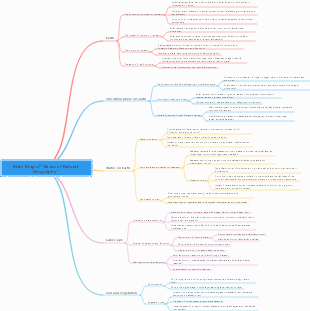
This is a mind map about the classification of matter (1). It summarizes and organizes the knowledge points to facilitate understanding and memory. It is suitable for exam review and preview to improve learning efficiency. Hurry and collect it to learn together!
Edited at 2024-10-13 19:45:45這是一篇關於把時間當作朋友的心智圖,《把時間當作朋友》是一本關於時間管理和個人成長的實用指南。作者李笑來透過豐富的故事和生動的例子,教導讀者如何克服拖延、提高效率、規劃未來等實用技巧。這本書不僅適合正在為未來奮鬥的年輕人,也適合所有希望更好地管理時間、實現個人成長的人。
This is a mind map about treating time as a friend. "Treating Time as a Friend" is a practical guide on time management and personal growth. Author Li Xiaolai teaches readers practical skills on how to overcome procrastination, improve efficiency, and plan for the future through rich stories and vivid examples. This book is not only suitable for young people who are struggling for the future, but also for everyone who wants to better manage time and achieve personal growth.
這七個習慣相輔相成,共同構成了高效能人士的核心特質。透過培養這些習慣,人們可以提升自己的領導力、溝通能力、團隊協作能力和自我管理能力,從而在工作和生活中取得更大的成功。
這是一篇關於把時間當作朋友的心智圖,《把時間當作朋友》是一本關於時間管理和個人成長的實用指南。作者李笑來透過豐富的故事和生動的例子,教導讀者如何克服拖延、提高效率、規劃未來等實用技巧。這本書不僅適合正在為未來奮鬥的年輕人,也適合所有希望更好地管理時間、實現個人成長的人。
This is a mind map about treating time as a friend. "Treating Time as a Friend" is a practical guide on time management and personal growth. Author Li Xiaolai teaches readers practical skills on how to overcome procrastination, improve efficiency, and plan for the future through rich stories and vivid examples. This book is not only suitable for young people who are struggling for the future, but also for everyone who wants to better manage time and achieve personal growth.
這七個習慣相輔相成,共同構成了高效能人士的核心特質。透過培養這些習慣,人們可以提升自己的領導力、溝通能力、團隊協作能力和自我管理能力,從而在工作和生活中取得更大的成功。
Classification and transformation of substances
mixture
Definition: A substance that is a mixture of two or more substances
Examples: air (containing nitrogen, oxygen, carbon dioxide and other substances), solution (such as salt water is composed of sodium chloride and water), alloy (such as pig iron is a mixture of iron and carbon, etc.)
pure substance
Definition: consisting of only one substance
Elemental substance
Definition: A pure substance composed of the same elements
Classification
Metal elements: such as iron (Fe), copper (Cu), aluminum (Al), etc., have metallic luster, good electrical conductivity, thermal conductivity and ductility
Non-metallic elements:
Solid non-metallic elements: such as carbon (C), sulfur (S), silicon (Si), etc.
Liquid non-metallic elements: such as bromine (Br₂)
Gaseous non-metallic elements: such as hydrogen (H₂), oxygen (O₂), nitrogen (N₂), etc.
compound
Definition: A pure substance composed of different elements
Oxide:
Classification:
Acidic oxides: Oxides that react with bases to form salts and water. For example, carbon dioxide (CO₂) reacts with sodium hydroxide (NaOH) to produce sodium carbonate (Na₂CO₃) and water.
Basic oxide: An oxide that reacts with acid to form salt and water. For example, calcium oxide (CaO) reacts with hydrochloric acid (HCl) to form calcium chloride (CaCl₂) and water
Amphoteric oxides: Oxides that can react with both acids and bases to form salts and water. For example, aluminum oxide (Al₂O₃)
acid:
Definition: A compound in which all cations ionized in an aqueous solution are hydrogen ions (H⁺)
Classification:
According to the number of ionizable hydrogen atoms in the acid molecule, it is divided into monobasic acids (such as hydrochloric acid HCl), dibasic acids (such as sulfate H₂SO₄), tribasic acids (such as phosphoric acid H₃PO₄), etc.
According to the strength of the acid, it is divided into strong acids (such as hydrochloric acid, sulfuric acid, nitric acid) and weak acids (such as acetic acid CH₃COOH)
According to the oxidizing properties of acids, they are divided into oxidizing acids (such as concentrated sulfuric acid, nitric acid) and non-oxidizing acids (such as hydrochloric acid, dilute sulfuric acid).
Salt:
Definition: A compound composed of a metal ion (or ammonium ion (NH₄⁺)) and an acid ion
Classification:
Normal salt: The product of complete neutralization of acid and base. Such as sodium chloride (NaCl), sodium sulfate (Na₂SO₄)
Acid salt: A product in which the hydrogen ions in an acid are partially neutralized. Such as sodium bicarbonate (NaHCO₃), sodium bisulfate (NaHSO₄)
-Basic salt: a product in which the hydroxide ions in the base are partially neutralized. Such as basic copper carbonate Cu₂(OH)₂CO₃
transformation of matter
Transformation relationships between elements, oxides, acids, bases, and salts
Metal element→alkaline oxide→alkali→salt
For example:
2Ca O₂ = 2CaO (metallic calcium is oxidized to alkaline oxide calcium oxide)
CaO H₂O = Ca(OH)₂ (the alkaline oxide calcium oxide reacts with water to form alkali calcium hydroxide).
Ca(OH)₂ CO₂ = CaCO₃↓ H₂O (alkali calcium hydroxide reacts with carbon dioxide to form the salt calcium carbonate).
Non-metallic element → acidic oxide → acid → salt
For example:
C O₂ = CO₂ (non-metallic carbon is oxidized to the acidic oxide carbon dioxide)
CO₂ H₂O = H₂CO₃ (acidic oxide carbon dioxide reacts with water to form acidic carbonic acid)
H₂CO₃ Ca(OH)₂ = CaCO₃↓ 2H₂O (acid carbonic acid reacts with alkali calcium hydroxide to form the salt calcium carbonate)
The relationship between types of chemical reactions and material transformations
Combination reaction: A reaction in which two or more substances produce a new substance.
For example: 2H₂ O₂ = 2H₂O, CaO H₂O = Ca(OH)₂
Decomposition reaction: a reaction in which one substance produces two or more other substances
-Example: 2H₂O = 2H₂↑ O₂↑, CaCO₃ = CaO CO₂↑
- Displacement reaction: A reaction in which one element and one compound react to form another element and another compound.
- For example: Fe CuSO₄ = FeSO₄ Cu, Zn 2HCl = ZnCl₂ H₂↑
Summary of the laws of material transformation
Changes in the valence state of elements: During the transformation of substances, the valence of elements may change. In a redox reaction, the valence of a compound increases or decreases; in a non-redox reaction, the valence of a compound does not change.
Influence of reaction conditions: Different material transformations require different reaction conditions, such as heating, ignition, catalysts, etc.
The properties of a substance determine the direction of transformation: the chemical properties of a substance determine the types of transformations it can undergo under specific conditions