MindMap Gallery 10 Muscular Tissue
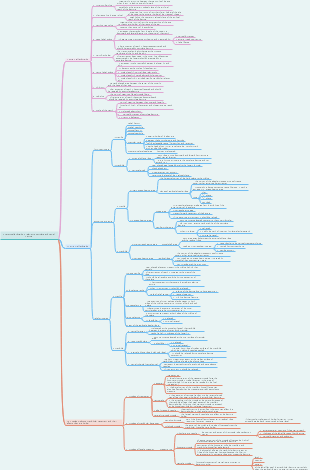
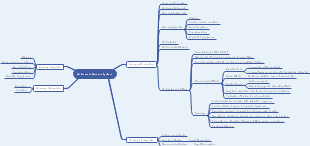
The mind map on 10 Muscular Tissue focuses on the types of muscular tissue, including smooth muscle, cardiac muscle, and skeletal muscle. It also elaborates on the types of muscle fibers, such as fast-twitch and slow-twitch fibers, and their different characteristics in terms of muscle contraction and endurance. Additionally, the mind map discusses the organizational levels within skeletal muscle, including fascicles, myofibrils, and sarcomeres, which collectively constitute the basic functional units of skeletal muscle.
Edited at 2024-11-01 04:00:4410 Muscular Tissue
Muscular Tissue - Contribution fo Homeostasis Producing body movments, moving substanaces through body Stablise posture, joints Produce heat to maintain normal body temperature Properties Excitability, Contractibility Extensibility Elasticity
Types of Muscular Tissue
Skeletal (e.g. bones)
voluntary, striated
Body movement, stablizing position & joints, generating heat/ thermogenesis
Cardiac (e.g. blood)
involuntary, striated
Autorhythmicity, hormone & neuro-transmitters
Intercalated discs, contain desmosomes & gap junctions
No epimysium, only Peri & Endo, contracted 10-15 times longer than Skeletal muscle tissue
Smooth (e.g. blood, food, hair, Instestine wall)
involuntary, nonstriated
Storing/ moving substance, sphincters
Common, Visceral (single-unit) s.m.t., in skin & tubular arrangements (walls of blood vessels, hollow organs)
Multi-unit s.m.t., individual fibers with its own motor neuron terminals, contract only the specific fiber only (Walls of large artery, airways, hair follicles, iris)
Structure: # Thick : Thin filament = 1:15-20, Intermediate filaments (no regular pattern of overlap), no striation, no Transverse tubules (instead, pouchlike caveolae Ca2+), dense bodies (Zdisc), contract rotates as corkscrew turns, opposite direction as relax
Physiology: Relative comparason, contraction starts slower, last much longer, Ca2+ from IS. Fluid & SR, calmodulin (regulatory protein) activates myosin light chain kinase,
Smooth muscle tone: continue partial contraction
Contract / relax response: S.M.fibers stretched considerably and still remain contratile function. Response to action potentials from autonomic nervous system, stretching, hormones, pH, O2, CO2 levels, temperature, ion concentration. e.g. hormone epinephrine (from adrenal medulla), relax SM in airway/ blood vessel walls.
Stress-relaxation response: S.M.fibers stretched, initially contract increase tension. Within 1min, tension decrease. e.g. walls of blood vessels and hollow organs, changes muscle fiber in length, organ in shape but limited pressure change

Types of Muscle Fibers
Red muscle fibers (darker, high myoglobin)
White muscle fibers (lighter, low myglobin
Functional classification
1. Slow oxidative (SO) fibers, twitch contraction 100-200msec, Aerobic, Red m.f., e.g. Maintain posture/ aerobic endurance activities
2. Fast oxidative-glycolytic (FOG) fibers, twitch contraction <100msec,, Aerobic & anaerobic, Red m.f., e.g. walking & sprinting
3. Fast glycolytic (FG) fibers, Anaerobic, Whiite m.f., e.g. rapid, intense movements of short duration
Levels of Organisation within Skeletal Muscle
Skeletal Muscle
Facicle (Muscular tissue)
Myocyte (Muscle Fiber cell)
Myofibril
Myofilament
Structure of Skeletal Muscle Tissue (SMT)
Subcutaneous layer (hypodermis) [separates muscle & skin]
Aveolar connective tissue (c.t.) + adipose c.t. (triglycerides for insulating) + Nerves (blood & lympatic vessels)
Fascia (dense sheet irregular c.t.), Line body wall [protect muscle/organ]
Skeletal Muscle (Bundle of *Fascicles)
Epimysium c.t. {outer c.t. Wrap *Perimysium}
Nerve + artery + 1-2 veins
Fascicle (Bundle of *Myocytes)
Perimysium c.t. {surround 10-100 *Fascicles}
Perimysium {inner c.t. Wrap Fascicle}
Nucleus + Blood capillaries + Somatic motor neuron
Endomysium {Wrap Myocyte}
Myocyte (Muscle fiber 4-10", Bundle of *Myofibrils)
Endomysium c.t. wrap sarcolemma
Sarcolemma
[Tranverse (T) tubules]
Sarcoplasmic Reticulum (SR) (Ca2+}
[Terminal cistern of SR]
Mitochondria (for ATP production)
Nucleus
Sarcoplasm (ICF.{contents})
Glycogen (for ATP syn.)
Myoglobin (Protein for O2 release @ mitochondria )
Myofibril (Bundle of *Filaments)
Myosin - Thick Protein Filaments (16nm diameter x 1-2 length um)
Actin - Thin Protein Filaments (8nm diameter x 1-2 length um)
Tendon (connection to bone periosteum or other muscles)
Examples: Tendon = Continuous extension of C.T. (Epi + Peri + Endo) e.g. calcaneal (Achilles) tendon @ Calf - heel bone Aponeurosis = C.T. extend as a broad, flat sheet of c.t. e.g. epicraial aponeuosis @ frontal - occipitofrontalis muscle
Epimysium c.t. cont. +
Perimysium c.t. cont. +
Endomysium c.t. cont.
Nerve & Blood Supply
Somatic motor neurons (Axon-Brain & S.cord)
Capillaries
[Supply O2, nutrients], [Remove heat and waste products]
Structure of Myofibrial
Contractile proteins are: Myosin, Motor protein (Thick Filament contains ~300 myosin molecules) Actin (Thin Fliaments) 6 Actin : 1 Myosin
Arrangment of Sarcomeres (Compartments between Z discs)
I band (thin filaments only)
Z disc (separator)
A band (overlapping filaments)
H zone (Thick filaments only)
M line [Centerline hold thick filaments]
I band (thin filaments only)
Z disc (separator)
Arrangment of Contractile Proteins
Myosin (Thick filament)
Myosin Heads
[Actin-binding site]
[ATP-binding site]
Myosin Tail
Actin (Thin filament), site Tn-I
[Myosin-binding site]
Regulatory Proteins: - Tropomyosin, covered - Troponin, opens
Tropomyosin_covers, siteTn-T
Troponin_opens (Ca2+ binding site), site Tn-C
Arrangment of Structural Proteins
Titin (Spring-back, link M-line, through thick filament, to Z-disc)
a-Actinin
Myomesin (M-line)
Nebulin (Thin filament)
Dystrophin (Links Actin & Sarcolemma to ECMatrix)
Regeneration of Musclar Tissue
Hypertrophy (Enlargment of existing cells) @ S.M., C.M., S.M.
Hyperplasia (Increase in number of fibers) e.g. uterus
**C.M. cannot be replaced, heal by fibrosis (scar tissue)
Control of Muscle Tension
Affecting factors
Frequency of stimulation
Amount of stretch before contraction
Nutrient and Oxygen availablility
Motor Units
# of Muscle Fibers per Motor Units
Somatic motor neuron + all Skeletal Muscle fibers it stimulates (150 m.fibers per unit)
Muscles controlling eye movement (10-20 m.f. per unit)
Larynx (2-3 m.f. per unit)
Calf (2k-3k per unit)
Motor unit recruitment
# of active motor units increases, not in unison, smooth recruitment
Twitch Contraction
Myogram = Record of muscle contraction (20-200 msec, msec=0.001sec)
Latent period (2msec)
Contraction period (10-100msec)
Relaxation period (10-100msec)
Refractory period (s.m. ~1msec; c.m.~250msec)
Two stimuli applied, one immediately after the other, muscle will respond to 1st stimulus but not to 2nd. It temporarily loses its excitability
Frequency of Stimulation
Single twitch
Wave summation
Unfused tetanus
Fused tetanus
Muscle tone
Small amount of tautness or tension due to weak involuntary contractions
Small groups of Motor units alternatively active/ inactive,
Steady pressure for Smooth muscle fibers e.g. gastroinstestinal tract, blood vessels.
Isotonic & Isometric Contraction
Isotonic contraction (equal tension)
concentric isotonic contraction = shorten, lifting book
eccentric isotonic contraction = lengthen, lowering book
Isometric contraction (tension generated < resistance to move an object), no change in muscle length, hold book. can assist stablilise some joints.
Muscle Metabolism
3 ways Production of ATP
1. Creatine phosphate (15s)
While muscle relax, ADP + Creatine phosphate => ATP + Creatine
2. Anerobic Glycolysis (2mins)
Muscle glycogen breakdown into => Glucose + 2 Pyruvic acid => Glysolysis + 2 ATP + 2 Lactic acid
3. Aerobic respiration (2mins-hrs)
Within mitochondria, pyruvic acid (glycolysis) or fatty acids (adipose cells) or amino acids (protein) + O2 => 30 or 32ATP + Co2 + H2O
Fatigue
Muscle Fatigue
Definition: Inability to maintain contraction force after prolonged activity
Central Fatigue
Definition: Desire to cease activity (brain, spinalcord)
Oxygen Consumption after exercise
Recovery oxygen uptake / Oxygen debt
added oxygen, over and above the rest oxygen consumption, that is taken into body after exercise
3 ways of Restoration of metabolic conditions to resting level
1. Convert lactic acid back into glycogen stores in liver
2. Resynthesize creatine phosphate and ATP in muscle fibers
3. Replace the oxygen removed from myoglobin
Contraction & Relaxation
Generation of Muscle action potential
1. Release of acetycholine (ACh)
2. Activation of ACh receptors
3. Production of muscle action potential at motor end plate
4. Termination of ACh activity
Acetylcholinesterase, Enzyme (AChE) break down ACh in sarcoplasm
Acetate
Choline
Sliding Filament Mechanism
Excitation-Contraction Coupling at triad (TCTTTC)
Excitation-Contraction coupling = The sequence of events between Excitation (muscle action potential) and Contraction (sliding of filaments) Muscle Contraction starts: Muscle action potential propagates along the sarcolemma into the T tubules, it cause the release of Ca2+ from SR to sarcoplasm Increase in Ca2+ concentration in sarcoplasm starts muscle contraction, a decrease stops it.
Voltage-gated Ca2+ channels @ Sacrolemma, transverse tubule (Tetrads, voltage sensor, trigger the opening of channel)
Terminal cisterns @ Sarcoplasmic Reticculum
Ca2+ release channels
Ca2+ ATPase pump (reverse,use ATP to constantly pump Ca2+ from sacroplasm to SR)
Protein Calsequestrin, allowing more Ca2+ to be stored within SR
Muscle Contracton Cycle
Contraction cycle repeats as long as the available of ATP & Ca2+ is sufficiently high Actin(myosin-binding sites open when : Troponin attach Ca2+, Tropomyosin dislocate
1. ATP Hydrolysis: Myosin head-ADP + P (energy), cocked position at 90o angle
2. Cross-bridge: Attachment of myosin to actin, release P (energy)
3. Power stroke: Action(thin filament pull > M-line), myosin head at 45o angle, release ADP
4. Detachment of myosin from actin: Myosin head binds to new ATP
Length-Tension Relationship
Forcefulness of muscle contraction Dependent factors = Length of sarcomeres before muscle contraction begins
Optimal length 2.0-2.4um (very close to resting length in most muscle), zone of overlap between thick and thin filament (H-zone)
Overall Summary of events of Contraction & Relaxation
1. Nerve Action potential @ Somatic Motor Neuron (SMN) triggers release ACh
2. ACh binds to receptors @ Motor End Plate (MEP), trigger a muscle action potential
3. Acetylcholinesterase breakdown ACh until another Nerve Action potential from SMN release next wave of ACh.
4. Release of Ca++ @ Sarcoplasmic Reticulum (SR) into sarcoplasm = A muscle action potential travel along T. Tubule triggers a change in Voltage-gated Ca++ channels
5. Exposing myosin-binding sites @ ACTIN = Ca++ binds to troponin on thin filament by adjusting the tropomyosin
6. Contraction = Myosin heads bind to actin, undergo power strokes and release; thin filaments are pulled toward center of sarcomere.
7. Close of Ca++ Release Channels; Ca++-ATPase pumps use ATP to restore low level of Ca++ in the sarcoplasm
8. Blocking of myosin-binding sites on ACTIN = Tropomyosin return to original shape
9. Muscle relaxes
Neuromuscular Junction (NMJ)
Main Components
Structure of Somatic motor neurons (SMN)
Axon terminal
Mitochondria
1st cell communication @ Synapes
Synaptic vessicles
Synaptic end bulbs
Synaptic cleft (gap)
Protein transporters
Synaptotagmin
Synaptobrevin
Snap25
Syntaxin
Motor end plate
Acetylcholine receptors @junctional folds, # 30-40 million
Post-junctional folds (muscle cell end)
Ion channels / Gates
Ligand gated ion channels
Nicotinic Receptor (Channel Protein)
ACh binding-site
Voltage Sensitive gated
Ca2+-ATPase pumps @ S.R.
Na-K ion channel pump (3Na+ > in (cell) 2K+ >out)
Neurotransmitters
Acetylcholine (ACh)
Calcium (Ca++)
Protein activator
Sodium (Na+)
Potassium (K+)
Energy transfer voltage
Action potential (A.P. +30 m. Volt)
Threshold potential, (T.P., -55 m.Volt)
Resting Membrane potential (R.M.P., -90 m.Volt)
Summary of Major Features of the 3 types of Muscular Tissue