MindMap Gallery The Era of Indian Nations and the Contention of a Hundred Schools of Thought
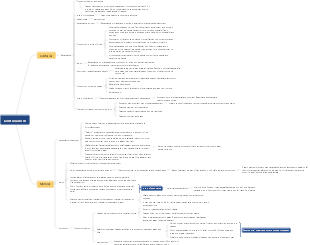
This is a mind map about the age of nations and the contention of a hundred schools of thought in India. The main content includes: the age of nations (6th century BC - 4th century BC) and the contention of a hundred schools of thought.
Edited at 2024-11-20 22:21:31This template shows the structure and function of the reproductive system in the form of a mind map. It introduces the various components of the internal and external genitals, and sorts out the knowledge clearly to help you become familiar with the key points of knowledge.
This is a mind map about the interpretation and summary of the relationship field e-book, Main content: Overview of the essence interpretation and overview of the relationship field e-book. "Relationship field" refers to the complex interpersonal network in which an individual influences others through specific behaviors and attitudes.
This is a mind map about accounting books and accounting records. The main contents include: the focus of this chapter, reflecting the business results process of the enterprise, the loan and credit accounting method, and the original book of the person.
This template shows the structure and function of the reproductive system in the form of a mind map. It introduces the various components of the internal and external genitals, and sorts out the knowledge clearly to help you become familiar with the key points of knowledge.
This is a mind map about the interpretation and summary of the relationship field e-book, Main content: Overview of the essence interpretation and overview of the relationship field e-book. "Relationship field" refers to the complex interpersonal network in which an individual influences others through specific behaviors and attitudes.
This is a mind map about accounting books and accounting records. The main contents include: the focus of this chapter, reflecting the business results process of the enterprise, the loan and credit accounting method, and the original book of the person.
The Era of Indian Nations and the Contention of a Hundred Schools of Thought
The Age of Nations (6th century BC - 4th century BC)
sixteen powers
There are many states, but there is no unified country
The political system is divided into kings and aristocratic republics
Most countries are ruled by kings
A few practice aristocratic republics. For example: The Buddhist scriptures mention that in the country of Bazhi, "several ministers gathered together to discuss business matters."
The leader is still called the king, but is elected by the assembly of nobles belonging to Kshatriyavarna rather than hereditary
The most typical development is the continuous growth of autocratic royal power
feature
In the stage of annexation and hegemony between countries before entering the imperialist period
Magadha dominates
Rise: Mid-sixth century B.C.
Politics: Diplomacy abroad and close attacks, strengthening rule domestically
Dominate the central part of the Ganges River Basin and gradually annex its neighbors
A prosperous city
Rajagaha, Huasheng, Savatthi, Paranai, Vaishali and the northwest capitals
economy
Iron tools were widely used and agricultural production levels increased rapidly.
A large number of people gather in rural areas, and animal husbandry is cultivated in parallel. In addition to rice, sugar cane, fruits, etc. are widely cultivated
The development of agriculture provides abundant raw materials for handicraft industry and promotes the development of handicraft industry.
The division of labor gradually became smaller, and each handicraft industry had its own guild. The person in charge was often responsible to the king for supervising quality and production.
Inland trade is frequent
There are transportation networks connecting cities, and there are also trade exchanges with Sri Lanka and other places. Silver and copper coins are used instead of barter exchange.
Cities generally emerged, and there were eight major cities in the era of Gautama Buddha.
emerging city
Distinctive Features: The emergence of fortification walls
There are moats and other defensive works built outside the city wall.
There are large gathering places in the city
class
The wealth and power of the Kshatriyas, headed by the king, increased dramatically. They pursued a higher social status and inevitably had disputes with the Brahmin caste.
The Vaisyas are getting richer and richer day by day. They are diligent in business and skillful in accumulation, and have become wealthy slave owners. They are dissatisfied with the privileges of Brahmans who advocate high spirituality but get something for nothing.
The working people at the bottom, their living conditions are declining day by day, they are suffering from hunger and cold, and they are suffering from discrimination.
The status of Brahmins is declining
A hundred schools of thought contend
Samana thought
background
In the Age of Nations, conquests continued between countries, and conflicts between castes became acute.
Social unrest promotes ideological and cultural changes
New ideas and new religions from all walks of life are springing up like mushrooms after a rain.
meaning
Oppose Brahmanism’s control of the ideological realm, question the authority of Veda, oppose sacrifices, and oppose Brahmin supremacy
important schools
The world-conforming school
Basic point
Materiality of the world: It is believed that the world is composed of four material elements: earth, water, wind, and fire. Human consciousness is produced by the body formed by combining these four elements in a special way. The body and spirit are unified and there is no separation. body and independent soul
Denial of the supernatural: does not admit the existence of supernatural entities or gods, maintains that all things in the universe "exist naturally and do not arise from causes", denies that there are other worlds and afterlife, that there is no reincarnation and karma, and that there is no need for sacrifices and sacrifices. Ritual, liberation is death.
Criticism of the caste system: From the standpoint of the oppressed people, we resolutely oppose the unequal caste system. We believe that whether you are a Brahmin or a Chandala, the blood flowing in your veins is red, and there is no difference between life and death.
ethical concepts
Actively engage with the world: Promote optimism and actively engage with the world, oppose asceticism and all hypocritical morality, and believe that wise people should not suffer for liberation.
Hedonism: Opposes the feudal concept of chastity, believes that women's chastity and other precepts are binding on women, and advocates that the purpose of life is enjoyment. It has been unanimously attacked by other philosophical sects.
Influence
It is a world view and outlook on life that has been popular among the people from ancient times to the Middle Ages. However, because its theory is in direct opposition to the dominant philosophical sect, its classics may have been burned by Brahmin monks, and now it can only be seen in critical materials of the hostile sect. Its scattered fragments.
Ashphigians
representative figure
Makali Kosala
Main theories
In this given world, every living monad must be regenerated repeatedly, starting from basic molecules and gradually passing through geological, biological, animal storage stages, and then emerging in human form; each living monad is regenerated in various stages. The number, time and progress of regeneration are also fixed, and the relationship between each life monad in the process of repeated regeneration is also strictly regulated.
Human will and behavior, whether good or evil, cannot affect the entire established process. Practice cannot speed up the process of liberation, and doing evil cannot delay it.
The course of life is not determined by oneself, nor by others, but by fate.
Influence
The Ashfikar sect was once one of the important schools of thought in ancient India. It influenced and competed with Brahmanism, early Buddhism, and Jainism. Its theory is of great significance for studying the development and evolution of ancient Indian philosophy, religion, and culture. It is of great significance and provides a unique perspective for people to understand the way ancient humans perceived the world and destiny.
Jainism
Core Doctrine
Non-violence: Jainism emphasizes respect for all life and non-injury. It believes that all living things have souls, so killing is strictly prohibited, even plants.
Reincarnation of Karma: It advocates that the soul will reincarnate in different life forms due to actions in previous lives, and that liberation can only be achieved by eliminating karma.
The Seven Truths are: life, non-life, leakage, binding, control, silence, and liberation, which are used to explain the nature, state of existence, and the way to liberation of all things in the universe and life.
Cultivation and practice
The Five Precepts: including not killing, not lying, not stealing, not committing sexual misconduct, and not being greedy for money, are the basic precepts that believers need to abide by in their daily lives.
Asceticism: Jainism believes that karma can be eliminated through asceticism and liberation can be achieved. There are various methods of asceticism, such as fasting, meditation, etc.
social impact
Cultural aspects: Jainism has had a profound impact on Indian philosophy, literature, and art. Its philosophical thoughts have provided important materials for the development of Indian philosophy, and it has also formed a unique style in the fields of architecture, sculpture, and other arts.
In terms of social life: The concepts of non-violence, honesty, and tolerance it advocates have a positive effect on the moral concepts and social harmony of Indian society, and influence people's lifestyle and value orientation.