MindMap Gallery Aromatic hydrocarbons
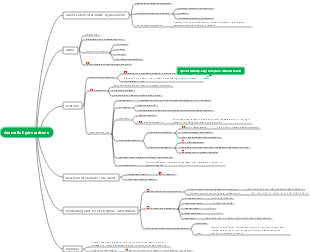
University Organic Chemistry Aromatic Hydrocarbons Mind Map. Aromatic hydrocarbons refer to aromatic hydrocarbon compounds, usually compounds containing a benzene ring structure in the molecule. Classification, monocyclic aromatic hydrocarbons, condensed ring aromatic hydrocarbons, and non-benzene aromatic hydrocarbons are introduced.
Edited at 2024-11-12 16:56:03これは、「Amazon Reverse Working Method」「Amazon Reverse Working Method」に関するマインドマップです。それは、Amazonの成功の秘密を明らかにし、実用的な作業方法と管理の原則を提供し、Amazon文化を理解し、仕事の効率と創造性を向上させたい読者にとって大きな参照価値です。
Azure BlobストレージにおけるMicrosoftの顕著な進歩とイノベーション、特にChatGptの作成者であるOpenaiの巨大なコンピューティングニーズを効果的にサポートする方法に焦点を当てています。 Azure Blobストレージ製品管理チームのJason Valerieは、JakeとDeverajaと協力して、Azure BlobストレージがOpenaiの大規模なモデルトレーニング、処理データ、ストレージをexebbitレベルまでに行う上で重要な役割を果たしました。議論には、AIワークロードのスケーリングスーパーコンピューターが直面している課題と、地域ネットワークゲートウェイを接続するデータセンターなどのアーキテクチャソリューション、および動的ストレージ容量の拡張を可能にする拡張アカウントの導入が含まれます。技術的な側面は、チェックポイントのメカニズム、大規模なデータ処理、革新的なブロブビューと階層的な名前空間、グローバルデータモビリティ機能をカバーし、Microsoftのグローバルネットワークインフラストラクチャを戦略的に利用して効率的なデータ送信を可能にします。この会話は、高度なAIの研究開発に強力でスケーラブルで効率的なストレージソリューションを提供するというマイクロソフトのコミットメントを完全に示しています。
これは、主にオブジェクト状態の変化、熱エンジン、内部エネルギー、熱比熱容量、温度スケールを含む、熱に関するマインドマップです。紹介は詳細であり、説明は包括的です。
これは、「Amazon Reverse Working Method」「Amazon Reverse Working Method」に関するマインドマップです。それは、Amazonの成功の秘密を明らかにし、実用的な作業方法と管理の原則を提供し、Amazon文化を理解し、仕事の効率と創造性を向上させたい読者にとって大きな参照価値です。
Azure BlobストレージにおけるMicrosoftの顕著な進歩とイノベーション、特にChatGptの作成者であるOpenaiの巨大なコンピューティングニーズを効果的にサポートする方法に焦点を当てています。 Azure Blobストレージ製品管理チームのJason Valerieは、JakeとDeverajaと協力して、Azure BlobストレージがOpenaiの大規模なモデルトレーニング、処理データ、ストレージをexebbitレベルまでに行う上で重要な役割を果たしました。議論には、AIワークロードのスケーリングスーパーコンピューターが直面している課題と、地域ネットワークゲートウェイを接続するデータセンターなどのアーキテクチャソリューション、および動的ストレージ容量の拡張を可能にする拡張アカウントの導入が含まれます。技術的な側面は、チェックポイントのメカニズム、大規模なデータ処理、革新的なブロブビューと階層的な名前空間、グローバルデータモビリティ機能をカバーし、Microsoftのグローバルネットワークインフラストラクチャを戦略的に利用して効率的なデータ送信を可能にします。この会話は、高度なAIの研究開発に強力でスケーラブルで効率的なストレージソリューションを提供するというマイクロソフトのコミットメントを完全に示しています。
これは、主にオブジェクト状態の変化、熱エンジン、内部エネルギー、熱比熱容量、温度スケールを含む、熱に関するマインドマップです。紹介は詳細であり、説明は包括的です。
Aromatic hydrocarbons
Classification (number of benzene rings and connection methods)
Monocyclic aromatic hydrocarbons
polycyclic aromatic hydrocarbons
Condensed aromatic hydrocarbons
Two or more benzene are connected by sharing two adjacent C atoms
Naphthalene
anthracene
Philippines
The structure of benzene
In the delocalized p bond, a-the number of atoms; b-the number of electrons
Monocyclic aromatic hydrocarbons
Substituted benzene nomenclature
Simple alkylbenzene naming: with benzene as the parent and the name of the substituent written before the word benzene, it is called an alkylbenzene (the base is often omitted)
2 substituents
Ortho: 1, 2-(o)
Room: 1, 3-(m)
Right: 1,4-(p)
3 substituents
Company: 1, 2, 3-
Partiality: 1, 2, 4-
Average: 1, 3, 5-
When the benzene ring has an unsaturated alkyl group or the hydrocarbon group attached is more complex, with aliphatic hydrocarbons as the parent and ph as the substituent, it is called... phenyl alkane
chemical properties
Because benzene has a large p bond, it is quite stable. It does not oxidize or add under normal conditions, and is conducive to substitution reactions.
electrophilic substitution reaction
The electron cloud of benzene is like two breads sandwiching the nucleus - a hamburger, so the reagent attacks the benzene ring and reacts with the electron cloud first - electrophilic reaction
Halogenation reaction (using FeX3 as catalyst)
Chlorinated
bromo
nitrification reaction
Sulfonation reaction
Friedel-Crafts reaction
Symbol: Use anhydrous AlCl3 as catalyst
addition reaction
H2
Cl2
oxidation reaction
Side chain oxidation
Room temperature, dilute neutral or alkaline KMnO4 - no reaction
Acidic KMnO4 with a-H in the side chain - are oxidized to -COOH
Benzene epoxidation
Side chain halogenation
Positioning base
The first type of positioning base: adjacent and counterpositioning bases
Except for halogen, all activate ph - the halogen-induced effect-I is too strong and passivates ph (so it has the smallest impact among this type of positioning base)
Except for halogens, electrophilic reactions are faster than ph
Positioning effect: -NH2>-OH>-Me, -Et (hydrocarbyl)>-ph>-X (halogen)
The second type of positioning base: meta positioning base
All passivation
Electrophilic substitution is more difficult than ph
Positioning effect: -NO2>-CN>-COOH
Discrimination skills
The atom directly connected to ph has only a single bond - the first type of substituent
The atom directly connected to ph contains double or triple bonds or has a positive charge - the second type of substituent
The essence of the positioning effect: the induction effect and conjugation effect of the substituent make the electron cloud density on the ph alternately dense and dense, and the dense C is easy to react with the electrophile
Observe the groups connected to ph and mark d and d- (alternating). The d/d- of the atomic band directly connected to ph will affect the electron cloud arrangement of ph.
Positioning effect of binary substituted benzene
Homogeneous groups
Aligned positioning – replaces co-located positions
Different positioning - mainly strong ones
Different types of groups
Mainly the first type of positioning group (because the first type of positioning group increases the density of the electron cloud, which facilitates the reaction, while the second type reduces the density and makes the reaction difficult)
Pay attention to steric effects
Condensed aromatic hydrocarbons
Naphthalene
name
Numbering starts from position a. The two shared Cs will not have substituents, so they are not numbered.
Numbering starts from the a position closest to the main functional group
minimal principle
Finish one loop first, then another one
chemical properties
Substitution reaction: generally occurs at the a position - special case: sulfonation of naphthalene -80°C to obtain a-naphthalene sulfonic acid; 165°C to obtain b-naphthalene sulfonic acid
addition reaction
Reaction Difficulty: Alkenes < Naphthalene < Benzene
1, 4 bonus
The p electrons on each adjacent C in the naphthalene molecule are not completely evenly distributed.
subtopic
non-benzene aromatic hydrocarbons
Aromaticity: similar to electrophilic substitution reaction of benzene ring
Huecker 4n 2 Rule
planar single ring
are composed of sp2 hybrid atoms
conjugated polyene structure
The ring atoms provide a total of 4n 2 p electrons
Note that it is provided by the ring-forming atoms, and the p electrons provided by conjugation with it are not included if they are not atoms in the ring, e.g. chlorobenzene
Halogenated a-H (free radical reaction)
Benzene hexachloride
cyclohexane
acylation reaction
No rearrangement reaction will occur after the R-CO-X bond is broken, because there is an O attached to the acyl C
Introduce acyl group
alkylation reaction
When there are 3 or more R in R-X, isomerization-rearrangement often occurs (for R-X, it is an SN1 reaction, and if the intermediate has C, it will be rearranged for stability) ph-X cannot replace R-X for alkylation because the ph-X conjugated system is very stable and C-X is not easy to disconnect.
Introduce alkyl group
Halogen elemental reactivity: F2>Cl2>Br2>I2
F2 reacts very violently
The I2 reaction is slow, and HI is a reducing agent, making the 2 reaction reversible. Experiments have shown that the reverse reaction is dominant.
Chlorobenzene and iodobenzene are not prepared by this method