MindMap Gallery Scheduling
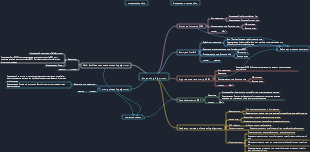
This is a mind map about scheduling. The main content includes: scheduling algorithm and processor scheduling. The introduction is detailed and the description is comprehensive. I hope it will be helpful to those who are interested!
Edited at 2024-10-28 17:25:18Diese Vorlage zeigt die Struktur und Funktion des Fortpflanzungssystems in Form einer Mind Map. Es führt die verschiedenen Komponenten der internen und externen Genitalien ein und sortiert das Wissen eindeutig aus, um Ihnen dabei zu helfen, mit den wichtigsten Wissenspunkten vertraut zu werden.
Dies ist eine Mind Map über die Interpretation und Zusammenfassung des Beziehungsfeldes E-Book, des Hauptinhalts: Überblick über die Essenzinterpretation und Übersicht über das Feld E-Book. "Relationship Field" bezieht sich auf das komplexe zwischenmenschliche Netzwerk, in dem ein Individuum andere durch spezifische Verhaltensweisen und Einstellungen beeinflusst.
Dies ist eine Mind Map über Buchhaltungsbücher und Buchhaltungsunterlagen.
Diese Vorlage zeigt die Struktur und Funktion des Fortpflanzungssystems in Form einer Mind Map. Es führt die verschiedenen Komponenten der internen und externen Genitalien ein und sortiert das Wissen eindeutig aus, um Ihnen dabei zu helfen, mit den wichtigsten Wissenspunkten vertraut zu werden.
Dies ist eine Mind Map über die Interpretation und Zusammenfassung des Beziehungsfeldes E-Book, des Hauptinhalts: Überblick über die Essenzinterpretation und Übersicht über das Feld E-Book. "Relationship Field" bezieht sich auf das komplexe zwischenmenschliche Netzwerk, in dem ein Individuum andere durch spezifische Verhaltensweisen und Einstellungen beeinflusst.
Dies ist eine Mind Map über Buchhaltungsbücher und Buchhaltungsunterlagen.
Scheduling
Processor Scheduling
Select a process and allocate processors according to some algorithm
Scheduling type
Advanced scheduling
job scheduling
External storage -> memory (job-oriented)
Select the appropriate job from the backup queue, load it into memory, and create a process for it
None -> Created state -> Ready state
low frequency
Neutral pole dispatch
memory scheduling
External memory -> memory (process-oriented)
According to certain rules, select the appropriate process from the suspension queue and transfer the data back to the memory
Suspended state -> Ready state Blocked pending state -> blocked state
medium frequency
low level scheduling
process scheduling
Memory -> CPU (concurrent scheduling)
According to certain rules, select processes from the ready queue to allocate processors
Ready state -> Running state
highest frequency
process scheduling
opportunity
give up voluntarily
Process terminates normally
Termination due to abnormal operation
Active blocking
passively give up
time slice exhausted
There are more urgent things to deal with (interrupt exception)
Higher priority processes enter the ready queue
When process scheduling cannot be performed
In the process of handling the interrupt
The process is located in the critical section of the operating system kernel
During primitive execution
Way
non-preemptive scheduling
The CPU can only be voluntarily given up by the currently running process.
Preemptive scheduling
CPU usage rights can be deprived by the operating system
Scheduling algorithm
Evaluation index
CPU utilization
busy time/total time
System throughput
Number of tasks completed/total time
turnaround time
turnaround time
Job completion time - job submission time
average turnaround time
Sum of job turnaround times / number of jobs
Rights turnaround time
Job turnaround time/Job actual run time
Average rights turnaround time
Sum of job weighted turnaround times / number of jobs
waiting time
The sum of the time the process/job waited to be serviced
response time
The time from when a user submits a request to the first response
batch scheduling algorithm
FCFS - first in, first served
Non-preemptive
advantage
Fair and simple to implement
shortcoming
Not good for short jobs
Consider waiting time
Does not cause hunger
SJF/SPF - Short jobs/short processes first
Default is non-preemptible, preemptible
advantage
"Shortest" average wait time/turnaround time
shortcoming
Not good for long jobs
Consider running time
can cause hunger
HRRN - High Response Ratio Priority
Non-preemptive
advantage
A compromise between the two algorithms above
Consider waiting time and running time
Does not cause hunger
interactive scheduling algorithm
time slice rotation
Preemptive
advantage
Fair and applicable time-sharing system
shortcoming
Frequent switching has overhead and does not differentiate between priorities.
Time slice settings
If it is too large, it will degenerate into a first-in-first-out algorithm.
Too small will cause excessive system overhead.
Does not cause hunger
priority scheduling
Both preemptive and non-preemptive
advantage
Differentiate priorities and apply time-sharing system
shortcoming
may cause hunger
can cause hunger
Multi-level feedback queue
Preemptive
advantage
A compromise between the two algorithms above
Disadvantages are generally not mentioned
can cause hunger
Multi-level queue scheduling algorithm
Multiple queues are divided according to process type, and different queues have different priorities.
Scheduling methods between queues
fixed priority
The low-priority queue is scheduled only when the high-priority queue is empty.
time slice division
Each queue is assigned a different time
Different queues can adopt different scheduling strategies