MindMap Gallery Important nutrients for humans
This map provides classification and organization of chemical nutrients for junior high schools. The content is extremely detailed and covers all core contents, making it very convenient for everyone to learn. Suitable for exam review and preview to improve learning efficiency. Hurry up and collect it to learn together!
Edited at 2024-10-27 12:28:42Diese Vorlage zeigt die Struktur und Funktion des Fortpflanzungssystems in Form einer Mind Map. Es führt die verschiedenen Komponenten der internen und externen Genitalien ein und sortiert das Wissen eindeutig aus, um Ihnen dabei zu helfen, mit den wichtigsten Wissenspunkten vertraut zu werden.
Dies ist eine Mind Map über die Interpretation und Zusammenfassung des Beziehungsfeldes E-Book, des Hauptinhalts: Überblick über die Essenzinterpretation und Übersicht über das Feld E-Book. "Relationship Field" bezieht sich auf das komplexe zwischenmenschliche Netzwerk, in dem ein Individuum andere durch spezifische Verhaltensweisen und Einstellungen beeinflusst.
Dies ist eine Mind Map über Buchhaltungsbücher und Buchhaltungsunterlagen.
Diese Vorlage zeigt die Struktur und Funktion des Fortpflanzungssystems in Form einer Mind Map. Es führt die verschiedenen Komponenten der internen und externen Genitalien ein und sortiert das Wissen eindeutig aus, um Ihnen dabei zu helfen, mit den wichtigsten Wissenspunkten vertraut zu werden.
Dies ist eine Mind Map über die Interpretation und Zusammenfassung des Beziehungsfeldes E-Book, des Hauptinhalts: Überblick über die Essenzinterpretation und Übersicht über das Feld E-Book. "Relationship Field" bezieht sich auf das komplexe zwischenmenschliche Netzwerk, in dem ein Individuum andere durch spezifische Verhaltensweisen und Einstellungen beeinflusst.
Dies ist eine Mind Map über Buchhaltungsbücher und Buchhaltungsunterlagen.
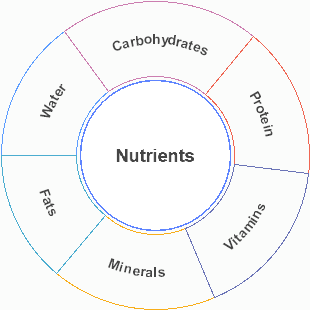
Important nutrients for humans
protein
Composition elements: C, H, O, N
It is the basic substance that constitutes cells and the main raw material for the body's growth and repair of damaged tissues; it provides energy.
Energy supply: 5%-20%
Complete oxidation of each gram of protein releases approximately 18kJ of energy.
main food
Fish, meat, eggs, milk, beans
animal
Animal muscles, skin, hair, hooves, horns, egg white, etc.
plant
In the seeds of many plants (such as soybeans and peanuts)
Proteins are extremely complex compounds composed of a variety of amino acids, with relative molecular masses ranging from a few Thousands to millions.
Adults need to consume 60~70g per day, and teenagers in the growth and development period need more.
The protein that the human body obtains through food reacts with water in the gastrointestinal tract to produce amino acids. Some amino acids are recombined into various proteins needed by the human body to maintain the growth, development and tissue renewal of the human body; other amino acids can be oxidized to generate urea, carbon dioxide, water, etc. and are excreted from the body, while releasing energy for human body activities.
hemoglobin (Relative molecular mass: 68000)
For example, hemoglobin in the blood acts as a carrier in the process of inhaling oxygen and exhaling carbon dioxide.
Hemoglobin is made up of protein and heme.
In the lungs, Fe2 of heme in hemoglobin combines with oxygen to form oxyhemoglobin, which flows with the blood to various tissues and organs of the body, releasing oxygen for oxidation in the body. At the same time, hemoglobin combines with carbon dioxide in the blood and carries it to the lungs for exhalation.
Hemoglobin can also combine with carbon monoxide, and the binding ability is very strong, about 200 to 300 times that of oxygen. Once combined, it is not easy to separate, and it can no longer combine with oxygen, and people will die of hypoxia and suffocation. ——Causes of gas poisoning
Smoke
Cigarette smoke contains hundreds of harmful substances to the human body
The most toxic ones are carbon monoxide, nicotine (nicotine), and tar containing carcinogens [benzopyrene (bǐ), dioxin (è) Ying, etc.].
People who smoke for a long time are susceptible to coronary heart disease, emphysema, lung cancer and other diseases. Heavy smoking can cause death from poisoning.
formaldehyde
Some substances such as formaldehyde will react with proteins, destroy the structure of proteins, and cause them to deteriorate. This formaldehyde is seriously harmful to human health.
Soaking animal specimens in formaldehyde aqueous solution (formalin) enables the specimens to be preserved for a long time.
enzyme
Specificity, diversity, efficiency
Enzymes are biological catalysts that can catalyze reactions in living organisms. An enzyme can only catalyze one type of reaction or type of reaction, and And it is generally carried out under body temperature and near neutral conditions.
When you chew rice and steamed buns in your mouth, you feel a sweet taste. This is because saliva contains amylase, which can hydrolyze part of the starch in the food into maltose; the remaining starch is hydrolyzed into maltose by pancreatic amylase in the small intestine; Maltose is hydrolyzed into glucose that can be absorbed by the human body under the catalysis of maltase in the intestinal juice. Most enzymes such as amylase and maltase are proteins.
carbohydrate
Composition elements: C, H, O
Sugars and fats release energy through oxidation in the human body, providing energy for body activities and maintaining a constant body temperature.
Energy supply: 60%-70%
Complete oxidation of each gram of glucose releases approximately 16 kJ of energy.
starch (C6H10O5)n
Mainly found in plant seed starch or tubers
Rice, wheat, corn, potato, etc.
The chemical formula of starch is (C6H10O5)n. With different n values, the relative molecular mass ranges from tens of thousands to hundreds of thousands.
glucose C6H12O6
Food starch undergoes a series of reactions with water through the catalysis of enzymes in the human body, and eventually turns into glucose.
Glucose is absorbed through the intestinal wall and enters the bloodstream to become blood sugar, which provides nutrients to human tissues.
Glucose is slowly oxidized into carbon dioxide and water under the catalysis of enzymes, and at the same time releases energy to meet the needs of body activities and maintaining a constant body temperature.
sucrose C12H22O11
C6H12O6 6O2 = enzyme = 6CO2 6H2O
main food
White sugar, rock sugar, brown sugar
sugar cane, beet
Is a commonly used sweetener in food
cellulose
Cellulose is the building block of plant cells
Cotton contains more than 90% cellulose. Cellulose can be digested and absorbed by cattle, sheep, horses and other animals, but cannot be digested by the human body, but it plays a special role in the human body's digestion process.
You should ensure that you consume a certain amount of vegetables, fruits, whole grains and other fiber-rich foods every day.
grease
Composition elements: C, H, O
Sugars and fats release energy through oxidation in the human body, providing energy for body activities and maintaining a constant body temperature.
Energy supply: 20%-25%
main food
Peanut oil, soybean oil, rapeseed oil, butter and cream, etc.
At room temperature, vegetable fats are in a liquid state and are called oils; animal fats and oils are in a solid state and are called fats. The two are collectively called fats.
vitamins
Vitamins can regulate metabolism, prevent disease, and maintain good health.
There are more than 20 kinds of vitamins. Most of them cannot be synthesized in the human body and need to be taken in from food. Vitamins are required in small amounts in the human body, but they can play an important role in regulating metabolism, preventing diseases, and maintaining good health.
Lack of certain vitamins can make people sick
Lack of vitamin A can cause night blindness
Lack of vitamin C can cause scurvy
Lack of vitamin D can cause rickets
main food
Vegetables, fruits, seed foods, animal livers, eggs, milk, fish, cod liver oil, etc.
Aflatoxin
Rice, peanuts, flour, corn, dried potatoes and beans should be stored in a dry and ventilated place, because they are prone to mildew and aflatoxin when the temperature is 30~38°C and the relative humidity exceeds 80%. of Aspergillus flavus.
Aflatoxin is very heat-resistant and cannot be destroyed by cooking. It can only be destroyed by heating to above 280°C.
Aflatoxins can damage the human liver and induce diseases such as liver cancer. Therefore, moldy food must not be eaten.
Inorganic salt Minerals
water
The most abundant substance in the human body