MindMap Gallery Heart pumping process and mechanism
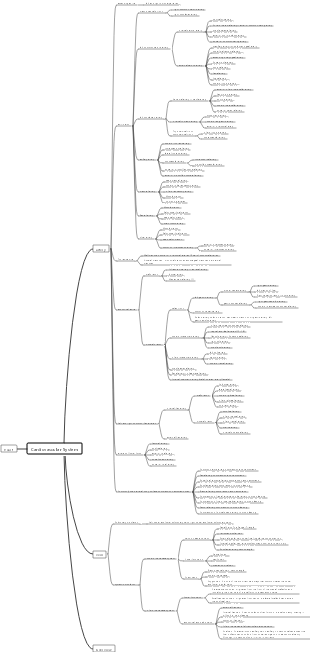
This is a mind map about the heart's pumping process and mechanism. The main contents include: (4) heart sound (experiment), (3) the role of the atrium in heart pumping, (2) heart pump Blood process, (1) cardiac cycle.
Edited at 2024-10-09 19:18:08Dive into the world of the Chinese animated film Nezha 2: The Devil's Birth! This knowledge map, created with EdrawMind, provides a detailed analysis of main characters, symbolic elements, and their cultural significance, offering deep insights into the film's storytelling and design.
This is a mindmap about Nezha 2, exploring its political metaphors and cultural references. The diagram highlights the symbolism behind the Dragon Clan’s suppression, drawing parallels to modern geopolitical conflicts and propaganda manipulation. It also details Chinese historical and cultural elements embedded in the film, such as the Jade Void Palace, Ao Bing’s armor, Taiyi Zhenren’s magic weapon, and Nezha’s hairstyle.
This is a mindmap about the main characters of Nezha 2, detailing their backgrounds, conflicts, and symbolic meanings. It explores the personal struggles and transformations of Nezha, Ao Bing, Shen Gongbao, and Li Jing as they navigate themes of rebellion, duty, ambition, and sacrifice.
Dive into the world of the Chinese animated film Nezha 2: The Devil's Birth! This knowledge map, created with EdrawMind, provides a detailed analysis of main characters, symbolic elements, and their cultural significance, offering deep insights into the film's storytelling and design.
This is a mindmap about Nezha 2, exploring its political metaphors and cultural references. The diagram highlights the symbolism behind the Dragon Clan’s suppression, drawing parallels to modern geopolitical conflicts and propaganda manipulation. It also details Chinese historical and cultural elements embedded in the film, such as the Jade Void Palace, Ao Bing’s armor, Taiyi Zhenren’s magic weapon, and Nezha’s hairstyle.
This is a mindmap about the main characters of Nezha 2, detailing their backgrounds, conflicts, and symbolic meanings. It explores the personal struggles and transformations of Nezha, Ao Bing, Shen Gongbao, and Li Jing as they navigate themes of rebellion, duty, ambition, and sacrifice.
Heart pumping process and mechanism
(1) Cardiac cycle
A cycle of mechanical activity consisting of one contraction and one relaxation of the heart
The length of the cardiac cycle is related to heart rate
Heart rate: The number of times the heart beats per minute, which varies by age, gender and other factors
Heart rate: 75 beats/min, cardiac cycle 0.8s
Features
Whole heart diastole, ensuring the heart is filled with blood
Atrial contractions refill the ventricles
The heart pumps blood mainly through the ventricles
(2) Heart pumping process
Taking the left ventricle as an example, the cardiac cycle is divided into two phases: ventricular systole and ventricular diastole.
ventricular systole
isovolumetric contraction phase
Pressure: atrial pressure < ventricular pressure ↑ < aortic pressure
Valve: atrioventricular valve, semilunar valve
Blood flow: no in or out, volume remains unchanged
rapid ejection period
pressure:
Atrial pressure <ventricular pressure ↑ ↑ > aortic pressure
valve:
The atrioventricular valve is closed and the semilunar valve is open
blood flow
Ventricle → Aorta (2/3 of total ejection volume)
slow down ejection phase
pressure:
Intraatrial pressure<Intraventricular pressure↓<Intraaortic pressure
valve:
Atrioventricular valves close, semilunar valves open (inertia)
Blood flow:
ventricle→aorta
ventricular diastole
isovolumetric diastole
pressure:
Intraatrial pressure<Intraventricular pressure↓<Intraaortic pressure
valve:
Atrioventricular valve closure, semilunar valve closure
Blood flow:
No entry or exit, volume remains unchanged
rapid filling period
pressure
Intraatrial pressure>Intraventricular pressure↓↓<Intraaortic pressure
valve:
Atrioventricular valves open, semilunar valves closed
Blood flow:
Room → Room (2/3)
slow down filling phase
pressure:
Atrial pressure > Ventricular pressure ↑ < Aortic pressure
valve:
Atrioventricular valves open, semilunar valves closed
Blood flow:
Room → Room (small quantity, slow speed)
atrial systole
pressure:
Atrial pressure>Ventricular pressure<Aortic pressure
valve:
Atrioventricular valves open, semilunar valves closed
Blood flow:
Atrial → Ventricular (further filling the ventricle by about 30%)
Ventricular muscle contraction and relaxation (motive force)
Atrium: primary pump
Myocardial contraction/relaxation
pressure gradient
valve open/closed
blood flow in/out
(7 phases)
Ventricular systole: divided into three phases
Isovolumic contraction period: lasts 0.05S
Rapid ejection period: lasts 0.1S
Slow down the ejection period: lasts 0.15S
Ventricular diastole: divided into four phases
Isovolumic relaxation period: lasts 0.07S
Rapid filling period: lasts 0.1S
Slow down filling period: lasts 0.22S
Atrial systole: lasts 0.1S
(3) The role of the atria in pumping blood in the heart
Temporary admission and storage of blood—ventricular systole
A channel for blood to return from the veins to the ventricles—global diastole (early and mid-ventricular diastole)
Primary pump—atrial systole (late ventricular diastole)
The effect of atrial contraction on ventricular filling at rest is not major. For example, in atrial fibrillation, the effect on ventricular filling and ejection function is not serious, but in ventricular fibrillation, the heart's pumping activity stops immediately.
(4) Heart sound (experiment)
definition
Use a stethoscope against the chest wall to hear the sound caused by the vibrations caused by the closing of the heart valves and blood hitting the ventricular walls.
type
The first heart sound (can be heard by normal people with auscultation)
Second heart sound (can be heard by normal people with auscultation)
The third heart sound (can be heard by a few people during auscultation)
Fourth heart sound (phonocardiogram can be recorded)
first heart sound
Cause
Atrioventricular valves close, ventricles vibrate, and arterial walls vibrate
Features
low and long
parts
apex
physiological significance
① Chamber contraction begins
②Atrioventricular valve function
③Strength reflects cardiac contraction force
second heart sound
Cause
Semilunar valve closure, large A root vibration, ventricular wall vibration
Features
high and short
parts
bottom of heart
physiological significance
① Start of ventricular diastole ② Semilunar valve function ③ Reflects the level of arterial pressure