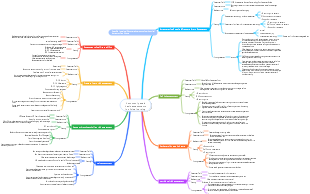
MindMap Gallery Commonly used basic assessments in clinical nursing
Several basic nursing assessment forms are commonly used in clinical practice, including self-care ability assessment, fall risk assessment, pressure injury (pressure ulcer) risk assessment, pipeline slippage risk assessment, awakening assessment, nutritional risk screening assessment, pain assessment, and venous thromboembolism (VTE) Risk Assessment.
Edited at 2024-10-08 19:02:48Dive into the world of the Chinese animated film Nezha 2: The Devil's Birth! This knowledge map, created with EdrawMind, provides a detailed analysis of main characters, symbolic elements, and their cultural significance, offering deep insights into the film's storytelling and design.
This is a mindmap about Nezha 2, exploring its political metaphors and cultural references. The diagram highlights the symbolism behind the Dragon Clan’s suppression, drawing parallels to modern geopolitical conflicts and propaganda manipulation. It also details Chinese historical and cultural elements embedded in the film, such as the Jade Void Palace, Ao Bing’s armor, Taiyi Zhenren’s magic weapon, and Nezha’s hairstyle.
This is a mindmap about the main characters of Nezha 2, detailing their backgrounds, conflicts, and symbolic meanings. It explores the personal struggles and transformations of Nezha, Ao Bing, Shen Gongbao, and Li Jing as they navigate themes of rebellion, duty, ambition, and sacrifice.
Dive into the world of the Chinese animated film Nezha 2: The Devil's Birth! This knowledge map, created with EdrawMind, provides a detailed analysis of main characters, symbolic elements, and their cultural significance, offering deep insights into the film's storytelling and design.
This is a mindmap about Nezha 2, exploring its political metaphors and cultural references. The diagram highlights the symbolism behind the Dragon Clan’s suppression, drawing parallels to modern geopolitical conflicts and propaganda manipulation. It also details Chinese historical and cultural elements embedded in the film, such as the Jade Void Palace, Ao Bing’s armor, Taiyi Zhenren’s magic weapon, and Nezha’s hairstyle.
This is a mindmap about the main characters of Nezha 2, detailing their backgrounds, conflicts, and symbolic meanings. It explores the personal struggles and transformations of Nezha, Ao Bing, Shen Gongbao, and Li Jing as they navigate themes of rebellion, duty, ambition, and sacrifice.
nursing assessment
Assessment of self-care ability
Definition and purpose: Self-care ability is people’s ability to take care of themselves in life. The purpose is to understand the patient’s actual self-care ability and provide a basis for formulating personalized care plans.
Assessment points: Dynamic assessment can be carried out when the patient's condition changes through observation and direct questioning.
Timing of assessment: upon admission, after surgery, when conditions change, and before discharge. (Assessed within 2 hours of admission and completed within 5-10 minutes)
Assessment tools and grading: Barthel's self-care ability rating scale is commonly used, including ten items. Each item has four scoring criteria (completely independent, requires some help, requires great help, completely dependent, with scores decreasing in order). The scores are added together. That is the total score, ranging from 0-100. A total score of ≤40 is considered severe dependence, 41-60 is considered moderate dependence, 61-99 is considered mild dependence, and 100 is considered no dependence.
Nursing measures: Provide the basis for hierarchical care based on the patient's scoring results, with heavy reliance on first-level care, moderate reliance on second-level care, slight reliance on second- or third-level care, and no need to rely on third-level care.
Fall risk assessment
Definition: An inpatient fall occurs when a patient unexpectedly falls to the ground or lower than the initial position in any setting of a medical institution, with or without trauma.
Assessment purpose: Provide a safe hospital environment and take targeted preventive measures based on fall risk levels and influencing factors.
Timing of assessment: upon admission, changes in condition, use of high fall risk medications, transfer to another department, and before discharge.
Assessment points: Focus on the assessment of fall risk factors and emphasize dynamic assessment to increase the comprehensiveness and timeliness of assessment.
Assessment Tools and Grading
Clinical assessment of fall risk
coma or complete paralysis
Low risk of falls
One of the following situations exists: History of surgical sedation within the past 24 hours Use of 2 or more high fall risk medications
Risk of falling
One of the following situations exists: Age ≥80 years old Two or more falls within 6 months before hospitalization, or a fall during this hospitalization Presence of unsteady gait, lower limb joint or muscle pain, visual impairment, etc. Have used sedative, analgesic or sleeping drugs within 6 hours
High risk of falls
Morse Fall Risk Assessment Scale
It includes 6 items including history of falls, diagnosis of more than one disease, use of walking aids, intravenous infusion, gait, and mental status, with a total score of 25 points. The higher the score, the greater the risk of falling. A score of <25 points indicates a low risk of falling, a score of 25-45 points indicates a medium risk of falling, and a score of >45 points indicates a high risk of falling.
Nursing measures
1. The floor in the ward should be kept clean and dry, and the bathroom should be equipped with anti-slip facilities.
2. Provide sufficient lighting facilities to ensure intact condition.
3. Clear access barriers indoors, beside the bed and in the hallway.
4. Place daily necessities within easy reach of patients.
5. Teach the patient how to operate the bedside lamp and pager, and keep them in an easily accessible place.
6. The patient should be accompanied by a dedicated person when moving.
7. The patient’s clothes should be of appropriate size and wear non-slip shoes.
8. When instructing patients to change their positions, they should stop for 1 minute to prevent sudden changes in position from causing orthostatic hypotension.
Pressure injury (pressure ulcer) risk assessment
Definition: A pressure injury is defined as a localized injury to the skin and underlying soft tissue, typically seen over bony prominences or associated with medical or other devices.
Purpose of Assessment: To identify whether the patient is at risk of developing pressure ulcers
Timing of assessment: 1. First assessment: The assessment should be completed within 2 hours after the patient is admitted to the hospital. In case of special circumstances such as emergency surgery, the assessment should be completed in a timely manner after surgery. 2. Re-evaluation: Those at extremely high risk will be evaluated every 48 hours, those at high and medium risk will be evaluated twice a week, and those at low risk will be evaluated once a week. Patients should be evaluated at any time when their condition changes.
Assessment points: Check the skin all over the body, pay attention to easily overlooked places such as behind the pillow and behind the feet, and accurately stage pressure injuries if they occur.
Assessment tools and grading: The Braden assessment scale is commonly used. The assessment content includes 6 items: sensation, moisture, activity, mobility, nutritional intake, friction and shear force. Each item is scored from 1 to 4 points, with a total score of 23 points. , the lower the score, the higher the risk of developing pressure ulcers. 15-18 is classified as low risk, 13-14 is classified as moderate risk, 10-12 is classified as high risk, and <9 is classified as very dangerous.
Nursing measures
1. Avoid long-term pressure on local tissues
2. Avoid the effects of friction and shear forces
3. Avoid moisture, friction and irritation from excrement
4. Promote local blood circulation
5. Improve the body’s nutritional status and actively treat primary diseases
Pipe Slip Risk Assessment
Definition: Tube slippage mainly refers to the detachment of gastric tubes, urinary tubes, drainage tubes, endotracheal tubes, tracheostomy, central venous catheters and peripherally inserted central venous catheters.
Purpose of evaluation: To identify high-risk groups for unplanned extubation and applying it in nursing care can effectively reduce the rate of unplanned extubation and reduce the occurrence of hidden catheter hazards.
Timing of assessment: For those with various indwelling catheters upon admission, transfer, or after surgery, the first assessment will be conducted. From now on, high-risk (Ⅲ degree) catheters will be assessed every shift, medium-risk (Ⅱ degree) catheters will be assessed every day, and low-risk (Ⅰ degree) catheters will be assessed every day. Evaluate twice a week, and evaluate at any time if there are abnormalities until extubation.
Assessment points: Clarify the classification of various types of catheters
Assessment tools and grading: Inpatient catheter detachment risk assessment form, including 8 items. A score of ≤8 points indicates mild risk, a score of 9 to 12 points indicates moderate risk, and a score of ≥13 points indicates high risk. Catheter slippage may occur at any time if the score is ≥ 9 points, and a warning sign to prevent catheter detachment is hung. The patient will be followed up and evaluated once a week according to the condition until the risk value is ≤ 8 points. If there is a risk change, the patient will be evaluated in a timely manner. Patients with a score of ≥ 13 points will be evaluated daily. .
Nursing measures
1. All conduits should be fixed according to specifications.
2. There should be a "prevent catheter slippage" warning sign next to the bedside of patients with indwelling catheters.
3. Patients with indwelling catheters should have a dedicated person to protect the catheter during transportation or changing positions.
4. Strengthen inspections. During each inspection, patients should be carefully evaluated for risk factors for catheter slippage and recorded.
Awakening assessment
Anesthesiology Specialist Assessment
Definition: The patient transitions from a state of general anesthesia to an awake state.
Evaluation purpose: It has important clinical value to ensure smooth recovery, eliminate harmful stimuli in a timely manner, and reduce complications during the recovery period.
Assessment points: Understand the four stages of recovery from general anesthesia and judge the degree of recovery.
Assessment tools and grading: divided into 3 evaluation indicators, including breathing, consciousness, and movement. The total score is 6 points. The higher the score, the better the degree of awakening.
Nursing measures: Provide ventilator-assisted ventilation to patients with tracheal intubation. At the same time, ECG monitoring monitors the patient's vital signs, continuous body temperature monitoring, antagonist drugs, and measures to keep warm. After the operation, the effect of the anesthetic in the patient's body gradually wears off, until the patient gradually regains consciousness.
pain assessment
Definition: It is an unpleasant sensory and emotional experience, accompanied by existing or potential tissue damage, and is a protective defense response of the body against harmful stimuli.
Purpose of assessment: to correctly determine pain type, pain intensity and its impact, so as to relieve pain and increase comfort for patients.
Evaluation time
1. Initial assessment: When the patient reports to the hospital or sees a doctor for the first time, a pain assessment should be performed to determine whether the patient is in pain and to initially understand the intensity and nature of the pain to provide a basis for subsequent treatment plans.
2. When pain worsens or is relieved: When a patient's pain worsens or is relieved, the pain needs to be evaluated to understand the development of pain and judge the effect of treatment.
Assessment points
1. Time of occurrence and duration of pain
2. The location where the pain occurs and the nature of the pain (sharp, dull, spasm, burn, pain, shooting)
3. Severity of pain (local, diffuse, deep, superficial)
Assessment Tools and Grading
1. Numeric scoring method: Use numbers 0-10 instead of words to indicate the degree of pain, with 0 being no pain and 10 being extreme pain.
2. Facial expression pain determination method.
3. The Prince-Henry scoring method is suitable for patients who cannot speak after major thoracic and abdominal surgery or after tracheotomy and intubation. It is divided into 5 levels, each with a score of 0-4 to assess the degree of pain.
Nursing measures: Reduce or eliminate the causes of pain, rationally use methods to relieve or relieve pain, provide social and psychological support, and appropriately use psychological care and pain psychotherapy.
Nutritional Risk Screening Assessment
Definition: An existing or potential risk associated with a nutrient that may lead to adverse clinical outcomes for patients.
Purpose of assessment: Conduct nutritional risk screening on every admitted patient to assess whether they have nutritional risks, and take corresponding measures based on the screening results, such as formulating parenteral and enteral nutrition support plans.
Timing of assessment: All patients (except children) within 24 hours after admission.
Assessment Points: Choosing the Right Nutritional Screening Tool
Assessment tools and grading: Nutritional risk screening form NRS (adult), including three parts: disease severity score, nutritional status reduction score, and age score (one point is added for those over 70 years old). Higher scores represent poorer nutritional status.
(1) A total score of ≥3 (or pleural effusion, ascites, edema, and serum protein <35g/L) indicates that the patient is malnourished or at nutritional risk, and nutritional support should be used.
(2) Total score <3 points: Review nutritional assessment every week. If the result of subsequent reexamination is ≥3 points, the nutritional support program will be entered.
(3) If the patient plans to undergo major abdominal surgery, the patient will be scored according to the new score (2 points) during the first evaluation, and the final score will be used to determine whether nutritional support is needed (≥3 points) based on the new total score.
Nursing measures
1. Provide different hospital diets according to different conditions of patients.
2. For patients receiving enteral nutrition, pay attention to the amount, type, interval and maintenance of the diet.
Venous Thromboembolism (VTE) Risk Assessment
Definition: Blood clots abnormally in the veins, causing the blood vessels to be completely or incompletely blocked, which is a venous reflux disorder.
Purpose of assessment: The assessment of the risk of venous thromboembolism in different diseased groups can help further stratify the risk of embolism.
Timing of assessment: All patients should complete thrombosis risk assessment within 24 hours after admission. Patients should be re-assessed within 6 hours after surgery (including interventional surgery), within 6 hours after patients are transferred to another department, and before discharge. The patient should be assessed at any time when VTE risk factors change.
Key points of assessment: According to the changes in the condition, select the appropriate assessment time, conduct dynamic assessment, select appropriate assessment tools, and accurately make stratified judgments based on the assessment results.
Assessment tools and classification: VTE-Padua score, divided into 11 risk factors, risk levels: low risk: 0-3 points; high risk: ≥4 points.
Nursing measures
1. Avoid sitting for long periods of time and walking long distances. When the affected limb is swollen and uncomfortable, rest in bed promptly and elevate the affected limb 20-30cm above the level of the heart.
2. Dietary guidance: Eat a low-fat, high-fiber diet; keep the stool unobstructed to avoid increasing intra-abdominal pressure, which affects blood reflux in the lower limbs; quit smoking to prevent vasoconstriction caused by nicotine stimulation in tobacco.
3. Exercise appropriately. Encourage patients to strengthen daily exercise to promote venous return and prevent venous thrombosis.
Qiu Xinyue, Department of Anesthesiology, Surgery Area, our hospital Instructor: Qiu Liting