MindMap Gallery Chapter 4 Electrochemistry and Metal Corrosion
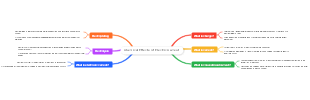
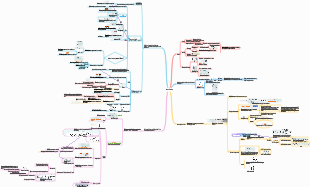
This is a mind map about Chapter 4 Electrochemistry and Metal Corrosion. The main contents include: 4.3 Application of electromotive force and electrode potential, 4.2 Electrode potential, 4.1 Primary battery.
Edited at 2024-11-27 16:45:22Lezione 12 della storia, l'ascesa della democrazia nazionale in Asia, Africa e America Latina, questa mappa del cervello ti aiuta a familiarizzare con i punti chiave della conoscenza e rafforzare la memoria. Gli studenti bisognosi possono aggiungere un segnalibro.
Questa è una mappa mentale sull'introduzione alla competenza di Chat GPT.
Questa è una mappa mentale sulla condivisione di profonde abilità di utilizzo.
Lezione 12 della storia, l'ascesa della democrazia nazionale in Asia, Africa e America Latina, questa mappa del cervello ti aiuta a familiarizzare con i punti chiave della conoscenza e rafforzare la memoria. Gli studenti bisognosi possono aggiungere un segnalibro.
Questa è una mappa mentale sull'introduzione alla competenza di Chat GPT.
Questa è una mappa mentale sulla condivisione di profonde abilità di utilizzo.
Chapter 4 Electrochemistry and Metal Corrosion
4.1 Primary battery
4.1.1 Chemical reactions in primary batteries
The composition of primary battery
Primary battery: It is a device that uses redox reactions to output electrical power to the environment. set
The function of salt bridge: to supplement electricity Charge, maintain charge balance
Electrodes and electrode reactions
In a primary battery, the electrode from which electrons flow out is called the negative electrode, and the electrode from which electrons flow in is called the negative electrode. positive pole
A galvanic cell is made up of two half-cells; the reaction in a half-cell is reaction, that is, electrode reaction. Therefore, the half cell is called electrode
Several common types of electrodes and electrode symbols
Metal electrode (metal-metal ion electrode) symbol M | Mn (aq, c)
Non-metallic electrode (gas-ion electrode)
Redox electrode (ion-ion electrode)
Insoluble salt electrode (metal-metal insoluble Salt - negative ion electrode)
Schematic of primary battery
The negative electrode is written on the left and the positive electrode is written on the right. The salt bridge is represented by a double dotted vertical line ( ), and the interface between the two phases is represented by a single vertical line (|). Use "," to separate two different types or different valences. state solution
Use chemical formulas to express the composition of various substances in the primary battery, and indicate the gases respectively. The pressure and concentration of the body and solution
The order of chemical formulas and symbols should truly reflect the connections between substances in the battery. Touch sequence
Cu-Zn primary battery can be expressed as (-)Zn|ZnSO4(c1)|| CuSO4(c2)|Cu( )
4.1.2 Thermodynamics in primary cells
The relationship between ΔrGm of battery reaction and electromotive force E
ΔrGm⊝= -nFE⊝
The relationship between K⊝ of battery reaction and standard electromotive force E⊝
By measuring the standard electromotive force Eå of the original battery, you can know the equilibrium constant Kå of the battery reaction.
4.2 Electrode potential
4.2.1 Standard electrode potential
Standard hydrogen electrode
The electrode potential of a standard hydrogen electrode is zero.
Standard hydrogen electrode: Insert a platinum sheet coated with a layer of loose platinum black into a (H) = 1 mol/dm3 acid solution. Continuously pass p(H2) at 298.15K =100kPa pure hydrogen flow, platinum black can easily absorb hydrogen and reach saturation. It has a catalytic effect on the electrochemical reaction, causing hydrogen to quickly reach H+ in the solution. It is balanced. Its degree of reversibility is very high. The electrode composed in this way is called a standard hydrogen electrode.
Definition of standard electrode potential
Under standard conditions, the standard hydrogen electrode is used as the standard electrode and is artificially specified The electrode potential is zero, and the standard hydrogen electrode and the electrode to be measured form a primary cell. The value of its electromotive force is the standard electrode potential of the electrode to be measured. It is expressed by φѩ.
Use of standard electrode potential meters
Regardless of the direction of conversion of electricity to matter in the actual reaction, its φ algebra The value remains unchanged.
The algebraic value of φ has nothing to do with the selection of stoichiometric numbers in the electrode reaction.
The algebraic values of φ in the table are arranged in ascending order
When checking the standard electrode potential data, pay attention to the specific existence of the electric pair The form, state and media conditions must all comply.
4.2.2 Nernst equation of electrode potential
Nernst equation
Factors affecting electrode potential
(Oxidation state) concentration increases or (reduction state) concentration decreases, increases, The oxidation capacity of oxidized substances increases; (Oxidation state) concentration decreases or (reduction state) concentration increases, decreases, Increased reducing ability of reduced substances
If there is H or OH Participate in the electrode reaction, the acid and alkalinity of the medium opposes the electrode The potential value has an impact.
4.3 Application of electromotive force and electrode potential
4.3.1 Comparison of relative strengths of oxidizing agents and reducing agents
Using the electrode potential ( f ) and the standard electrode potential ( f ө ) compare
4.3.2 Judgment of reaction direction
Determining the direction of redox reactions
① E >0 or f - f - >0 or f oxidizing agent - f reducing agent >0, Then the battery reaction proceeds spontaneously;
E = 0 or f - f - = 0 or f oxidizing agent - f reducing agent = 0 n then the battery reaction reaches a balanced state;
E < 0 or f - f - < 0 or f oxidizing agent - f reducing agent < 0 n, the battery reaction proceeds spontaneously in the reverse direction.
4.3.3 Measurement of reaction progress
A measure of the extent of redox reactions
As E increases, K will increase, and the battery reaction will proceed more thoroughly.