MindMap Gallery Determination of carbohydrates in food
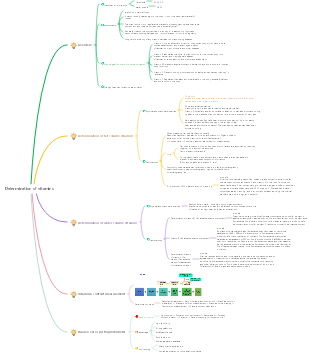
Food analysis: Determination of carbohydrates, including extraction and clarification of sugars, determination methods of sugars, determination of starch, determination of pectin (gravimetric method), and determination of cellulose (gravimetric method).
Edited at 2024-11-25 20:51:33This template shows the structure and function of the reproductive system in the form of a mind map. It introduces the various components of the internal and external genitals, and sorts out the knowledge clearly to help you become familiar with the key points of knowledge.
This is a mind map about the interpretation and summary of the relationship field e-book, Main content: Overview of the essence interpretation and overview of the relationship field e-book. "Relationship field" refers to the complex interpersonal network in which an individual influences others through specific behaviors and attitudes.
This is a mind map about accounting books and accounting records. The main contents include: the focus of this chapter, reflecting the business results process of the enterprise, the loan and credit accounting method, and the original book of the person.
This template shows the structure and function of the reproductive system in the form of a mind map. It introduces the various components of the internal and external genitals, and sorts out the knowledge clearly to help you become familiar with the key points of knowledge.
This is a mind map about the interpretation and summary of the relationship field e-book, Main content: Overview of the essence interpretation and overview of the relationship field e-book. "Relationship field" refers to the complex interpersonal network in which an individual influences others through specific behaviors and attitudes.
This is a mind map about accounting books and accounting records. The main contents include: the focus of this chapter, reflecting the business results process of the enterprise, the loan and credit accounting method, and the original book of the person.
Determination of carbohydrates in food
Overview
1. chemical composition of carbohydrates
Carbohydrates are a type of polyhydroxyaldehyde or polyhydroxyketone compound composed of three elements: C, H, and 0.
2. Classification of carbohydrates
Chemical classification: Monosaccharides: refers to carbohydrates that cannot be decomposed by hydrolysis methods, such as fructose and glucose. Easily soluble in water, sweet, optically active and reducing; Oligosaccharides: refer to complex carbohydrates with a degree of polymerization (number of monosaccharide residues) ≤ 10, such as sucrose, lactose, maltose; Polysaccharides: many monosaccharides or derivatives 3. High molecular compounds formed by combining glycosidic bonds.
Nutritional perspective: Effective carbohydrates: those that are nutritious (provide energy) to the human body are called effective carbohydrates; ineffective carbohydrates - dietary fiber: refer to substances that cannot be digested, decomposed, or absorbed by people's digestive system or enzymes in the digestive system. , but microorganisms in the digestive system can break down and utilize some of it.
3. Carbohydrate representation
Total carbohydrate (%) = 100-(moisture, crude protein, ash and crude fat)
Nitrogen-free extract (%) = 100-(moisture, crude protein, ash, crude fat, crude cellulose)
4. properties of carbohydrates
Color reaction: monosaccharide reacts with concentrated hydrochloric acid or concentrated sulfuric acid to remove three molecules of water to generate furfural.
Reducing properties: Some low molecular weight sugars have reducing properties (sucrose has no reducing properties because sucrose does not have a hemiacetal hydroxyl group)
Optical rotation: Under certain conditions, the optical rotation of various sugars can be measured.
5. Meaning of determination
Sugar has important physiological functions.
One of the basis for evaluating food quality.
Process control needs.
Excessive intake of carbohydrates may cause hyperlipidemia, obesity, etc.
Extraction and clarification of sugar
extract
1. Extraction agent: Water is used as the extraction agent: suitable for sugar and sugar products, fruits and vegetables, and fruit and vegetable products.
2. Control the temperature at 45-50°C: If the temperature is too high, soluble starch and dextrin will be extracted.
3. Acidic samples: Neutralize to neutral with calcium carbonate.
4. Plant extract: Adding mercuric dichloride can prevent sugar hydrolysis.
clarify
1. . Clarifying agent: Precipitate some interfering substances to make the extract clear and transparent.
2. Clarifying agents commonly used in laboratories
Neutral lead acetate: suitable for plant extracts, it can remove protein, tannin, organic acids, and pectin. Disadvantages: Poor decolorization power, it cannot be used to clarify dark sugar liquid, otherwise it will be treated with activated carbon.
Alkaline lead acetate: suitable for dark sucrose solution, which can remove pigments, organic acids and proteins. Disadvantages: The sediment particles are large and can take away fructose.
3. Commonly used lead removers
Potassium oxalate, sodium oxalate, disodium hydrogen phosphate, sodium sulfate
How to measure sugars
direct titration
1. Principle
The protein is removed from the sample, and the calibrated Fehling's reagent is directly titrated under heating conditions. The reducing sugar reacts with the potassium sodium copper tartrate complex in Fehling's reagent to generate red cuprous oxide, which precipitates cuprous oxide and then reacts with the reagent. Potassium ferrocyanide reacts to generate a soluble compound, using methylene blue as an indicator. At the end point, a slight excess of reducing sugar reduces the blue oxidized methylene blue to the colorless reduced tetramethyl blue. Finally, the amount of reducing sugar is calculated based on the volume consumed by the sample.
2. Determination method
Sample processing: sample → extraction → protein removal → filtrate
Calibrated Fehling's reagent solution
Predetermination of sample solutions
Determination of sample solution
Potassium permanganate titration method
1. Principle
After removing the egg matter from the sample, the reducing sugar reduces the copper salt to cuprous oxide. After adding iron sulfate, the cuprous oxide is oxidized to copper salt. The ferrous salt generated after the oxidation is titrated with potassium permanganate solution. According to the consumption of potassium permanganate, calculate the content of cuprous oxide, and then look up the table to get the amount of reducing sugar.
Determination of starch
chemical structure of starch
1. Amylose: Amylose is a starch with linear chains composed of glucose residues bonded by α-1,4 glycosidic bonds.
2. Amylopectin: Amylopectin is a straight-chain backbone composed of a-1,4 glycosidic bonds, and branch points are composed of a-1,6 glycosidic bonds.
acid hydrolysis
1. principle
After the fat and soluble sugars are removed from the sample, the starch is hydrolyzed and converted into reducing monosaccharides under a certain acidity. The weight of the starch is determined by measuring reducing sugars and multiplying by the conversion parameter 0.9.
2. Scope of application and characteristics
It is suitable for samples with high starch content and low other polysaccharide content such as hemicellulose and polysaccharide. This method is simple to operate and widely used, but its selectivity and accuracy are not as good as the enzymatic method.
3. Result calculation
Starch%=Glucose%x0.9
enzymatic hydrolysis
1. principle
After the fat and soluble sugars are removed from the sample, the starch is hydrolyzed into disaccharides using amylase, and then the disaccharides are hydrolyzed into monosaccharides using hydrochloric acid. The reducing sugar content is then measured using the reducing sugar determination method and converted into starch content.
2. Scope of application and characteristics
This method is not interfered by polysaccharides such as hemicellulose, polypentose, pectin, etc., and is suitable for samples with high polysaccharide content. The analysis results are accurate and reliable, but the operation is complicated and time-consuming.
3. Result calculation
Starch%=Glucose%x0.9
Determination of pectin (gravimetric method)
Existence form and nature
1. Protopectin: is a methylesterified polygalacturonide chain bound to cellulose and hemicellulose. Protopectin is insoluble in water and can be converted into pectin under the action of pectinase or acid and is in a dissolved state.
2. Pectin: Pectin ester acid is polygalacturonic acid that has been methylated to a certain extent. Pectin is a white amorphous substance, odorless, soluble in water and becomes a colloidal solution that condenses and precipitates in ethanol and salt solutions.
3. Pectic acid: is polygalacturonic acid without esterification.
gravimetric method
principle
First treat the sample with 70% ethanol to precipitate pectin, and then wash the precipitate with ethanol and ether in order to remove soluble sugars, fats, pigments and other substances. The residue is extracted with acid or water to extract total pectin or water-soluble pectin. Pectin is saponified to produce sodium pectate, which is then acidified with acetic acid to produce pectic acid. Calcium salt is added to produce calcium pectate. The precipitate is dried and weighed.
Scope of application and characteristics
It is suitable for all kinds of food, and the method is stable and reliable, but the operation is cumbersome and time-consuming. Calcium pectate precipitates are easily mixed with other colloidal substances, making this method less selective.
Determination of cellulose (gravimetric method)
Crude fiber: Indicates substances in food that cannot be dissolved by dilute acid or alkali and cannot be digested and utilized by the human body. Its main components are cellulose, hemicellulose, lignin and a small amount of nitrogen-containing substances.
Dietary fiber: Refers to the sum of polysaccharides and lignin in food that cannot be digested by human digestive enzymes. It includes cellulose, hemicellulose, pentosan lignin, pectin, gum, etc.
Acid and alkali treatment method
1. Principle
Under the action of hot dilute sulfuric acid, sugar, starch, pectin and other substances in the sample are hydrolyzed and removed, and then treated with hot potassium hydroxide to dissolve the protein and saponify the fat and remove it. It is then treated with ethanol and ether to remove tannins, pigments and residual fat. The resulting residue is crude fiber. If it contains inorganic substances, it can be deducted after ashing.
2. Scope of application and characteristics
This method is simple and rapid to operate, suitable for all types of food, and is the most widely used classic analysis method. However, the measurement results of this method are rough and have poor reproducibility.
3. Calculation method
Crude fiber (%) = (G/m) x100%
Neutral detergent fiber method
principle
After the sample is soaked in hot neutral detergent, the residue is fully washed with hot distilled water to remove free starch, protein, and minerals in the sample. Then alpha-amylase solution is added to decompose the bound starch, and then washed with distilled water and acetone. , to remove residual fat, pigment, etc., and the residue is dried to become neutral detergent fiber
Scope of application and characteristics
This method applies to samples of grains and their products, feed, fruits and vegetables, etc. This method has simple equipment, easy operation, high accuracy and good reproducibility. The measured results include all cellulose, hemicellulose, and lignin in the food, which are closest to the true content of dietary fiber in the food, but do not include water-soluble non-digestible polysaccharides, which is the biggest shortcoming of this method.