MindMap Gallery Determination of lipids
Food Analysis Chapter 6: Determination of Lipids, including extraction methods of lipids, several physical and chemical properties of edible oils, determination of lipids, selection of extractants, sample pretreatment, overview, etc.
Edited at 2024-11-25 19:46:24This template shows the structure and function of the reproductive system in the form of a mind map. It introduces the various components of the internal and external genitals, and sorts out the knowledge clearly to help you become familiar with the key points of knowledge.
This is a mind map about the interpretation and summary of the relationship field e-book, Main content: Overview of the essence interpretation and overview of the relationship field e-book. "Relationship field" refers to the complex interpersonal network in which an individual influences others through specific behaviors and attitudes.
This is a mind map about accounting books and accounting records. The main contents include: the focus of this chapter, reflecting the business results process of the enterprise, the loan and credit accounting method, and the original book of the person.
This template shows the structure and function of the reproductive system in the form of a mind map. It introduces the various components of the internal and external genitals, and sorts out the knowledge clearly to help you become familiar with the key points of knowledge.
This is a mind map about the interpretation and summary of the relationship field e-book, Main content: Overview of the essence interpretation and overview of the relationship field e-book. "Relationship field" refers to the complex interpersonal network in which an individual influences others through specific behaviors and attitudes.
This is a mind map about accounting books and accounting records. The main contents include: the focus of this chapter, reflecting the business results process of the enterprise, the loan and credit accounting method, and the original book of the person.
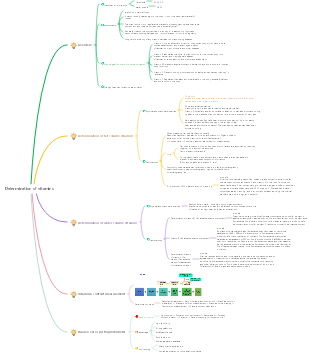
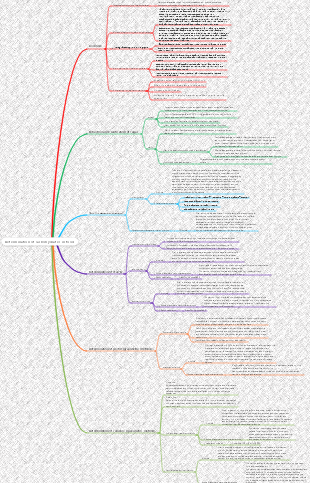
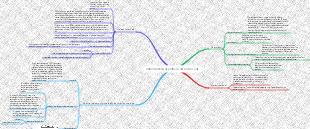
Determination of lipids
Selection of extractants and sample pretreatment
Principles for selecting extraction agents
Ether
Advantages: (1) The boiling point is lower than 34.6°C; (2) The ability to dissolve fat is stronger than petroleum ether. It is used as an extractant in the determination of fat content in GB.
Disadvantages: (1) It can saturate 2% water; (2) The extraction capacity of water-containing ether is reduced: (3) Water-containing ether dissolves non-fat components (such as sugar) and is extracted, making the result higher (sugar) Egg whites, etc.); (4) Flammable.
Petroleum ether (boiling range 30~60℃)
Applicable to
1. Dry and grind the sample;
2. Samples that are not easy to deliquesce and agglomerate;
3. Only free fat in the sample can be extracted.
Sample pretreatment
The processing method depends on the nature of the sample itself. Pre-processing of milk is very simple, whereas processing of plant or animal tissue is more complex.
Crushing: Minimize the physical, chemical and enzymatic degradation of lipids in the sample.
Add sea sand (samples that are prone to caking): Add 4-6 times the sample amount to loosen the sample and expand the contact area with the organic solvent, which is beneficial to extraction:
Add anhydrous sodium sulfate (samples with higher water content): Because the ether can be saturated with 2% water, the ether cannot penetrate into the tissue. The ability to extract fat is reduced, so when some samples have high water content, anhydrous sodium sulfate can be added until the sample is in the form of granules.
Drying: improves fat extraction efficiency. Because when the sample is wet, ether cannot penetrate into the tissue. The appropriate temperature should be chosen.
High temperature: (1) Fat is oxidized; (2) Fat combines with sugar and protein to become bound fat, which cannot be extracted by ether.
Low temperature: fat is easily degraded.
Acid treatment: hydrolyzes the bound fat and precipitates the fat in a free state.
Some samples contain a large amount of carbohydrates. When measuring fat, the water-soluble carbohydrates should be washed away with water before drying and extraction.
Overview
Lipids and fat content in food
Most animal and plant foods contain naturally occurring fats or lipid compounds, but the amounts vary.
Vegetable or animal fats have the highest fat content, while fruits and vegetables have very low fat content.
physical properties
Lipids are generally colorless, odorless, tasteless and neutral. The relative density is less than 1, the relative density of solid lipids is about 0.8, and the relative density of liquids is 0.915-0.940
chemical properties
Hydrolysis and saponification
Hydrogenation and halogenation
Oxidation and rancidity
The role of lipids
Provides essential fatty acids to the body
Rich in heat energy nutrients, it is the main source of heat energy for the human body; each gram of fat can provide 37.62kJ (9kcal) heat energy in the body, which is more than twice as high as carbohydrates and proteins.
Lipoproteins formed by the combination of fat and protein regulate human physiological functions and complete biochemical reactions in the body
Have a feeling of satiety
form of existence
Free state: animal fats and vegetable oils
Bound state: Naturally occurring phospholipids, glycolipids, lipoproteins and fats in some processed foods (such as baked goods and malted milk, etc.) form a bonded state with ingredients such as proteins or carbohydrates. For most foods, free fat is predominant, with less bound fat.
Several physical and chemical properties of edible oils and fats
Acid value
Acid value - the mass of potassium hydroxide (mg) required to neutralize the free fatty acids in 1g of oil.
Acid value is the main indicator reflecting the rancidity of oil.
Determination of iodine value
Iodine value (iodine value)--The mass of iodine chloride or iodine bromide absorbed by 100g of grease is converted into the mass of iodine (g).
The iodine value reflects the degree of unsaturation of oil within a certain range.
peroxide value
Peroxide value - (0.002 mol/L) Na, S, 0 required to titrate 1g of grease, volume of standard solution (mL).
The peroxide value reflects the freshness and rancidity of the oil.
Saponification price
Saponification value - the mass of potassium hydroxide (mg) required to neutralize all fatty acids (free bound) in 1g of oil.
Saponification value can identify the type and purity of oils and fats
Lipid extraction methods
Soxhlet extraction method
Principle: After the sample is extracted with a solvent such as anhydrous ether or petroleum ether, the substance obtained by evaporating the solvent is called fat or crude fat in food analysis.
Applicable objects: It is suitable for the determination of samples with high lipid content, low bound lipid content, capable of drying and grinding, and not easy to absorb moisture and agglomerate.
Features: The results are more reliable for most samples, requiring a long cycle and a large amount of solvent.
calculate Fat%=(W1-W2)x100/W
Acidic ether extraction method
Principle: After the food sample is hydrolyzed with hydrochloric acid, the fat is extracted with ether, then the solvent is recovered and removed in a boiling water bath, and the free and combined fat content is obtained by weighing.
Applicable objects: It is suitable for the determination of lipids in various types of food. It is suitable for solid, semi-solid, viscous liquid or liquid food, especially processed mixed food, which is easy to absorb moisture, agglomerate, and is difficult to dry. The effect is better.
Alkaline ether extraction method
Principle: The ammonia-ethanol solution is used to destroy the colloidal properties and fat globule membrane of the milk, so that the non-fat components are dissolved in the ammonia-ethanol solution, and the fat is freed. Then the fat is extracted with ether-petroleum ether, and the solvent is distilled to remove the residue. The substance is milk fat.
Applicable objects: Suitable for all kinds of liquid milk (raw milk, processed milk, partially skimmed milk, skimmed milk, etc.), various condensed milk, milk powder, cream and ice cream and other dairy products that can be dissolved in alkaline solution. It is also suitable for soy milk or Foods that are milky when added with water.
Chloroform-methanol modified method
Principle: Using polar methanol and non-polar chloroform as solvents, it can form a ternary extraction system with the water in the sample to turn the lipids bound in the sample tissue into free fat. It can also extract polar lipids such as phospholipids. (that is, extract all the fat), then evaporate the solvent, and weigh and quantify.
Applicable objects: This method is very thorough for the extraction of lipids and phospholipids contained in sample tissues, and is especially suitable for the extraction of food fats such as fish and poultry. The acid decomposition method can decompose some phospholipids, but this method will not decompose it.
Babcock and Gerber methods
Principle: Concentrated sulfuric acid is used to dissolve non-fat components such as lactose and protein in milk, and the calcium casein salt in milk is converted into soluble casein bisulfate, so that the fat globule membrane is destroyed and the fat is freed, and then heated and centrifuged. The fat is completely and quickly separated, and the value of the fat layer can be directly read to know the fat content of the milk being measured.
Scope of application: These two methods are standard methods for determining milk fat and are suitable for the determination of fat in fresh milk and dairy products. For dairy products containing a lot of sugar (such as sweetened condensed milk, sugar-sweetened milk powder, etc.), the sugar is easy to caramel when using this method, making the result error larger, so it is not suitable.
This method is simple and rapid to operate. The measurement accuracy meets the requirements for most samples, but is not as accurate as the gravimetric method.