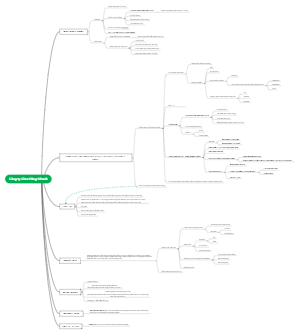
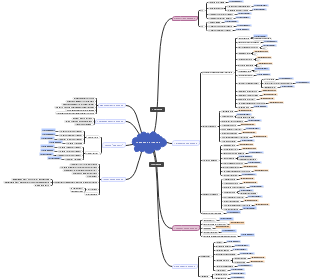
Certainly! Here’s a brainstorming list around the theme of "ATPL General Navigation" (Airline Transport Pilot License General Navigation)
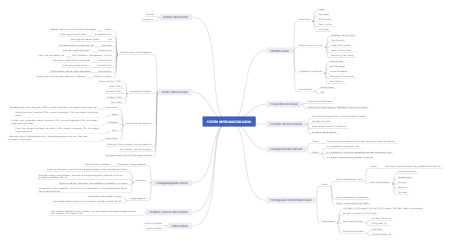
### Themes and Concepts in ATPL General Navigation
1. **Navigation Fundamentals**
Definitions and principles of navigation
Types of navigation: dead reckoning, pilotage, celestial, and instrument navigation
2. **Air Navigation Aids**
VOR (VHF Omnidirectional Range)
NDB (Non-Directional Beacon)
GNSS (Global Navigation Satellite System)
DME (Distance Measuring Equipment)
3. **Charts and Map Reading**
Understanding aeronautical charts (VFR & IFR)
Interpreting airspace classifications and boundaries
Reading topographical features and landmarks
4. **Flight Planning**
Pre-flight preparation and route selection
Weather considerations and NOTAMs (Notices to Airmen)
Fuel calculations and weight & balance considerations
5. **Navigation Procedures**
Standard Operating Procedures (SOPs) for navigation
Approach and departure procedures
Holding patterns and circuit training
6. **Position Fixing and Reporting**
Techniques for fixing a position (triangulation, radial)
Importance of regular position reporting
Utilizing checkpoints during the flight
7. **Flight Instruments**
Overview of primary flight instruments used in navigation
Understanding the function of the altimeter, heading indicator, and artificial horizon
Navigating using GPS and other advanced technology
8. **Situational Awareness**
Importance of maintaining situational awareness in navigation
Using mental models for navigation decision-making
Recognizing and mitigating navigation errors
9. **Human Factors in Navigation**
Crew resource management (CRM) and teamwork
Decision-making processes in navigation
Fatigue management and its impact on navigation performance
10. **Legal and Regulatory Framework**
Overview of ICAO and national regulations affecting navigation
Understanding responsibilities related to navigation as a pilot
Review of relevant navigational regulations and standards
11. **Advanced Navigation Techniques**
RNAV (Area Navigation) and RNP (Required Navigation Performance)
Use of autopilot and flight management systems (FMS)
Inertial navigation systems (INS)
12. **Emergency Navigation Procedures**
Techniques for navigation in adverse weather or reduced visibility
Contingency navigation for lost communication scenarios
Use of backup navigation instruments
13. **Technological Advances in Navigation**
Emerging technologies: satellite-based augmentation systems (SBAS)
The role of artificial intelligence in navigation
Future trends in aviation navigation technology (e.g., drones, urban air mobility)
14. **Practical Case Studies**
Analysis of historical navigation mistakes and accidents
Effective navigation techniques from seasoned pilots
Lessons learned from real-world navigational challenges
15. **Ongoing Education and Training**
Importance of recurrent training and validation of navigation skills
Utilizing simulators for navigation practice
Staying updated on regulatory changes and technology advancements
Each of these points can serve as a basis for further exploration and study concerning ATPL general navigation, suitable for theoretical understanding, practical application, and examination preparation. This structured list should cover the essential aspects of navigation that an airline transport pilot must be familiar with.
 Wondershare EdrawMind