MindMap Gallery Evolutionary theory of origin of state
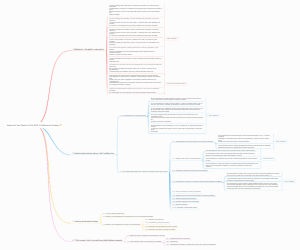
The evolutionary theory of the origin of the state explores how cultural factors such as religion, customs, and language influence the formation of states. It divides the evolution of states into stages such as tribal societies, city-states, empires, and modern states. Key theorists and contributors such as Marx, Weber, and Durkheim have made significant contributions to the theory of state origin, providing important perspectives on understanding the formation and development of states.
Edited at 2024-12-24 21:38:37evolutionary theory of origin of state
Historical Context of State Formation
Ancient civilizations and state emergence
Mesopotamia and the first city-states
Geography's role in state formation
Trade and economic interactions
Theories of social contract
Philosophers advocating for the concept
Impact on societal hierarchies
Evolution of governance structures
Transition from tribes to organized states
Importance of leadership roles
Development of laws and regulation
Role of warfare in state development
Belligerency as a catalyst for unity
Military organization indicating need for states
Cultural Influences on State Origin
Religion's role in legitimizing power
Divine right of kings
Theocracy as a form of governance
The symbolic role of rituals
Cultural narratives and state identity
Myths and historical stories
Fostered unity and social cohesiveness
Language and communication
Development of written language
Record keeping and administration
Laws and treaties documented
Influence on trade and diplomacy
Facilitating interactions between diverse groups
Enhanced cultural exchanges
Artistic expressions reflecting state ideologies
Architecture symbols of power
Monumental structures and their purposes
Art reflecting societal values
Literature promoting state propaganda
Historical accounts glorifying leadership
Use of storytelling for social cohesion
Stages of Evolutionary Development
Tribal societies
Characteristics of early human organization
Kinship and familial ties
Shared resources and communal living
Transition to chiefdoms
Emergence of leadership roles
Role of conflict resolution
Early states
Structuring of populations
Taxation and resource allocation
Bureaucracy and administration
Complexity and stratification in societies
Class divisions established
Specialization of labor
Mature states
Development of legal systems
Codifying laws for societal order
Importance of fair governance
Expansion of state power
Diplomacy and international relations
Establishing empires through conquests
Key Theorists and Contributors
Thomas Hobbes
Views on human nature and governance
The state of nature and societal contract
Emphasis on absolute authority
Justification for the formation of states
Security and protection
John Locke
Ideas on consent and governance
Importance of individual rights
Influence of governmental accountability
Foundation of modern democratic principles
State power derived from the people
Karl Marx
Perception of state as a tool of oppression
Class struggles and state evolution
Economic influences on political organization
Implications of socialism for state theory
Vision for a stateless society
Economic Factors in State Evolution
Agricultural advancements
Domestication of plants and animals
Surplus food production enabling population growth
Stratification of society due to wealth accumulation
Trade developments
Rise of trade routes and economic networks
Interdependency among states
Resource management and allocation
Importance of natural resources
Role in economic sustainability
Conflict over resources leading to state formation
Taxation systems
Funding state functions through resources
Implications for social classes
Social Structures in Early States
Hierarchical organization
Stratification of roles and responsibilities
Nobility, clergy, and commoners
Power dynamics shaping civilizations
Gender roles and expectations
Patriarchal societies predominating
Women's roles in economy and influence
Community and state
Interaction between local communities and governing bodies
Importance of return of social harmony
Conflict resolution frameworks established
Development of citizenship concepts
Rights and duties of citizens
Community involvement in governance
Political Organization and Authority
Formation of governance systems
Centralized vs. decentralized systems
Bureaucratic systems promoting efficiency
Local governance structures leading to conflicts
Different governance forms
Monarchies, democracies, and oligarchies
Evolution of these forms through history
Leadership dynamics
Role of charismatic leaders
Influence on public loyalty and governance
Creation of personal followership
Institutional structures sustaining authority
Ensuring stability and continuity in governance
Separation of powers and checks
Case Studies of Early States
Mesopotamia
Features of early city-states
Organization, agriculture, and trade
Legal codes created e.g. Hammurabi's code
Writing systems and their importance
Administrative tasks facilitated by cuneiform
Cultural development through literature
Ancient Egypt
Pharaohs as divine rulers
Relationship between religion and state
Monumental architectures like pyramids
Bureaucratic advancements
Role of scribes in administration
Taxation and resource management
Indus Valley Civilization
Urban planning and organization
Grid layout of cities
Significance of drainage systems
Trade and connection with other cultures
Evidence of extensive trade networks
Cultural exchanges promoting stability
Critiques of Evolutionary Theory
Limitations of gradualism
Oversimplification of complex transitions
Non-linear state evolution
Variability of historical contexts
Neglect of external influences
Impact of colonialism and globalization
Economic shifts affecting state formation
Eurocentrism in state theory
Overemphasis on Western models of development
Ignoring alternative governance structures
Case studies from diverse civilizations underrepresented
Need for localized histories
Reassessing the narratives of state formation
Broader perspectives enhancing understanding
Implications for Modern Governance
Relevance of historical context in contemporary politics
Lessons from past state dynamics
Understanding governance success and failures
Shift towards inclusive governance
Importance of diverse voices in political systems
Historical examples of effective coalitions
Evolving concept of citizenship
Changing expectations for citizen involvement
Engaging the populace in governance
Rights and responsibilities in modern societies
Influence of global interconnectedness
Impacts of globalization on local governance
Adoption of best practices across nations