MindMap Gallery Overview of Educational Psychology
This is a mind map about an overview of educational psychology. Concept: It is a science that studies the basic psychological laws of learning and teaching in educational and teaching situations. It is an interdisciplinary subject of psychology and education, between natural science and social science. between.
Edited at 2024-12-12 13:32:04Find a streamlined guide created using EdrawMind, showcasing the Lemon 8 registration and login flow chart. This visual tool facilitates an effortless journey for American users to switch from TikTok to Lemon 8, making the transition both intuitive and rapid. Ideal for those looking for a user-centric route to Lemon 8's offerings, our flow chart demystifies the registration procedure and emphasizes crucial steps for a hassle-free login.
これは稲盛和夫に関するマインドマップです。私のこれまでの人生のすべての経験は、ビジネスの明確な目的と意味、強い意志、売上の最大化、業務の最小化、そして運営は強い意志に依存することを主な内容としています。
かんばんボードのデザインはシンプルかつ明確で、計画が一目で明確になります。毎日の進捗状況を簡単に記録し、月末に要約を作成して成長と成果を確認することができます。 実用性が高い:読書、早起き、運動など、さまざまなプランをカバーします。 操作簡単:シンプルなデザイン、便利な記録、いつでも進捗状況を確認できます。 明確な概要: 毎月の概要により、成長を明確に確認できます。 小さい まとめ、今月の振り返り掲示板、今月の習慣掲示板、今月のまとめ掲示板。
Find a streamlined guide created using EdrawMind, showcasing the Lemon 8 registration and login flow chart. This visual tool facilitates an effortless journey for American users to switch from TikTok to Lemon 8, making the transition both intuitive and rapid. Ideal for those looking for a user-centric route to Lemon 8's offerings, our flow chart demystifies the registration procedure and emphasizes crucial steps for a hassle-free login.
これは稲盛和夫に関するマインドマップです。私のこれまでの人生のすべての経験は、ビジネスの明確な目的と意味、強い意志、売上の最大化、業務の最小化、そして運営は強い意志に依存することを主な内容としています。
かんばんボードのデザインはシンプルかつ明確で、計画が一目で明確になります。毎日の進捗状況を簡単に記録し、月末に要約を作成して成長と成果を確認することができます。 実用性が高い:読書、早起き、運動など、さまざまなプランをカバーします。 操作簡単:シンプルなデザイン、便利な記録、いつでも進捗状況を確認できます。 明確な概要: 毎月の概要により、成長を明確に確認できます。 小さい まとめ、今月の振り返り掲示板、今月の習慣掲示板、今月のまとめ掲示板。
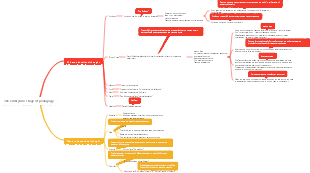
Overview of Educational Psychology
Basic connotation of educational psychology
Concept: It is a science that studies the basic psychological laws of learning and teaching in educational and teaching situations. It is an interdisciplinary subject of psychology and education, between natural science and social science. Between science.
Research object: human psychology in school education and teaching situations
Research Topic: How to learn, how to teach, and the interaction between learning and teaching
Research content
Learning and Teaching Factors five elements
student main object
Group Differences: Age, Gender, and Sociocultural Differences
Individual differences: knowledge base, learning style, intelligence level, interests and needs
Teacher’s key role, leading role, main body of teaching
Teaching content: the main information part intentionally conveyed, the object in teaching
Teaching media: All teaching media can express teaching content.
teaching environment
Physical environment: natural classroom conditions, teaching facilities, spatial layout (can be directly perceived)
Social environment: classroom discipline, classroom atmosphere, teacher-student relationship, classmate relationship, school spirit, social and cultural background (subtle influence)
learning and teaching process
Learning process: core content, earliest and most researched
teaching process
Evaluation and reflection process: throughout the entire teaching environment
Broad sense: school educational psychology, family and social educational psychology Narrow sense: school educational psychology
The role of educational psychology (describe, explain, predict, control)
Help teachers understand the problem accurately
Provide scientific theoretical guidance for practical teaching
Help teachers predict and intervene with students
Help teachers conduct educational research based on actual teaching
The development of educational psychology
Start-up period Before 1920s
Pestaloch → "Pioneer of Educational Psychology" "Psychologicalization of Education and Teaching" was the first to mention the "slogan"
Herbart → took psychology as the basis of educational theory and put it into practice. He was the first to clearly put forward "practice"
1868, Ushinsky → "Objects of Personnel Education", the founder of Russian educational psychology
1877, Kapterev → "Educational Psychology" The earliest work officially named "Educational Psychology"
1903, Thorndike → "Educational Psychology", the first book in the West, which was expanded into "Outline of Educational Psychology" ① Human nature ② Learning psychology ③ Individual differences and their causes
1908, Landlord Yue → Translated "Practical Psychology of Education" by Ohara Mataichi
Development period 1920s to late 1950s
The Development of Western Educational Psychology
1940s Freudian psychoanalysis; Skinnerian behaviorism; Vygotskian constructivism
In the 1950s, the rise of program teaching and teaching machines
In 1924, Liao Shicheng wrote my country's first "Educational Psychology"
The development of educational psychology in the Soviet Union
mature period 1960s to late 1970s
Bruner → Curriculum Reform Movement
Skinner→Teaching Reform
Rogers → "Student-centered" education reform movement
Three major sports
perfect period After the 1980s
Brunner: proactive research, reflective research, collaborative research social and cultural research
In 1980, Pan Shu wrote "Educational Psychology"
The development of educational psychology content system
Early 20th century → The initial establishment of the traditional content system → Represented by Thorndike's "Educational Psychology"
From the 1920s to the 1950s → the content of educational psychology expanded → multiple schools of thought coexisted and the content was complex
From the 1960s to the 1990s → the establishment of the content system of cognitive educational psychology → focusing on the combination with teaching practice, with cognitive theory taking the lead
After the 1990s → Comprehensive trend of educational psychology content system → Transformation from school opposition to school integration
Development Trends in Educational Psychology
Change teaching concepts, pay attention to psychological issues in both teaching and learning, and the rise of teaching psychology
Pay attention to social and psychological factors affecting education
Focus on research on various strategies and metacognition in practical teaching
Research on age characteristics, individual difference measurement and individualized teaching continues to receive attention
Research methods and principles of educational psychology
research methods
Experimental method Advantages: causal relationship, the most widely used and the greatest achievements, including: field experiments, laboratory experiments
Observation method The most common and basic, including: natural observation, experimental observation, "the front door of scientific research" Disadvantages: small sampling, superficiality
Survey methods have a wide range and high efficiency, including: questionnaire method, interview method, case investigation, and document analysis
The case method refers to a certain person or a group. In-depth understanding of the individual is too superficial and not applicable.
Testing Methods Individual Psychology and Behavior
Educational experience summary method promotes self-reflection of educational practitioners
Product analysis method/activity analysis method Students’ handicrafts, paintings, and compositions
Research principles
Principle of objectivity, seeking truth from facts, prerequisite
Educational Principles/Ethical Principles Most Important
Developmental principles: look at students’ psychology from a dynamic perspective
The principle of integrating theory with practice
Systematic principles: treat students comprehensively