MindMap Gallery Influence of subjects on pedagogy
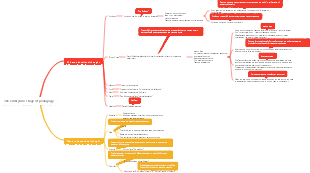
This is a mind map about Influence of subjects on pedagogy,Main content: Technology Digital literacy, problem-solving, and innovation.,Philosophy Critical thinking, logical reasoning, and ethics.,Social Sciences Societal dynamics, empathy, and critical thinking.,Languages Linguistic skills, cultural understanding, and communication.,Physical Education Health, fitness, and teamwork.,Arts Aesthetics, creativity, and self-expression.,History Contextual understanding and analysis of past events.,Lit
Edited at 2024-09-19 01:05:27Influence of subjects on pedagogy:
Science Experiments, critical thinking, and data analysis skills.
Science experiments play a crucial role in pedagogy as they promote critical thinking and develop students' data analysis skills.
By engaging in hands-on experiments, students learn to question, hypothesize, and make insightful observations.
Through the process of applying scientific methods, students develop critical thinking skills by making logical connections and drawing conclusions based on evidence.
Data analysis skills are essential in pedagogy as they enable students to gather and interpret empirical evidence, making learning more evidence-based and objective.
Students learn to analyze data, identify patterns, and draw meaningful conclusions.
This skill cultivates a scientific mindset and enhances problem-solving abilities.
Mathematics Logic, problem-solving, and reasoning abilities.
The study of mathematics contributes significantly to pedagogy by developing logical thinking, problem-solving skills, and reasoning abilities in students.
Mathematics requires students to apply logical reasoning to solve problems and make connections between concepts.
Through mathematical reasoning, students learn to approach problems systematically, break them down into manageable steps, and arrive at logical solutions.
Problem-solving skills are nurtured through mathematical exercises, where students are encouraged to explore different approaches and strategies to find solutions.
Students learn to think critically, analyze problems from multiple perspectives, and apply mathematical principles to real-life situations.
Literature Communication, interpretation, and creative expression.
Literature plays a vital role in pedagogy by fostering effective communication, enhancing interpretational skills, and encouraging creative expression in students.
By studying and analyzing various literary forms, students learn to express their thoughts, opinions, and emotions effectively through verbal and written communication.
Literature provides students with a rich source for interpretation where they can analyze themes, characters, and literary techniques, fostering critical thinking and analytical skills.
Creative expression is encouraged through literature, as it allows students to explore their imagination, experiment with different writing styles, and develop their unique voices.
Writing creatively also enhances students' vocabulary, grammar, and language skills.
History Contextual understanding and analysis of past events.
The study of history is instrumental in pedagogy as it provides students with a contextual understanding of past events and fosters analytical thinking.
Through the examination of historical events, students gain an appreciation for the complexities of human experiences and the motivations behind significant developments.
By analyzing primary and secondary sources, students learn to critically evaluate information, identify biases, and develop their historical perspectives.
Understanding history helps students make connections between the past, present, and future, enabling them to become well-informed and active citizens in society.
Arts Aesthetics, creativity, and self-expression.
The arts contribute to pedagogy by promoting aesthetic appreciation, encouraging creativity, and providing an outlet for self-expression.
Through exposure to various art forms, students develop an understanding and appreciation for aesthetics, cultivating their ability to recognize beauty and create meaningful connections.
Engaging in artistic activities allows students to explore their creativity, think outside the box, and develop innovative problem-solving skills.
Art offers a platform for self-expression, enabling students to communicate their thoughts, emotions, and identities through visual, performing, and literary arts.
Artistic expression nurtures self-confidence, self-awareness, and empathy for others.
Physical Education Health, fitness, and teamwork.
Physical education is essential in pedagogy as it promotes students' physical health, instills values of fitness and wellness, and fosters teamwork.
Through physical activities and sports, students develop a healthy lifestyle, improve physical fitness, and acquire knowledge about nutrition and wellness.
Engaging in team sports and collaborative physical activities cultivates skills in communication, cooperation, and leadership.
Physical education also enhances cognitive abilities, as studies have shown a positive correlation between exercise and improved academic performance.
Languages Linguistic skills, cultural understanding, and communication.
The study of languages is fundamental in pedagogy as it enhances linguistic skills, promotes cultural understanding, and fosters effective communication.
Language learning equips students with the ability to communicate fluently in different languages, expanding their global perspectives and enhancing intercultural competence.
Cultural understanding is developed through exposure to different languages, literature, and traditions, promoting tolerance, empathy, and appreciation for diversity.
Effective communication skills are cultivated through language learning, as students acquire vocabulary, grammar, and pronunciation skills, enabling them to express themselves confidently in various contexts.
Social Sciences Societal dynamics, empathy, and critical thinking.
The social sciences play a significant role in pedagogy by fostering an understanding of societal dynamics, promoting empathy, and developing critical thinking skills.
Social science subjects such as sociology, psychology, and anthropology provide students with insights into human behavior, social structures, and cultural norms.
Through studying the social sciences, students develop empathy by gaining awareness of diverse perspectives, understanding societal challenges, and working towards social justice.
Critical thinking skills are nurtured through social science education, as students learn to analyze and evaluate information, recognize biases, and form evidence-based arguments.
Philosophy Critical thinking, logical reasoning, and ethics.
Philosophy contributes to pedagogy by developing critical thinking skills, logical reasoning abilities, and fostering ethical thinking in students.
Studying philosophy encourages students to question assumptions, analyze arguments, and think critically about complex issues.
Through logical reasoning, students learn to construct sound arguments, identify fallacies, and develop persuasive communication skills.
Philosophy also cultivates ethical thinking by raising questions about values, morality, and ethical decision-making, helping students develop a strong moral compass.
Technology Digital literacy, problem-solving, and innovation.
Technology plays a crucial role in pedagogy by fostering digital literacy, enhancing problem-solving skills, and promoting innovation in students.
Digital literacy equips students with the knowledge and skills necessary to use technology effectively, navigate the digital world safely, and critically evaluate online information.
Technology integration in learning encourages students to find innovative solutions to problems, think creatively, and adapt to new technological advancements.
Technology empowers students to be active creators rather than passive consumers, promoting entrepreneurial skills, collaboration, and a growth mindset.