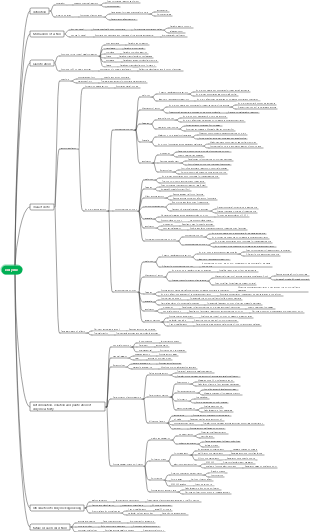
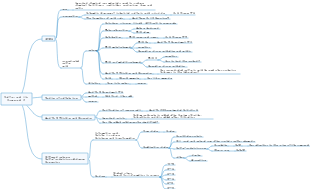
MindMap Gallery Classification and naming of organic matter (Part 1)
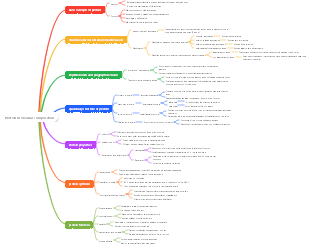
University medical organic chemistry mainly introduces saturated hydrocarbons, unsaturated hydrocarbons, aromatic hydrocarbons, halogenated hydrocarbons, alcohols, phenols, ethers, etc. in detail to help you become familiar with the key points of knowledge and enhance your memory. Students in need can save it.
Edited at 2024-12-15 22:15:06Find a streamlined guide created using EdrawMind, showcasing the Lemon 8 registration and login flow chart. This visual tool facilitates an effortless journey for American users to switch from TikTok to Lemon 8, making the transition both intuitive and rapid. Ideal for those looking for a user-centric route to Lemon 8's offerings, our flow chart demystifies the registration procedure and emphasizes crucial steps for a hassle-free login.
これは稲盛和夫に関するマインドマップです。私のこれまでの人生のすべての経験は、ビジネスの明確な目的と意味、強い意志、売上の最大化、業務の最小化、そして運営は強い意志に依存することを主な内容としています。
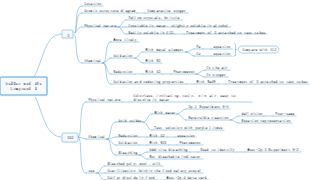
かんばんボードのデザインはシンプルかつ明確で、計画が一目で明確になります。毎日の進捗状況を簡単に記録し、月末に要約を作成して成長と成果を確認することができます。 実用性が高い:読書、早起き、運動など、さまざまなプランをカバーします。 操作簡単:シンプルなデザイン、便利な記録、いつでも進捗状況を確認できます。 明確な概要: 毎月の概要により、成長を明確に確認できます。 小さい まとめ、今月の振り返り掲示板、今月の習慣掲示板、今月のまとめ掲示板。
Find a streamlined guide created using EdrawMind, showcasing the Lemon 8 registration and login flow chart. This visual tool facilitates an effortless journey for American users to switch from TikTok to Lemon 8, making the transition both intuitive and rapid. Ideal for those looking for a user-centric route to Lemon 8's offerings, our flow chart demystifies the registration procedure and emphasizes crucial steps for a hassle-free login.
これは稲盛和夫に関するマインドマップです。私のこれまでの人生のすべての経験は、ビジネスの明確な目的と意味、強い意志、売上の最大化、業務の最小化、そして運営は強い意志に依存することを主な内容としています。
かんばんボードのデザインはシンプルかつ明確で、計画が一目で明確になります。毎日の進捗状況を簡単に記録し、月末に要約を作成して成長と成果を確認することができます。 実用性が高い:読書、早起き、運動など、さまざまなプランをカバーします。 操作簡単:シンプルなデザイン、便利な記録、いつでも進捗状況を確認できます。 明確な概要: 毎月の概要により、成長を明確に確認できます。 小さい まとめ、今月の振り返り掲示板、今月の習慣掲示板、今月のまとめ掲示板。
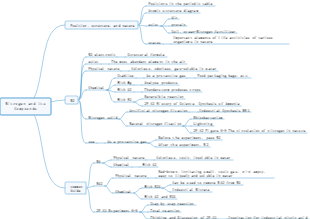
Classification and naming of organic matter (Part 1)
Saturated hydrocarbons
Alkanes
systematic nomenclature
IUPAC naming principles
The carbon chain is the longest, the branches are nearest, and the total number is smallest.
Br>Cl>Cycle>Ethyl>Methyl>Propyl (order)
The branch chain with the higher alphabetical order (order) is written first. When two different branches are in the same order from both ends, the branch chain with the higher order is listed first.
eg: 2,3,5-trimethyl-4-propylheptane
cycloalkanes
Monocyclic alkanes
cycloalkane
The C number attached to the lowest-order substituent is 1, and the position numbers of other substituents are as small as possible.
When a more complex C chain is connected to a simple ring, or several alicyclic hydrocarbons are connected to the same C chain, the ring can be used as a substituent. eg: 3-cyclopropyl-5-methylheptane
Polycycloalkanes
Spirocyclic hydrocarbons
According to the total number of carbon atoms in the ring, it is called: spiro [ ] a certain alkane. In [ ], indicate the number of carbon atoms in each ring except spiro atoms. Arrange from small to large, separated by dots
Numbering: Start from the small ring → spiro atom → macrocycle, and make the substituent number as small as possible.
eg: 5-methylspiro[2.4]heptane
Bridged cyclic hydrocarbons
According to the total number of carbons in the ring, it is called a bicyclic [ ] alkane. [ ] indicates the carbons in each bridge except the bridgehead carbon. Atomic numbers, arranged from largest to smallest, separated by dots
Numbering: start from one bridgehead carbon → macrocycle → another bridgehead carbon → small ring, try to make the substituents as many as possible The smallest number.
eg: 8,8-dimethylbicyclo[3.2.1]octane
unsaturated hydrocarbons
ene
common nomenclature
Ethylene, propylene, isobutylene
systematic nomenclature
The longest carbon chain is selected as the main chain; numbering starts from the end closest to the unsaturated bond; the cycloolefin is called a cycloolefin depending on the size of the ring.
eg:3-cyclohexyl-2-methylprop-1-ene
alkenyl
CH3CH2=CH- 1-propenyl (propenyl)
CH2=CHCH2- 2-propenyl(allyl)
If the atoms or groups connected to two double bonded carbon atoms are the same as each other
cis-trans isomerism
Sequence rules
(1) Atoms with a large atomic number are given priority over atoms with a small atomic number. For isotopes, those with higher mass numbers are preferred. Such as: -I>-Br>-Cl>-SH>-NH2>-CH3>-D>-H
(2) If the atoms connected to the main chain are the same, the atoms connected to the atom are compared successively. For example: -CH3 and -CH2CH3 are C.H.H.H and C.C.H.H, and the ethyl group has priority.
(3) If the atoms in the substituent are connected by double bonds or triple bonds, the atoms are regarded as connected twice or three times.
On the same side is called the cis configuration, On the opposite side is the trans configuration.
In compounds containing multiple double bonds, when the number of the main chain is selected, one of the cis double bonds should be selected. end starts. eg: cis, trans-hept-2,5-diene
If the four atoms or groups connected to two double-bonded carbon atoms are not the same
Z/E configuration notation
Compare the priorities of the two groups on each double bond carbon according to the order rules. If the priority group (larger group) is on the same side of the double bond, it is the Z (Zusammen, Z) configuration. The priority group is on the double bond. The opposite side of the bond is E (Entgegen, E) configuration.
Alkyne
When a compound contains both a double bond and a triple bond, and the double bond and triple bond are at different positions from the end of the carbon chain, the bond and triple bond should be given the lowest possible number.
If the double bond and triple bond are at the same distance from the end of the carbon chain, they are numbered in the order of alkenes first and then alkynes.
Aromatic hydrocarbons
monosubstituted benzene
Benzene as parent
Toluene, cumene, bromobenzene, nitrobenzene
Benzene as a group
Phenyl: styrene, 2-methyl-4-phenylpentane Benzyl: benzyl alcohol, benzyl chloride
polysubstituted benzene
Parent selection priority: -SO3H>-COOH>-OH>-NH2>-R>-NO2>-X ortho 0, between m, pair p, both
Halogenated hydrocarbons
IUPAC naming principles
The carbon chain is the longest, the branches are nearest, and the total number is smallest.
Br>Cl>Cycle>Ethyl>Methyl>Propyl (order)
The branch chain with the higher alphabetical order (order) is written first. When two different branches are in the same order from both ends, the branch chain with the higher order is listed first.
eg: 2,3,5-trimethyl-4-propylheptane
eg: 3-chloro-1-methylcyclohexene
Alcohol, phenol, ether
alcohol
Choose the longest carbon chain containing -OH as the main chain, number it from the carbon atom near the -OH end, and call it "an alcohol" according to the number of carbon atoms contained in the main chain, and add the word "an alcohol" or "alcohol" The position of the hydroxyl group is indicated above.
phenol
When naming phenol, phenol can be used as the parent, or aromatic hydrocarbons can be used as the parent. If the molecule contains only phenolic hydroxyl groups, phenol is used as the parent; if the molecule contains multiple hydroxyl groups and hydrocarbon groups, aromatic hydrocarbons are used as the parent and phenolic hydroxyl groups are used as substituents.
p-Chlorophenol, benzene-1,3-diphenol, 2,3-dihydroxytoluene
ether
common nomenclature
Just add the word "ether" after the two hydrocarbon names. eg: diethyl ether, methyl tert-butyl ether
systematic nomenclature
Choose a longer hydrocarbon group as the parent, and use a hydrocarbon group with a smaller number of carbon atoms and an oxygen atom called an alkoxy group as a substituent. When there is an unsaturated hydrocarbon group, the hydrocarbon group with a greater degree of unsaturation is used as the parent. eg: 2-methyl-1-methoxypent-1-ene