MindMap Gallery STEMNexus.org
STEMNexus.org, education structure and subject break down .It provides insight into various resources for teaching engineering, mathematics, and software development, including websites such as code.org and eGFI. The framework emphasizes the importance of low-cost kits for hands-on learning, such as Blocks Rock and Robowunderkind, to enhance spatial reasoning and robotics skills. It also introduces initiatives like the National Math Festival and resources for lifelong learners.
Edited at 2025-02-04 16:51:58Main Idea
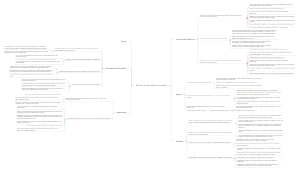
STEMNexus.org
STEM Subjects
Sience
Technology
Enginering
Math
All subjects are Based on academic definitions and workforce categorizations
Preschool (Ages 2–5)
Sensory play, basic problem-solving, and foundational STEM vocabulary.
Daily Routines as Learning: Use songs with patterns ("Wheels on the Bus") and compare object sizes/weights during play
Nature Exploration: Identify shapes in leaves, rocks, or fruit. Use mood trackers to discuss emotions and patterns
Simple Engineering: Build towers with blocks and experiment with tools (e.g., plastic screwdrivers) to explore cause/effect
Top Resources:
Elementary School (Ages 5–10)
Key Focus: Hands-on experiments, basic coding, and curiosity-driven science.
Coding Basics: Code.org’s Hour of Code and Sphero robotics kits
Kitchen Science: Explorable’s DIY projects (bouncy eggs, mold experiments)
Interactive Simulations: PhET’s math/physics games (e.g., balancing equations)
Top Resources:
Middle School (Ages 11–14)
Key Focus: Applied engineering, data analysis, and critical thinking.
Robotics & Coding: VEX Robotics kits and littleBits circuits for prototyping
Environmental Challenges: Kid Spark’s water filtration projects and Mystery Science NGSS lessons
Virtual Labs: Concord Consortium’s STEM Resource Finder (chemistry/biology simulations)
High School (Ages 14–18)
Key Focus: Career-ready skills, advanced labs, and specialized certifications.
Advanced Coding: Coursera/edX courses (Python, AI) with university credits
Engineering Projects: VEX V5 Workcell for automation and Water Rocket Kits
Research Tools: HHMI BioInteractive’s case studies and NASA Internships
Main Topic
Sicence Subjects
Biology
Physics
Chemistry
Astronomy
Earth Science
Environmeant Science
Biomedical Science
Psychology
Economics
Geography
Resources
STEM Teaching Tools (stemteachingtools.org) Practical guides and policy updates for educators
Edutopia STEM Resources (edutopia.org) Lesson plans, videos, and real-world applications
STEM-Works (stem-works.com) Activities like virtual surgeries and forensic labs
BioInteractive (biointeractive.org) Case studies, films, and data-rich activities for biology
NASA STEM Engagement (nasa.gov) Lesson plans, simulations, and internships for space and Earth sciences
PhET Simulations (phet.colorado.edu) Interactive simulations for physics, chemistry, and biology
Preschool (Ages 2–5)
Here are the top STEM resources for preschoolers (ages 2–5), curated from educator-recommended activities and proven early learning strategies:
Elementary students (ages 5–10)
top STEM resources for elementary students (ages 5–10), combining hands-on experiments, digital tools, and educator-vetted platforms:
Middle School Students (ages 11-14):
the top STEM resources for middle school students (ages 11-14):
High School (Ages 14–18)
Based on the search results and current educational trends, here are the top STEM resources for high school students (ages 14-18):
For STEM resources beyond high school,
Main Topic
Technology
Computer Science
Information Technology (IT)
Cybersecurity
Data Science
Software Development
Resources
Code.org (code.org) Free coding tutorials and game design projects
CK-12 (ck12.org) Adaptive learning tools for IT and computer science
Main Topic
Engineering
Civil Engineering
Mechanical Engineering
Electrical Engineering
Chemical Engineering
Aerospace Engineering
Automotive Engineering
Resources
eGFI (egfi-k12.org) Lesson plans and career guides for engineering disciplines
Main Topic
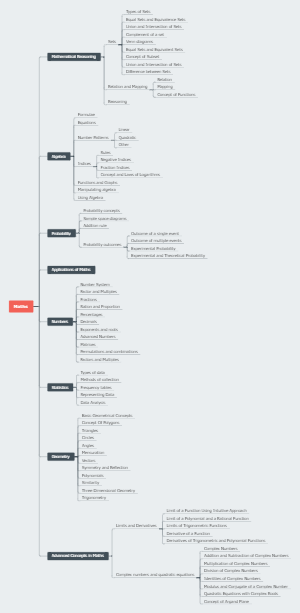
Math
Pure Mathematics
Applied Mathematics
Statistics
Actuarial Science
Financial Mathematics
Resource
National Math Festival (nationalmathfestival.org) Games and puzzles to engage students in applied math
Main Topic
Educator & Family Support
This framework balances free digital tools (e.g., PhET, CK-12) with hands-on kits, prioritizing skill progression from foundational play to career readiness.
Curriculum Design:
NSTA (NGSS-aligned lesson plans)
National Science Digital Library (aggregated NASA/NSF materials)TeachEngineering (project-based activities)
Low-Cost Kits:
Blocks Rock! (3D modeling toys for spatial reasoning)
Robowunderkind (modular robotics for home use)
Lifelong Learners
FutureLearn (microcredentials in AI/healthcare)
Art Projects for Kids (STEM-art fusion activities)
Main Topic
Theoretical Sciences
Theoretical sciences in STEM focus on developing and testing hypotheses, models, and theories to explain natural phenomena without necessarily conducting physical experiments. These fields often use mathematical models and abstract reasoning to understand complex systems and predict outcomes
Theoretical physics
Theoretical chemistry
Theoretical biology
Theoretical computer science
Pure mathematics
These disciplines contribute to STEM by: Providing foundational knowledge for applied sciences and engineering Developing new mathematical and computational tools Advancing our understanding of fundamental principles in nature Inspiring new technological innovations Theoretical sciences play a vital role in STEM education and research by fostering critical thinking, problem-solving skills, and the ability to work with abstract concepts7. They often serve as the basis for future practical applications and technological advancements.
Rescources:
These resources cater to different levels of expertise, from high school students to advanced researchers, providing a range of materials from interactive simulations to peer-reviewed journals in theoretical STEM fields.
MathSciNet: This database covers all fields of pure and applied mathematics, providing access to over 400 current journals. It's highly technical and organized based on the logical structure of mathematics, making it ideal for theoretical research
CogNet: Established by MIT, this cognitive science site offers full-text access to peer-reviewed journals, books, and reference sources. It's particularly suitable for upper-level undergraduates and advanced researchers in theoretical cognitive science
PhET Interactive Simulations: While not exclusively for theoretical sciences, these simulations cover physics, chemistry, and other STEM fields, allowing students to visualize and interact with theoretical concepts5
Quanta Magazine: This publication covers developments in mathematics, theoretical physics, computer science, and life sciences, providing in-depth articles on cutting-edge theoretical research
Stanford's Pre-Collegiate Studies: Although not specifically for theoretical sciences, this program offers courses in subjects like machine learning, thermodynamics, and astrophysics, which have strong theoretical components
MIT OpenCourseWare: While not mentioned in the search results, this platform is known to provide free access to MIT course materials, including those in theoretical sciences.
arXiv.org: Although not listed in the search results, this pre-print repository is a crucial resource for theoretical scientists to access the latest research papers across various STEM fields.

Main Topic
Fringe sciences
Fringe sciences occupy a unique position in relation to STEM (Science, Technology, Engineering, and Mathematics). While they are often considered outside the mainstream of scientific research, fringe sciences can play an important role in advancing STEM fields. Fringe science is characterized by: Using the scientific method, unlike pseudoscience1 Exploring ideas at the boundaries of established science1 Often being poorly funded and under-resourced1 Sometimes leading to paradigm shifts in scientific understanding1 Some examples of fringe sciences that have become accepted parts of STEM include: Evolution The Big Bang Theory Continental Drift These theories were once considered fringe but are now fundamental to our understanding of biology, cosmology, and geology respectively. Fringe sciences can contribute to STEM by: Challenging established theories and encouraging critical thinking Inspiring new avenues of research and technological innovation Fostering interdisciplinary approaches to scientific problems1 However, it's important to note that not all fringe sciences become accepted. Many remain on the outskirts of scientific consensus or evolve into pseudoscience1. The scientific community carefully evaluates fringe ideas based on evidence and rigorous testing before incorporating them into mainstream STEM fields. In STEM education, exposure to fringe sciences can help students develop critical thinking skills and understand the process of scientific inquiry. It encourages them to question assumptions and consider alternative explanations, which are valuable skills in all STEM disciplines
Based on the search results, here are some of the best resources for fringe sciences:
For those interested in exploring fringe science ideas, it's important to approach these resources critically and understand that many fringe concepts may not be accepted by mainstream scientific consensus.
Explorable.com: This website provides an overview of fringe science, its characteristics, and its role in scientific progress
Science Alcove: Offers articles and resources on fringe science topics, including cryptids and unconventional scientific ideas
Academic Research Databases: While not specifically focused on fringe science, these databases can be useful for finding peer-reviewed articles on fringe topics: Scopus Web of Science PubMed JSTOR4
Directory of Open Access Journals (DOAJ): A free, open-access database that may include articles on fringe science topics
"Fringe Science: Parallel Universes, White Tulips, and Mad Scientists": A book edited by Kevin R. Grazier, PhD, which explores scientific concepts from the TV show Fringe, but also touches on real-world fringe science topics
Wikipedia: While not a primary source, the Fringe Science article can provide an overview and links to more specific topics within fringe science