MindMap Gallery Aerial
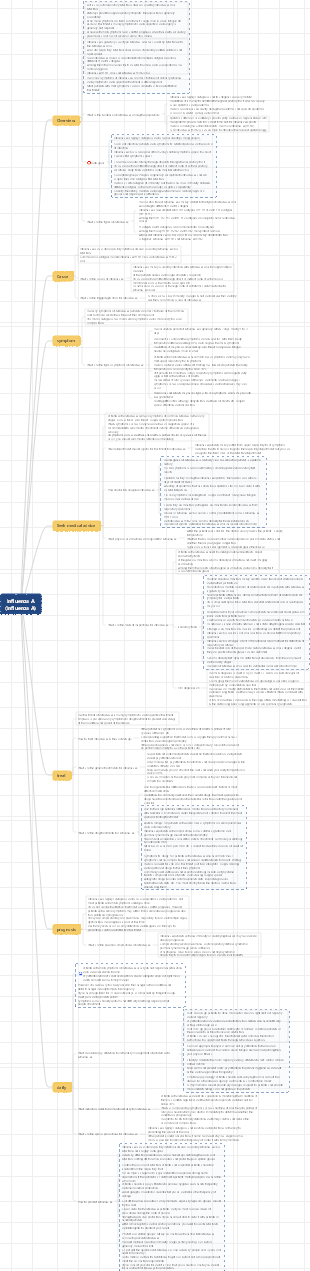
This is a mind map about influenza A, an acute respiratory infectious disease caused by influenza A virus. Symptoms, preventive measures and treatment measures are summarized.
Edited at 2025-02-08 11:11:30In order to help everyone use DeepSeek more efficiently, a collection of DeepSeek guide mind map was specially compiled! This mind map summarizes the main contents: Yitu related links, DS profile analysis, comparison of DeepSeek and ChatGPT technology routes, DeepSeek and Qwen model deployment guide, how to make more money with DeepSeek, how to play DeepSeek, DeepSeek scientific research Application, how to import text from DeepSeek into MindMaster, the official recommendation of DeepSeek Wait, allowing you to quickly grasp the essence of AI interaction. Whether it is content creation, plan planning, code generation, or learning improvement, DeepSeek can help you achieve twice the result with half the effort!
This is a mind map about DeepSeek's 30 feeding-level instructions. The main contents include: professional field enhancement instructions, interaction enhancement instructions, content production instructions, decision support instructions, information processing instructions, and basic instructions.
This is a mind map about a commercial solution for task speech recognition. The main content includes: text file content format:, providing text files according to the same file name as the voice file.
In order to help everyone use DeepSeek more efficiently, a collection of DeepSeek guide mind map was specially compiled! This mind map summarizes the main contents: Yitu related links, DS profile analysis, comparison of DeepSeek and ChatGPT technology routes, DeepSeek and Qwen model deployment guide, how to make more money with DeepSeek, how to play DeepSeek, DeepSeek scientific research Application, how to import text from DeepSeek into MindMaster, the official recommendation of DeepSeek Wait, allowing you to quickly grasp the essence of AI interaction. Whether it is content creation, plan planning, code generation, or learning improvement, DeepSeek can help you achieve twice the result with half the effort!
This is a mind map about DeepSeek's 30 feeding-level instructions. The main contents include: professional field enhancement instructions, interaction enhancement instructions, content production instructions, decision support instructions, information processing instructions, and basic instructions.
This is a mind map about a commercial solution for task speech recognition. The main content includes: text file content format:, providing text files according to the same file name as the voice file.
Aerial
definition
Influenza A (referred to as influenza A) is an acute respiratory infectious disease caused by influenza A virus.
symptom
Prodromal symptoms
Nasal symptoms: Mild nasal congestion may occur, increased nasal secretions may occur, and sometimes clear watery nasal snot may become mucous or purulent nasal snot as the condition develops.
Symptoms of the pharynx: Feeling itchy and dryness in the throat, and subsequent sore throat may occur. The sore throat may worsen slightly when swallowing, but the pain is generally relatively mild and may also be accompanied by a foreign body sensation in the pharynx.
Typical Symptoms
Fever and accompanying manifestations: Fever is one of the most prominent symptoms of influenza A. The body temperature rises rapidly to above 39-40℃ in a short period of time, and even some patients can reach 41℃. When you have fever, you are often accompanied by fear of chills and chills, and your body will tremble involuntarily and feel cold.
Systemic symptoms: Headache is usually more severe, and there will be swelling and thrusting pain on the entire head or local area, which may affect the patient's mental state and daily activities. The muscles of the whole body, including the limbs, waist, back, neck and other parts, will experience soreness, muscle fatigue, and the soreness during movement. In severe cases, it may cause difficulties in movement in the patient, and simple movements such as going up and down stairs and raising hands will become difficult.
Respiratory tract symptoms: Coughs are generally more frequent, mostly dry cough, that is, there is no sputum or only a small amount of thin white sputum. As the condition progresses, the throat pain may worsen due to frequent coughing, hoarseness may appear, and the voice will become dull and hoarse.
Gastrointestinal symptoms: Gastrointestinal symptoms are relatively more common in children. Frequent vomiting may occur, large amounts of stomach contents may be vomited, and sometimes nausea and loss of appetite. At the same time, there may be diarrhea, increased stools, thin texture of feces, and watery stools may appear in severe cases.
Severe symptoms
Respiratory failure: The patient's respiratory rate is significantly accelerated, his breathing is exhausted, accompanied by obvious dyspnea, which is manifested as shortness of breath, wheezing, and cyanosis in the skin, lips and other parts, that is, the color becomes cyano. When conducting blood gas analysis and examination, it will be found that the oxygen partial pressure is significantly reduced and the carbon dioxide partial pressure is increased, which seriously affects gas exchange and requires the help of oxygen inhalation or even mechanical ventilation to maintain life.
Septic shock: Blood pressure will continue to drop, the systolic blood pressure may be less than 90mmHg, and the diastolic blood pressure may be less than 60mmHg, resulting in insufficient blood supply to various organs of the body. Patients may experience consciousness disorders, such as mental depression, drowsiness, coma, etc., which may also be accompanied by symptoms such as damp and cold skin, paleness, and reduced urine volume. If not treated in time, it may be life-threatening.
Preventive measures
Vaccination
Vaccination time: It is recommended to get the flu vaccine in September-November before the arrival of the flu season every year for the best protection. For some special groups, such as nursing homes, childcare institutions and other places where people gather, the vaccination time can be appropriately delayed according to the local flu epidemic situation.
Applicable population: Children and adults over 6 months old can receive influenza vaccine. It is especially recommended for the elderly, children, pregnant women, patients with chronic cardiopulmonary diseases, diabetes, and immunocompromised diseases, as well as medical staff, teachers and services. Vaccination of key groups such as industry practitioners.
Note: Before vaccination, you should truthfully inform your doctor about your health status, such as whether you have a history of allergies. After vaccination, you need to stay at the vaccination site for 30 minutes to observe whether there are adverse reactions, such as local redness, swelling, pain, and a few people may experience systemic symptoms such as fever and fatigue, which can generally be relieved within 1-2 days.
Personal hygiene
Correct hand washing: When washing hands, make full use of the cleaning effect of soap or hand sanitizer to clean every part of your hands, including the palms of your hands, the back of your hands, between your fingers, and the seams of your nails. Follow the seven-step hand washing method, and the hand washing time is no less than 20 seconds to ensure that the bacteria on the hands can be effectively removed.
Respiratory hygiene: When coughing or sneezing, in addition to covering your mouth and nose with tissues and elbows, used tissues should be thrown into the covered trash can immediately and wash your hands in time. If there is no tissue, use the inner side of your elbow to cover your mouth and nose directly with your hands to prevent the germs from spreading to other objects through your hands.
Living habits
Sleep management: Ensure regular work and rest time, go to bed and get up on time every day, providing the body with enough rest time, which helps to enhance immunity. For children and adolescents, it can also promote growth and development.
Exercise exercise: At least 150 minutes of moderate-intensity aerobic exercise should be performed every week, such as brisk walking, jogging, swimming, etc., and some strength training can also be performed appropriately, such as push-ups, sit-ups, etc., to enhance muscle strength and endurance. Pay attention to gradual progress during exercise to avoid overwork.
Balanced diet: Food should be diversified, including cereals, vegetables, fruits, proteins, etc. Increasing the intake of foods rich in nutrients such as vitamin C, vitamin D and zinc, such as oranges, lemons, milk, seafood, etc., can help improve the body's resistance.
Environmental Management
Ventilation: Indoors, window opening time and number of times should be reasonably arranged according to the size of the room and the actual situation. In winter, you can choose to open the windows to ventilate when the temperature is high at noon to avoid colds caused by opening the windows.
Place selection: During the high incidence of influenza, such as shopping malls, cinemas, buses and other places, there are dense people and poor air circulation, which is prone to influenza A. If you have to go, you should wear a mask, try to shorten your stay time, and pay attention to maintaining a certain social distance from others, at least 1 meter or more.
other
Contact protection: If you have an influenza A patient around you, try to avoid close contact with the patient, such as sharing towels, tableware, etc. When taking care of patients, you should wear masks and gloves and take personal protection. The items used by the patient should be cleaned and disinfected in a timely manner.
Clothing adjustment: Add and reduce clothes in time according to weather changes to avoid catching a cold. In seasons where the temperature difference between morning and evening is large, be careful to add clothes at any time to prevent the invasion of cold evil. At the same time, the clothes you wear should be kept dry and avoid wearing wet clothes to avoid affecting your body's resistance.
Treatment measures
General treatment
Isolation and rest: Aerosol A is highly contagious. Confirmed or suspected patients should be isolated at home to avoid infecting others. At the same time, ensure adequate sleep, reduce physical energy consumption, and help the body recover.
Supplement nutrition and moisture: In terms of diet, you should choose foods that are easy to digest and rich in vitamins and protein, such as eggs, milk, vegetables, fruits, etc. Drink more water, about 1500-2000 ml per day to prevent dehydration and promote the discharge of metabolites.
Drug treatment
Antiviral drugs: Use as early as possible as possible as possible, and the medication should be best within 48 hours of onset, which can significantly reduce symptoms, shorten the course of the disease, and reduce the risk of complications. Commonly used drugs include oseltamivir, mabaloxavir, zanamivir, etc.
Symptomatic treatment drugs: For those with symptoms of high fever, acetaminophen, ibuprofen and other antipyretic analgesics can be used. For those who cough or cough, cough expectorants such as ambroxol and dextromethorphan can be used. If you have symptoms of nasal congestion and runny nose, you can use pseudoephedrine and other to relieve nasal mucosa congestion, or use physiological seawater nasal spray to clean the nasal cavity.
Other treatments
Traditional Chinese medicine treatment: Traditional Chinese medicine prescriptions or Chinese patent medicines can be used under the guidance of a doctor, such as Lianhua Qingwen Capsules, Jinhua Qinggan Granules, etc. In addition, massage of Yingxiang acupoints, Fengchi acupoints and other acupoints may also help relieve symptoms.
Severe treatment: A few severe patients may experience respiratory failure, septic shock, etc., and need to be admitted to the intensive care unit, and life support treatment such as mechanical ventilation, extracorporeal membrane oxygenation (ECMO), and strengthen comprehensive treatment measures such as anti-infection and anti-shock. .