MindMap Gallery Toyota production method a complete system production management method
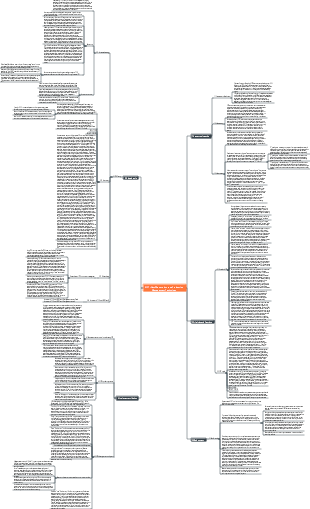
This is a mind map about Toyota's production method: a systematic and complete production management method. The main contents include: 5. Example analysis, 4. Tool application, 3. Main features, 2. Theoretical framework, 1. Conceptual meaning .
Edited at 2025-02-04 13:08:52In order to help everyone use DeepSeek more efficiently, a collection of DeepSeek guide mind map was specially compiled! This mind map summarizes the main contents: Yitu related links, DS profile analysis, comparison of DeepSeek and ChatGPT technology routes, DeepSeek and Qwen model deployment guide, how to make more money with DeepSeek, how to play DeepSeek, DeepSeek scientific research Application, how to import text from DeepSeek into MindMaster, the official recommendation of DeepSeek Wait, allowing you to quickly grasp the essence of AI interaction. Whether it is content creation, plan planning, code generation, or learning improvement, DeepSeek can help you achieve twice the result with half the effort!
This is a mind map about DeepSeek's 30 feeding-level instructions. The main contents include: professional field enhancement instructions, interaction enhancement instructions, content production instructions, decision support instructions, information processing instructions, and basic instructions.
This is a mind map about a commercial solution for task speech recognition. The main content includes: text file content format:, providing text files according to the same file name as the voice file.
In order to help everyone use DeepSeek more efficiently, a collection of DeepSeek guide mind map was specially compiled! This mind map summarizes the main contents: Yitu related links, DS profile analysis, comparison of DeepSeek and ChatGPT technology routes, DeepSeek and Qwen model deployment guide, how to make more money with DeepSeek, how to play DeepSeek, DeepSeek scientific research Application, how to import text from DeepSeek into MindMaster, the official recommendation of DeepSeek Wait, allowing you to quickly grasp the essence of AI interaction. Whether it is content creation, plan planning, code generation, or learning improvement, DeepSeek can help you achieve twice the result with half the effort!
This is a mind map about DeepSeek's 30 feeding-level instructions. The main contents include: professional field enhancement instructions, interaction enhancement instructions, content production instructions, decision support instructions, information processing instructions, and basic instructions.
This is a mind map about a commercial solution for task speech recognition. The main content includes: text file content format:, providing text files according to the same file name as the voice file.
Toyota production method: a complete system production management method
1. Conceptual meaning
1.1. Generation and Development
Toyota Production System (TPS) was born in Japan after World War II and was founded by Naichi Ono, deputy president of Japan's Toyota Motor Company. After more than 40 years of exploration and improvement, it has formed a complete production management technology and method system including business philosophy, production organization, logistics control, quality management, cost control, inventory management, on-site management and on-site improvement.
Lean production management is the name of Toyota-style production management by MIT in the United States. Toyota production method is therefore also called fine production method or lean production method. In 1985, the International Automotive Program led by Professor Jones of MIT Womack and Professor Jones conducted a comparative analysis of several automobile factories. In 1990, the book "The Machine to Transform the World" was published, naming the Toyota production method as lean production, and Its management ideas are described. In 1996, the author of the book published a sequel, "Lean Thought", which promoted the lean method to areas outside of manufacturing.
1.2. Basic meaning
Toyota's production method is a production that "to achieve the goal of the company's responsibility to employees, society and products, with the goal of completely eliminating waste, and on the basis of continuous improvement, adopts on-time and automated methods to pursue the rationality of manufacturing products. Way".
2. Theoretical framework
2.1. A goal
The goal of Toyota's production method is to completely eliminate waste, and the goal of business operations is to maximize profits. The traditional view is that selling price = cost profit, while Toyota believes that product prices are determined by consumers, producers should reduce costs and eliminate waste, and profit = selling price - cost.
Toyota breaks down waste at production sites into seven types:
Waste of overproduction: Too much, too early, "just in case" production or delivery leads to unbalanced and concentrated logistics, affecting quality and output, and is the main source of waste.
Waiting waste: Waste caused by the wait of the operator, parts or customers.
Transportation waste: moving parts does not increase value, and repeated handling will cause waste.
Waste of improper processing: waste of processing process caused by unreasonable local design and improper equipment maintenance.
Unnecessary inventory waste: inventory masks problems, adds lead time and storage space requirements.
Waste caused by unnecessary actions: waste caused by inappropriate actions by the operator.
Waste of defective products: It wastes time and money on producing unqualified products, and the longer it hides, the greater the loss.
All Toyota employees will eliminate these seven types of waste as their work goals and implement standardized operations and processes.
2.2. Two pillars
On-time production
Meaning: At the necessary moment, produce necessary quantities of necessary products or parts, including production according to demand, controlling production quantity, and ensuring product quality.
Production method: Adopt the "reverse" production method to form a reverse "pull" production organization control process, transmit demand information through Kanban management, collect materials from the previous process, and carry out on-time production according to the Kanban prompts.
Conscious production
Meaning: It is a production control system that is different from automation. On the basis of automation, it uses machines to discover and correct abnormal situations in the production process, and at the same time completes functions such as automatic detection, shutdown, and alarm.
Purpose: Improve quality, reduce costs, strengthen operational safety, and liberate human resources to engage in more meaningful work.
2.3. A major foundation
The cornerstone of Toyota's production method is the on-site continuous improvement activities that all employees participate in, and is implemented through three ways: the quality management team, the rationalization recommendation system and the continuous improvement activities:
Quality Management Team: An informal team composed of staff in the same production site, researching and solving quality problems and improving problems through self-inspiring and mutual inspiring.
Rationalized suggestions system: Toyota's creative thinking system, through the joint thinking and participation of all employees in improving activities, improve product quality, reduce costs, and enhance employee loyalty and sense of belonging.
Continuous improvement activities: It is the creed of Toyota's production and operation. It continues to carry out improvement activities based on the complex and changing production site conditions, continuous improvement of people's abilities, changes in corporate environment and customer needs.
3. Main features
Pull-on-time production
Production starting point: Starting from the needs of the end user as the production starting point.
Production method: emphasizes logistics balance, pursues zero inventory, and transmits information through the board. The rhythm in production can be manually intervened, but the focus is on ensuring logistics balance.
Production unit coordination: The production plan is completed by each production unit, and coordination between units is extremely important.
Total quality management
Quality concept: Emphasizes that quality is produced rather than inspected, and the final quality of the product is ensured by quality management in production.
Quality control: Each process is subject to quality inspection and control, problems are discovered in a timely manner, production is stopped until it is resolved, and unqualified products are avoided.
Team work method
Employee Role: Employees not only execute orders, but also actively participate in and assist decision-making.
Team organization: Divide team members according to business relationships, emphasizing the versatility of one’s expertise, trust in the work atmosphere, and organizational changes are determined according to different things.
Concurrent Engineering
Working method: During product design and development, concept design, structural design, process design, final requirements, etc. are combined to ensure that the quality is completed as required at the fastest speed.
Information feedback: Each member of the project team regularly or at any time, coordinates and solves problems, and uses CIM technology to assist the parallelization process.
4. Tool application
4.1. Application promotion measures
Carry out in-depth TPS training
Conflict of ideas: TPS ideas may conflict with corporate traditional philosophy and employee work experience, such as perceptions of inventory.
Training content: TPS theory training is provided for corporate employees, and on-site object-oriented training and problem-oriented training are provided for different positions.
Post-test promotion
Promotion method: First conduct trial operation in some positions and areas, and the effect is obvious and does not affect production, and then promote it to the overall situation.
Continuous improvement is the bottom line
Improvement effect: expose and improve problems in production and management, so that the TPS concept can penetrate into every corner of the company.
4.2. Application precautions
Top management support
Determination requires: The top management must have unswerving determination to provide the system with continuous and strong support.
Problem response: Solve the problems exposed during the implementation process and avoid employees' fear of difficulties.
Eliminate all waste
The concept of waste: "Eliminate all forms of waste and completely reduce costs" as the basic principle and the pursuit of goals.
Waste elimination: Find out the various wastes that exist in the enterprise and gradually eliminate them.
Adhere to dynamic self-improvement
System operation: break the normal and stable production system, expose problems and solve them, and promote the continuous progress of the system.
Respect human nature and mobilize enthusiasm
Personnel participation: Active participation of people is the key to Toyota's production method, including the education and training of employees.
Effect realization: improve labor productivity, ensure product quality, and reduce production costs.
Thinking about inventory issues
Current inventory status: The overall rationalization of my country's production system has not yet been formed, and there may be inventory problems in the implementation of TPS.
Solution: Set up a raw material database at the first end of the production line to reduce the raw material reserve quota, and achieve on-time full process.
Realize rapid equipment replacement and adjustment
Importance: It is a key factor in improving industrial competitiveness and realizes technical support for on-time production.
Method application: SMED method is used to shorten the equipment replacement and adjustment time.
4.3. Key principles
Establish a Kanban system
System function: Re-transform the process, achieve "reverse" control of production quantity, save inventory costs, and improve process efficiency.
Emphasize real-time inventory (Just In Time)
Inventory concept: produce necessary things and quantity based on customer needs, bringing change thinking to American companies.
Complete standard operation
Operating specifications: Establish strict specifications for production work details, and employees can change standard operations according to the situation to improve efficiency.
Eliminate waste, inequalities and ambiguity
Waste exclusion: Exclude all kinds of waste at the production site, including waste of materials, manpower, time and other resources.
Repeat why five times
Work attitude: Employees are required to constantly ask why and think about how to do it in the work process to create a perfect manufacturing task.
Production balance
Balance requirements: Each production project takes the volume to reach the average value as much as possible, and reduces inventory and production waste.
Make full use of "living people and living space"
Space Utilization: By improving processes and streamlining production space, personnel can become "multi-capable workers" and create higher value.
Develop automation habits
Connotation of automation: including machine systems and human automation, develop good work habits, and constantly learn and innovate.
Elastic changes in production mode
Production method adjustment: Adjust the production method according to the situation, such as changing from production line operation to employees working simultaneously on the work platform.
4.4. Four major rules
Work clearly stipulates: The content, order, time and results of all work must be clearly stipulated.
The customer-supplier relationship is clear: Every customer-supplier relationship must be direct and the response method is clear.
The product circulation route is simple: The circulation route of each product and service must be simple and direct.
Improvement scientific progress: All improvements must be carried out under the guidance of teachers, in accordance with scientific methods, at the lowest possible organizational level.
5. Case Study
5.1. Application of Toyota production mode in Tianjin Aisan Company
Company Profile Tianjin Aisan Auto Accessories Co., Ltd. is a joint venture jointly funded by Tianjin Carburetor Factory, Japan Aisan Industrial Co., Ltd., and Japan Toyota Trading Co., Ltd. The management system and production model operate according to Japan Aisan Company. The products The quality reaches the level of similar products in Japan, with a pass rate of 100%.
Application
Policy formulation: formulate annual company policies based on the medium-term business plan, including setting annual goals and countermeasures for completing goals.
Functional Policy Management
Functional allocation: The functions of the company's current organizational structure are composed of 10 functions such as cost and technology, and are respectively responsible by senior management personnel.
Policy Plan: Each function formulates annual company policy plan (Table A), including medium-term policies, goals, countermeasures, plans, etc.
Policy development: Each department formulates annual department policy plans (Table C) based on the company's key countermeasures.
Implementation and inspection of policies: hold a policy presentation meeting, conduct a policy completion presentation meeting, and analyze and improve unfinished projects.
People-oriented, focusing on training
Training level: divided into three levels: full-staff education, team leader education, and section chief education or above leadership education.
Education content: including total quality management education, Toyota production methods, and publication of improvement results.
Educational method: conduct training in combination with examples, such as improving process documents, sending employees to Japan for training, etc.
Quality Management
Quality concept: Emphasizes that quality is made, not tested.
Quality control: 100% inspection method for all products is implemented, operators are responsible for online inspection, and full-time inspection personnel are responsible for partial process inspection.
By learning and applying Toyota production methods, the product quality of Tianjin Aisan Company has been significantly improved, with the installation-free adjustment rate of the OEM factory above 99.97%, the passing rate of the factory products reached 100%, the after-sales service rate was below 0.08%, and it has passed the ISO9002 quality system certification.