 Wondershare EdrawMind
MindMap Gallery OPT New Ways to Improve Production Management Technology
- 27
OPT New Ways to Improve Production Management Technology
Still worrying about low production efficiency and stock backlog? OPT will help you! It covers modules such as concepts, principles, and implementation, and comprehensively analyzes from theory to practice. Suitable for production managers, workshop supervisors, and business owners. Can be used in mechanical manufacturing, electronic production and other scenarios. Provide update services. Click to bookmark and download and get the OPT practical template!
Edited at 2025-02-04 12:58:23
- DeepSeek User Guide Collection
In order to help everyone use DeepSeek more efficiently, a collection of DeepSeek guide mind map was specially compiled! This mind map summarizes the main contents: Yitu related links, DS profile analysis, comparison of DeepSeek and ChatGPT technology routes, DeepSeek and Qwen model deployment guide, how to make more money with DeepSeek, how to play DeepSeek, DeepSeek scientific research Application, how to import text from DeepSeek into MindMaster, the official recommendation of DeepSeek Wait, allowing you to quickly grasp the essence of AI interaction. Whether it is content creation, plan planning, code generation, or learning improvement, DeepSeek can help you achieve twice the result with half the effort!
- DeepSeek 30 feeding level instructions
This is a mind map about DeepSeek's 30 feeding-level instructions. The main contents include: professional field enhancement instructions, interaction enhancement instructions, content production instructions, decision support instructions, information processing instructions, and basic instructions.
- Voice recognition commercial solution
This is a mind map about a commercial solution for task speech recognition. The main content includes: text file content format:, providing text files according to the same file name as the voice file.
OPT New Ways to Improve Production Management Technology
- DeepSeek User Guide Collection
In order to help everyone use DeepSeek more efficiently, a collection of DeepSeek guide mind map was specially compiled! This mind map summarizes the main contents: Yitu related links, DS profile analysis, comparison of DeepSeek and ChatGPT technology routes, DeepSeek and Qwen model deployment guide, how to make more money with DeepSeek, how to play DeepSeek, DeepSeek scientific research Application, how to import text from DeepSeek into MindMaster, the official recommendation of DeepSeek Wait, allowing you to quickly grasp the essence of AI interaction. Whether it is content creation, plan planning, code generation, or learning improvement, DeepSeek can help you achieve twice the result with half the effort!
- DeepSeek 30 feeding level instructions
This is a mind map about DeepSeek's 30 feeding-level instructions. The main contents include: professional field enhancement instructions, interaction enhancement instructions, content production instructions, decision support instructions, information processing instructions, and basic instructions.
- Voice recognition commercial solution
This is a mind map about a commercial solution for task speech recognition. The main content includes: text file content format:, providing text files according to the same file name as the voice file.
- Recommended to you
- Outline
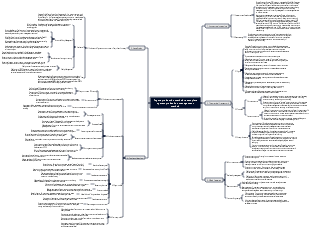
OPT: New Ways to Improve Production Management Technology
1. Conceptual meaning
1.1. Generation and Development
Optimized Production Technology (OPT) was proposed by Israeli physicist Dr. Eli Goldratt in the 1970s. Initially, he designed a set of computer software for manpower and material dispatch for his friend's troubled manufacturing plant, which helped the factory get out of it. Later, Godrat developed management software, namely OPT software, which is widely used in the manufacturing industry.
OPT was originally called the Optimized Production Timetable, and was renamed the Optimized Production Technology in the 1980s. Later, Godrat developed it into the Theory of Constraints (TOC). Although OPT has a short appearance, it has achieved remarkable achievements. It is another new production organization method after MRP and JIT (Just in Time). It has been quickly accepted by the Western business community due to its unique management ideas and significant economic benefits.
1.2. Main meaning
OPT aims to make the entire production process work in a coordinated manner to achieve company goals. Any manufacturing organization can be regarded as a system that converts raw materials into products, and manufacturing resources are a key part of it. It is generally believed that when designing an enterprise, the production capacity balance can be achieved at each stage, but since production is a dynamic process and demand is constantly changing, it is difficult to achieve production capacity balance in reality. Therefore, uneven resource load will occur during the production process, resulting in bottlenecks and Non-bottleneck resources.
Bottleneck (defined by OPT) refers to resources whose actual production capacity is less than or equal to the production load. Such resources limit the output speed of the entire production system; the remaining resources are non-bottleneck resources. The basis of OPT's organization of production is to strictly distinguish bottleneck resources from non-bottleneck resources, focus on bottleneck resources, and give priority to formulating operation plans for bottleneck resources to ensure that their load does not exceed production capacity.
1.3. Main concepts
Bottlenecks and non-bottlenecks resources: Manufacturing organizations convert raw materials into products, and manufacturing resources include all resources required for production, such as machines, workers, factories and fixed assets. In actual production, due to the dynamic nature of production, production capacity is difficult to balance at each stage, resulting in bottleneck resources with excessive resource load, while the rest are non-bottleneck resources. To determine whether a resource is a bottleneck, it is necessary to examine its actual production capacity and production load (or the demand for it by related resources is not necessarily the market demand).
Classification of enterprises by logistics: The enterprise production process can be regarded as an activity chain from raw materials to finished products. In fact, this activity chain is often disturbed by random events. By classifying "logistics" in enterprises, we can recognize the weaknesses or "bottlenecks" of different types of "logistics", and then plan and control them in a targeted manner. Generally, "product logistics" is divided into three types: "V", "A" and "T":
"V" type logistics: processing or conversion from a raw material to a variety of different end products, such as oil refineries, steel plants, etc. Its characteristics include more types of final products than types of raw materials; the basic processing process of all final products is the same; enterprises are generally capital-intensive and highly specialized.
"A" type logistics: processed from multiple raw materials or converted into a final product, such as a shipyard. Its characteristics are that there are many parts and some parts are unique to special finished products; the processing process of parts is different; the equipment is generally general.
"T" type logistics: It is a development of "A" type, with multiple final products, such as locking factories, automobile manufacturers, etc. Its characteristics include assembling more finished products from some common parts; the parts of many finished products are the same; the parts processing process is usually different.
In fact, there are often more than one type of "product logistics" for enterprises, and enterprises can be divided accordingly according to the dominant "product logistics". From the perspective of manufacturing resources, there is a difference between bottlenecks and non-bottlenecks in the resources that "materials" pass through. There are bottlenecks to non-bottleneck resources, from non-bottlenecks to bottleneck resources, bottleneck resources and non-bottleneck resources to the same assembly center, bottleneck resources, and bottleneck resources. The four basic relationships between them and non-bottleneck resources. [Table: Comparison of different characteristics of "V" type, "A" type, and "T" type enterprises]
This table compares the types of raw materials, finished products, product processing processes, parts, equipment, process flow, production lead time, bottleneck identification and production control coordination of "V" type, "A" type, and "T" type enterprises, etc., in terms of raw materials, finished products, product processing processes, parts, equipment, process flow, production lead time, bottleneck identification and production control coordination, etc. Different characteristics of the aspects show that from "V" to "A" to "T" enterprises, the types of raw materials are gradually increasing, the types of finished products and process flows are changing, and the difficulty of bottleneck identification and production control coordination is increasing. trend.
2. Principles and Functions
2.1. Principles of OPT
Pursuing balance of logistics rather than balance of production capacity: pursuing balance of production capacity when designing a new factory is to make full use of production capacity, but for multiple varieties of production enterprises that have been put into production, pursuing balance of production capacity may lead to product backlog because the product may not necessarily meet the requirements. At that time, the market demand.
The degree of utilization of "non-constraint" is not determined by itself, but by the system's "constraint": that is, the degree of utilization of non-bottleneck resources is restricted by the bottleneck resources in the system.
The "Utilization" and "Activation" of resources are not synonyms: "Utilization" refers to the degree to which resources should be utilized, and "dynamic" refers to the degree to which resources can be utilized. Traditional views often regard the two as synonyms, but In fact, they differ.
One hour loss on "constraint" is one hour loss on the entire system: production time includes adjustment preparation time and processing time. In terms of constraint resources, the meaning of adjustment preparation time is different from that of non-constrained resources. Constrain resource control and reduce output by one hour if interrupted, saving one hour of adjustment preparation time can increase one hour of processing time and correspondingly increase system output. Therefore, special protection measures should be taken for constrained resources, such as reducing the adjustment of preparation time and frequency, implementing a continuous working system, setting up quality checkpoints, setting up buffer links, etc., to increase their output.
One hour saved by "non-constraint" is not helpful to increase the effective output of the system: non-bottleneck resources have idle time in addition to production time. Saving their production time will increase idle time, although it may reduce processing batches and increase batches to reduce products in production Inventory and production lead times, but these impacts on the fundamental goals of the system are still subject to constraints on resource constraints.
"Constraints" control inventory and effective output: effective output is restricted by the company's production capacity and market demand, and is controlled by resource constraints and market constraint bottlenecks. If the "constraint" is within the enterprise, it indicates insufficient production capacity and limits effective output; if the enterprise's resource capacity is higher than market demand, then market demand becomes a "constraint". At the same time, "non-constraint" should be synchronized with "constraint", "constraint" controls the inventory level, and excessive inventory is a waste.
Transport batches may not be equal to (and in many cases should not be equal to) processing batches: In workshop on-site planning and control, batch determination affects enterprise inventory and effective output. OPT adopts a unique dynamic batch system to divide the in-product inventory into transportation batches (the number of parts transported between processes) and processing batches (the number of the same parts prepared for processing can be adjusted at one time, which can be the sum of one or several forwarding batches) . Determining the processing batch requires consideration of the reasonable application of resources and product-in-process inventory. Determining the transportation batch requires consideration of the continuity and parallelism of the production process, as well as reducing waiting time and transportation workload and expenses. The starting points of the two are different, so the transportation batch does not necessarily have to be processed. Batches are equal.
The batch size should be variable, not fixed: this is the direct application of Principle 7. The transportation batch is considered from the perspective of product-in-production, and the processing batch is considered from the perspective of resource type. When the same workpiece is processed on constrained resources and non-constrained resources, and is transmitted between different processes, different batch sizes can be dynamically determined according to actual needs.
When organizing the operation plan, the system resource constraints are taken into account. The lead-up period is the result of the operation plan, not the predetermined value: MRPII uses the unlimited capacity planning method to prepare the operation plan according to the pre-prepared lead-up period. When the production lead-up period is large and the actual entry and exit, The plan is difficult to implement. OPT considers the system resource constraints during the planning period, and uses the limited capacity planning method to first arrange the production progress plan of the key parts on the constraint resources, and then use it as a benchmark to schedule and optimize the previous and subsequent processes in different ways, and finally prepare non-critical work plan. Therefore, the lead time in OPT is a function of batch, priority and many other factors, and is the result of the preparation of the production plan.
OPT’s nine principles emphasize that in enterprise production activities, we must grasp key issues, solve bottlenecks, and obtain large profits with a small amount of investment.
2.2. OPT’s goal
OPT advocates believe that the real goal of any manufacturing company is to make money now and in the future. To achieve this goal, it is necessary to increase production and sales rates while reducing inventory and operating expenses. Measure whether a company makes money, it usually uses three indicators: Net Profit (NP), return on investment (ROI) and cash flow (Cash Flow (CF): It is the company that makes money. The absolute amount of the net profit is generally higher, the better the company's efficiency is. > - Return on Investment (ROI): represents the ratio of returns to investments in a certain period, and is used to compare the benefits of enterprises of different investment scales. For example, the annual net profit of both companies is 500,000 yuan, one invests 1 million yuan and the other invests 2 million yuan. The former has a higher investment rate and better efficiency. > - Cash Flow (CF): represents the money from income and expenditure in the short term, which is a necessary condition for the survival of the enterprise.
These three indicators mainly consider the effective utilization and arrangement of existing resources, but cannot directly guide production, if the production batch cannot be judged based on this. Therefore, OPT proposed three operating indicators: Throughput, T, Inventory, I, and Operating Expenses, OE, as bridges. If these operating indicators perform well, it means that the company has strong profitability: > - Production and sales rate (T): It is not the general pass rate or output rate, but the amount produced and sold within a unit of time, that is, obtaining money through sales activities The rate of production and unsold products belong to inventory. > - Inventory (I): Including raw materials prepared to meet future needs, products in process, parts that are not used for the time being, unsold finished products, and fixed assets after deduction, etc. Inventory occupies funds and incurs related expenses. > - Operating fee (OE): is all expenses in the process of converting inventory into production and sales, including direct and indirect expenses.
As measured in currency, T is the money entering the system, I is the money stored in the system, and OE is the money paid to turn I into T. When T increases and I and OE remains unchanged, NP, ROI and CF are all increased; when OE decreases and T and I remain unchanged, NP, ROI and CF are also increased; when I decrease and T and OE remains unchanged, ROI will increase; when I decrease and T and OE remains unchanged, ROI will increase; when I decrease and T and OE remains unchanged, ROI will increase; , CF will increase, but NP will not change. Typically, the reduction of I can reduce OE, which in turn increases NP, ROI, and CF, but when I drop to a lower level, the effect of continuing to reduce I on reducing OE is reduced. 【formula】
$NP=T - OE$
$ROI=(T - OE) / I$
These formulas show the relationship between operating indicators and financial indicators, indicating that by reasonably adjusting production and sales rates, inventory and operating fees, the company's net profit and investment rate can be affected, and thus the company's goal of making money can be achieved.
3. Main content
3.1. Basic Principles
The basic idea of OPT is to find out the weakest links in product production that affect production progress and concentrate on ensuring full load work. The specific principles include:
Try to ensure full load of key resources: Key resources (such as people, equipment, materials, etc.) are weak links that limit the productivity of the production system, and their working hours directly affect the output of the enterprise. To ensure that critical resources work at full capacity, the following measures can be taken:
Set up quality checkpoints before key processes to ensure that the workpiece pass rate invested in key processes is 100%, and avoid the waste of key resources.
Setting up a buffering process before a key process can use time buffering (in small batch production of a single piece, setting the buffering time between the completion time of the process and the start time of the key process) or insurance products in the product (in batch production) as buffering , so that key resources are not affected by fluctuations in the productivity of previous processes and increase system output.
Adopt dynamic processing batches and handling batches. According to actual conditions, different processing batches are adopted for the same workpiece on key resources and non-critical resources, and different handling batches are adopted when transferring between different processes to rationally utilize resources and reduce product backlogs. and wait to ensure production continuity and balance.
Reduce auxiliary production time in key processes and improve the utilization rate of key resources.
The utilization and productivity of non-critical resources are determined by the capacity of critical resources: the logistics volume or output of the production system depends on the ability of critical resources to pass, and the load and productivity of critical resources determine the utilization and productivity of non-critical resources. If the critical resource situation is not taken into account and blindly increasing the utilization and productivity of non-critical resources will lead to the production of unsuited excess workpieces or products, increase inventory, and backlog of working capital, which will not improve economic benefits.
Different planning methods are adopted for the leading and subsequent processes of key processes: in order to avoid excessive backlog of workpieces before the key processes and quickly complete sets after the key processes, the OPT system uses a pull method to prepare plans for the leading processes of key processes (according to subsequent processes) Process requirements determine the production date and quantity of the leading process), and the subsequent processes of key processes are promoted to prepare plans (the production time and quantity of the subsequent processes are determined according to the completion of the leading process). This planning method takes into account the constraints of key resources and limited production capacity, enhancing the implementability of the plan.
Based on the above principles, in the process of preparing production plans, enterprises should first prepare production plans for key parts of the product, and then prepare production plans for non-critical parts on the premise of confirming the production progress of key parts.
4. Implement application
4.1. Requirements and conditions for implementing OPT
At present, there are many views on the theoretical community's understanding of OPT. Some people regard it as a new planning idea, a simulation language for operational planning, a software package for generating production planning related plans, or an attempt to process data accuracy. However, OPT emphasizes that the workshop site is focused on the decision-making volume at the enterprise workshop site. By using a set of weighting functions of "management coefficients" to determine the number of operation priority and batches, a reasonable production plan is formulated. These management coefficients involve product portfolio, delivery time, Factors such as safe inventory levels and the use of bottleneck resources.
The key to OPT implementation lies in the implementation of the plan, but the traditional cost accounting assessment system will hinder it. Because traditional cost accounting ignores the difference between bottlenecks and non-bottlenecks, focuses on local optimization, and assesses the utilization rate and production costs of equipment and operators, it is easy for people to blindly produce, pursue high equipment utilization rate, and ultimately lead to high inventory and waste. OPT assesses bottlenecks and non-bottlenecks from a global perspective, pays attention to "utilization" rather than "energy", and evaluates non-bottleneck resources with effective product volume.
In addition, OPT software needs a lot of data support, such as product structure files (BOM), processing process files, as well as accurate processing time, adjustment preparation time, minimum batch, maximum inventory, alternative equipment and other data. The successful implementation of the OPT also requires managers to have confidence in their plans and change old ways of working, such as accepting lunch and continuous work systems.
OPT is more suitable for basic and simple products, as well as production situations with large batches and fewer processes required, and is not effective in a single-piece production workshop. Its applicable conditions include relatively stable bottlenecks, ability to ensure that the bottlenecks can reach 100%, relatively stable demands, and employees are willing and able to obey planned scheduling arrangements. At the same time, OPT requires accurate dynamic data, bottlenecks and data close to bottleneck resources, and employees need to be trained so that they can use OPT methods to solve problems.
4.2. OPT's job planning method
Calculate the load of the equipment (work center) and find the bottleneck equipment (work center): The first step of the OPT job control method is to find the bottleneck in the system. By distributing production to key equipment, calculating its load, and comparing it with available capacity, the equipment with the most load exceeding the available capacity is the location of the bottleneck.
Determine the control point and establish the control flow: Any production system needs a control point to control the flow of materials. If there are bottleneck equipment in the system, the bottleneck is the best control point, because its output rate determines the system pass rate. After determining that the bottleneck is the control point, an information communication relationship needs to be established at the two endpoints of the control point and the input and output of the production process, namely the control flow.
Arrange the output or flow of bottleneck equipment: The production plan starts with the bottleneck equipment or bottleneck work center, and arranges the output or flow according to process and equipment parameters.
Calculate the output or flow of other equipment: After determining the output or flow of bottleneck equipment, the output or flow of non-bottleneck equipment will be arranged from behind to front with the bottleneck as the center, and the output or flow of non-bottleneck equipment will be arranged from front to back with the "push" The output or flow rate of subsequent processes.
Ensure the full-load work of bottleneck equipment: In order to make bottleneck equipment reach full-load work and make full use of system capabilities, buffers and checkpoints need to be set up at the bottleneck equipment to reduce the impact of productivity fluctuations on it.
4.3. OPT's planning and control system
OPT's planning and control system is also called DBR system (Drum - Buffer - Rope approach, "drum", "buffer" and "rope" are referred to as DBR method for short), and consists of "drum", "buffer" and "rope" three types. Parts:
"Drum Drum": In the DBR method, "drum" represents "drum beat", which is the beat. Just like the drum beats that command, drive and uniformly tune in the marching queue, "drum" is the driving force of OPT production plan. It determines the output rhythm of the entire production system. By controlling the "drum" it can coordinate the production of each process and make the production process proceed in an orderly manner.
"Buffer": The purpose of setting the "buffer" is to ensure a high output rate of the "bottleneck", so that the bottleneck can be fully utilized and the cost is minimal. There are generally two types: "time buffering" and "inventory buffering". Unlike MRP's safe inventory and safety lead time, DBR's buffering is specially set for bottleneck resources to ensure that bottleneck resources will not be stopped due to insufficient raw material supply or fluctuations in the previous process.
"Rope": The function of "rope" is to establish a connection between the "drum" and its upstream processes, transmit production instructions, and all parts of the drive system are produced according to the rhythm of the "drum". In the implementation of DBR, the "rope" is implemented through a detailed operation plan involving feeding raw materials to each workshop, and its function is similar to the MRP instructions or the "kanban" of the JIT. The "rope" must ensure the minimum inventory or the quantity of products in production. By controlling the entry of materials, the non-bottleneck equipment before the bottleneck can be produced evenly, reduce the processing batch and transportation batch, shorten the lead time and reduce the inventory of products in production, and avoid bottlenecks being suspended. material situation.
The implementation of the DBR system mainly includes the following steps:
Identifying bottlenecks: This is a key step in planning and control. Because bottlenecks restrict the output capacity of an enterprise, generally when demand exceeds capacity, the machine with the longest queue is often the "bottleneck". By calculating the task working hours of various machine tools and comparing them with the capacity working hours, the machine tool with the highest load is the bottleneck. After determining the bottleneck, use it as a control point to ensure that its operations are not mass-produced and prevent excessive product-in-production inventory.
Based on bottleneck constraints, establish product production plans:
Management and control of "buffer": In order to protect bottlenecks and make full use of their capabilities, a "time buffer" is usually set, that is, the material arrives a period of time in advance to avoid the bottlenecks stop working and waiting for materials.
Control materials entering non-bottlenecks and balance the logistics of enterprises: materials entering non-bottlenecks are controlled by the bottleneck output rate. Generally, the reverse order method is used to sort non-critical resources to synchronize them with the processes on key resources, and the lead time can be followed. For batch changes, batches can also be decomposed as needed.
Consider processing batches: According to the OPT principle, the processing batches on the bottleneck are the largest, while the upstream process of the bottleneck adopts small batches and multiple batches to reduce product-in-process inventory.
Comprehensive consideration of costs: comprehensively consider product-in-process inventory costs, finished product inventory costs, processing costs and labor costs, etc., so as to minimize the total cost of the entire processing process while ensuring the continuous bottleneck processing.
The use of "rope": The function of "rope" is to minimize inventory. Bottlenecks determine the output rhythm of the production line. The upstream processes implement traction production, connecting the bottlenecks with the upstream processes through "ropes", so that materials can quickly pass non-bottleneck operations according to the product production plan to meet the production needs of bottlenecks. The "rope" is realized by a detailed operation plan involving feeding raw materials to the workshop. Its essence is the same as the "Kanban" idea, that is, the latter process collects parts and processes them from the front process as needed, and the previous process only supplements the mobilized parts to achieve the benefit of Control production to ensure that the production rhythm is consistent with bottleneck output, and avoid production chaos and inventory backlog.
5. Related tools
5.1. TOC Theory
5.1.1. Conceptual meaning
Main meaning: TOC (Theory of Constraint) is the management philosophy developed by Israeli physicist and corporate management consultant Dr. Godrat on the basis of OPT. This theory proposes a standardized method to define and eliminate constraints in manufacturing operation and production activities to support continuous improvement. Its core purpose is to identify constraints that hinder the realization of system goals and eliminate them, which is a conceptual and methodological development of MRPII and JIT.
Basic points:
An enterprise is a system with clear goals: the enterprise’s goal is to obtain more profits at present and in the future, and all business activities should be carried out around this goal.
Definition and type of constraints: All factors that hinder the enterprise from achieving its overall goals are constraints. There are various types of constraints, including material, such as market, materials, capabilities, funds, etc.; there are also non-material, such as logistics and quality assurance system, corporate culture, management system, rules and regulations, employee behavior norms and work attitudes, etc. It can also be called strategic constraints.
Measuring indicators: TOC breaks the traditional concept of accounting costs and proposes three main measurement indicators: effective output, inventory and operating expenses. Effective output refers to the currency obtained by an enterprise through sales during the specified period; inventory refers to the currency invested by the enterprise in shopping materials for the sale of effective output; operating expenses refer to the currency spent by an enterprise to convert inventory into effective output during the specified period. , including costs other than materials, inventory storage fees are also included. TOC believes that the improvement effect should be evaluated from the overall evaluation of the enterprise. Only effective outputs may continue to grow, and inventory investment and operating expenses cannot be reduced to below zero.
Drum-Buffer-Rope Method (DBR Method) and Buffer Management Method: TOC compares the main production plan (MPS) to a "drum", and determines the maximum logistics volume of the enterprise based on the available capacity of bottleneck resources and capacity constraint resources (CCR), as the " Drum beats command the production beat. Retain material reserve buffers before all bottlenecks and assembly processes to ensure full use of bottleneck resources and achieve maximum effective output. At the same time, the material delivery volume of the previous process is controlled according to the logistics volume of the bottleneck process. The non-restrictive process adopts a reverse order plan, the bottleneck process adopts a straight order plan, and the subsequent process organizes production according to the rhythm of the bottleneck process.
Decision-making methods for defining and handling constraints: TOC emphasizes three methods, collectively known as Thinking Processes (TP):
Effect Cause Effect Method: used to find out "what to change", and to find the root causes of constraints by setting as few as possible, analyzing and testing, and thus finding the key points. An effective way to problem.
Evaporation Cloud Method: used to deal with the "what to change to" problem, develops the "fine WHYS" idea of eliminating ineffective labor and waste by JIT, and proposes guiding rules.
Socratic Method: The teacher only asks questions, does not give answers, guides the masses to offer suggestions on core issues, makes participants feel "participated", and actively participates in reform activities, and develops the "full participation of all staff members ( people involvement/emppowerment)” spirit.
Composition structure:
A set of constraint-solving processes: logically and systematically answer three questions that must be raised in the process of enterprise improvement: What to improve? What does it look like? And how to make improvements possible?
A set of daily management tools: can improve management efficiency, covering effective communication, win-win conflict resolution, team collaboration, rights allocation, etc. These are necessary conditions and basic tasks for successfully resolving constraints, but they are mostly involved in other management theories. This article has not been expanded in detail.
Innovative empirical solutions to apply TOC to specific fields: These fields include production, distribution, marketing and sales, project management and corporate direction setting, etc., and by applying TOC theory to actual fields, innovative solutions are formed plan.
5.1.2. Core content
Corporate goals and measurements: The ultimate goal of a company is to continue to make more profits. TOC believes that there are three ways to achieve this goal, namely, increase production and sales rate (Throughput, referred to as T), reduce inventory (Inventory, referred to as I), and reduce operating expenses (OE). To better understand these three concepts, compare them with the traditional measures of net profit (NP), return on investment (ROI) and cash flow (Cash Flow) that measure whether a company makes money:
Net profit (NP): It is the absolute amount of money a company makes. Generally, the higher the net profit, the better the company's efficiency.
Return on Investment (ROI): represents the ratio of returns to investments in a certain period, and is used to compare the benefits of enterprises of different investment scales.
Cash flow (CF): represents the money from income and expenditure in the short term, which is a necessary condition for the survival of the enterprise.
However, these traditional indicators have disadvantages when used in daily decision-making, such as delay in decision-making expectations, inconsistent local standards with global optimization, and inability to directly guide production. Therefore, TOC proposed the production and sales rate (T), inventory (I) and operating expenses (OE) in the operating index system. There are the following relationships with NP, ROI, and CF: [Formula]
$NP=T - OE$
$ROI=(T - OE) / I$
At the same time, reduction of I can reduce OE, but this effect will weaken with the degree to which I decrease. When I is high, reducing I can significantly reduce the maintenance inventory fee, thereby reducing OE; when inventory is reduced to a lower level, continuing to reduce I will have little effect on reducing OE, but it can shorten the manufacturing cycle, increase market share and future production and sales rate. The reduction in OE will increase NP, ROI and CF, which will help the company make a profit. 2. Five core steps of TOC: - The first step is to find out what constraints exist in the system: If an enterprise wants to increase production and sales rate, it usually considers raw materials, capabilities, markets, policies, etc. Such as increasing raw material investment, improving production resource capacity, exploring market demand, and finding policies and regulations that restrict production and sales rates. - The second step is to find ways to break through these constraints: to address the problems identified in the first step, propose specific solutions to increase production and sales rates. For example, if raw materials are constraints, they need to be provided in a timely manner and fully utilized; if market demand is constraints, methods to expand market demand should be given; if internal production resources are constraints, efficient production in this link is required. Taking the low utilization rate of equipment that breaks through bottlenecks as an example, you can set up time buffers (mostly used for single-piece small batch production), product-in-process buffers (mostly used for batch production), set up quality inspection links before bottleneck equipment, and count the scrap rate. Measures such as identifying the causes of waste and solving them, improving rework or rework methods. - The third step is to make all other activities of the enterprise obey the various measures proposed in the second step: This step is designed to synchronize other parts of the system with the constraints and make full use of the production capacity of the constraints. Taking the production process as an example, if a machine on the assembly line is a constraint, a time buffer can be set to ensure that other links provide its material supply to meet production needs. Many companies pursue 100% utilization rate of non-constrained links due to unclear this point, resulting in more product-in-process, constraint-link waiting time and other waste. - Step 4: To implement the measures proposed in the second step, so that the constraints found in the first step are no longer constraints of the enterprise: For example, if a certain machine is a constraint, shorten the equipment adjustment and operation time, Measures such as improving processes, working overtime, increasing operators or machines. - Step 5: Beware that human laziness becomes a system constraint: After breaking through a constraint, you must return to the first step and start a new cycle. Because after improving a constraint link, new weak links may appear to become constraints. Companies that have obtained a lot of profits through TOC will take the initiative to make strategic choices, shift constraints to the link that is least difficult for the company, and then adjust the company's operations (such as product design, marketing, investment, employee recruitment, etc.) to achieve the utilization of constraints and control, not be constrained. 3. TOC's Thinking Process (TP for short): TP answers three questions strictly according to causal logic: - What to improve? (What to change?): Similar to the first step of the five core steps, but when the constraints are unclear, you need to understand the current status of the system and establish a "current reality tree". "Current Reality Tree" is a causal graph, starting from "roots" (fundamental cause), it develops to "trunks" and "branches" (intermediate results), and finally to "leaves" (a phenomenon that people are unsatisfied with, that is, adverse effects Un desirable Effects, referred to as UDE). Drawing the "current reality tree" can find the real problem and clarify the direction of improvement. - What does it look like? (What to change to?): There are two steps to answer this question. First, find the breakthrough point to overcome the current constraints. You can use the "fog removal method" to dispel the confusion and ambiguity around the conflict and find the key "injection" to solve the problem. Then use the "Future Reality Tree" to confirm whether the solution can transform "bad effects" into "satisfactory effects" (Desirable effects, DE). At the same time, we should pay attention to the "negative effect branches", that is, the possible negative impacts of the implementation of improvement measures, and avoid these negative effects by fully communicating with stakeholders and ensuring that the solution is feasible. - How to make improvements possible? (How to cause the change?): The key is to get people directly related to improvement to develop the action plan needed to implement the transformation. To do this, "Required Tree" (a logical diagram showing the path to overcome obstacles) and "transformation tree" (a collection of activities required for successful implementation and clarifying the order of activities) are needed. Through these two tools, the smooth implementation of improvement measures can be ensured.
The five core steps and thinking process of TOC focus on the relationship between activities. When constraints are easy to identify, the five core steps can provide a way to resolve constraints; when constraints are not easy to identify, TP can be used to find core problems or conflicts and solve problems effectively. tool.
5.1.3. Tool application
The application of TOC in production management:
Using TOC thinking process: The TOC's idea is to first clarify the causal relationship between things when facing unclear things, and then understand the actions required to achieve the goals. When an enterprise makes improvements, managers need to think about three issues: what to improve, what to change, and how to make improvements possible.
Indicator system using TOC: Traditional indicators (net profit, return on investment and cash flow) that measure corporate profits have disadvantages in daily decision-making, such as delayed decision-making expectations, inconsistent local and global, and inability to directly guide production. The operating indicator system (production and sales rate, inventory and operating expenses) proposed by TOC can alleviate or overcome these disadvantages and are used to improve the execution and control of enterprise production plans. DBR stipulates that workshop operation standards are to maintain market demand, rather than simply pursuing the continuous operation of workers and machines. It transmits production instructions through "ropes" and drives all processes to produce at the rhythm of "drums".
Establishing the marketing concept of TOC: TOC compares marketing to kill ducks, proposes to understand potential customer needs, find out the core issues that cause customer complaints, and provide solutions that maximize customer satisfaction, that is, find "ducks like to eat" first. What”, then carry out targeted marketing.
Combined with MRPⅡ and JIT: When MRPⅡ is combined with TOC, the enterprise-level production plan can adopt MRPⅡ, with a planning period of weeks; the workshop-level operation plan is completed by DBR in the TOC, with a planning period of days, and the key control links can be further refined. The combination of the two is mainly reflected in the sharing and communication of BOM, process description, resource capability data. When TOC and JIT are combined, reasonable buffering is required to be set in the front of the "bottleneck", and the "bottleneck" process is used as the "Kanban" instruction. The enterprise level still adopts MRP II to formulate production plans.
5.1.4. Comparison of TOC with MRPⅡ and JIT
Comparison of TOC with MRPⅡ and JIT management methods: [Table: Comparison of TOC with MRPⅡ and JIT management methods]