MindMap Gallery Novel Topic Task 1 The Narrative Art of Novel
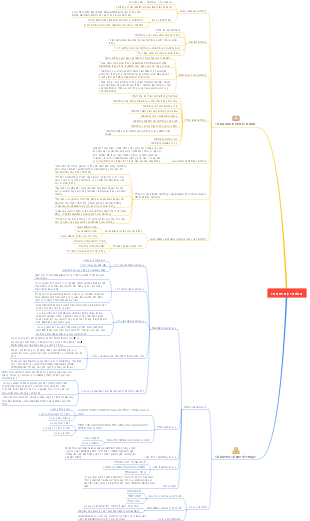
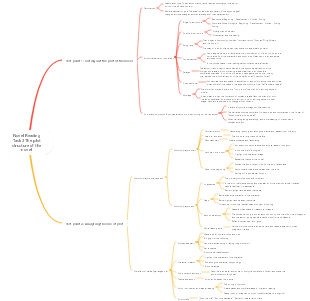
This is a mind map about the narrative art of novels, the main contents include: test points 4, narrative form (text characteristics), test points 3, narrative skills (plot arrangement skills), test points 2, narrative order and narrative Rhythm, test points 1. Narrative perspective, personality and tone.
Edited at 2025-01-31 12:34:24Rumi: 10 dimensions of spiritual awakening. When you stop looking for yourself, you will find the entire universe because what you are looking for is also looking for you. Anything you do persevere every day can open a door to the depths of your spirit. In silence, I slipped into the secret realm, and I enjoyed everything to observe the magic around me, and didn't make any noise. Why do you like to crawl when you are born with wings? The soul has its own ears and can hear things that the mind cannot understand. Seek inward for the answer to everything, everything in the universe is in you. Lovers do not end up meeting somewhere, and there is no parting in this world. A wound is where light enters your heart.
Chronic heart failure is not just a problem of the speed of heart rate! It is caused by the decrease in myocardial contraction and diastolic function, which leads to insufficient cardiac output, which in turn causes congestion in the pulmonary circulation and congestion in the systemic circulation. From causes, inducement to compensation mechanisms, the pathophysiological processes of heart failure are complex and diverse. By controlling edema, reducing the heart's front and afterload, improving cardiac comfort function, and preventing and treating basic causes, we can effectively respond to this challenge. Only by understanding the mechanisms and clinical manifestations of heart failure and mastering prevention and treatment strategies can we better protect heart health.
Ischemia-reperfusion injury is a phenomenon that cellular function and metabolic disorders and structural damage will worsen after organs or tissues restore blood supply. Its main mechanisms include increased free radical generation, calcium overload, and the role of microvascular and leukocytes. The heart and brain are common damaged organs, manifested as changes in myocardial metabolism and ultrastructural changes, decreased cardiac function, etc. Prevention and control measures include removing free radicals, reducing calcium overload, improving metabolism and controlling reperfusion conditions, such as low sodium, low temperature, low pressure, etc. Understanding these mechanisms can help develop effective treatment options and alleviate ischemic injury.
Rumi: 10 dimensions of spiritual awakening. When you stop looking for yourself, you will find the entire universe because what you are looking for is also looking for you. Anything you do persevere every day can open a door to the depths of your spirit. In silence, I slipped into the secret realm, and I enjoyed everything to observe the magic around me, and didn't make any noise. Why do you like to crawl when you are born with wings? The soul has its own ears and can hear things that the mind cannot understand. Seek inward for the answer to everything, everything in the universe is in you. Lovers do not end up meeting somewhere, and there is no parting in this world. A wound is where light enters your heart.
Chronic heart failure is not just a problem of the speed of heart rate! It is caused by the decrease in myocardial contraction and diastolic function, which leads to insufficient cardiac output, which in turn causes congestion in the pulmonary circulation and congestion in the systemic circulation. From causes, inducement to compensation mechanisms, the pathophysiological processes of heart failure are complex and diverse. By controlling edema, reducing the heart's front and afterload, improving cardiac comfort function, and preventing and treating basic causes, we can effectively respond to this challenge. Only by understanding the mechanisms and clinical manifestations of heart failure and mastering prevention and treatment strategies can we better protect heart health.
Ischemia-reperfusion injury is a phenomenon that cellular function and metabolic disorders and structural damage will worsen after organs or tissues restore blood supply. Its main mechanisms include increased free radical generation, calcium overload, and the role of microvascular and leukocytes. The heart and brain are common damaged organs, manifested as changes in myocardial metabolism and ultrastructural changes, decreased cardiac function, etc. Prevention and control measures include removing free radicals, reducing calcium overload, improving metabolism and controlling reperfusion conditions, such as low sodium, low temperature, low pressure, etc. Understanding these mechanisms can help develop effective treatment options and alleviate ischemic injury.
Novel Topic Task 1 The Narrative Art of Novel
Test point 1 Narrative perspective, persona and tone
Narrative perspective
Common narrative perspectives
omniscient perspective (omniscient narrator, God's perspective)
① Broad vision: suitable for expressing subjects with large extension of time and space, complex contradictions and numerous characters;
② Free and easy: You can switch freely between different characters and events when narrating;
③Objective and comprehensive: Let readers understand all the truth.
Limited perspective (role narrator, limited perspective)
① Set up suspense and stimulate readers' reading expectations.
② Enhance the sense of substitution and authenticity.
③ Restore the original appearance of things to the greatest extent.
A special narrative perspective
Children's Perspective
①Objective and true: children's mind is pure and experience is simple
② Easy and friendly: Children's poor vocabulary and unique sentences make narrative language easy and friendly
③ "Disfaction": children's rich imagination and ignorance make the narrative effect more "Disfaction";
④ Plot: Children's curiosity drives the development of the plot;
⑤ Character image: create character images from the perspective of children, making the character image more three-dimensional and full;
⑥ Theme: Use the innocent and kind nature of children to compare the ugliness of the adult world, examine human nature, highlight the theme, and are directly touching.
Alternate use of children's perspective and adult perspective
Children: The works observe and describe life from the perspective of children, making "childhood" more vivid and full of childish fun.
Adult: Writers occasionally comment on life from an adult perspective, making the meaning of the words written by the writer clearer, deeper, more thoughtful and philosophical.
Female perspective
① Delicate emotions: Women's keen observation ability makes emotional expression more delicate and fascinating;
②Motherhood, women: express sympathy and compassion for the weak with their maternal emotional brushstrokes. Or express the resistance to power and the desire for freedom in a female tone;
③Plot: shaped the image of ※※※※female, using its ※※※※※ psychology to show the mental journey and promote the development of the plot.
An old man's perspective
①Nostalgia: The narrative from the perspective of the elderly is mostly reminiscent, so there is often a sense of nostalgia;
② Deep thinking: The elderly are mostly mature and rational, and have in-depth thinking about things, so novels generally have a deep thinking meaning, thinking about the fate of themselves, nations, and countries;
③Virtual and profound: The old man has experienced many things in the world, and the narratives will have a sense of vicissitudes and profoundness of history.
Animal perspective
① Novel experience: Looking at the world from an animal's perspective, giving readers a new experience, more interesting, more objective, calm and real;
②Plot: The psychological activities displayed by animals are often alternate with the psychological activities of humans, thereby promoting the development of the plot;
③ See what people cannot see: animals are not humans, which shows how serious the things in life are being ignored, which is thought-provoking;
④ Deep meaning: highlights the theme that the author wants to truly express.
A novel also has multiple changes in perspectives. The author chooses different perspective types, which is of great significance to the sublimation of the content theme of the novel, and at the same time makes the novel's narrative method have different aesthetic effects.
Narrative name
First person
①Reader’s feelings: make readers feel real and friendly;
② The author's argument and lyricism: It is convenient for the author to express his thoughts and feelings.
Second person
① Increase intimacy and bring the readers closer to the text;
② Easy to talk, easy to lyricism, has a call effect, and can enhance infectiousness;
③Can enable readers to quickly integrate into the role.
Third person
①Not bound by time and space;
②Flexible and free narrative angle;
③ Can show a colorful life more directly and objectively.
Personal Transformation Narrative
①The narrative is more vivid;
② Expressing emotions and attitudes is relatively free;
③ Make use of strengths and make up for weaknesses, so that the object of the narrative can be expressed in a comprehensive and three-dimensional manner.
Narrative tone
It refers to the narrator's personality characteristics such as age, gender, identity, and emotional attitudes.
In some novels, some authors can hide their usual tone and speak in the tone of the characters in the text.
A novel also has multiple changes in perspectives. The author chooses different perspective types, which is of great significance to the sublimation of the content theme of the novel, and at the same time makes the novel's narrative method have different aesthetic effects.
Test Point 2: Narrative order and narrative rhythm
Narrative order
By the way
It is described in the order of event development (time, space, or internal logic).
effect
①The plot development context is clear, the layers are clear, and the article is in full swing;
② In line with the laws of people's understanding of things.
flashback
According to the need for expression, the ending of the event or the most prominent fragment is mentioned in the preceding paragraph, and then the event is described in the order of occurrence and development.
effect
① Enhance the infectiousness of the article;
②Create suspense, attract readers, and be fascinating;
③ Emphasize content, express emotions, and deepen the theme; enhance the vividness of the article;
④ Rich in changes and avoid dullness.
Insert
In the process of narrating the main event, according to the needs of expression, the main line is temporarily interrupted and another event related to the central event is inserted. After describing the inserted event, follow the original event to write it. The content of the interlude does not affect the expression of the main event. If there is no interlude, the main event will still be complete.
effect
① Supplementary explanations to make the content richer (making the plot more complete);
② Highlight the central character and make the image more full;
③ Paving the basis and reflecting the structure to make the structure more rigorous;
④ Deepen the theme of the novel to make the theme more profound;
⑤The writing is rich in changes (interrupted or stopped), making the plot more twists and turns.
Supplementary narrative (resume)
In the text, use two or three sentences or a short paragraph to make some additional explanations to the person or thing mentioned above, and add another event related to it, so that the entire process of the event will be clearer and more complete. If there is no supplementary description, it will Influence the integrity of the story.
effect
① Explain and make the theme fully expressed;
②Supplement rich and complete the structure of the article;
③Creating suspense (unexpectedly), causing the plot to go ups and downs.
Imprint and supplementary
The insertion of relevant situations outside the basic events, and removing them does not affect the integrity of the event itself; the insertion can only be in the article, not at the end of the article.
What is supplemented is an organic link in the development of basic events, and removing them will affect the integrity of the event itself. Supplementary descriptions can be in the article or at the end of the article.
Partial narrative (plain narrative)
Let’s first talk about one thing, then tell another, write down the complicated and complicated things clearly, orderly, and appropriately.
effect
① Be clear in structure, so that you can understand the ins and outs of things;
② Expand the capacity of the works.
Narrative rhythm
Acceleration and deceleration
Acceleration: Secondary plot, one by one. Acceleration is "Zhang", jump, abbreviation, and is mostly used for narrative.
Reduction: Key plots, exciting points, and rich colors. Deceleration is "relaxation", slow movement, fine brushwork and detailed description, mostly used for description.
Acceleration and deceleration intertwined: one stretch and one relaxation, ups and downs, and twists and turns. Narrative and description are magic weapons to control the speed of novels and create narrative turbulence.
Omitted
Event omission
Select people and things from a specific period of time and save people and things that you don’t need to pay attention to outside of this period of time.
Content omitted
When narrating, the author intentionally hides it without revealing it or simply leaves blank space, giving readers room for imagination for readers to enjoy. Such as Hemingway's "Iceberg Principle".
It helps the novel's narrative is concentrated, compact, concise and subtle, making the novel have extremely rich connotations outside the limited text, allowing readers to feel unfinished after reading it.
repeat
The frequency of narrative refers to the repetitive relationship between events and narratives in the story, and often has the effect of rendering and emphasizing. For example, in "Blessings", Xianglin Sao repeatedly tells A Mao's story.
Answering methods
First, a specific analysis of the content of the narrative order is combined with the text;
The second is to clarify the specific effect of this order, focusing on the latter.
Test point 3 Narrative skills (plot arrangement skills)
Skills to create plot turbulence
suspense
It refers to setting up a riddle in the narrative of the novel, hiding the answer, and then pointing it out at the right time, so that the readers' expectations can be satisfied.
Activate the reader's "tension and expectation mood", attract readers and be fascinating.
Repression
It refers to the writing object whether you want to promote it first or want to suppress it first, and then suddenly turn it around.
Effect
Out of the expectations of readers
Make the article trends change and change, and make the article have a turnaround and ups and downs.
Enhance the readability of the work
contrast
Compare two opposing things or two different aspects of the same thing together.
Function: Show contradictions, express characters or highlight themes.
set off
It refers to the artistic method of depicting one thing to express another thing. It is divided into two types: positive and contrasting.
Make the article more vivid, the characters and things more prominent, and the theme more distinct.
Breaking
Connotation
At the end of the novel
Some kind of "coincidence" of the plot, some unexpected reversal
The character "sharp changes".
This sudden change often results in unexpected and reasonable effects, and plays the finishing touch to express the main theme of the novel.
Strict plot arrangement skills
clue
Connotation: The context that runs through the plot of the entire work
type
A character or something in a novel
The author's emotions, the events of the novel
The space and time of the story
effect
Plot: Make the plot more concentrated and compact;
Character: Make the character more prominent and the image is more full;
Topic: Make the theme richer and more deepened.
Care
The relationship between certain contents and meanings in chapters are reflected and echoed in different parts.
Function: Make the plot coherent, clear and compact.
Foreshadowing
The author makes a pre-prompt prompt or hint to the characters or events that will appear in the work.
Function: Make the whole text echo before and after, the structure is more rigorous, the plot development is more reasonable, and the cause and effect are more distinct.
bedding
Also known as a laying pad, it laying another character or thing to serve as a pad to set off the main characters or things.
Function: accumulate momentum and highlight the main theme.
Foreshadowing, response and preparation are both techniques for creating plot turbulence and strict plot arrangement.
Test point 4 Narrative form (text characteristics)
Void (imagination, dreams, memories) and reality (reality)
Break through the boundaries of time and space and enrich plot content;
Presenting characters from different periods to make characters more specific;
Avoid straightforward narrative and make the structure more flexible.
Science and fantasy
"Science" is the basis of "fantasy". Although "fantasy" is based on "science", it must break through the limitations of specific science and give full play to its imagination.
Humanistic care and scientific awareness are integrated.
History and fiction
"History" means that major historical facts, main contradictions, and destiny of characters must conform to history, and the destiny of historical figures cannot be fabricated or distorted;
"Fiction" refers to appropriate artistic exaggeration and necessary concentration of contradictions, making the character more full and performing artistic processing of the characters that conforms to their own and the background of the times.
Reasonable arrangement of "history" and "fiction" can artistically reproduce the social life of a certain historical period, reveal the inevitable trend of historical development, and allow readers to understand history and be inspired by it.
Story and new edit
"Stories" itself are well-founded in history. The works examine classics and literature, and are full of historical charm;
"New compilation" is manifested as a new way of telling history, such as fiction of details, incorporation of modern Chinese, and the use of miscellaneous writing. The work is full of imagination and creativity;
A "new compilation" of the "story" focuses on observing both history and reality, and the work is profoundly ideological.
Magic (absurdity) and reality
Connotation
Magic (absurd)
Subject: The content of the subject is absurd and detached from real life, or the characters or events do not exist in real life, or in the form of mythological stories;
Plot: The plot is absurd and bizarre;
Writing method: absurd brushwork, absurd and bizarre description, stream of consciousness techniques, conception of time and space shuttle, etc.
reality
Real life
Artistic truth: the characters are real, the plot is logical, and the real life and theme reflected are real and credible.
The relationship between the two: Magic is a deformation of reality, which must contain reality. The authenticity here includes both the truth of life and the truth of art.
Interspersed with news reports, local chronicles, interviews
The plot can be supplemented to make the plot more complete and realistic and the characters more full.
legend
Stories with bizarre plots or unusual characters' behaviors
Through strong contrast, the novel writes about its behavior in detail (the narrative process is only written but not the reason).
Realism and Romanticism
Realism focuses on intuition, while romanticism focuses on imagination;
Realism focuses on truth, romanticism focuses on exaggeration;
Realism focuses on reality, romanticism focuses on ideals;
Realism focuses on the present, while romanticism focuses on the future.
Highlight groups and reduce individuals
Shape group images and render a universal environmental atmosphere;
There is a prose tendency in narrative language.
Digging deep social connotations from trivial phenomena in daily life
See the big one from the small, emphasizing the sharp contrast between triviality and profoundness
We must fully reflect on the social background at that time to think about it
Poetic (prose culture) novel
Plot: Focus on lyricism, downplay narrative, delayed plot, loose structure, the author does not pursue tense and exciting storylines, and does not even have a complete storyline;
Environment: The environment is artistically oriented, focusing on the description of the image of the scenery, creating artistic conception, and focusing on displaying a pure aesthetic world;
Characters: The characters are blurred, and there are even no main characters. Most of the characters are ordinary people, flat and simple, not heroes with distinct personalities, and are arranged by the author to be transformed into the contextual atmosphere of the novel;
Language: The language of the novel is extremely concise, concise, and poetic. Pay attention to the musical beauty of language and pay attention to the use of symbols, metaphors and other techniques;
Writing method: Pay attention to detailed description, every detail has meaning, and every word, action, object and item in the novel is purposeful and valuable;
Topic: In terms of theme, it often hides or dilutes the sufferings of life, shows the beauty of human feelings and human nature, and expresses the yearning for beautiful human nature.
Dramaic novels
Looking at the scenes in his eyes from the perspective of the character, reducing the voice and feelings of the narrator (author) and objectively presenting the story through the characters' activities;
Use dialogue to shape characters, express the relationship between characters, connect scenes, and promote the development of the storyline;
Reveal the psychology through the characters' language and actions and express conflicts;
The story takes place in a concentrated time and place, and most of the plots take place in a certain place.