MindMap Gallery Three and Four Rule Matrix Analyzing the Competitive Status Tool for Enterprises in a Mature Market
How should companies position and compete in mature markets? The three and four rules matrix reveals the answer to you. It focuses on the share distribution of different companies in the market and intuitively demonstrates the competitive position of the company. Through this matrix, companies can clearly understand their position, predict competitive trends, and then formulate targeted strategies to gain an advantage in the fierce competition in mature markets. Come and find out!
Edited at 2025-01-16 17:53:06Rumi: 10 dimensions of spiritual awakening. When you stop looking for yourself, you will find the entire universe because what you are looking for is also looking for you. Anything you do persevere every day can open a door to the depths of your spirit. In silence, I slipped into the secret realm, and I enjoyed everything to observe the magic around me, and didn't make any noise. Why do you like to crawl when you are born with wings? The soul has its own ears and can hear things that the mind cannot understand. Seek inward for the answer to everything, everything in the universe is in you. Lovers do not end up meeting somewhere, and there is no parting in this world. A wound is where light enters your heart.
Chronic heart failure is not just a problem of the speed of heart rate! It is caused by the decrease in myocardial contraction and diastolic function, which leads to insufficient cardiac output, which in turn causes congestion in the pulmonary circulation and congestion in the systemic circulation. From causes, inducement to compensation mechanisms, the pathophysiological processes of heart failure are complex and diverse. By controlling edema, reducing the heart's front and afterload, improving cardiac comfort function, and preventing and treating basic causes, we can effectively respond to this challenge. Only by understanding the mechanisms and clinical manifestations of heart failure and mastering prevention and treatment strategies can we better protect heart health.
Ischemia-reperfusion injury is a phenomenon that cellular function and metabolic disorders and structural damage will worsen after organs or tissues restore blood supply. Its main mechanisms include increased free radical generation, calcium overload, and the role of microvascular and leukocytes. The heart and brain are common damaged organs, manifested as changes in myocardial metabolism and ultrastructural changes, decreased cardiac function, etc. Prevention and control measures include removing free radicals, reducing calcium overload, improving metabolism and controlling reperfusion conditions, such as low sodium, low temperature, low pressure, etc. Understanding these mechanisms can help develop effective treatment options and alleviate ischemic injury.
Rumi: 10 dimensions of spiritual awakening. When you stop looking for yourself, you will find the entire universe because what you are looking for is also looking for you. Anything you do persevere every day can open a door to the depths of your spirit. In silence, I slipped into the secret realm, and I enjoyed everything to observe the magic around me, and didn't make any noise. Why do you like to crawl when you are born with wings? The soul has its own ears and can hear things that the mind cannot understand. Seek inward for the answer to everything, everything in the universe is in you. Lovers do not end up meeting somewhere, and there is no parting in this world. A wound is where light enters your heart.
Chronic heart failure is not just a problem of the speed of heart rate! It is caused by the decrease in myocardial contraction and diastolic function, which leads to insufficient cardiac output, which in turn causes congestion in the pulmonary circulation and congestion in the systemic circulation. From causes, inducement to compensation mechanisms, the pathophysiological processes of heart failure are complex and diverse. By controlling edema, reducing the heart's front and afterload, improving cardiac comfort function, and preventing and treating basic causes, we can effectively respond to this challenge. Only by understanding the mechanisms and clinical manifestations of heart failure and mastering prevention and treatment strategies can we better protect heart health.
Ischemia-reperfusion injury is a phenomenon that cellular function and metabolic disorders and structural damage will worsen after organs or tissues restore blood supply. Its main mechanisms include increased free radical generation, calcium overload, and the role of microvascular and leukocytes. The heart and brain are common damaged organs, manifested as changes in myocardial metabolism and ultrastructural changes, decreased cardiac function, etc. Prevention and control measures include removing free radicals, reducing calcium overload, improving metabolism and controlling reperfusion conditions, such as low sodium, low temperature, low pressure, etc. Understanding these mechanisms can help develop effective treatment options and alleviate ischemic injury.
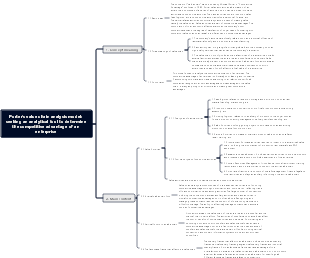
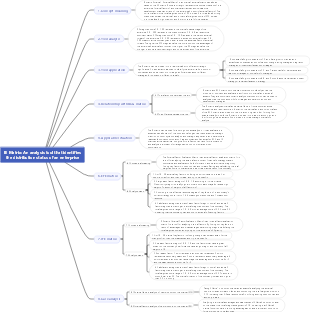
Three and Four Rule Matrix: Analyzing the Competitive Status Tool for Enterprises in a Mature Market
1. Conceptual meaning
The three-four rule matrix was proposed by Bruce Henderson of Boston Consulting Group and was used to analyze the competitive position of companies in mature markets. In a stable competitive market, there are no more than three influential competitors, and the largest competitor has no more than four times the market share of the smallest.
In the stable competitive market, participants are divided into three categories: leaders, participants and survivors. The winner's market share is above 15%, which can have a significant impact on market changes; the participants' market share is between 5% and 15%, which is an effective participant in market competition; the survivor's market share is usually less than 5%, which is a local Segment filler. This matrix shows that in any industry, there are niche competitors growing around the three major dominators. Companies at both ends of the industry can make better profits, and companies sandwiched in the middle are often unstable, as if they "fall into a trench."
2. Content analysis
2.1 Deciding conditions
Among the influential leaders, the number of companies is no more than three, and the market share of the most powerful competitors is no more than four times that of the smallest. The model is determined by the following two conditions:
1. Between any two competitors, a 2:1 market share seems to be an equilibrium point. At this equilibrium point, it is unrealistic to increase or decrease the market share of competitors and is not worth the loss. This is an empirical conclusion.
2. If the market share is less than 1/4 of the largest competitor, it is impossible to compete effectively. This conclusion can be inferred from the empirical curve relationship.
Typically, these two conditions cause the market share sequence to show that each competitor has a market share of 1.5 times that of the competitors followed, and the smallest competitor has a market share of no less than 1/4 of the largest. From a mathematical principle, if these two conditions are met at the same time, the number of competitors should not exceed three.
In actual situation, if the market share of the two competitors is similar, increasing the relative market share can lead to growth in both output and cost; however, as the share gap between market leaders widens, opportunities gradually disappear, and the cost of price reduction increases and the benefits decrease. . A 4:1 market share ratio limit is in reality. If, beyond this limit, the cost difference will cause low-market share competitors to give up competition unless the leader is willing to lose shares to ensure a high price.
There are two exceptions to the above situation: one is that the local market has sufficient sharing experience with other parts, and competitors with low market share are in a leading position in other parts, and can lead in this local market and take the initiative in price; the other is that the originally prosperous company is due to accounting Continuously invest in insignificant products by sharing equally, achieving complete production strategies or management mistakes.
In addition, the market share of the three major dominators is most favorable, exceeding this share will lead to profit loss, shrinking growth space and may face regulatory problems. There are also some interesting inferences, such as the number one company is often more innovative, and the bigger the niche competitors develop, the more likely they are to fall into the "trench".
3. Meaning and effect
3.1 Strategic significance
From a strategic perspective, using the three- and four rule matrix to analyze market position has the following significance:
1. When a large number of competitors exist, if there is no external constraint, competition will reduce the competitors. In order to maintain relative market share, competitor growth needs to exceed the market growth rate.
2. In pursuit of growth regardless of all efforts, the cash outflow of losers will increase day by day.
3. Except for the two competitors with the largest market share, other competitors may fail or become cashless pits. Although they sometimes make profits, they need to continue to invest.
4. When the market share is less than 30% of the relevant market, or reaches 1/2 or more of the leader, it is very risky for competitors to maintain the status quo.
5. The sooner you realize investment profits and achieve a market position second only to the leader, the lower the risk of competitors, the higher the return on investment may be. The definition of relevant markets and their entry barriers is an important strategic evaluation factor.
6. The investment strategy and attitude towards market share are important for the market leader, and their strategy determines the speed of elimination.
7. For the same product and the same price conditions, changes in market share depend on the relative investment intention of competitors, and the investment growth rate must be higher than the sum of the market growth rate and the inflation rate.
8. The faster the industry grows, the faster the elimination.
All types of enterprises need to adjust their competitive strategies according to the matrix of three or four rules. For example, market leaders should be fast followers in innovation, promote the industry to adopt unified standards, carry out first-class marketing and advertising promotion, use diversified distribution channels, focus on cost control and product differentiation, emphasize output above profit, and strive to expand the market. Avoid dogmatic thinking.
3.2 Tactical significance
From a tactical perspective, the role of the three and four rules matrix is as follows:
1. If the price of low-cost market leaders is too high, the elimination process will be delayed and they will gradually lose market share. The faster the industry grows, the faster the elimination.
2. If two market leaders with comparable market share do not work together to maintain prices, they will eliminate other competitors, but may lose market share together. The price/experience curve can be used as an indicator of elimination, and the elimination situation can be judged by the change in the curve slope.
3. Market leaders have the initiative. If market share is valued, it will be difficult for others to replace them unless they lack the funds to maintain production capacity. However, many leaders will have no intention of ceding market share to maintain short-term profits.
4. If the challenger wants to replace the leader, he needs to adopt roundabout tactics, occupy independent local markets or invest far more funds needed for the leader's defense.
4. Tool application
The use of three or four laws requires identifying independent and identical local markets, and competitors adopt the same competitive method in these markets. However, competitor competition areas often overlap and are not exactly the same, and obstacles between local markets can be overcome when there are scale effects with common cost factors. The application of three and four laws depends on the precise definition of the relevant market. Competitive equilibrium usually takes years to achieve, unless the leader can maintain market share during the rapid growth stage of the product life cycle.
5. Case Study
5.1 Case 1: Analysis of the three or four specifications of newspaper competition
my country's newspaper competition is moving towards a "three and four laws" pattern, which is reflected in both national and regional media markets:
1. National media market: Among sports newspapers, only three or four have an impact on the market. Sports Weekly is leading, and Southern Sports is suspended. In terms of financial newspapers, "21st Century Business Herald", "Economic Observer" and "China Business News" occupy the top three market share, while other newspapers have little influence.
2. Regional media market: In the competition for urban newspapers in cities such as Chengdu, Nanjing, and Xi'an, there are no more than 4 newspapers that will ultimately have an impact on the market. Taking Xi'an as an example, currently the "Huashang Daily", "Xi'an Evening News", "Sanqin Metropolis Daily" and other newspapers below the third place have weak influence.
The "three and four laws" have the following long-term impacts on the newspaper market structure:
1. Competitive landscape that is conducive to leaders: When most newspapers' market share is close to 1:1/2:1/4, competition eases, market stability, and weak newspapers have a narrow space for activities.
2. "The third place dilemma": The third place newspaper needs a large amount of capital to maintain its share, but its advertising revenue is insufficient, so it needs to break through or transform and exit the market as soon as possible.
3. Newspaper barriers and investment risks: The "three and four laws" make market share tend toward a specific pattern, newspaper barriers are built up, investment risks are increased, and opportunities are reduced.
4. Change in competitive situation: Newspaper competition will be more concentrated among weak newspapers, and the "sorting battle" between the second and third places may become the focus of competition.
5.2 Conclusion
In the new stage of my country's media reform, the competition in the newspaper industry has shown new characteristics. When newspaper managers formulate competitive measures, the "three and four laws" are important aspects that need to be considered. The key to success or failure of newspaper operations lies in the strategic grasp and control ability.