MindMap Gallery PMBOK Knowledge System 7th Edition Framework Architecture Mind Map
PMBOK Knowledge System 7th Edition Framework Architecture Mind Map, including project management environment, project management principles, project management practices, etc. I hope it will be helpful to everyone.
Edited at 2025-02-13 17:47:34Rumi: 10 dimensions of spiritual awakening. When you stop looking for yourself, you will find the entire universe because what you are looking for is also looking for you. Anything you do persevere every day can open a door to the depths of your spirit. In silence, I slipped into the secret realm, and I enjoyed everything to observe the magic around me, and didn't make any noise. Why do you like to crawl when you are born with wings? The soul has its own ears and can hear things that the mind cannot understand. Seek inward for the answer to everything, everything in the universe is in you. Lovers do not end up meeting somewhere, and there is no parting in this world. A wound is where light enters your heart.
Chronic heart failure is not just a problem of the speed of heart rate! It is caused by the decrease in myocardial contraction and diastolic function, which leads to insufficient cardiac output, which in turn causes congestion in the pulmonary circulation and congestion in the systemic circulation. From causes, inducement to compensation mechanisms, the pathophysiological processes of heart failure are complex and diverse. By controlling edema, reducing the heart's front and afterload, improving cardiac comfort function, and preventing and treating basic causes, we can effectively respond to this challenge. Only by understanding the mechanisms and clinical manifestations of heart failure and mastering prevention and treatment strategies can we better protect heart health.
Ischemia-reperfusion injury is a phenomenon that cellular function and metabolic disorders and structural damage will worsen after organs or tissues restore blood supply. Its main mechanisms include increased free radical generation, calcium overload, and the role of microvascular and leukocytes. The heart and brain are common damaged organs, manifested as changes in myocardial metabolism and ultrastructural changes, decreased cardiac function, etc. Prevention and control measures include removing free radicals, reducing calcium overload, improving metabolism and controlling reperfusion conditions, such as low sodium, low temperature, low pressure, etc. Understanding these mechanisms can help develop effective treatment options and alleviate ischemic injury.
Rumi: 10 dimensions of spiritual awakening. When you stop looking for yourself, you will find the entire universe because what you are looking for is also looking for you. Anything you do persevere every day can open a door to the depths of your spirit. In silence, I slipped into the secret realm, and I enjoyed everything to observe the magic around me, and didn't make any noise. Why do you like to crawl when you are born with wings? The soul has its own ears and can hear things that the mind cannot understand. Seek inward for the answer to everything, everything in the universe is in you. Lovers do not end up meeting somewhere, and there is no parting in this world. A wound is where light enters your heart.
Chronic heart failure is not just a problem of the speed of heart rate! It is caused by the decrease in myocardial contraction and diastolic function, which leads to insufficient cardiac output, which in turn causes congestion in the pulmonary circulation and congestion in the systemic circulation. From causes, inducement to compensation mechanisms, the pathophysiological processes of heart failure are complex and diverse. By controlling edema, reducing the heart's front and afterload, improving cardiac comfort function, and preventing and treating basic causes, we can effectively respond to this challenge. Only by understanding the mechanisms and clinical manifestations of heart failure and mastering prevention and treatment strategies can we better protect heart health.
Ischemia-reperfusion injury is a phenomenon that cellular function and metabolic disorders and structural damage will worsen after organs or tissues restore blood supply. Its main mechanisms include increased free radical generation, calcium overload, and the role of microvascular and leukocytes. The heart and brain are common damaged organs, manifested as changes in myocardial metabolism and ultrastructural changes, decreased cardiac function, etc. Prevention and control measures include removing free radicals, reducing calcium overload, improving metabolism and controlling reperfusion conditions, such as low sodium, low temperature, low pressure, etc. Understanding these mechanisms can help develop effective treatment options and alleviate ischemic injury.
PMBOK Knowledge System 7th Edition Framework Mind Map
PMBOK Knowledge System 7th Edition Framework Architecture
Project Management Process
Start the process group
Formulate project charter
Determine project goals
Determine the scope of the project
Identify project stakeholders
Identify stakeholders
Identify the individual or organization that the project affects
Analyze stakeholder needs and expectations
Planning process group
Develop a project management plan
Determine project management methodology
Develop a project scope description
Develop a scope management plan
Define project scope
Create a Work Breakdown Structure (WBS)
Develop a time management plan
Develop a project schedule
Determine project milestones
Develop a cost management plan
Estimate project cost
Develop a cost budget
Develop a quality management plan
Determine quality standards
Develop quality assurance and control activities
Develop a resource management plan
Planning resource requirements
Planning resource allocation
Develop a communication management plan
Determine communication needs
Develop communication strategies
Develop a risk management plan
Identify project risks
Develop risk response strategies
Formulate a procurement management plan
Determine procurement requirements
Develop a procurement strategy
Develop a plan for participating in relevant parties
Analyze the needs of relevant parties
Develop a strategy for participating in a relevant party
Execution process group
Guiding and managing project work
Implement project management plan
Manage project resources
Management project knowledge
Gather project knowledge
Share project knowledge
Management quality
Implement quality assurance
Control project quality
Acquisition, development and management teams
Building a team
Management Team
Management Communication
Ensure information circulation
Management Project Stakeholder Expectations
Implement risk management
Implement risk response plans
Monitor risks
Implement procurement
Select a supplier
Manage supplier relationships
Management of relevant parties
Supervise the participation of relevant parties
Adjust the participation strategies of relevant parties
Monitoring process group
Monitoring project work
Track project progress
Assessing project performance
Implement overall change control
Review change requests
Approve or refuse changes
Acceptance project results
Confirm the scope of the project
Complete project acceptance
Control range
Changes in management scope
Update the Working Breakdown Structure (WBS)
Control timetable
Update project schedule
Management progress deviation
Control costs
Management cost deviation
Update cost benchmarks
Control quality
Implement quality control
Management quality improvement
Control resources
Manage resource allocation
Manage resource performance
Control communication
Management communication channels
Manage communication effects
Control risk
Monitor residual risks
Identify new risks
Controlling procurement
Manage contract performance
Manage supplier performance
Control the participation of relevant parties
Monitoring relevant parties involved
Adjust the participation plan of relevant parties
Project Management Knowledge Area
Project Integration Management
Formulate project charter
Develop a project management plan
Guiding and managing project work
Management project knowledge
Monitoring project work
Implement overall change control
End of a project or phase
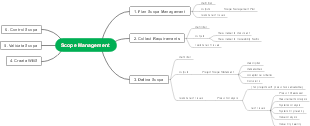
Project scope management
Planning scope management
Collect requirements
Define the scope
Create a Work Breakdown Structure (WBS)
Confirm range
Control range
Project time management
Planning time management
Define activities
Arrange the activity order
Estimate activity duration
Set a timetable
Control timetable
Project cost management
Planning cost management
Estimated cost
Make a budget
Control costs
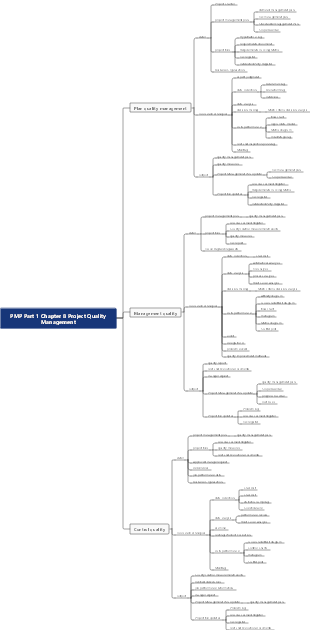
Project quality management
Planning quality management
Implement quality assurance
Control quality
Project Resource Management
Planning Resource Management
Estimate resource requirements
Get resources
Building a team
Management Team
Control resources
Project communication management
Planning Communication Management
Management Communication
Monitoring communication
Project risk management
Planning risk management
Identify risks
Conduct risk analysis
Planning risk response
Implement risk response
Monitor risks
Project procurement management
Planning and procurement management
Implement procurement
Manage procurement relationships
Controlling procurement
Project stakeholder management
Identify relevant parties
Participation of the planning parties
Management of relevant parties
Monitoring relevant parties involved
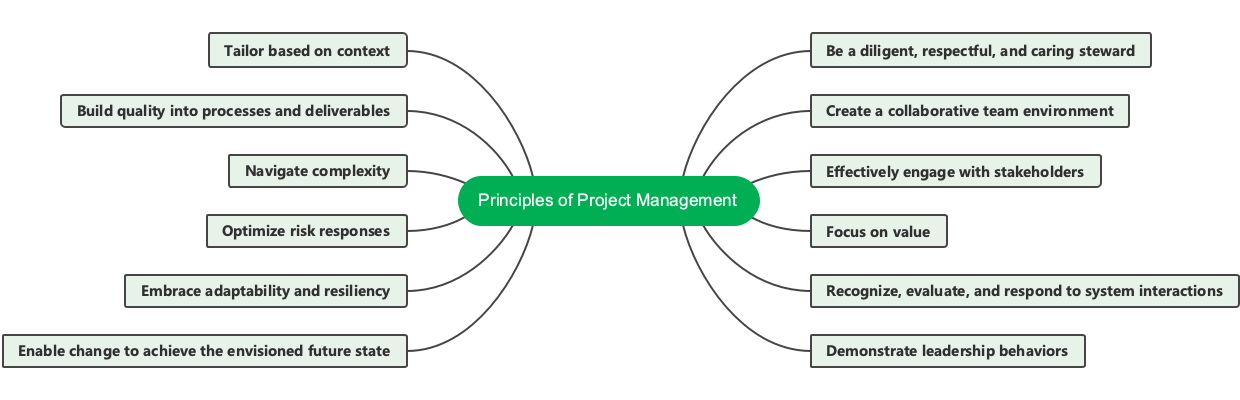
Project Management Principles
Driven by value
Ensure project results meet stakeholder needs
Optimize the commercial value of project results
Leadership and teamwork
Develop leadership and teamwork
Promote collaboration among team members
Adaptability and iterativeness
Adapt to changing environments and needs
Iterative and incremental methods for project management
Project governance
Ensure projects comply with organizational standards and policies
Manage project stakeholder expectations
Agility and flexibility
Apply agile methods to improve project adaptability
Flexible response to changes in the project process
Integration and collaboration
Integrate project management processes and knowledge areas
Work together to achieve project goals
Quality and efficiency
Pay attention to the quality of project results
Pursuing efficiency to maximize resource utilization
Risk Management
Actively identify and respond to project risks
Improve project success rate through risk management
Project Management Practice
Project life cycle management
Understand the stages of a project from start to finish
Key decision points during the life cycle of a project
Project governance
Ensure projects comply with organizational standards and policies
Manage project stakeholder expectations
Project Portfolio Management
Manage multiple projects to achieve organizational strategic goals
Optimize resource allocation and project priorities
Project Set Management
Manage a set of related projects, sub-project sets and project activities
Achieve project set goals and benefits
Project Management Office (PMO)
Provide project management support and guidance
Unified project management methods and standards
Project Management Methodology
Select and apply a management methodology suitable for projects
Combining agile, predictive and hybrid approaches
Project Management Technology
Use technical tools to improve project management efficiency
Application project management software and platform
Project management capability development
Develop professional project management skills and soft skills
Improve the performance of project teams and individuals
Project Management Environment
Organizational culture and structure
The impact of adapting to the organization's culture and structure on the project
Manage political and power dynamics within an organization
Organizational process assets
Optimize project management using organizational process assets
Update organizational process assets to reflect project experience
Project Management Information System (PMIS)
Use the project management information system to support project management
Manage project data and information
External environmental factors
Consider the impact of the external environment on the project
Manage project relations with external stakeholders