MindMap Gallery TOGAF Reading
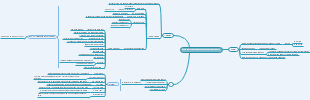
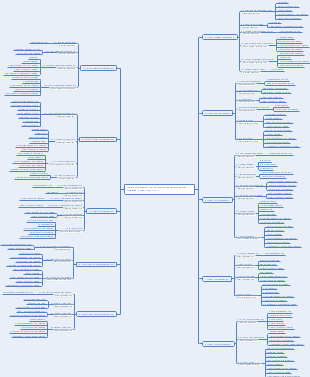
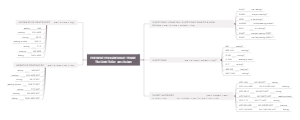
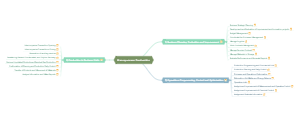
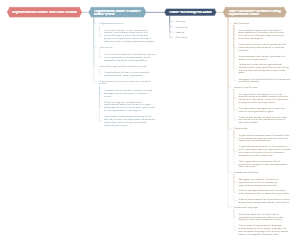
This enterprise architecture map details TOGAF components: The Architecture Development Method (ADM) illustrates iterative phases from Preliminary to Requirements Management; ADM Guidelines & Techniques include scenario planning and gap analysis tools; Content Framework standardizes deliverables and metamodels. Phase transition workflows and integration points with ITIL/COBIT are highlighted, providing standardized implementation blueprints for digital transformation. Reference models show how to customize the framework for specific industries while maintaining compliance.
Edited at 2025-02-23 20:48:32TOGAF Reading
(II) Architecture Development Method (ADM)
made up of ...
description of ADM
step by step approach to to developing an enterprise architecture
core of TOGAF
Business Vision & Drivers
biz need feeds into method, identifying problems to be addressed
method refines understanding of biz need
Business Capabilities
method delivers new solutions
ADMS Phases
Introduced in section 2.4
Preliminary Phase
preparation & initiation activities required to create Architecture Capability
Customisation of TOGAF
Definition of Architecture Principles
Phase A - Architecture Vision
Phase B - Business Architecture
Phase C - Information Systems Arcitecture
Phase D - Technology Architecture
Phase E - Opportunities & Solutions
Phase F - Migration & Plannning
Phase G - Implementation & Governance
Phase H - Architecture Change Management
Requirements Management
(III) ADM Guidelines & Techniques
made up of ...
ADM guidelines
ADM techniques
TOGAF guidelines/techniques
(IV) Architecture Content Framework
describes content model structured metamodel for artefacts
made up of ..
content framework
structured meta model for artefacts
(re) use architecture building blocks
overview of typical deliverables
ABB - Architectural Building Block
(potentially) reusable artefact
SBB - Solution Building Blocks
reusable implementation pieces e.g. network
goal
drive consistency in content & organization
(VII) Architecture Capability Framework
Contents
establishing the architecture capability
architecture board
architecture contracts
architecture governance
maturity model
skills framework
practice needs the capability to manage...
finance
performance
service
risk
resources
communications & stakeholders
quality
supplier
configuration
environment
input & outputs
Business Capabilities
sets targets, plans, KPIs, budgets etc
drives need for maturity
Business Vision & Drivers
informs size, structure & culture of capability
effective ooperation of architecture capability ensures vision reallisation
Benefits
of Governance
increased transparency & accountability
risk control
protect existing asset base, through max reuse
proactive control, monitor & mgmt
drive process, concept, component reuse across all business units
demonstrate value via monitoring, measuring, eval & feedback
increased visibility (higher & lower in org)
decision making visibility
(VI) TOGAF Reference Models
http://pubs.opengroup.org/architecture/togaf9-doc/arch/
made up of ...
selection of reference models
TOGAF Foundation Architecture
Integrated Information Infrastructure Reference Model (III-RM)
(V) Enterprise Continuum & Tools
made up of ...
appropriate taxonomies
tools to characterize & store outputs
Business Vision & Drivers
repository & continuum inform current state
Business Capabilities
operational change update continuum
support goals of
partition to manageable segments
views onto the repository
ways of classifying architecture pieces
consistency
re-usable elements would include
TRM
industry standard taxonomies
internal artefacts
Architecture Continuum supports
Supports
general rules
representation
relationships
traceability & drivation of relationships
base TOGAF elements such as III-RM
industry reference models
ABBs
a means by which commonality can be discovered
Solution Continuum
Supports
consistency in describing solution implementation
SBBs
addressing commonalities and differences for
products
systems
processes
services
(I) TOGAF Introduction
made up of ...
introduce key concepts
TOGAF terms
relese notes
architecture covers
Section 2.3
Business Architecture
strategy
governance
organisation
kkey business processes
data architecture
organisatiion of data
logical data assets
physical data assets
data management resources
application architecture
blueprint for individual applications
application interaction
relationship to core business processes
Technology Architecture
logical software & hardware capabilities
IT Infrastructure
middleware
networks
communications
processing & standards
Terminology & Concepts
Section 2.5 of TOGAF
Deliverable
any work product delivered with review and stakeholder sign off
artefact
architectural work that describes aspect of architecture
classified as
catalogue
matrix
diagrams
Building Block
component of business, IT, architectural capability - maybe re-usable. combined with other blocks to build architectuures and solutions
ABB - Architecture Building Block
typically describe required capability & specification of SBBs
data
processes
software
SBB - Solution Building Block
items to build required capability e.g. network or software
Enterprise Continuum
Architecture Continuum
Generic Architecture (generalize for future re-use)
Specific Architecture (adaptation for use)
Solutions Continuum
Generic Solutions - generalize for re-use
Specific Solutions - adaptation for use
Architecture Repository
Section 2.7
Metamodel
describes org tailored application of framework
metamodel for architecture content
Capability
params, structures & processes to support governance
Landscape
representation of assets deployed
multiple levels of abstraction
Standards Information Base (SIB)
standards by which should be complied with
can be industry stanndards
selected suppliers products/services
existing services in production
Reference Library
guidelines
templates
patterns
other material to accelerate creation of architectures
Governance Log
Architecture Vision
succinct definition of Target Architecture
Boundryless Information Flow
trademark of Open Group
shorthhand representation of "access to integrated iinformation to support business process improvements"
infrastructure supporting this has
open standards
can combine multiple information sources
securely deliver information where & when needed
information is with right context
concerns
key interests that are crucial to stakeholders
can bbe functional or non fuunctional or business process
Objective
time bounded milestone
Segment Architecture
detailed formal description of part of the enterprise
used at program or portfolio level
Needed Core Capabilities
Financial Management
Performance Mgmt
Risk Mgmt
Communications & Stakeholder Mgmt
Quality Mgmt
Supplier Mgmt
Configuration Mgmt
Environment Mgmt
Part II includes guidance to combine TOGAF with other methodologies, including ...
ITIL
CMMI
COBIT
Prince2
PMBOK
MSP