 Wondershare EdrawMind
MindMap Gallery Lifting technology
- 33
Lifting technology
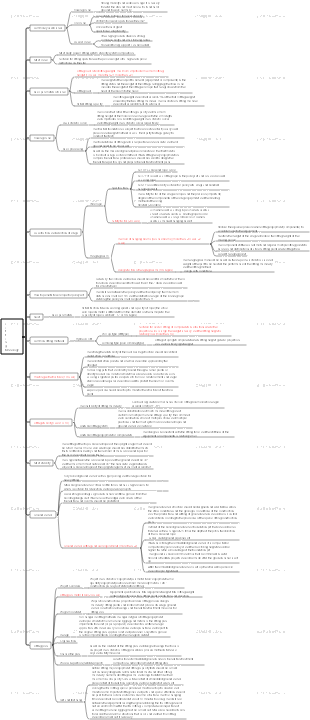
It includes the selection and use of lifting machinery, the selection principles of spreaders, the formulation and implementation of lifting plans, as well as the stability and safety of lifting and lifting operations. The content is detailed, organized and easy to understand, and is an indispensable learning assistant for you.
Edited at 2025-03-01 19:50:06
- Rumi 10 spiritual high-dimensional awakenings
Rumi: 10 dimensions of spiritual awakening. When you stop looking for yourself, you will find the entire universe because what you are looking for is also looking for you. Anything you do persevere every day can open a door to the depths of your spirit. In silence, I slipped into the secret realm, and I enjoyed everything to observe the magic around me, and didn't make any noise. Why do you like to crawl when you are born with wings? The soul has its own ears and can hear things that the mind cannot understand. Seek inward for the answer to everything, everything in the universe is in you. Lovers do not end up meeting somewhere, and there is no parting in this world. A wound is where light enters your heart.
- Pathophysiology - Heart failure
Chronic heart failure is not just a problem of the speed of heart rate! It is caused by the decrease in myocardial contraction and diastolic function, which leads to insufficient cardiac output, which in turn causes congestion in the pulmonary circulation and congestion in the systemic circulation. From causes, inducement to compensation mechanisms, the pathophysiological processes of heart failure are complex and diverse. By controlling edema, reducing the heart's front and afterload, improving cardiac comfort function, and preventing and treating basic causes, we can effectively respond to this challenge. Only by understanding the mechanisms and clinical manifestations of heart failure and mastering prevention and treatment strategies can we better protect heart health.
- Pathophysiology - ischemia - reperfusion injury
Ischemia-reperfusion injury is a phenomenon that cellular function and metabolic disorders and structural damage will worsen after organs or tissues restore blood supply. Its main mechanisms include increased free radical generation, calcium overload, and the role of microvascular and leukocytes. The heart and brain are common damaged organs, manifested as changes in myocardial metabolism and ultrastructural changes, decreased cardiac function, etc. Prevention and control measures include removing free radicals, reducing calcium overload, improving metabolism and controlling reperfusion conditions, such as low sodium, low temperature, low pressure, etc. Understanding these mechanisms can help develop effective treatment options and alleviate ischemic injury.
Lifting technology
- Rumi 10 spiritual high-dimensional awakenings
Rumi: 10 dimensions of spiritual awakening. When you stop looking for yourself, you will find the entire universe because what you are looking for is also looking for you. Anything you do persevere every day can open a door to the depths of your spirit. In silence, I slipped into the secret realm, and I enjoyed everything to observe the magic around me, and didn't make any noise. Why do you like to crawl when you are born with wings? The soul has its own ears and can hear things that the mind cannot understand. Seek inward for the answer to everything, everything in the universe is in you. Lovers do not end up meeting somewhere, and there is no parting in this world. A wound is where light enters your heart.
- Pathophysiology - Heart failure
Chronic heart failure is not just a problem of the speed of heart rate! It is caused by the decrease in myocardial contraction and diastolic function, which leads to insufficient cardiac output, which in turn causes congestion in the pulmonary circulation and congestion in the systemic circulation. From causes, inducement to compensation mechanisms, the pathophysiological processes of heart failure are complex and diverse. By controlling edema, reducing the heart's front and afterload, improving cardiac comfort function, and preventing and treating basic causes, we can effectively respond to this challenge. Only by understanding the mechanisms and clinical manifestations of heart failure and mastering prevention and treatment strategies can we better protect heart health.
- Pathophysiology - ischemia - reperfusion injury
Ischemia-reperfusion injury is a phenomenon that cellular function and metabolic disorders and structural damage will worsen after organs or tissues restore blood supply. Its main mechanisms include increased free radical generation, calcium overload, and the role of microvascular and leukocytes. The heart and brain are common damaged organs, manifested as changes in myocardial metabolism and ultrastructural changes, decreased cardiac function, etc. Prevention and control measures include removing free radicals, reducing calcium overload, improving metabolism and controlling reperfusion conditions, such as low sodium, low temperature, low pressure, etc. Understanding these mechanisms can help develop effective treatment options and alleviate ischemic injury.
- Recommended to you
- Outline


Lifting technology
Classification and selection of lifting machinery
Classification and scope of application of lifting machinery
Classification of lifting machinery
Light and small lifting equipment
Jacks, pulleys (or lifting pulleys, pulley sets), lifting hoists, and hoists.
crane
Bridge crane
Beam cranes, bridge cranes, gantry cranes, semi-gantry cranes, loading and unloading bridges, etc.
Boom crane
Door cranes and semi-door cranes, tower cranes, mobile cranes, mast cranes, suspension Arm cranes, etc.
Cable crane
Cable cranes, gantry cable cranes
Working Platform
Mechanical parking equipment
Characteristics and scope of application of commonly used cranes
Flowing crane
Advantages: Strong mobility, wide range of use, and convenient transfer of the site. Disadvantages: The site has high requirements and must be on flat and hard ground to work normally.
Mobile cranes can be divided into: car cranes, crawler cranes, all-ground cranes, tire cranes and truck cranes
Tire crane: can operate all weekly within a range of 360°. Tire cranes can drive with load and have great operational adaptability. They are suitable for relatively stable workplaces in mechanical and electrical engineering.
Crawler crane: Because of the large grounding area of the crawler, it can be on soft roads When walking upward, it has the characteristics of high ground adhesion, strong climbing ability, small turning radius (even turning in place), no need for leg support during operation, and can be loaded and driven.
Tower crane
Mast crane
Composed of mast body, power-lifting system, and stability system
①Mast body: including mast, base and accessories The mast body forms include lattice, steel pipe type, steel pipe plus angle steel type, etc. Large masts mostly use lattice cross-sections, while small and medium-sized masts are also used. Steel pipe cross-section
②Power-lifting system: mainly composed of a winch, wire rope (running rope), lifting pulley set, guide pulley, etc.
③Stable system: mainly includes cable, wind rope, ground anchor, etc. The angle between the cable wind rope and the ground should be between 30° and 45°, and a safe distance should be maintained from the power supply lines, buildings and trees.
④ Mast cranes are non-standard cranes. They have simple structures, large lifting weights, low requirements for the site, low usage costs, but low efficiency. It is mainly suitable for lifting operations where certain extra-weight, extra-high and special restrictions are subject to site.
Gantry crane
The hydraulic lift of large building structures and the hydraulic lift of large gantry cranes The gantry crane is a non-standard crane. Door cranes can also be used for lifting tall equipment, chemical containers, and lifting and rotating bridges.
Door crane
A boom type crane
Basic parameters for crane selection
The main ones include lifting load, rated lifting weight, maximum amplitude, maximum lifting height, etc. These parameters are important basis for formulating lifting technical solutions.
Hoisting load
composition
①The weight of the object to be lifted (equipment or component) in the hoisting state ② The weight of the lifting and rigging (Flower cranes should generally include the weight of the hook and the weight of the lifting wire rope hanging from the head of the boom to the hook). For example, the lifting load of a crawler crane is the sum of the weight of the lifted equipment (including reinforcement, lifting lugs, etc.) and the sling (string buckle), the weight of the hook pulley set, and the weight of the lifting wire rope hanging from the head of the boom.
Calculate the load
Dynamic load coefficient: General dynamic load coefficient k₁=1.1
Uneven load coefficient: generally taking uneven load system in two or more units Number k₂=1.1~1.25
Calculate load for lifting
Qj =k1 × k2 × Q Qj: Calculate the load K1: Dynamic load coefficient, take 1.1 K2: Uneven load coefficient, take 1.1~1.25 Q: The lifting load allocated to a crane, including the weight of equipment and cable spreader
Rated lifting capacity
(1) The maximum lifting weight of the crane under the selected arm length and rotation radius should be greater than the load calculated for lifting. (2) When two lifting machines lift a heavy object at the same time, it is advisable to use cranes of the same type or similar performance. The lifting weight should not exceed 75% of the total lifting weight allowed by the two lifting machines. The load of each lifting machine should not exceed 80% of its safe load.
Maximum amplitude
The maximum amplitude is the maximum lifting rotation radius of the crane, that is, the lifting rotation radius under the rated lifting capacity conditions
Maximum lifting height
Hm>H1 H2 H3 H4 Hm-Height of the lower pulley at the top of the crane boom H1-Equipment Height H2-The height of the rigging from the top surface of the equipment to the hook (including the height of wire rope, balance beam, shackle, etc.) H3-Height of the top surface of the foundation or anchor bolt to the bottom surface of the equipment when in place H4-Height of the top surface of the foundation or anchor bolt
Selection of mobile cranes
Characteristic curve
The curves that reflect the lifting capacity and maximum lifting height of the mobile crane change with the arm length and amplitude are called lifting weight characteristic curves and lifting height characteristic curves respectively.
Selection steps
(1) Determine the station truck position of the crane based on the positioning plane position of the lifted equipment (component) and the on-site situation. Once the station train position is determined, the amplitude of the crane will be determined. (2) Determine the minimum lifting height for equipment lifting based on the positioning height, equipment size, sling height, etc. of the lifting height curve of the crane to determine the crane arm length. (3) Through the crane's lifting performance table, check the rated lifting weight of the crane at the same amplitude and different arm lengths. (4) If the rated lifting capacity of the crane is greater than the calculated load, the crane selection will be qualified, otherwise it should be re-selected. (5) Calculate the safety distance between the boom and the equipment, the boom and nearby structures, equipment and structures, etc. If the calculation results meet the specification requirements, the selection will be passed, otherwise it should be re-selected.
Basic processing
(1) Flowing cranes must be hoisted on a horizontal hard ground. The foundation at the crane working position (including the crane walking route) needs to be handled. (2) Use appropriate methods to treat the soil according to the soil quality of the foundation or based on the measured ground pressure resistance. When lifting heavy equipment on complex foundations, professionals should be asked to design the foundation specifically and prepare foundation treatment plans. (3) The treated foundation should undergo pressure resistance testing, and the pressure weight method is commonly used or a third-party testing agency is asked to conduct the test.
Classification and selection of cable spreaders
Wire rope, sling, sling
Wire rope
6×19 is generally used as cable rope and cable 6×37 is generally used in situations where steel ropes are bent, and is often used in pulley sets. It can also be used as a lifting rope through pulley sets. Used as a sling 6×61 Suitable for pulley sets, slings and bundled hanging objects, etc.
Sling
Requirements for cable appearance inspection
① When inserting wire rope slings, the core of the inserted part of the rope must not be exposed, and the strands must be tight and must not be loose; The thread cut head after insertion should be flat and not be obviously distorted. ② The surface of the joint of the pressed wire rope sling should be smooth and free of cracks, flashes and burrs. The end of the wire rope should exceed Aluminum alloy joints 1~1.5 times the rope diameter.
Angle requirements for sling and plumb line
Generally, it should be controlled between 30°-45°, and in special cases, it should not be greater than 60°. If you use more than 2 lifting points to lift, the angle between the sling at each point and the horizontal line should not be less than 60°.
Usage requirements
① The wire rope sling is mainly selected based on parameters such as weight of the hanging object, diameter of the sling, number of threads, stress angle, nominal tensile strength and safety coefficient of the wire rope. Drama spirit plant trees and hang them on the corner ③ The safety factor of the sling wire rope is related to the precision (important) degree of the equipment and components to be hanged and the binding method of the sling. The value should comply with the requirements of relevant specifications. Secretly tied to Abe (prepared) Situation when wire rope cables (lifting belts) are not allowed to be used ① The end of the rope at the prohibited hanging sign is exposed and cannot be repaired; the rope strands are loose or separated and cannot be repaired. Not allowed to use. ② The wire rope has broken wire, broken strands, wire extrusion, single-layer wire rope core extrusion, and local wire rope diameter Defects such as reducing, strand extrusion or twisting, kinking; no signage. Not allowed to use.
Safety factor
(1) When used as a pull rope, it should be greater than or equal to 3.5; (2) When using a winch to carry rope, it should be greater than or equal to 5; (3) When used as a binding rope buckle, it should be greater than or equal to 6; the tied person should be dragged and hung () (4) When tying lanyard buckle, it should be greater than or equal to 5; 6 14 35 5 (5) When used as a manned hanging basket, it should be greater than or equal to 14.
Requirements for use of hanging ears and shackles
Request for use of hanging ears
① Product logo. Including: manufacturer name, spreader name, spreader model, rated load, spreader weight, factory number, factory date
② Factory documents. Including: product qualification certificate, product instruction manual, product main material inspection form (when needed), product test report (when needed), packing list (when needed).
③ Before leaving the factory, the equipment should conduct a lifting test according to the design requirements and issue a test report. After the equipment arrives, it should Check the appearance quality of the hanging ears and conduct non-destructive testing if necessary. ④ The welding parts connected to the equipment should be inspected for surface penetration. equipment After arriving at the scene, the technicians must retest the welding position and size of the hanging ears.
Shackle usage requirements
① The shackles used in lifting construction should be selected according to the rated load mark and must not be overloaded. No marks shall be used. Must be used. ② The surface of the shackle should be smooth, and there must be no defects such as burrs, cracks, sharp corners, interlayers, etc., and welding methods shall not be used. Repair the shackle defects. ③ Appearance inspection should be carried out before use, and permanent deformation or cracks should be scrapped. ④ When using shackles, you should only bear longitudinal tension and not lateral stress.
Hanging beam
The role of hanging beam (balance beam)
(1) Reduce the squeeze pressure when lifting the equipment (component) and avoid damaging the equipment. (2) Shorten the height of the sling and reduce the lifting height of the moving pulley. (3) The component stiffness is not met and needs to be balanced and distributed when lifting stress is loaded at multiple lifting points. (4) Convert the hanging point. On one hoist of the same non-standard crane (such as a mast crane), if two or more pulley sets need to be hung, a balance beam is also required. The balance beam during lifting of the dual-machine mainly plays the role of distributing the crane load and converting the lifting point.
Design and use requirements for hanging beams
design
① The hanging beam should be designed according to the shape characteristics, size and mass of the hanging parts, the performance of the lifting machinery, and the lifting method. It can be made of seamless steel pipes, steel plate box structures or combinations. The specific structural form can be solid-belly or lattice. ② The pole-type balance beam can also be designed as a combination steel pipe flange butt type according to a certain lifting tonnage and length.
Usage requirements
① Check and confirm before use. The main stressed parts are plastic deformation or cracks, the amount of the suspension shaft wear reaches 5% of the original size, and the hanging beam is severely corroded, etc., and the suspension beam is not allowed to be used. ② If abnormal noise occurs during use, obvious deformation of the structure, etc. should be stopped immediately. ③ Collisions and impacts should be avoided during use. ④ The hanging beam should be cleaned after use, placed on flat and hard support objects, and should be kept by a dedicated person.
Lifting Slide
Tackle classification
(1) According to the structure of the head of the pulley, it can be divided into hook type, chain ring type, hoist ring type and hoist beam type. (2) According to the number of wheels of the pulley, it can be divided into single-wheeled pulley, double-wheeled pulley and multi-wheeled pulley. Among them, single-wheeled pulley has two types: closed and open. (3) According to the function of the pulley, it can be divided into fixed pulley, dynamic pulley, guide pulley and balance pulley
Use requirements for tackles
According to its purpose and installation purpose, the trolley is divided into three types: fixed trolley, moving trolley and guiding trolley. The fixed trolley and the trolley are connected in series to form a pulley group.
Determination trolley. Only change the direction of the force, but the magnitude of the force is not The speed of the rope remains unchanged. The fixed pulley is generally used as a balance pulley and a guide pulley.
Mobile pulley. Move synchronously with the hanging object
Guided pulley. The guide pulley can only change the direction of the force, but the magnitude of the force remains unchanged.
How to penetrate wire rope for pulley set
Generally, 3 doors and below should be used for smooth travel; 4 to 6 doors should be used for flowers Wear; double running heads should be used for 7 or above. The deflection angle of the pulley of the wire rope entering the pulley should be controlled at Not more than 4°
Selection of pulley sets
① Select the rated load and number of doors of the pulley set based on the pulley set load determined by force analysis and calculation. ② Calculate the pulley set running rope pulling force and select the running rope diameter. ③ Note that the selected running rope diameter must match the pulley set. ④ Calculate the load of the guide wheel based on the maximum tension and guide angle of the running rope and select the guide wheel.
Use requirements for tackles
(1) The pulley should be used according to the factory nameplate and product instruction manual, and must not be used overloaded. When a multi-wheeled trolley uses only part of its pulley, the lifting capacity of the pulley should be reduced according to the ratio of the number of wheels used to the total number of wheels. (2) The distance between the moving and stationary (static) pulleys must comply with the requirements of relevant specifications, and the minimum distance shall not be less than 1.5m; the deflection angle of the running rope entering the pulley shall not be greater than 5°.
hoist
Basic parameters of the hoist
(1) Rated traction force (2) Working speed: that is, the speed at which the roll is rolled into the wire rope (3) Rope capacity: that is, the maximum value of the working length of the wire rope allowed to be accommodated by the reel of the hoist. The nameplate of each winch is marked with the capacity of a wire rope of a certain diameter. When choosing, you must pay attention that if the diameter of the actual wire rope is different from the diameter indicated on the nameplate, the capacity check must also be carried out.
Hand-drawn hoist
Usage Check
(1) Before use, check the integrity of the lifting structure, the flexibility and lubrication of the operating part, and the zipper should be flexible and free, and there should be no chain runs, chain drops or stagnation. (2) When using the chain, the chain should be slew straight and gradually tightened. The two hooks should be subjected to a force on one axis. After inspection and confirmation, the lifting operation should be carried out.
Hand-pulled hoist usage requirements
(1) The load carrying capacity of the hand-pulled hoist hanging point shall not be less than 1.05 times the rated load of the hand-pulled hoist; when multiple hoists are used to lift the same workpiece, the operation should be synchronized, and the maximum load of a single hoist shall not exceed 70% of its rated load. (2) When the hand-pulled hoist is used in a vertical, horizontal or inclined state, the force direction of the hand-pulled hoist should be consistent with the direction of the sprocket to prevent the chain from being stuck or falling out. (3) If the hand-pulled hoist that bears the load needs to stay for a long time, the hand zipper must be tied to the lifting chain to prevent the self-locking device from failing. (4) Hand-pulled hoists that have been used for more than 3 months or have been idle for a long time should be disassembled, cleaned, inspected and filled with lubricating oil. For situations such as missing parts, structural damage or severe wear of the machine, it must be repaired or replaced before it can be used.
Lifting method and lifting stability requirements
Lifting method
Use structure hoisting
Using building structures as lifting points, the equipment is lifted or moved through hoisting machines, pulley sets and other spreaders. Using structure hoisting method When doing homework: ① The strength and stability of the load-bearing structure under stress conditions should be checked. ② The selected stress point and plan should be approved by the designer. ③ For the bearing parts that pass through anchor points or directly bound, local reinforcement measures should also be taken; for example, large steel plates, sleepers, etc. are used for local reinforcement, and angle steel or wooden squares are used to protect the beam or column angles. ④ During construction, a special person should be set up to monitor the structure of the stress point.
Equipment and structural parts lifting
Equipment hoisting
①Suspended construction electromechanical equipment
Flow cranes are preferred for lifting. During lifting, people are prohibited from staying within the slewing range of the crane. When loading and unloading with roller rods, the thickness of the roller rods should be consistent, and the erection of the raceway should be flat, solid, and the joints should be staggered. When lifting with pull-out rods, the stress at each lifting point should be uniform.
② Industrial equipment hoisting
When hoisting horizontal equipment, the spacing between lifting points should be greater than 1/3 of the length of the equipment, and lifting beams should be used. When lifting by tying, the contact areas of the edges and edges of the rigging and the equipment should be protected and the equipment should be protected.
Special steel structure hoisting
① When hoisting the tower by high-altitude assembly method, its crawling mast must be determined by design. ② Before the overall lifting of the large-span roof, the vertical verticality of all slings should be corrected and load-load debugging should be carried out. The horizontal height difference between each sling point should not exceed 2mm, and trial lifting should be carried out. ③ When the grid frame is lifted or lifted, the verification load should include the structural weight and various construction loads during the lifting stage, and multiplied by the power coefficient 1.1. If a pull rod is used, the power coefficient is 1.2; if a crawler crane or a car crane is used, the power coefficient is 1.3.
Sub-theme
Lifting stability
Stability of lifting and hoisting operations
(1) Stability of lifting machinery (2) Stability of lifting system (3) Stability of lifting equipment or components
Causes and preventive measures for instability in lifting and lifting operations
(1) The lifting machinery is unstable
Main reasons: overload, unstable legs, mechanical failure, over-limited elevation angle of lifting boom, etc. Preventive measures are: strictly prohibit overloading; apply the legs well and use wood and steel plates to strengthen and reinforce them to ensure the stability of the legs; strictly inspect mechanically; the elevation angle of the lifting boom shall not exceed 78°, and the minimum shall not be less than 45°.
Unstable lifting system
Main reasons: the asynchronicity of multi-machine lifting; uneven distribution of loads of multi-machine lifting with different lifting capabilities; errors in command and coordination of multiple actions and multiple positions, and instability of the mast system cable and wind rope and ground anchor. Preventive measures: When lifting multiple machines, try to use cranes with the same model and similar lifting capabilities, and synchronize the lifting of multiple machines through main and deputy commands; cluster jacks or hoists can achieve synchronization of multiple lifting points through computer control; formulate careful command and operation procedures and conduct drills to achieve coordinated commands; cable wind ropes and ground anchors are strictly calculated and set according to the lifting plan and process, and check and record after the setting is completed.
Unstable lifting equipment or components
Main reasons: Due to the inconsistent force during design and lifting, the stiffness of the equipment or components is relatively small. Preventive measures are: multi-lifting point hoisting for slender and large-area equipment or components; reinforce thin-wall equipment; reinforce weak parts or rods of steel structures and grid structures or increase cross-sections to improve stiffness.
Stability of the mast
(1) Requirements for setting cable wind ropes: The setting of cable wind ropes on the top of the upright single-mast should be 6 to 8. The back main cable wind rope should be added to the masts that are tiltedly hoisted, and the number of main cable wind ropes on the back should not be less than 2. (2) The angle between the cable wind rope and the ground should be 30°, and the maximum must not exceed 45°. The horizontal angle between adjacent cables of upright single masts shall not be greater than 60°. (3) The cable wind rope should be equipped with facilities to prevent twisting of the pulley after being subjected to stress. (4) The masts that need to be moved should be equipped with spare cable and air ropes.
Types and requirements of ground anchors
Types of ground anchors
Fully buried ground anchor can withstand large tension and is suitable for heavy lifting. The movable ground anchor generally has little force and has a high reuse rate. It is suitable for renovation and expansion projects. Use existing buildings as ground anchors ① Obtain written approval from the building design unit. ② When using it, the edges and corners of the foundation and column should be protected.
Ground anchor setting and use requirements
① The ground anchor structure form should be designed and selected according to the stress conditions and the geological conditions of the construction area. The production and setting of ground anchors should be calculated and verified according to the provisions of the lifting construction plan. ② In front of the buried ground anchor foundation pit, there should be no trenches, cables, underground pipelines, etc. within a range of 2.5 times the pit depth in the direction of the cable wind rope. ③ When backfilling the embedded ground anchor, it should be compacted or compacted by pure land layered. The backfilling height should be more than 400mm higher than the ground around the foundation pit and must not be immersed in water. After the ground anchor is set up, hidden project records should be made. ④After the embedded ground anchor is set up, the stressed rope buckle should be pre-tightened.
Mast usage requirements and stability verification
Mast usage requirements
(1) The mast should be used in accordance with the provisions of the mast instruction manual and must not be overloaded. (2) The mast assembly should be assigned in accordance with the instructions for use. The straightness of mast assembly should be less than 1/1000 of its length, and the total deviation should not exceed 20mm. (3) The mast foundation should be designed according to the mast load, the geological conditions of the mast erect position and the surrounding underground conditions. (4) When using inclined mast lifting equipment, the inclination shall not exceed 15°.
Mast stability verification
(1) Mast stability verification is required
①In the lifting operation of large equipment, if the mast is not used within the performance parameters specified in the mast instruction manual, the mast stability verification is required. For example: the mast length height exceeds the height recommended working conditions of the mast instruction manual, or the lifting angle of the main hanging pulley set (i.e. the angle between the main hanging pulley set and the mast axis) exceeds the angle specified in the performance parameters of the instruction manual. ② Those who fail the stability verification cannot be used.
The basis and method of stability verification
The stability verification of the mast should be carried out according to the calculation formulas, parameters and methods used in the mast design calculation book.
Basic steps for mast stability verification
1) Force analysis and internal force calculation. 2) Check the cross-sectional characteristic data of the mast. 3) Calculate the mast length and thin ratio. 4) Check the stability coefficient of the axial pressure and perform stability calculation. Exhausted (intercepted)
Preparation and implementation of hoisting plan
The basis for preparing the hoisting plan
Contents of lifting plan preparation
1) Preparation instructions
2) Project Overview
Project Features Equipment parameter table: should include: equipment name, quantity, equipment position number, main body material, etc. Construction floor plan Status before lifting For example: arrival time, form, design unit, manufacturing unit name, equipment foundation and installation and surrounding environment, etc.
3) Hoisting process design
(1) Construction technology Overview of equipment lifting process methods (such as double-mast slip method, crane slip method) and lifting process requirements.
(2) Lifting parameter table It mainly includes equipment specifications and dimensions, total equipment weight, total lifting weight, center of gravity elevation, lifting point orientation and elevation, etc. If section lifting is used, the section size and section weight of the equipment should be indicated.
(3) Machinery Selection of lifting and hoisting equipment, installation and removal process requirements of lifting and hoisting equipment; summary table of lifting and material.
(4) Hanging points and reinforcement The location and structural design drawings of the equipment support and lifting points, and the partial or overall reinforcement drawings of the equipment.
(5) Process drawing Hoisting level and elevation layout drawings;
(6) Ground anchor construction drawing
(7) Foundation treatment measures for lifting operations area
Implementation of hoisting plan
1) Approval and change of hoisting plan
(1) Approval of lifting plan. The completed lifting plan should be subject to approval procedures in accordance with regulations. (2) Changes in the hoisting plan. The lifting plan after approval should have serious implementation and technical authority, and if changes are required, the necessary procedures should be followed. For major changes in the hoisting plan, such as changes in the hoisting method, changes in the types of hoisting equipment, and the replacement of main machine rigging and materials, the hoisting plan implementation unit (or the plan preparer) should write a written change application, accompanied by necessary calculations and explanations, and report to the original hoisting plan approval unit and personnel. Only after approval can it be implemented according to the changed content.
2) Hoisting organization
(1) Establishing a lifting organization structure that is compatible with the lifting scale is the organizational guarantee for the implementation of smooth lifting. (2) The project department leaders and command personnel are responsible for comprehensive command, decision-making and coordination. The project department’s engineering technology, safety management, quality supervision, equipment and material management personnel are responsible for all aspects of business work according to their division of labor. Operators such as lifting workers, fitters, electrical repairmen, gas-electric welders, lifting machinery drivers, etc. shall carry out lifting operations in accordance with the construction procedures and lifting methods of the lifting plan to complete the lifting work.
3) Finalize the hoisting plan
(1) After approval, the lifting plan should be issued to relevant units and personnel. After a preliminary understanding of the content of the plan, technical briefings will generally be conducted during the construction preparation stage. (2) The lifting technical person in charge or plan preparation person provides technical briefings to the relevant personnel involved in the lifting. (3) The plan briefing is based on the content of the lifting plan and the design drawings, focusing on project characteristics, lifting procedures, process methods, technical keys and safety measures. (4) After technical briefing, keep the briefing records and keep, archive and make reference after visas from relevant departments.
4) Inspection of the hoisting process
(1) From the start of lifting preparations to the end of lifting, important construction work should be carried out under the supervision of inspectors. (2) The inspection work implements the entire lifting process. For important technical links and major technical measures involving lifting safety, it should be in accordance with relevant requirements. Check one by one, and the items are passed. Concealed projects such as the construction of embedded ground anchors, foundation treatment, compaction, and reinforcement of lifting sites should be implemented under the supervision of inspectors, and the hidden project records should be filled in. (3) The lifting machinery and machine rigging should be checked and confirmed to be qualified before entering the installation position. Re-inspection of lifting machinery and machine rigging In addition to checking its integrity, it should also check whether its settings are standardized.
5) Test and test hang
(1) Before lifting major equipment, lifting capacity tests should be carried out on newly designed and manufactured masts and other lifting machinery, homemade hanging beams, and slings to determine their maximum load capacity. Such as tensile force test of embedded ground anchor, pressure test of foundation, operation and braking test of winch, etc. (2) The test lifting can not only check the safety and correctness of the rigging used, but also a comprehensive assessment of the lifting organization work, and also verify the flexibility and reliability of the signal and command system. The trial lifting should be regarded as the general exercise of lifting. All lifting personnel must be in place according to their division of labor and each bear their own responsibilities. During the trial lifting, special personnel must be set up to observe and monitor some important lifting links and parts, and special attention should be paid to the occurrence of some abnormal situations. The trial hanging time should not be too long, generally controlled at about 10 minutes. The distance between the equipment leaving the ground during the trial lifting should not exceed 100mm. After the trial lifting, a comprehensive inspection of each lifting machine rigging must be carried out. Measures should be taken to resolve the abnormal situations that occur, and if necessary, another trial lifting should be carried out.
6) Hoisting in place and finishing
(1) For major equipment lifting projects, formal lifting can only be carried out after obtaining the lifting instructions. (2) Before starting the lifting, the relevant power supply department should also make requirements to ensure power supply. If necessary, some insurance measures should be taken to prevent sudden power outages and accidents. When there is a risk of electric shock during the lifting operation at the lifting site, if the overhead line is overhead, the power outage should be contacted and someone should be sent to supervise it. For roads that need to be interrupted, warning signs and warning lights should be set up at the intersection according to regulations, and special personnel should be sent to guard them. Warning areas must also be set up at the hoisting site, lifting work permits must be issued, and unrelated personnel are prohibited from entering in case of accidents. (3) After the equipment is in place, the equipment should be rectified and positioned and the anchor bolts should be tightened immediately. (4) When dismantling the hoisting equipment, such as the removal of large mast systems, it should still be carried out according to the lifting plan process to ensure safety in the finishing stage.
Special equipment
Classification of special equipment Classification of special equipment
Lifting machinery
Lifting machinery refers to electromechanical equipment used for vertical lifting or vertical lifting and horizontally moving heavy objects. Lifts with a rated lifting weight greater than or equal to 0.5t; mechanical parking equipment with a rated lifting weight greater than or equal to 3t (or a tower crane with a rated lifting torque greater than or equal to 40t•m or loading and unloading bridge with a productivity greater than or equal to 300t/h), and lifting height greater than or equal to 2m; mechanical parking equipment with a rated lifting weight greater than or equal to 2 floors. Table 5.3-6 Category and variety of lifting machinery
Regulations on the manufacture, installation, transformation and maintenance of special equipment
Special equipment production unit license
Note: 1.t refers to the rated lifting weight (ton). 2. The licenses for crane manufacturing bridges, gantry cranes (class A), mobile cranes (class A), and gantry cranes (class A) are from the country The State Administration for Market Regulation is responsible for the implementation; other manufacturing licenses are authorized by the State Administration for Market Regulation. Or the provincial market supervision and management department is responsible for the implementation. 3. All levels of lifting machinery installation licenses are authorized by the State Administration for Market Regulation or provincial market supervision and administration. The supervision and management department is responsible for the implementation.
Supervision and inspection of special equipment
First inspection and regular inspection of lifting machinery
(1) First inspection The first inspection refers to the inspection conducted before put into use on the basis of the self-inspection of the installation unit or the user unit that does not implement installation supervision and inspection. The lifting machinery that performs the first inspection must also be regularly inspected according to the prescribed regular inspection cycle.
(2) Catalog of lifting machinery for the first inspection
Regular inspection
Regular inspection refers to the inspection conducted by the user on the basis of the self-inspection of the lifting machinery by the inspection mechanism in accordance with the cycle.
Regular inspection cycle
① Tower cranes, elevators, mobile cranes, and cable cranes once a year. ② Bridge cranes, gantry cranes, gantry cranes, mast cranes, and mechanical parking equipment once every two years.
Supervision and inspection of lifting machinery
(1) Supervision and inspection refers to the installation, renovation and major repair units that carry out their own operations during the installation, renovation and major repair process of lifting machinery. The inspection and test are qualified and the inspection agency supervises and confirms the self-inspection and test process and results of the installation, transformation and major repair units. The process of recognition. (2) After the installation supervision and inspection of tower cranes and construction lifts, the climbing of tower cranes and the joint operations of construction lifts are completed. The process does not implement installation supervision and inspection, and the user shall formulate operating procedures for their operations to ensure the safety of the operation and the safety performance of the operation. (3) When lifting machinery for flow-operated operations is put into use after leaving the factory, the first inspection and supervision inspection should be carried out; among which, after disassembly, it will be carried out. The lifting machinery installed in the second time will no longer be subject to supervision and inspection, and regular inspections should be carried out in accordance with the "Technical Regulations on Safety of Crane Machinery" TSG51-2023; In addition, regular inspections should be carried out for disassembly and reinstalled within the validity period of the periodic inspection, but regular inspections should be recalculated. cycle. (4) The crane construction unit shall carry out the crane to be carried out before the crane is installed (including the crane that performs the first inspection) before the crane is installed (including the crane that performs the first inspection). The municipal special equipment safety supervision and management department of the equipment installation site shall be notified in writing. After the construction unit informs it, fill out the "Apply for Supervision and Inspection of Major Repairs of Crane Machinery Installation and Renovation" and apply for inspection to the inspection agency. And submit the following information: ① Special equipment manufacturing license, installation, renovation and maintenance license or license acceptance decision and other license certificates. ② Test certificate of safety protection device and electric hoist type. ③The whole machine type test certificate or the prototype type test application form. ④Notice on installation, transformation and repair of special equipment. ⑤ Construction contract and construction plan. If the required information is a copy, the official seal of the construction unit shall be stamped with. If there are any changes to the submitted information, the construction unit shall promptly notify you. Inspection mechanism.
Doctor's order (glycology) a local chicken