MindMap Gallery Thinking Brain Map in the Application Field of Artificial Intelligence (AI)
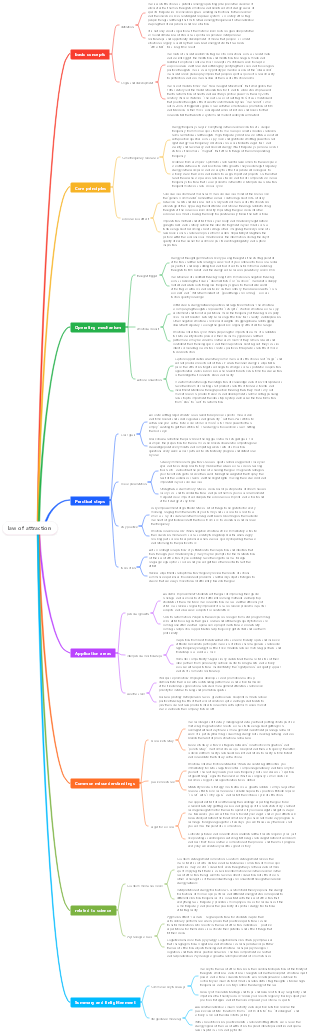
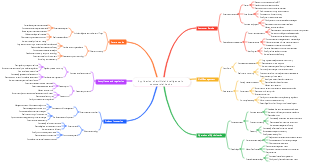
This is a mind map about the field of artificial intelligence (AI) application. The main contents include: smart home, medical and health, entertainment and media, transportation and autonomous driving, retail and e-commerce, education, financial technology, future trends, challenges and ethical issues, law and justice, security and public safety, agriculture, energy and environmental protection, logistics and warehousing, and manufacturing.
Edited at 2025-03-10 03:33:17Rumi: 10 dimensions of spiritual awakening. When you stop looking for yourself, you will find the entire universe because what you are looking for is also looking for you. Anything you do persevere every day can open a door to the depths of your spirit. In silence, I slipped into the secret realm, and I enjoyed everything to observe the magic around me, and didn't make any noise. Why do you like to crawl when you are born with wings? The soul has its own ears and can hear things that the mind cannot understand. Seek inward for the answer to everything, everything in the universe is in you. Lovers do not end up meeting somewhere, and there is no parting in this world. A wound is where light enters your heart.
Chronic heart failure is not just a problem of the speed of heart rate! It is caused by the decrease in myocardial contraction and diastolic function, which leads to insufficient cardiac output, which in turn causes congestion in the pulmonary circulation and congestion in the systemic circulation. From causes, inducement to compensation mechanisms, the pathophysiological processes of heart failure are complex and diverse. By controlling edema, reducing the heart's front and afterload, improving cardiac comfort function, and preventing and treating basic causes, we can effectively respond to this challenge. Only by understanding the mechanisms and clinical manifestations of heart failure and mastering prevention and treatment strategies can we better protect heart health.
Ischemia-reperfusion injury is a phenomenon that cellular function and metabolic disorders and structural damage will worsen after organs or tissues restore blood supply. Its main mechanisms include increased free radical generation, calcium overload, and the role of microvascular and leukocytes. The heart and brain are common damaged organs, manifested as changes in myocardial metabolism and ultrastructural changes, decreased cardiac function, etc. Prevention and control measures include removing free radicals, reducing calcium overload, improving metabolism and controlling reperfusion conditions, such as low sodium, low temperature, low pressure, etc. Understanding these mechanisms can help develop effective treatment options and alleviate ischemic injury.
Rumi: 10 dimensions of spiritual awakening. When you stop looking for yourself, you will find the entire universe because what you are looking for is also looking for you. Anything you do persevere every day can open a door to the depths of your spirit. In silence, I slipped into the secret realm, and I enjoyed everything to observe the magic around me, and didn't make any noise. Why do you like to crawl when you are born with wings? The soul has its own ears and can hear things that the mind cannot understand. Seek inward for the answer to everything, everything in the universe is in you. Lovers do not end up meeting somewhere, and there is no parting in this world. A wound is where light enters your heart.
Chronic heart failure is not just a problem of the speed of heart rate! It is caused by the decrease in myocardial contraction and diastolic function, which leads to insufficient cardiac output, which in turn causes congestion in the pulmonary circulation and congestion in the systemic circulation. From causes, inducement to compensation mechanisms, the pathophysiological processes of heart failure are complex and diverse. By controlling edema, reducing the heart's front and afterload, improving cardiac comfort function, and preventing and treating basic causes, we can effectively respond to this challenge. Only by understanding the mechanisms and clinical manifestations of heart failure and mastering prevention and treatment strategies can we better protect heart health.
Ischemia-reperfusion injury is a phenomenon that cellular function and metabolic disorders and structural damage will worsen after organs or tissues restore blood supply. Its main mechanisms include increased free radical generation, calcium overload, and the role of microvascular and leukocytes. The heart and brain are common damaged organs, manifested as changes in myocardial metabolism and ultrastructural changes, decreased cardiac function, etc. Prevention and control measures include removing free radicals, reducing calcium overload, improving metabolism and controlling reperfusion conditions, such as low sodium, low temperature, low pressure, etc. Understanding these mechanisms can help develop effective treatment options and alleviate ischemic injury.
Thinking Brain Map in the Application Field of Artificial Intelligence (AI)
Smart home
Application scenarios:
Voice Assistant (Smart Speaker Control)
Control home equipment through voice command
No manual operation required for improved convenience
Supports multiple languages and dialects to meet different user needs
Integrate a variety of services, such as weather forecasts, news reports
Provide real-time information to enhance user experience
You can set reminders and alarm clocks to manage daily affairs
Home security (face door lock, abnormal alarm)
Face door lock provides a safe and convenient way to access the home
Facial recognition technology, quickly unlock
Temporary passwords or key cards can be authorized remotely
An abnormal alarm system responds to potential threats in a timely manner
Monitor the status of door and window switches and issue an alarm when abnormal
Link with community security systems to improve security
Energy consumption management (intelligent temperature control, lighting)
Intelligent temperature control system automatically adjusts indoor temperature
Automatically adjust according to outdoor weather and indoor temperature
Learn user habits and optimize energy use
Intelligent lighting system automatically adjusts brightness according to ambient light
Save energy and extend the service life of the light bulb
You can remotely control or set the timing switch
Home appliance automation (scenario linkage)
Scenario linkage realizes intelligent interaction between home appliances
Automatically turn on or off related devices according to user habits
For example, leaving home mode automatically turns off all appliances and lights
Improve living comfort and efficiency
Predict and meet demand by learning user behavior
Reduce daily chores and improve quality of life
Technical support:
Edge AI (localized processing)
Data is processed on the device side to reduce latency
Improve response speed and enhance user experience
Reduce dependence on central servers and save bandwidth
Protect user privacy, data is not transmitted outside
Local processing reduces the risk of data breaches
Users have more control over data
Internet of Things Protocol (Wi-Fi, Zigbee)
Wi-Fi is widely used for high-speed data transmission
Simple connection and wide coverage
Supports multiple devices to be online at the same time, with high stability
Zigbee is suitable for communications of low-power devices
Battery-powered sensors and controllers
Network self-organizing, easy to expand and maintain
User habits to model
Analyze user behavior patterns through machine learning
Personalized services to improve user satisfaction
Predict user needs and provide services actively
Continuous learning and optimization to adapt to user changes
The system is constantly updated to match the changes in user habits
Improve system accuracy and user stickiness
Medical Health
Application scenarios:
Medical imaging recognition (CT, MRI analysis)
Automatically analyze image data
Assisting doctors to diagnose quickly
Disease prediction and auxiliary diagnosis (early cancer screening)
Predict disease risk using big data analysis
Early detection of signs of disease
Drug development (molecular simulation, target discovery)
Accelerate the development process of new drugs
Reduce R&D costs and time
Personalized treatment (genetic data analysis)
Customized treatment plans based on personal genes
Improve treatment effectiveness and safety
Intelligent health management (wearable device monitoring)
Real-time monitoring of health status
Prevent disease and health risks
Technical support:
Deep Learning (Image Recognition)
Improve the accuracy of medical images recognition
Natural Language Processing (Electronic Medical Record Analysis)
Automated processing and analysis of medical record information
Reinforcement learning (drug optimization)
Optimize drug design and clinical trial process
Entertainment and Media
Application scenarios
Content generation (AI writing songs, paintings, scripts)
AI creates music works
Analyze the melody of popular trends
Generate personalized music works
AI Painting and Design
Generate art works using algorithms
Provide users with a unique visual experience
AI script creation
Create storylines based on data analysis
Provide script creativity for film and television works
Game AI (NPC intelligence, level design)
Intelligent NPC behavior design
Make NPC behavior more realistic
Enhance the player's immersion
Automated level generation
Dynamic adjustment of difficulty according to player abilities
Keep the game challenging and fun
Video recommendation (Netflix, TikTok algorithm)
Recommendation system based on user behavior
Analyze the user's viewing history recommended videos
Improve user satisfaction and viewing time
Utilize collaborative filtering technology
Discover potential user interests
Recommend content that users may like
Virtual anchor (motion capture, voice synthesis)
Motion Capture Technology
Capture and simulate real-life characters' actions in real time
Improve the realistic virtual image
Voice synthesis technology
Generate natural and smooth voice output
Provide multilingual service support
Technical support
Generative Adversarial Network (GAN)
For image and video content generation
Create high-quality visual works
Applied to virtual reality and augmented reality
Improve AI artistic creation ability
Improve the quality of works through confrontational training
Enable AI to create more diverse content
Reinforcement learning (game strategy)
Optimize the NPC decision-making process
Enable NPCs to react according to the gaming environment
Improve the playability and challenge of the game
Automated game testing
Use AI to test and debug games
Speed up the game development cycle
Phonetic Synthesis (TTS)
Provide natural language voice output
Convert text information to voice
For virtual assistants and customer service systems
Supports multilingual and dialect
Expand the application scope of speech synthesis
Improve the universality of voice services
Traffic and autonomous driving
Application scenarios:
Self-driving cars (L4/L5 level)
Achieve fully automated driving
Reduce traffic accidents and congestion
Traffic flow optimization (signal light control)
Dynamically adjust traffic signals
Improve traffic efficiency
Logistics path planning (drone delivery)
Optimize logistics distribution routes
Improve delivery speed and efficiency
Vehicle maintenance prediction (fault diagnosis)
Predict potential vehicle failures
Reduce unexpected downtime
Technical support:
Computer Vision (obstacle detection)
Detect and identify obstacles in real time
Reinforcement learning (decision making system)
Optimize driving decision-making process
Sensor fusion (lidar, camera)
Combining multiple sensor data for accurate judgment
Retail and e-commerce
Application scenarios
Personalized recommendation (user portrait)
Utilize user historical behavior data
Analyze user purchasing habits
Predict user preferences
Combined with user social data
Analyze the impact of users' social networks
Identify potential buying motivations
Dynamic pricing (supply and demand forecast)
Monitor market supply and demand changes in real time
Adjust product prices to maximize profits
Influencing demand through price strategies
Forecast future market trends
Based on historical data and seasonal factors
Optimize inventory and supply chain management
Intelligent customer service (pre-sales/after-sales consultation)
Automatically answer FAQs
Reduce the burden of manual customer service
Improve customer consultation efficiency
Provide personalized solutions
Custom answers based on user history questions
Continuous learning and improvement through user feedback
Unmanned store (face payment, product recognition)
Face payment technology
Quickly identify customers
Achieve a seamless payment experience
Product Identification System
Automatically identify product information
Simplify checkout process
Technical support
Collaborative filtering algorithm
Recommended products based on user similarity
Analyze user behavior similarity
Provide personalized product recommendations
Recommended products based on item similarity
Identify the correlation between items
Recommend similar products to users
Computer Vision (Product Identification)
Applied in unmanned stores
Automatically identify shelf products
Real-time update of inventory information
Improve product classification efficiency
Classification of products through image recognition technology
Speed up product launch
Generative AI (virtual fitting room)
Provide a virtual fitting experience
Users try on clothes through virtual images
Enhance shopping experience and reduce return rates
Support personalized clothing design
Generate clothing styles according to user preferences
Provide customized clothing services
educate
Application scenarios:
Personalized learning recommendation (adaptive learning platform)
Customized learning paths based on students' abilities
Improve learning efficiency and effectiveness
Intelligent paper marking and homework correction
Automatic homework correction and exams
Reduce the burden on teachers
Virtual teacher (Question and answering, language training)
Provide 24/7 online learning support
Help students practice and review at any time
Educational Data Analysis (Student Behavior Prediction)
Analyze students' learning behavior and grade trends
Early identification of learning difficulties
Technical support:
NLP (Composition Score, Translation)
Automated language learning tasks
Recommendation system (course matching)
Recommended learning resources suitable for students
Emotional Computing (Learning Status Monitoring)
Identify students' emotions and attention states
Financial Technology
Application scenarios:
Risk management (credit score, fraud detection)
Reduce credit risk
Prevent financial fraud
Quantitative trading (algorithm trading, high-frequency trading)
Automated trading strategy execution
Improve transaction efficiency and profit
Smart investment advisor (personalized investment advice)
Provide investment advice based on user needs
Help users' assets increase value
Customer Service (Chatbot, voice assistant)
Provide 24/7 customer support
Improve customer satisfaction
Automated report generation (financial data analysis)
Generate financial reports quickly
Support decision-making
Technical support:
Time series prediction
Predict market trends and risks
Knowledge Graph (Anti-money laundering)
Build a complex financial relationship network
Federated Learning (Data Privacy Protection)
Data learning while protecting privacy
Future trends
General Artificial Intelligence (AGI): Cross-domain task processing capabilities
AGI will have a human-like intelligence level
Ability to perform complex tasks in multiple fields
Realize true intelligent interaction and learning
Promote the wide application and in-depth development of AI technology
Play a huge role in medical care, education, scientific research and other fields
Promote the comprehensive progress of human society
AI and edge computing: low latency, high privacy protection
Edge computing pushes AI processing power to the edge of the network
Reduce data transmission distance and reduce latency
Improve data processing speed and security
Provide safer and faster services for smart homes
Localization processing reduces dependency on central servers
Protect user privacy and avoid the risk of data leakage
AI democratization: Open source tools lower development thresholds
Popularization of open source AI tools and platforms
Reduce the cost of using and developing AI technology
Promote the development of innovation and diversified applications
Inspire creativity among global developers and businesses
Provide technical support for enterprises of different sizes
Accelerate the iteration and optimization of AI technology
Human-computer collaboration enhancement: AI assists rather than replace humans
AI as an auxiliary tool to improve human work efficiency
Free up human resources by handling repetitive tasks through AI
Humans focus on creative work and decision-making
New working models and processes that promote human-computer collaboration
Combining AI and human advantages to improve overall efficiency
Change work content and organizational structure to create new job opportunities
Improved ethical framework: Global AI governance and norms
Establish a global AI ethical and legal framework
Ensure the healthy development and application of AI technology
Prevent the abuse of AI technology and ethical risks
Promote international cooperation and jointly formulate AI standards and rules
Coordinate national policies and actions through international organizations
Promote the fair and sustainable development of global AI technology
Challenges and ethical issues
Technical Challenges:
Data quality and labeling cost
High-quality data is the basis for AI accuracy
It requires a lot of manpower to annotate data
The accuracy of data annotation directly affects model performance
High cost, which may limit technological development
High costs make it difficult for small businesses to enter the market
Need to find a more economical method of annotating data
Model interpretability (black box problem)
The AI decision-making process is opaque and difficult to explain
Users lack trust in AI decisions
Legal and regulatory requirements model interpretability
Influencing the application of AI in key areas
High transparency is required in sensitive areas such as medical care and finance
Explicable AI models need to be developed
Computing power and energy consumption limits
High-performance computing demand is proportional to energy consumption
High computing power equipment costs high, limited popularity
Energy consumption issues affect equipment sustainability
Algorithms and hardware design need to be optimized
Improve energy efficiency ratio and reduce operating costs
Develop low-energy AI chips and algorithms
Ethical issues:
Privacy leakage (face recognition abuse)
Face recognition technology may invade personal privacy
Unauthorized facial data collection and use
In the face of hacker attacks, the risk of data security increases
Strict privacy regulations need to be formulated
Clarify the boundaries of data collection and use
Strengthen supervision and punishment of data abuse
Algorithm bias (fairness dispute)
AI algorithms may inherit or amplify human bias
Dataset imbalance leads to algorithm bias
Influencing the fairness of decision-making and harming the interests of specific groups
Diversity and fairness of algorithms need to be ensured
Diversified datasets to reduce bias
Regularly review and adjust algorithms to ensure fairness
Employment substitution (low-skill job impact)
Automation and intelligence may lead to the disappearance of some jobs
Low-skilled jobs are easily replaced by machines
Causing changes in social employment structure and unemployment problems
Requires policy support and vocational training
Provide job transfer training and education to help workers adapt
Formulate social security measures to reduce the pressure of transformation
AI weaponization (military application risk)
AI technology may be used to develop autonomous weapon systems
Autonomous weapons may cause ethical and legal disputes
Increase the risk of misjudgment and conflict
The international community needs to jointly formulate norms and restrictions
Formulate international treaties to limit the use of AI weapons
Strengthen international cooperation and jointly supervise AI military applications
Law and Judicial
Application scenarios
Contract Review (Terms and Risk Analysis)
Automatically identify risk clauses in the contract
Reduce the time and cost of manual review
Improve the accuracy and efficiency of contract reviews
Provide a risk assessment report
Provide detailed risk analysis for decision makers
Promote the transparency of contract management
Legal consultation (Q&A robot)
Provide instant legal consultation services
Quick answers to legal questions with a Q&A bot
Improve the accessibility of legal services
Support preliminary diagnosis of legal issues
Understanding problems using natural language processing technology
Provide preliminary legal advice and guidance
Case prediction (verdict result simulation)
Analyze historical case data
Predicting possible judgments in similar cases
Provide reference for legal strategy formulation
Support risk assessment and decision-making
By simulating possible outcomes of different legal strategies
Help lawyers and clients make smarter choices
Generation of legal documents (automatic drafting)
Automatic drafting of legal documents
Reduce repetitive work and improve work efficiency
Ensure the standardization of the format and content of the document
Support personalized document customization
Generate documents based on specific case requirements
Improve the pertinence and effectiveness of documents
Technical support
Knowledge graph (legal provisions related)
Building a legal knowledge graph
Integrate legal provisions and case information
Related inquiries that provide legal information
Supports complex legal inquiries and analysis
Realize multi-dimensional legal analysis through graph technology
Improve the depth and breadth of legal research and practice
NLP (text summary, entity recognition)
Text summary technology
Automatically extract the core content of legal documents
Provide users with a concise summary of information
Entity recognition technology
Identify key entities and concepts in legal texts
Supports rapid search and analysis of legal information
Logical reasoning (case matching)
Apply logical reasoning technology
Analyze the logical relationship and similarity between cases
Provide case matching and comparative analysis
Support legal argumentation and decision-making
Legal proof assists with logical reasoning
Provide strong support for legal decision-making
Security and Public Security
Application scenarios
Face recognition (monitoring system)
Improve the accuracy of the identification of the monitoring system
Real-time identification of individuals in the monitoring screen
Enhance safety monitoring efficiency
Applied to authentication
For access control systems and security inspections
Improve the speed and accuracy of security verification
Abnormal behavior detection (airport, station)
Monitor crowd behavior in real time
Identify potential security threats
Prevent and reduce security incidents
Analyze behavioral patterns
Learn normal behavior patterns through historical data
Discover abnormal behavior in time and call the police
Cyber Attack Defense (Intrusion Detection)
Monitor network traffic in real time
Identify abnormal traffic and potential attacks
Prevent data breaches and system corruption
Applied machine learning technology
Automatically learn and adapt to new attack modes
Improve the intelligence level of defense systems
Natural disaster warning (earthquake, flood forecast)
Analyze meteorological and geological data
Predict the possibility of natural disasters
Timely release warning information
Develop an emergency response plan
Develop response measures based on the prediction results
Reduce the losses caused by disasters
Technical support
Structured video analysis
Extract key information from videos
Identify objects and events in videos
Provide decision-making support for security monitoring
Optimize video storage and retrieval
Improve search efficiency through content analysis
Reduce the workload of manual monitoring
Federal Learning (Privacy Protection)
Sharing learning models across multiple devices
Protect user data privacy
At the same time, improve the generalization ability of the model
Support distributed data learning
Make the learning process more efficient and safe
Suitable for sensitive data processing scenarios
Edge AI (real-time response)
Intelligent processing at the source of data
Reduce data transmission delay
Achieve rapid decision-making and response
Support localized intelligent analysis
Suitable for scenarios with high response time requirements
Improve system stability and reliability
agriculture
Application scenarios:
Precision agriculture (soil and meteorological data analysis)
Accurate planting based on data
Improve crop yield and quality
Crop disease identification (drone inspection)
Use drones for disease monitoring
Discover and deal with diseases in a timely manner
Intelligent irrigation and fertilization
Intelligent irrigation and fertilization according to crop needs
Save resources and increase crop yields
Agricultural robots (picking, sowing)
Automatically complete picking and sowing
Improve operational efficiency and accuracy
Technical support:
Satellite remote sensing and image analysis
Remote monitoring of farmland conditions
Internet of Things (Sensor Network)
Real-time monitoring of farmland environment
Machine Learning (yield forecast)
Forecast crop yield and market demand
Energy and environmental protection
Application scenarios
Smart grid (Power load forecast)
Forecasting changes in power demand
Optimize power resource allocation
Improve grid operation efficiency
Support renewable energy grid connection
Balancing traditional energy with renewable energy
Promote the use of green energy
Renewable energy optimization (wind, solar)
Improve wind and solar power efficiency
Optimize the operation of power generation equipment
Reduce energy waste
Forecast and manage energy output
Predict output based on weather and environmental conditions
Plan energy use rationally
Pollution monitoring (air quality forecast)
Real-time monitoring of environmental quality
Assess the level of pollution and health risks
Take timely response measures
Predict pollution trends
Analyze historical data to predict future pollution
Provide scientific basis for policy formulation
Carbon Footprint Management (Corporate Carbon Emission Analysis)
Assess the company's carbon emissions
Monitor and report on corporate carbon emissions
Promote enterprises to reduce greenhouse gas emissions
Support the carbon trading market
Provide carbon emission data to support transaction decisions
Optimize the allocation and use of carbon emission rights
Technical support
Timing prediction model
Analyze time series data
Forecasting changes in energy demand and output
Supports the operation of smart grids
Optimize resource scheduling
Adjust resource allocation based on prediction results
Improve energy use efficiency
Optimization algorithm (resource scheduling)
Implement optimal resource configuration
Reduce energy waste and costs
Improve the overall performance of the system
Support decision-making in complex systems
Optimize decision-making under multivariable and constrained conditions
Improve the scientificity and accuracy of decision-making
Satellite data modeling
Using satellite remote sensing data
Monitor and analyze environmental changes
Supports a wide range of environmental monitoring tasks
Provide accurate geospatial analysis
In-depth analysis in combination with geographic information systems
Provide support for environmental management and planning
Logistics and Warehousing
Application scenarios
Intelligent sorting (robot sorting system)
Automatic sorting operations
Improve sorting speed and accuracy
Reduce errors and costs of manual sorting
Adapt to different cargo types
Flexible handling of goods of all shapes and sizes
Improve the adaptability of sorting systems
Inventory Management (Demand Forecast)
Real-time monitoring of inventory status
Predict changes in product demand
Optimize inventory levels and replenishment plans
Support dynamic inventory adjustment
Adjust inventory based on sales data and market trends
Reduce the risk of inventory backlog and out of stock
Unmanned delivery (AGV, drone)
Automated delivery process
Use unmanned vehicles to deliver goods
Improve delivery efficiency and reduce costs
Support last mile delivery
Solve the "last mile" problem in traditional distribution
Improve the coverage and convenience of delivery services
Path optimization (multi-vehicle collaboration)
Implement the optimization of delivery paths
Calculate the shortest or lowest cost delivery path
Improve delivery efficiency and response speed
Support multi-vehicle collaborative operation
Coordinate delivery tasks and routes between multiple vehicles
Implement optimal resource configuration
Technical support
Robot path planning
Provide path planning for robot sorting and distribution
Ensure robots move efficiently in warehouses
Avoid path conflicts and obstacles
Support dynamic environment adaptation
Adjust paths according to real-time environment changes
Ensure the continuity and safety of operations
Operations Research Algorithm (packing problem)
Solve the problem of cargo packing optimization
Improve cargo loading efficiency and space utilization
Reduce shipping costs and time
Supports complex optimization calculations
Apply advanced algorithms to solve complex optimization problems
Improve the overall performance of the logistics system
Real-time scheduling system
Realize real-time scheduling of goods and resources
Adjust the schedule based on real-time data
Ensure the timeliness and accuracy of logistics operations
Support decision-making in dynamic environments
Respond quickly in a changing environment
Optimize logistics operation processes and resource allocation
manufacturing
Application scenarios:
Intelligent quality inspection (defect detection)
Automatic testing of product quality
Improve production efficiency and quality
Predictive maintenance (equipment status monitoring)
Predict equipment failure and maintain it in advance
Reduce unexpected downtime and costs
Production process optimization (digital twin)
Simulated production process optimization decision
Improve production flexibility and efficiency
Supply Chain Management (Demand Forecast, Inventory Optimization)
Precise market demand
Optimize inventory management to reduce waste
Technical support:
Industrial Robots (Visual Guidance)
Improve production automation level
Edge computing (real-time data processing)
Process production data in real time
Digital Twin Technology
Create a virtual production model for analysis