MindMap Gallery How to master the AI method
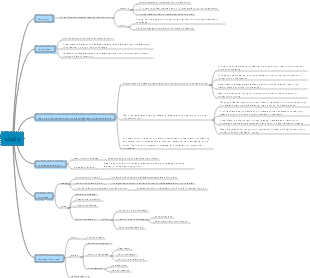
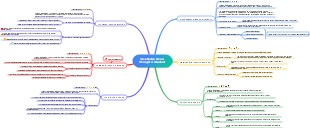
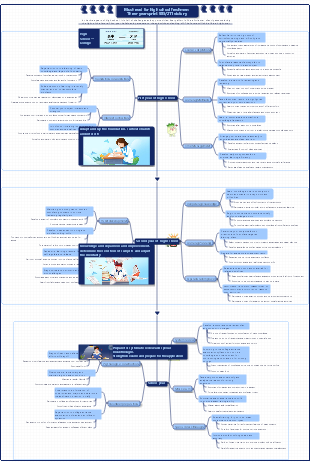
It is a detailed artificial intelligence (AI) learning mind map. Mastering AI methods requires systematic learning and practice, helping learners comprehensively improve their AI skills from basic knowledge to advanced applications, from theoretical learning to practical operations, from personal development to career planning, etc.
Edited at 2025-02-17 21:59:35This is a mind map about the annual work plan of the three pillars of human resources. The main contents include: strategic human resources planning, talent recruitment and allocation, employee performance management, employee training and development, employee relationships and communication, employee welfare and care, human resources information system construction, regulatory compliance and risk management, and organizational culture construction.
This is a mind map for the diagnosis and treatment of acute cerebral hemorrhage in patients with hemodialysis. The annual incidence of acute cerebral hemorrhage in patients with hemodialysis is (3.0~10.3)/1000, and the main cause is hypertension. Compared with non-dialysis patients, the most common bleeding site is the basal ganglia area, accounting for 50% to 80%; but the bleeding volume is large and the prognosis is poor, and the mortality rate is 27% to 83%. Especially for patients with hematoma >50ml, hematoma enlarged or ventricular hemorrhage on the second day after onset, the prognosis is very poor.
The logic is clear and the content is rich, covering many aspects of the information technology field. Provides a clear framework and guidance for learning and improving information technology capabilities.
This is a mind map about the annual work plan of the three pillars of human resources. The main contents include: strategic human resources planning, talent recruitment and allocation, employee performance management, employee training and development, employee relationships and communication, employee welfare and care, human resources information system construction, regulatory compliance and risk management, and organizational culture construction.
This is a mind map for the diagnosis and treatment of acute cerebral hemorrhage in patients with hemodialysis. The annual incidence of acute cerebral hemorrhage in patients with hemodialysis is (3.0~10.3)/1000, and the main cause is hypertension. Compared with non-dialysis patients, the most common bleeding site is the basal ganglia area, accounting for 50% to 80%; but the bleeding volume is large and the prognosis is poor, and the mortality rate is 27% to 83%. Especially for patients with hematoma >50ml, hematoma enlarged or ventricular hemorrhage on the second day after onset, the prognosis is very poor.
The logic is clear and the content is rich, covering many aspects of the information technology field. Provides a clear framework and guidance for learning and improving information technology capabilities.
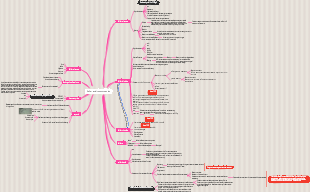
How to master the AI method
Learn basic knowledge
Understand the basic concepts of AI
Understand the definition and history of artificial intelligence
Research the main branches of AI, such as machine learning, deep learning, natural language processing, etc.
Master the basics of mathematics
Master linear algebra, calculus, probability theory and statistics
Understanding calculus and optimization theory
Learn programming languages
Familiar with Python and understand commonly used libraries such as NumPy, Pandas, and Matplotlib
Master the data structure and algorithm foundation
Practical operation experience
Using AI development tools and platforms
Learn to use deep learning frameworks such as TensorFlow, PyTorch, etc.
Master AI services from cloud service platforms such as AWS, Google Cloud or Azure
Participate in project practice
Join an open source project, contribute code or documentation
Work with the team to complete actual AI projects
Building a personal project
Design and implement a small AI application
Methods to solve practical problems through project learning
Classic algorithms
Master linear regression, logistic regression, decision tree, SVM, KNN and other algorithms
Theoretical study
Basic concepts such as learning supervised learning, unsupervised learning, reinforcement learning, etc.
In-depth research on domain knowledge
Read professional literature and books
Classic and latest papers in the field of AI
Read professional books and textbooks related to AI
Participate in professional courses and seminars
Register for online courses such as AI courses on Coursera, edX
Participate in academic conferences and seminars and communicate with experts
Track the latest technology trends
Subscribe to AI-related tech news and blogs
Follow the social media accounts of industry leaders and research institutions
Neural Network
Understand feedforward neural networks, convolutional neural networks (CNN), recurrent neural networks (RNN), etc.
frame
Learn TensorFlow or PyTorch to master model construction, training and evaluation
Cultivate critical thinking
Analyze and evaluate AI models
Learn how to evaluate the performance and limitations of AI models
Understand the bias and fairness of the model
Explore AI ethical and legal issues
Study the application ethics of AI in different fields
Understand laws, regulations and standards related to AI
Data cleaning
Learn to deal with missing values, outliers, etc.
Master the technology of feature selection, dimensionality reduction, etc.
Develop interdisciplinary competence
Combining knowledge of other disciplines
Learn psychology and cognitive science to understand human intelligence
Analyze the social impact of AI in combination with disciplines such as economics and sociology
Read papers and focus on top conferences such as NeurIPS and ICML
Learn the latest courses through Coursera, edX and other platforms
Develop innovation and problem-solving skills
Learn design thinking and innovative approaches
Practice using AI to solve interdisciplinary problems
Books: "Ian Goodfellow", "Personal Machine Learning" (Personal Warnington)
Courses: Andrew Ng's Machine Learning Course, Fast.ai's Deep Learning Course
Establish a professional network
Participate in the community and forums
Join LinkedIn, GitHub and other professional social networks
Participate in technical forum discussions such as Stack Overflow, Reddit and other
Master Git
Familiar with AWS, Google Cloud and other platforms
Establish industry connections
Participate in industry conferences and workshops
Connect and exchange experiences with experts in the industry
Continuous learning and adaptation
Tracking technology development trends
Read technical trend reports and analysis articles regularly
Focus on emerging technologies and research directions
Learn to collaborate in a team
Adapt to changing skills needs
Learn new programming languages and tools
Regularly evaluate and update personal skill sets
Develop logical thinking and problem-solving skills
Participate in AI forums, Meetup, and communicate with peers
Share your learning experience through a blog or a speech
Consider career planning
Determine career goals
Analyze personal interests and market demands
Set short-term and long-term career development goals
Prepare career development materials
Produce professional resumes and portfolios
Skills for preparing for interviews and career development
Choose areas of interest, such as computer vision, natural language processing, etc.
Expand career paths
Explore different career paths in the field of AI
Consider starting a business or joining a startup as a career path