 Wondershare EdrawMind
MindMap Gallery Globalization and Soft Power Competition
- 26
- 1
- 1
Globalization and Soft Power Competition
This is a mind map about "Globalization and Soft Power Competition", which mainly includes: the challenges and responses of soft power competition in the context of globalization, the relationship between globalization and soft power competition, the soft power development strategies of major countries, the connotation and composition of soft power, and the essence and characteristics of globalization.
Edited at 2025-02-25 10:41:09
- Reproductive system
This template shows the structure and function of the reproductive system in the form of a mind map. It introduces the various components of the internal and external genitals, and sorts out the knowledge clearly to help you become familiar with the key points of knowledge.
- Interpretation and summary of relationship field e-book
This is a mind map about the interpretation and summary of the relationship field e-book, Main content: Overview of the essence interpretation and overview of the relationship field e-book. "Relationship field" refers to the complex interpersonal network in which an individual influences others through specific behaviors and attitudes.
- Accounting books and accounting records
This is a mind map about accounting books and accounting records. The main contents include: the focus of this chapter, reflecting the business results process of the enterprise, the loan and credit accounting method, and the original book of the person.
Globalization and Soft Power Competition
- Reproductive system
This template shows the structure and function of the reproductive system in the form of a mind map. It introduces the various components of the internal and external genitals, and sorts out the knowledge clearly to help you become familiar with the key points of knowledge.
- Interpretation and summary of relationship field e-book
This is a mind map about the interpretation and summary of the relationship field e-book, Main content: Overview of the essence interpretation and overview of the relationship field e-book. "Relationship field" refers to the complex interpersonal network in which an individual influences others through specific behaviors and attitudes.
- Accounting books and accounting records
This is a mind map about accounting books and accounting records. The main contents include: the focus of this chapter, reflecting the business results process of the enterprise, the loan and credit accounting method, and the original book of the person.
- Recommended to you
- Outline





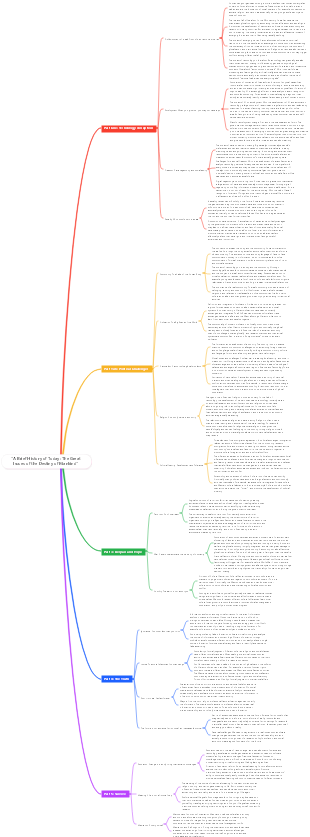

"Globalization and Soft Power Competition"
The essence and characteristics of globalization
The concept and connotation of globalization
Definition analysis
In-depth explanation: Globalization refers to the process of deepening interrelationship and interdependence among countries around the world in multiple fields such as economy, politics, culture, and society. It breaks regional boundaries and allows resources, information, personnel, capital, etc. to flow and allocate freely on a global scale.
Multidimensional understanding: From an economic perspective, globalization is manifested as the rapid development of international trade, international investment and transnational production; from a political perspective, the influence involving international organizations and international rules is increasing; from a cultural perspective, it is reflected in the exchange, collision and integration between different cultures.
History Evolution
Development stage: sort out the process of globalization from the early geographical discoveries that opened up trade globalization, to the industrial revolution promoting globalization of production, and then to the information age realizing all-round globalization of finance, technology, etc.
Key nodes: Analyze the role of major historical events such as the great geographical discoveries, industrial revolution, and information technology revolution in promoting the process of globalization, as well as the main characteristics and development trends of globalization at different stages.
Economic characteristics of globalization
1. Globalization of production
Multinational corporations operate: Multinational corporations deploy production bases around the world, distribute product research and development, design, production, assembly and other links to different countries and regions, and use the resource advantages and cost differences in various places to maximize production efficiency.
Global industrial chain formation: Explain how the global industrial chain revolves around core enterprises and through close cooperation between upstream and downstream enterprises, form a complete system from raw material supply, parts production to final product assembly and sales, and analyze the distribution characteristics and mutual relationships of each link around the world.
2. Trade globalization
Growth of international trade scale: Shows the rapid growth trend of global trade volume over the past few decades, and analyzes the driving factors behind trade growth, such as technological progress, trade liberalization policies, etc.
Changes in trade structure: Explore the development trends of traditional goods trade and emerging service trade, as well as changes in the structure of trade goods, such as the increasing proportion of high-tech products in trade.
3. Financial globalization
International financial market integration: describes the increasingly close connection between international financial markets, funds flow rapidly around the world, and the linkage between financial markets in various countries continues to increase.
Financial innovation and risk: Analyze the development of financial innovation tools such as financial derivatives, as well as the cross-border transmission of financial risks brought about by financial globalization, and discuss how to strengthen financial supervision to deal with risks.
Political characteristics of globalization
1. Changes in the international political landscape
Multipolarization trend: Analyzing the influence of emerging economies and developing countries on the international political stage is gradually increasing, and the trend of multipolarization in the world is becoming increasingly obvious, breaking the traditional international political pattern dominated by a few major powers.
The role of international organizations: Explain the important role played by international organizations such as the United Nations, the World Trade Organization, and the International Monetary Fund in coordinating international political and economic relations and solving global problems, as well as the challenges and reform needs faced.
2. National sovereignty and globalization
Sovereign transfer and sharing: Explore the sovereign transfer to a certain extent in order to participate in international cooperation and integrate into the global economic system, such as abiding by international rules and participating in the process of regional integration, and also achieving sovereign sharing and expansion through international cooperation.
Sovereignty maintenance and challenges: Analyze how a country maintains its sovereignty and security in the process of globalization, and deal with external political, economic, cultural pressures and challenges, such as the impact of cybersecurity and trade protectionism on national sovereignty.
Cultural characteristics of globalization
1. Cultural exchange and integration
Cultural communication channels: Explain how modern communication means such as the Internet, transnational media, and international tourism can promote exchanges and dissemination between different cultures, so that cultural elements from all over the world can penetrate and integrate each other.
Cultural diversity symbiosis: analyze the importance of cultural diversity in the context of globalization, as well as ways for different cultures to maintain their own characteristics and values in exchanges and integration, such as cultural protection policies, cultural innovation, etc.
2. Cultural conflicts and contradictions
Value differences: Explore how differences in value in different cultural backgrounds, such as individualism and collectivism, religious belief differences, etc., can trigger cultural conflicts and misunderstandings and affect international exchanges and cooperation.
Issue of cultural hegemony: Analyze the dominant position of Western countries in cultural communication and the threat of cultural hegemony to other countries' cultural security and cultural autonomy, and explore how to deal with cultural hegemony and safeguard national cultural sovereignty.
The connotation and composition of soft power
Definition and concept of soft power
1. Theory Origin
Proposer and background: Introduction to the background proposed by American scholar Joseph Nye, as well as its status and significance in the development of international relations theory.
Theoretical evolution: sort out the process of soft power theory from proposing to continuous development and improvement, analyze the expansion and deepening of the concept of soft power by different scholars, as well as the application and research in different disciplines.
2. Core connotation
Immaterial power: Emphasizing that soft power is an immaterial power that influences others' behaviors and concepts through attraction, inspiration and identification, in contrast to the traditional coercive force based on hard power such as military and economic.
Influence dimension: Understand the connotation of soft power from multiple dimensions such as political values, cultural attraction, foreign policy, etc., and analyze how it plays a role in international affairs and shapes the national image and international status.
The constituent elements of soft power
1. Cultural soft power
Traditional cultural value: Analyze how the rich traditional cultural resources of various countries, such as literature, art, philosophy, religion, etc., contain unique values and spiritual connotations, and become an important source of cultural soft power.
Modern cultural industry: Explore the role of cultural industries such as film and television, music, animation, games, etc. in global cultural communication, as well as the importance of the development of cultural industry in enhancing the country's cultural soft power, including the export of cultural products and the shaping of cultural brands.
2. Political soft power
Advantages of political system: Explain how a country's political system, such as democratic system, legal system, government governance capabilities, etc., reflects its political concepts and value orientation, attracts the attention and learning of other countries, and becomes an important part of political soft power.
Foreign policy influence: Analyze the foreign policies pursued by the country on the international stage, such as the Five Principles of Peaceful Coexistence and multilateral diplomacy, how to enhance the country's international reputation and influence by actively participating in international affairs and solving global problems.
3. Technology soft power
Scientific and technological innovation ability: emphasizes the core position of scientific and technological innovation in today's era, analyzes a country's ability in basic research, applied research, key technological breakthroughs, etc., and how to determine its position in global scientific and technological competition and its role in promoting the enhancement of the country's soft power.
Transformation of scientific and technological achievements: Explore how scientific and technological achievements are transformed into actual productivity and social welfare, such as the application of Internet technology and artificial intelligence technology in improving people's livelihood and promoting economic development, and through scientific and technological cooperation and technological output, enhancing the country's influence in the international science and technology field.
The relationship between globalization and competition for soft power
Globalization provides a platform for soft power competition
1. Accelerate information dissemination
Internet and new media: Analyze how the development of the Internet and new media technology breaks the time and space limitations of information dissemination, so that soft power elements such as culture, values, and political concepts of various countries can be quickly spread to all parts of the world, expanding the scope and influence of soft power competition.
The role of social media: Explore the unique advantages of social media platforms in information dissemination and public opinion guidance, such as Weibo, WeChat, Facebook, Twitter, etc., how they become an important base for countries to promote and compete soft power, and the impact of social media on the international public opinion landscape.
2. Frequent international exchanges
Cross-border education cooperation: Explain the development of cross-border education cooperation, such as international student exchanges, international academic conferences, joint scientific research projects, etc., how to promote cultural exchanges and talent flow between different countries and enhance the country's cultural attraction and academic influence.
International cultural activities: Analyze various international cultural activities, such as the Olympic Games, World Expo, International Film Festivals, etc., to provide a stage for countries to show their own cultural characteristics and soft power, and the role of these activities in enhancing mutual understanding and cultural identity between the international community.
Competition in soft power affects the process of globalization
1. Maintaining cultural diversity
Multicultural Symbiosis: Emphasizing the competition for soft power has prompted countries to pay more attention to protecting and inheriting their own cultural traditions, promoting the development of cultural diversity, making the process of globalization richer and more diverse, and avoiding cultural homogeneity.
Promotion of cultural exchanges: Analyze different countries through competition and exchange of cultural soft power, learn from each other and learn from excellent cultural achievements, promote cultural innovation and development, and provide a stronger cultural driving force for globalization.
2. International Order Shaping
Value Leadership: Explore a country that plays a leading role in the international community by spreading its own political values and ideas, such as freedom, equality, justice, and the rule of law, and affects the construction and development direction of the international order.
Rule-making participation: Analyze the country with its soft power to play a greater role in international organizations and international rule-making, make the international order more in line with its own interests and the common interests of the international community, and promote globalization to develop in a more fair and reasonable direction.
Characteristics of soft power competition in the context of globalization
1. Diversified competitive entities
State and non-state actors: In addition to traditional sovereign states, non-state actors such as multinational corporations, international non-governmental organizations, civil society groups, etc. have become increasingly prominent in the competition for soft power. To analyze how they participate in global soft power competition through their own activities and influence.
Regional Cooperation Organization: Discuss the efforts and achievements of regional cooperation organizations such as the EU, ASEAN, and the African Union in enhancing the overall soft power of the region, as well as the impact of regional soft power competition on the global landscape.
2. Extensive competition areas
All-round competition: Globalization makes soft power competition no longer limited to the cultural and political fields, but expands to various fields such as economy, science and technology, education, and the environment, analyzing the characteristics and relationships of soft power competition in different fields.
Rise of emerging fields: Focusing on the increasing importance of emerging fields such as cyberspace, artificial intelligence, biotechnology, etc. in the competition for soft power, we explore how countries can enhance their soft power through technological innovation, rule-making and other means in these fields.
3. Diversified competitive means
Cultural communication innovation: In addition to traditional cultural output methods, countries continue to innovate cultural communication methods, such as using technologies such as virtual reality (VR) and augmented reality (AR) to create immersive cultural experiences, and attract global audiences through emerging cultural forms such as online literature and short videos.
Adjustment of diplomatic strategies: In terms of diplomacy, countries have adopted more flexible and diverse diplomatic strategies, such as public diplomacy, cultural diplomacy, digital diplomacy, etc., to strengthen civil exchanges and interactions with other countries and enhance the affinity and influence of the country.
The development strategies of soft power in major countries
The United States' soft power strategy
1. Cultural industry export
Hollywood film influence: Analyze how Hollywood films, as the representative of the American cultural industry, can push American values, lifestyles and cultural symbols to the world through global distribution and wide dissemination, and shape the cultural image of the United States.
Pop Music and Fashion Industry: Explore the global trends of American pop music and fashion brands, and how they attract global consumers through commercial marketing and social media promotion, and enhance the appeal and identity of American culture.
2. Advantages of educational resources
Attraction of higher education: introduce the global reputation and influence of top American universities such as Harvard University and Stanford University, analyze their high-quality educational resources, advanced scientific research facilities and international academic atmosphere, and how to attract a large number of international students and scholars, cultivate talents with a global vision, and at the same time spread the academic concepts and values of the United States.
Education Exchange Project: Explain how various educational exchange projects carried out by the US government and universities, such as the Fulbright Project, the International Student Exchange Program, etc., can promote educational cooperation and talent exchange between the United States and other countries, and enhance the United States' voice in the field of international education.
3. Foreign policy influence
Leading international organizations: Analyze the important position of the United States in international organizations such as the United Nations, the World Bank, the International Monetary Fund, and how to promote its foreign policies and values by leading the decision-making and agenda setting of international organizations, and safeguard the global interests of the United States.
Military Alliance and Diplomatic Alliance: Explore the United States' establishment of military alliances and diplomatic alliances, such as NATO, the US-Japan alliance, to strengthen its political, economic and military cooperation with its allies, consolidate its strategic layout around the world, and enhance its international influence.
China's soft power construction
1. Traditional culture inheritance and innovation
Rejuvenation of traditional culture: Explain China's attention and protection of traditional culture in recent years, such as the research and inheritance of traditional cultural thoughts such as Confucianism, Taoism, and Legalism, as well as the promotion of traditional festivals and folk culture, and enhance national cultural confidence.
Cultural innovation achievements: Analyze China's efforts and achievements in cultural innovation, such as the popularity of the Forbidden City's cultural and creative products, the overseas dissemination of online literature, the rise of domestic animation and movies, etc., how to combine traditional culture with modern elements, create a cultural brand with Chinese characteristics, and enhance the international influence of Chinese culture.
2. International image creation
Dissemination of the concept of peaceful development: Emphasizes that China adheres to the path of peaceful development, actively spreads the concept of peace, development, cooperation and win-win, and demonstrates China's image as a responsible major power through participating in international peacekeeping operations, humanitarian rescue and other activities.
The impact of the Belt and Road Initiative: Analyze the important role of the Belt and Road Initiative in promoting economic cooperation, cultural exchanges and people-to-people communication in countries along the route, and how to enhance China's influence in the international economic and cultural fields through the construction of the Belt and Road Initiative, and shape China's international image of openness, inclusiveness and cooperation.
3. Diplomacy concepts and practices
Building a community with a shared future for mankind: explaining the connotation and significance of the concept of a community with a shared future for mankind, as well as China's practice in promoting the construction of a community with a shared future for mankind, such as holding the Asian Civilization Dialogue Conference and strengthening friendly cooperation with neighboring countries, etc., to provide Chinese wisdom and Chinese solutions to solve global problems.
Multilateral diplomatic cooperation: Analyze China's active participation in multilateral diplomatic activities, plays an important role in multilateral platforms such as the G20, the BRICS Cooperation Mechanism, and the Shanghai Cooperation Organization, promote the reform and improvement of the global governance system, and enhance China's voice in international affairs.
Soft power measures in other countries
1. Japanese animation culture output
Animation Industry Development: Introducing the development history and current situation of the Japanese animation industry, analyzing its leading position in the global animation market, and how animation works spread Japan's culture, values and lifestyle, becoming an important symbol of Japan's cultural soft power.
Animation and Culture Exchange: Discussion on strengthening the cooperation and cultural exchanges with other countries in the animation industry through holding international animation exhibitions and carrying out animation cultural exchange activities, and enhancing the international influence of Japanese animation culture.
2. Korean Korean culture rises
Pop and TV Series Communication: Analyze the popularity trends of Korean pop music (K-pop) and Korean dramas in Asia and around the world, and how they attract a large number of fans and spread Korean culture and values through their unique musical styles, exciting plots and the charm of idol stars.
The Korean wave cultural industry drives: Explain the driving role of Korean wave culture on Korean-related industries, such as tourism, cosmetics, fashion, etc., as well as how the South Korean government can promote the development and dissemination of Korean wave culture through policy support and industrial support, and enhance South Korea's national image and soft power.
3. European Union's cultural integration and international cooperation
Cultural integration strategy: introduce the EU's efforts to promote cultural exchanges and integration between member states, such as promoting the protection of European cultural heritage, carrying out European Cultural Year activities, etc., to enhance the sense of identity and cohesion of European culture.
International cooperation projects: Analyze EU cooperation projects in international culture, education, science and technology, such as the EU's Erasmus program, Horizon European scientific research program, etc., how to enhance the EU's influence and competitiveness in the global market and demonstrate the EU's soft power.
Challenges and responses to soft power competition in the context of globalization
Challenges in the competition for soft power
1. Cultural conflict intensifies
Value differences trigger conflicts: analyze how cultural values differences in different countries and regions, such as religious beliefs, moral concepts, political concepts, etc., can trigger cultural conflicts and misunderstandings in the context of globalization and affect the dissemination and acceptance of soft power.
The rise of cultural protectionism: Discuss the obstacles brought by some countries to global cultural exchanges and soft power competition in order to protect their own cultural industries and cultural traditions.
2. Imbalance of information dissemination
Western media dominance: Analyze the dominance of Western media in global information dissemination, and how they spread Western values and ideologies through agenda setting, public opinion guidance and other means, and suppress the spread of soft power in other countries.
Network information security threats: Discuss network information security issues, such as cyber attacks, information leakage, false information dissemination, etc., which damages the country's soft power, and how to deal with information security challenges in cyberspace and ensure national information sovereignty and cultural security.
3. Dilemma of international image shaping
Stereotypes are difficult to eliminate: analyze how the stereotypes formed by some countries for a long time internationally, such as the backward image of developing countries and the negative international image of some countries, affect the improvement of their soft power, and the difficulties and challenges of changing stereotypes.
Difficulty in guiding international public opinion: Explore how countries can effectively guide international public opinion, shape a positive international image, and respond to international public opinion crises and smear attacks in a complex and changing international public opinion environment.
Coping strategies to enhance soft power
1. Strengthen cultural construction and innovation
Cultural inheritance and protection: It emphasizes that all countries should attach importance to the inheritance and protection of their own culture, increase the protection of cultural heritage, traditional art, folk culture, etc., cultivate cultural inheritance talents, and provide a solid foundation for cultural innovation.
Cultural innovation and integration: Encourage cultural innovation, promote the integration of traditional culture with modern science and technology and modern cultural elements, create cultural products and cultural brands with the characteristics of the times and international competitiveness, and enhance the attractiveness and appeal of culture.
2. Optimize information dissemination strategy
Media diversified development: Advocate countries to develop a diversified media pattern, strengthen the international communication capacity of their own media, cultivate media talents with international vision and professional qualities, and break the information monopoly of Western media.
Application of new media technology: Make full use of new media technologies, such as social media, short video platforms, online live broadcasts, etc., innovate information dissemination methods, improve the timeliness and accuracy of information dissemination, and enhance interaction and communication with international audiences.
3. Actively participate in global governance
Contribute wisdom and solutions: Encourage all countries to actively participate in global governance, and contribute their own wisdom and solutions to address global issues, such as climate change, terrorism, public health crisis, etc., and enhance their influence and voice in international affairs.
Assuming international responsibilities: Emphasize that all countries should assume corresponding international responsibilities in global governance, demonstrate the country's responsibility and capabilities through practical actions, establish a good international image, and enhance the country's soft power.