MindMap Gallery Mind map of stock trading experts (detailed version)
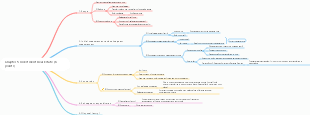
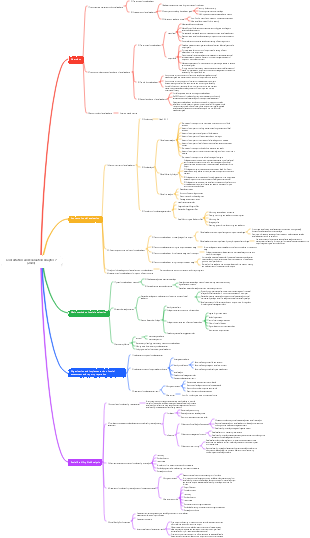
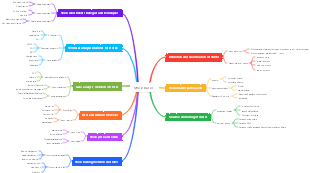
This is a mind map about the mind map of stock trading experts (detailed version). The main contents include: 1. Mindset management, 2. Basic knowledge, 3. Technical analysis, 4. Fundamental analysis, 5. Trading strategy, 6. Risk control, 7. Continuous evolution.
Edited at 2025-02-28 11:51:30Ceci est une carte mentale sur la carte mentale des experts en bourse (version détaillée).

This is a mind map about the mind map of stock trading experts (detailed version). The main contents include: 1. Mindset management, 2. Basic knowledge, 3. Technical analysis, 4. Fundamental analysis, 5. Trading strategy, 6. Risk control, 7. Continuous evolution.
Questa è una mappa mentale sulla mappa mentale degli esperti di trading azionari (versione dettagliata).
Ceci est une carte mentale sur la carte mentale des experts en bourse (version détaillée).
This is a mind map about the mind map of stock trading experts (detailed version). The main contents include: 1. Mindset management, 2. Basic knowledge, 3. Technical analysis, 4. Fundamental analysis, 5. Trading strategy, 6. Risk control, 7. Continuous evolution.
Questa è una mappa mentale sulla mappa mentale degli esperti di trading azionari (versione dettagliata).
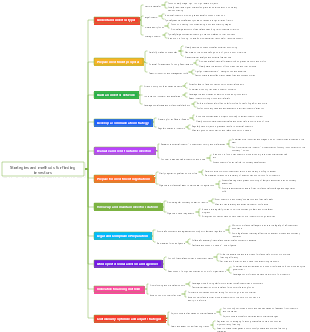
Mind map of stock trading experts (detailed version)
1. Mindset management
Rational thinking
Avoid greed and fear (not chasing the rise and sell the fall)
Stay calm and not be influenced by market sentiment
Make decisions based on technical analysis and fundamental analysis
Accept loss (stop loss discipline)
Set a reasonable stop loss point to avoid large losses
Summary timely after losses to avoid repeated mistakes
Long-term perspective
Focus on the long-term value of a company rather than short-term volatility
Develop a long-term investment plan to avoid frequent trading
Compound interest thinking (annualized return target 20%-30%)
Understand the power of compound interest and pursue stable growth
Reasonably allocate funds to realize asset value appreciation
Ignore short-term fluctuations (focus on trends)
Not disturbed by short-term market noise
Focus on long-term trends and company fundamentals
Discipline enforcement
Strictly implement the plan after making
Planning trading strategies and fund management in advance
Comply with the transaction plan and do not change it at will
Reject emotional trading (such as "betting a bet mentality")
Avoid making trading decisions due to impulsiveness
Stay objective and trade based on data and analytics
2. Basic knowledge
Market knowledge
Trading rules (T 1, limit on price increase and decrease)
Understand and comply with the trading rules stipulated by the exchange
Adapt to market rules and arrange trading plans reasonably
Main indexes (Shanghai Stock Exchange, Shenzhen Stock Exchange, ChiNext)
Track the main indexes to understand the overall market performance
Analyze index trends and predict market sentiment changes
Interpretation of terminology
K-line pattern (positive line/yin line, cross star, hammer line)
Learn the basic forms and meanings of K-line charts
Judge market sentiment and trends through K-line patterns
Trading volume (reducing volume/increasing volume, volume-price relationship)
Analyze the changes in trading volume and judge market activity
Combining price trends, understanding the relationship between quantity and price
Price-to-earnings ratio (PE), price-to-book ratio (PB)
Understand how to calculate price-to-earnings ratio and price-to-book ratio
Evaluate the valuation level of stocks using PE and PB
3. Technical analysis
Core indicators
Moving average system (5-day, 20-day, 60-day moving average)
Master the usage methods and significance of moving average system
Judging trends and trading opportunities through moving averages
MACD (Golden Fork/Dead Fork, Divergence Signal)
Calculation and interpretation of learning MACD indicators
Use MACD to identify trend changes and potential reversals
KDJ (Overbose/Oversold Area)
Understand the principles and applications of KDJ indicators
Judge the market overbought or oversold status through KDJ
Morphological recognition
Breakthrough form (head and shoulders bottom, double bottom, triangle)
Identify and understand various breakthrough forms
Forecast price trends and trading opportunities based on patterns
Reversal form (twilight star, morning star)
Learn the characteristics and trading signals of reversal patterns
Adjust trading strategies in time when the pattern appears
Key Position
Support/resistance level (front high and front low, gap)
Determine support and resistance levels and predict price fluctuations
Use these locations to develop a trading plan
4. Fundamental Analysis
Company level
Financial statements (net profit, gross profit margin, ROE)
Analyze financial statements and understand the company's operating status
Evaluate the profitability of a company through financial indicators
Industry status (leading stock advantages)
Research the company's position and competitive advantages in the industry
Pay attention to industry leading stocks and find investment opportunities
Industry Trends
Pay attention to industry development trends and potential changes
Analyze industry cycles and predict company future performance
Macroeconomics
Interest rate changes (rate hike/rate cut)
Pay attention to the central bank's interest rate policy
Analyze the impact of interest rate changes on the stock market
GDP growth rate, CPI/PPI data
Understand the meaning and impact of macroeconomic indicators
Use economic data to predict market trends
V. Trading Strategy
Stock selection logic
Main line hot spots (policy, capital resonance)
Looking for hot sectors for policy support and capital inflows
Select potential stocks based on market hot spots
High-recognition targets (industry leaders, popular stocks)
Choose industry leaders and stocks with high market attention
Use high-recognition stocks to obtain excess returns
Time to buy and sell
Buying point: Support level of shrinkage and pullback indicator divergence
Looking for buying opportunities when the price pulls back to support
Confirm the buying opportunity based on technical indicator divergence signals
Selling point: high volume stagflation/fall below trend line
Consider selling when the price is stagflation or falls below the trend line
Adjust shareholding strategy in a timely manner according to market signals
Position management
Partition operation (single stock ≤30% position)
Avoid excessive position of a single stock and diversify risks
Rationally allocate funds to control risk exposure of individual stocks
Pyramid increase positions (gradually add after profit)
Gradually increase positions after stock profit
Use the pyramid to increase positions to improve investment efficiency
6. Risk control
Stop loss rules
Fixed stop loss (such as loss of 5%-8% and exit)
Set a fixed stop loss ratio to control maximum loss
Resolutely execute the exit when the loss reaches the stop loss point
Move stop loss (refer to the trend to adjust the stop loss point)
Adjust the stop loss point according to market trends and lock in profits
Gradually increase the stop loss point when making a profit and protect profits
Black Swan Coping
Decentralized industries (avoid heavy positions in a single sector)
Invest in multiple industries to reduce risks in specific industries
Reduce potential black swan event impact through industry decentralization
Leave enough cash (retain more than 50% of positions in the bear market)
Maintain cash liquidity when market uncertainty is high
Leave funds for possible investment opportunities
7. Continuous evolution
Review and summary
Daily record trading (win rate, profit-loss ratio)
Record daily trading situations, analyze win rate and profit-loss ratio
Improve trading skills and decision-making quality through review and summary
Analyze error cases (such as emotional operations)
Review and analyze wrong decisions in transactions
Learn from mistakes and avoid making mistakes repeatedly
Learning Resources
Book recommendation: "Memoirs of the Stock Master" and "Smiling and Proud Stock Market"
Read classic investment books and absorb experiences from previous generations
Learn investment philosophy and trading skills through books
Tool recommendations: Tonghuashun (data), Snowball (community)
Use professional tools to obtain market data and information
Participate in the investment community, exchange experiences, and gain market insights