 Wondershare EdrawMind
MindMap Gallery English Conditionals
- 7
English Conditionals
This mind map, created using EdrawMind, provides a detailed overview of conditionals in English. It categorizes conditionals into four types: Zero, First, Second, and Third, each with specific tenses and usage examples. The map also includes variations and special cases, such as mixed conditionals and alternative verbs like "could" and "might." Additionally, it covers modal verbs, expressions of wish or if, and the connection between conditionals and reported speech, relative clauses, infinitives, causatives, and wishes.
Edited at 2025-04-05 18:09:29
- English Conditionals
This mind map, created using EdrawMind, provides a detailed overview of conditionals in English. It categorizes conditionals into four types: Zero, First, Second, and Third, each with specific tenses and usage examples. The map also includes variations and special cases, such as mixed conditionals and alternative verbs like "could" and "might." Additionally, it covers modal verbs, expressions of wish or if, and the connection between conditionals and reported speech, relative clauses, infinitives, causatives, and wishes.
- English B2-C3
El mapa mental de "English B2-C3" explora la gramática y expresiones del inglés de nivel intermedio-avanzado, incluyendo condicionales (Conditionals in English), verbos modales (Modal Verbs), expresiones de deseo (I wish / If Only) y arrepentimiento (Expressing Regret). Estas estructuras son esenciales para comunicarse con precisión y expresar emociones complejas o hipótesis.
English Conditionals
- English Conditionals
This mind map, created using EdrawMind, provides a detailed overview of conditionals in English. It categorizes conditionals into four types: Zero, First, Second, and Third, each with specific tenses and usage examples. The map also includes variations and special cases, such as mixed conditionals and alternative verbs like "could" and "might." Additionally, it covers modal verbs, expressions of wish or if, and the connection between conditionals and reported speech, relative clauses, infinitives, causatives, and wishes.
- English B2-C3
El mapa mental de "English B2-C3" explora la gramática y expresiones del inglés de nivel intermedio-avanzado, incluyendo condicionales (Conditionals in English), verbos modales (Modal Verbs), expresiones de deseo (I wish / If Only) y arrepentimiento (Expressing Regret). Estas estructuras son esenciales para comunicarse con precisión y expresar emociones complejas o hipótesis.
- Recommended to you
- Outline
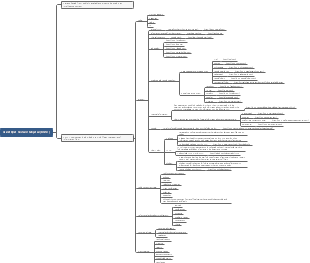




English B2-C3
1. Conditionals in English
Type 0. Zero Conditional For general truths and habits
If + Present Simple, ...Present Simple
Se usa para verdades universales
If water boils, it evaporates
If you eat too much, you get fat..!
Type I. First Conditional For possible things in the future
If + Present Simple, ... Will + Infinitive
Situaciones probables o muy factibles, pero no podemos estar seguros al 100%
If I save enough money this month, I will buy a new laptop
Se usa para hablar de situaciones reales o posibles.
If you come for the weekend, we will go to the cinema
Type II. Second Conditional For impossible things in the future
If + Past Simple, ...would + Infinitive
Hablar de situaciones en el FUTURO que NO es PROBABLE que ocurran
If I had a bigger salary, I would buy a house
If you didn´t live so far away, I would visit you more often..!
If I won the lottery, I would spend my life traveling
Hablar de situaciones en el PRESENTE que no se pueden dar porque son imposibles
If I had her number, I would phone her right now..!
If I were you, I would quit my job..!
If I were younger, I would travel more...!
Type III. Third Conditional For things that didn't happen in the past and possible consecuents
If + Past Perfect, ...would have + Part Participle
Se utiliza para hablar del PASADO describiendo una situación que NO SUCEDIÓ y de sus posibles consecuencias
If I had woken up earlier, I would have arrived on time..!
Se trata de situaciones hipotéticas y que ya no hay forma de cambiar. Se usan a menudo para hablar de nuestros arrepentimientos, ¡pero no solo eso! También de situaciones en las que el resultado fue positivo.
If I had stayed in my hometown, I would have never found my job.
If I hadn't taken a risk, I would have lost a geat opportunity..!
There are variations on this form. For example "could" and "might" can be used in the main clause: You could have stayed at my house if you had asked me. (You didn't stay at my house because you didn't ask me.) If we'd bought a lottery ticket last week, we might have won. (We didn't buy a lottery ticket and we didn't win.)
Type II y III. Mixed Conditional
If + Past Perfect, ...would + Infinitive
Cuando en vez de hablar de algo que no sucedió en el pasado (y de las consecuencias que podría haber ocasionado), lo que queremos es evaluar las posibles consecuencias futuras, podemos mezclar el segundo condicional con el tercero. CONDICIÓN: If I hadn't spent all my money (Type III Conditional) CONSECUENCIA: I would be able to help you (Type II Conditional)
If I hadn't spent all my money, I would be able to help you..!
If + Past Simple, ...would have + Past Participle
En este caso, la condición está en el SEGUNDO CONDICIONAL y la consecuencia en el TERCER CONDICIONAL. Lo que quiere decir que la condición es una situación HIPOTÉTICA y la consecuencia es algo que ya ocurrió. CONDICIÓN: If you really wanted to came (Type II Conditional) CONSECUENCIA: You would have found the way (Type III Conditional)
If you really wanted to came, you would have found the way
If you weren't so scared of everything, you would have enjoyed the film..!
2. Modal Verbs
Los verbos modales en inglés los usamos con mucha frecuencia: se trata de un tipo de verbo auxiliar que añade diferentes significados: - Posibilidad - Prohibición - Sugerencia - Obligación
CAN Expresa posibilidad o el hecho de saber hacer algo
COULD Es el pasado de CAN. Y también se usa como condicional de este mismo verbo. Cabe decir que además tiene un uso para expresar una pregunta más educadamente
SHOULD Expresa una recomendación. Un consejo, una opinión.
WOULD Es el verbo que ayuda a formar el condicional en inglés
MAY Expresa posibilidad o probabilidad. También se usa para preguntas de cortesía.
MIGHT Expresa una probabilidad pero con debilidad, o sea, es un suceso poco probable. También tiene un uso de cortesía.
SHALL Es una forma muy formal y casi arcaica. Es partícula de futuro.
WILL Auxiliar de futuro. Un futuro que acontecerá con seguridad.
MUST Expresa una obligación necesaria.
Situations
PRESENT ---> Modal Verb + Infinitive
PRESENT CONTINUOUS ---> Modal Verb + be + ing
PAST SIMPLE ---> Modal Verb + have + past participle (Usa have para todas las personas)
PAST CONTINUOUS ---> Modal Verb + have been + ing
Examples
It's possible I lost my earring on the bus (Past Simple. I'm not sure)
I may have lost my earring on the bus
I certain she went to bed early, her lights were off at ten..! (Past Simple. I'm sure)
She must have gone to bed early....
Jordan didn't have homewok so perhaps, he is playing football now..! (Present Continuous. I'm not sure)
Jordan may be playing football..!
I'm sure she isn't driving now, her car broke down this morning..! (Present Continuous. I'm sure)
She can not be driving now...!
I'm sure Molly didn't steal the jewels, she was with me last night..! (Past Simple. I'm sure)
Molly can not have stolen the jewels...!
Maybe Nora was having a shower when I called her..! (Past Continuous, I'm not sure)
Nora may-could-might have been having a shower...!
She loves her job, but I'm sure she needs a day off as well..! (Present Simple. I'm sure)
She must need a day of as well..!
3. I wish / If Only
Construction Subject + wish + {one back Past Tense}
Present Situation ---> Past Simple
Past Situation, Regret ---> Past Perfect
3rd Person (annoying now) ---> Would + Infinitive
I regret gambling my money at the Casino..!
I wish I hadn't gambled my money at the Casino...!
I would like to edit my video faster...!
I wish I could edit my video faster...!
Tania is always complaining about everything...!
I wish she wouldn´t complain about everything...!
I shouldn't have repaired my old car...!
If only I hadn't repaired my old car...!
Sam said she regretted spending so much on clothes...!
I only she hadn't spent so much on clothes...!
Wish / if only + past The following examples with "wish" and "if only" are all followed by a past tense, as the imagined situation is in the present or future: I wish / If only I had more money. I wish / If only Peter didn't live in Australia. I wish / If only she were still living here. I wish / If only I could travel to the moon.
4. Expressing Regret
EXAMPLE I didn't practice enough (action) I fail my driving test (outcome)
When something would have been a good idea, but we didn't do it Should have + Past Participle
You should have practiced more...!
Debiste hacerlo...!
When something was possible in the past, but we didn't do it Could have + Past Participle
You could have practiced more, but you didn't...
Fue posible, fuiste capaz pero no lo hiciste
As part of the Third Conditional Would have + Past Participle
Una situación imaginaria que hubiese pasado si...
I wouldn't have thought (think) of coming here if my daughter had not suggested (to suggest) it.
If you had practiced more, you would have passed the test...!
Uses...
Should've + Past Participle
5. Connectors
1. Resume Connector in English
Direction & Place
Here There Over there Beyond Under To the left In the distance Opposite
Emphasis
Especially Also In particular Furthermore In addition Indeed Of course Certainly Above all Specifically Significantly Notably
Time & Sequence
Later After Before Then Next Soon Finally First, second…
Comparison
As …as As if Equally Similarly Like In the same way Comparable In like manner Alternatively Unless Despite this By the way
Contrast
But However On the other hand Otherwise Unlike Conversely At the same time In spite of Whereas While Yet Apart from
Illustration
1. Such as In this case For one thing For instance For example In the case of Illustared by As an example An instance In other words
Cause and Effect
Therefore So Because Thus Hence Due to As a result Consequently For
Addition
As well as Further Furthermore and then And Too Furthermore Also In addition to Not only – but also Or
2. Showing contrast
Although
Este conector puede aparecer al principio o en medio de la oración; también hay que prestar atención al uso de las comas
I went swimming, although it was cold.
Even though
Este conector puede aparecer al principio o en medio de la oración; también hay que prestar atención al uso de las comas
Though
Se usa al final de la oración.
"Although" is more formal than "though", and therefore tends to be more common in writing than in speech, and vice versa. We use them to introduce a statement that is unexpected or surprising:
However: Sin embargo
It was cold. However, I went swimming. It was cold. I went swimming, however.
"However" is not a conjunction so it cannot join sentences. For this reason, it is normally separated from other sentences with a period, colon, or semi-colon:
Nevertheless
It was cold. Nevertheless, I went swimming. It was cold. I went swimming, nevertheless.
"Nevertheless" contrasts something that has just been said.
Despite
I went swimming despite the cold weather. I went swimming despite it being cold. Despite the cold weather, I went swimming.
"Despite" can connect a sentence. It is followed by a verb + -ing, noun, or noun phrase:
3. Showing the exact opposite of an idea
However
Luke is nice. However, Glenn is very unpleasant. Luke is nice. Glenn, however, is very unpleasant. Luke is nice. Glenn is very unpleasant, however.
On the other hand: Por otro lado
Luke is nice. Glenn, on the other hand, is very unpleasant. Luke is nice. Glenn is very unpleasant, on the other hand. Luke is nice. On the other hand, Glenn is very unpleasant.
While
John is nice, while Glenn is very unpleasant. While John is nice, Glenn is very unpleasant.
Unlike: Al contrario "de"
In other word: En otras palabras
Instead of: En vez de
4. Showing cause and effect
As: ya que
As she wasn't interested in rock music, she decided not to go to the concert. She decided not to go to the concert as she wasn't interested in rock music.
Since
Since she wasn't interested in rock music, she decided not to go to the concert. She decided not to go to the concert since she wasn't interested in rock music.
Seeing tha: Viendo que
Seeing she wasn't interested in rock music, she decided not to go to the concert. She decided not to go to the concert seeing that she wasn't interested in rock music.
Due to: Debido a
Due to her lack of interest in rock music, she decided not to go to the concert. She decided not to go to the concert, due to her lack of interest in rock music. Due to her not being interested in rock music, she decided not to go to the concert. She decided not to go to the concert, due to her not being interested in rock music.
In spite of: A pesar de
5. Expressing intention or purpose
So that
She turned off the TV so that her son could study.
By which: Por el/la/lo cuál
In which: En el/la/lo cuál
According to which: Según el/la/lo cuál
6. Expressing consequence
Therefore: Por lo tanto
I did not study. Therefore, I failed the test. I did not study. I, therefore, failed the test. I did not study. I failed the test, therefore.
Consequently: En consecuencia
In fact: De hecho/ En efecto
7. Adding
Moreover: Es más, Además
He maintains a balanced diet. Moreover, he does physical exercise regularly.
Beside: Además
Besides maintaining a balanced diet, he also does physical exercise regularly.
In adition: Además
In addition to maintaining a balanced diet, he does physical exercise regularly.
Furthermore: Además","
As well as: además de
I eat toast as well as cereal for breakfast every day.
“as well as” siempre va seguido de gerundio o de sustantivo, pero no de un pronombre con función de sujeto:
8. Expressing Purpose
When we want to express purpose, we can use the particle “to" + infinitive, or “for" + -ing verb or noun
I came here to have a coffee. I came here for a coffee. It's a product to clean windows with. It's a product for cleaning windows.
“In order to” + infinitive works in a similar way to “to" + infinitive. It is slightly more formal
I came here in order to have a coffee.
“So that” can also be used to express purpose. It is often used with: • modal verbs, • when a new subject is introduced, or • when we want to say that one action makes another action possible.
I came here so that I could have a coffee. She speaks slowly so that he can understand. She spoke slowly so that he could understand. Some students have to work so that they can pay for their studies.
In spoken English, it's common for speakers to omit the word "that": We took a taxi so (that) we wouldn't get wet.
SUMMARY
TO + INFINITIVE He went to the pharmacy to buy some medicine.
IN ORDER TO + INFINITIVE He went to the pharmacy in order to buy some medicine.
SO THAT + CLAUSE He went to the pharmacy so that he could buy some medicine.
FOR + NOUN He went to the pharmacy for some medicine.
6. Reported Speech
1. When we report what has been said, we can use direct or reported speech. In direct speech, we quote the exact phrase word for word using quotation marks
2. Characteristics
As a general rule, we often "shift" the tense of the original statement back in time.
Uses
DIRECT --------------------------- INDIRECT
Present simple ------------------- Past simple
Present continuous -------------- Past continuous
Past simple ------------------------ Past perfect simple
Past continuous ------------------- Past perfect continuous
Present perfect simple ----------- Past perfect continuous
Present perfect continuous ------ Past perfect continuous
Past perfect simple ---------------- No change
Future -------------------------------- Conditional
Future perfect ----------------------- Conditional perfect
Modal Verbs
may ------------------- might
"I may go to the theater."
She said (that) she might go to the theater.
must ------------------- had to
"You must wear a uniform."
She said (that) I had to wear a uniform.
can ------------------- could
"I can't hear very well."
She said (that) she couldn't hear very well.
shall ------------------- should
"Shall I call your sister?".
She asked if she should call my sister.
Other structures that do not change in reported / indirect speechMO
would
“Would you mind opening the door?”
He asked me if I would mind opening the door.
should / ought to
"You should / ought to buy a new house"
She said (that) I should / ought to buy a house.
could
"Could you come to my house?"
She asked me if I could come to her house.
might
"It might rain".
She said (that) it might rain.
needn't
"You needn't do the dishes".
She told me (that) I needn't do the dishes.
She told me (that) I didnt need to do the dishes.
used to
"I used to go swimming as a child".
He said (that) he used to go swimming as a child.
had better
"We had better call the police".
She said (that) they had better call the police.
3. Reporting verbs
INVITE + object + infinitive with “to”
He asked Cathy if she wanted to go to his house.
He invited Cathy to go to his house.
OFFER + infinitive with “to”
"I do for you." Anne said to Peter
Anne offered to do it for him.
PROMISE + infinitive with “to”
"I write to you every day." Anne said to Peter.
Anne promised to write to him every day.
REFUSE + infinitive with “to”
"I won't do it". Anne said to Peter.
Anne refused to do it.
SUGGEST + (verb + -ing)
“Why don’t we give her a present for her birthday?” Anne said to Peter
Anne suggested giving her a present for her birthday.
DENY + (verb + -ing)
“I didn't throw the ball.” he said. (The ball's broken the window)
He denied throwing the ball that had broken the window.
ADMIT + (TO) + verb + -ing
“I lied. I’m sorry.” Anne said.
Anne admited lying to him.
AGREE + infinitive with “to”
“OK. I’ll talk to the troublemakers.” Peter said.
Peter agreed to talk to the troublemakers.
THREATEN + infinitive with “to”
“If you don’t behave yourself, I’ll punish you.” her teacher said.
Her teacher threatened to punish her if she didn´t behave herself.
INSIST + on + gerund
“We need to take her to the doctor. I insist.” he said.
He insisted on taking her to the doctor.
CLAIM + infinitive with “to
“I’m the person who invented this system.” he said.
He claimed to be the inventor of the system.
ORDER + person + infinitive with “to”
“Don’t eat in class!” the teacher shouted to Jim.
The teacher ordered Jim not to eat in class.
4. Reporting Speech Commands
For commands, we often use the verb "to tell" followed by "(not) to + infinitive".
"Open the door."
Anne told me to open the door
“Be quiet!”. Anne told to Peter
Anne told him to be quiet.
“Don’t do that!”. Susan says to me.
She told me not to do that.
“Don’t play with that!”
She told me not to play with that.
5. Tell and Say
When “tell” is used in this context, it is similar to the verb “say”. However, “tell” is followed by an indirect object, while “say” doesn't require an indirect object: She told me that she was tired. She said that she was tired. She said to me that she was tired.
6. More
Links
Reported speech: Qué es y cómo utilizarlo | English Live Blog (ef.com)
Time and Place in Reported Speech | Grammar | EnglishClub
Images
7. Infinitive or ing
1. Verbs + infinitive or -ing
Verb + "to" + infinitive
VERB EXAMPLE
afford She can afford to buy a new house.
agree We agreed to meet again.
arrange We arranged to leave at seven.
attempt They attempted to escape from the house.
choose They chose to ignore my warning.
decide We decided to leave early.
expect We expect to pass our exams.
forget He forgot to leave the car.
hope She hopes to go to college.
manage He didn't manage to pass the test.
need* You didn't need to tell her.
* "need" can also be followed by the "-ing" form when it has a passive meaning. Compare:
My car needs cleaning.
I need to clean my car.
offer She offered to come with me.
plan They are planning to go on vacation.
pretend She pretended to be ill.
promise He promised to come.
refuse He refused to go.
seem He seemed to be very happy.
tend It tends to snow in January.
threaten He threatened to tell her mother.
want I want to study law.
Verb + Object
Verb + object + "to" + infinitive
VERB EXAMPLE
advise He advised me to leave.
allow They allowed me to use their car.
ask He asked her not to open the box.
challenge She challenged me to do something dangerous.
encourage She encouraged me to live on my own.
expect I expected him to come earlier.
forbid Their parents forbid them to go out at night.
force She forced him to eat the cake.
invite His family invited me to stay with them.
permit They will not permit her to go swimming.
persuade Jane persuaded me to attend the lecture.
remind You didn't remind me to bring the food.
teach Who taught you to cook?
tell I told you not to send that letter.
want I want you to pay more attention.
warn She warned me not to touch it.
would like I would like you to rethink your decision.
would prefer I would prefer you not to make such a mess.
Verb + object + infinitive without "to"
VERB EXAMPLE
make He made his pupils repeat the exercise.
let My parents let me stay out late.
help She helped me understand it.*
* the verb "to help" can be followed by an infinitive with or without "to":
I helped the old woman cross the road.
I helped the old woman to cross the road.
can, could, will, must, etc. (modal verbs) I will see you next week.
Verb + "-ing"
VERB EXAMPLE
admit He admitted stealing the money.
avoid We can’t avoid seeing her occasionally.
consider Have you considered living in the country?
deny My son denies breaking the vase.
enjoy We enjoy swimming.
finish Have you finished reading it?
imagine Can you imagine living on a desert island?
involve This job involves dealing with other people’s problems.
mind I don’t mind getting up early.
miss I miss walking on the sand.
practice We all practiced kicking the ball.
regret I regret leaving so soon.
risk He risked losing his house.
suggest She suggested going to the movie theater.
Verbs of preference
VERB EXAMPLE
dislike I dislike camping.
enjoy We enjoy swimming.
fancy Do you fancy going to the movie theater?
hate* She hates dancing.
like* I like swimming.
love* I love walking.
prefer* I prefer walking to driving.
* In American English and when referring to specific situations, we can also use "to" + infinitive after these verbs:
I prefer to read on weekends.
I like to watch the football if nothing else is on TV.
Other expressions and prepositional phrases followed by "-ing":
EXPRESSION EXAMPLE
can’t stand I can’t stand watching TV.
can’t help I can’t help speaking aloud.
to get used to I’m getting used to living on my own.
to be used to I’m used to staying up late.
it’s no use It’s no use waiting for him.
to be worth It’s not worth listening to her.
there’s no point in There’s no point in asking her for information.
to look forward to I’m looking forward to seeing you.
2. Verb + object + infinitive
Verb + object + "to" + infinitive
Verb + object + infinitive without "to"
8. Relative Clauses
9. Causative
We can use the structure "to have / get + something + past participle" to refer to a service or procedure that someone or something does for us. The structure is often referred to as the causative:
This structure is similar to the passive voice in that we give little importance to the agent of the action. Compare:
My car is being repaired (by the mechanic). (passive)
I'm having my car repaired (by the mechanic). (causative)
10. Wishes
1. WISH + Past Simple We want a situation in the present (or future) to be different.
I wish I ate more vegetables (but I don't)
2. WISH + Past Continuous We want to be doing a different activity in the present (or the future).
I wish it weren't raining now (It's raining now)
3. WISH + Past Perfect We want to be able to change a situation in the past.
I wish I hadn't done it. (I did it).
4. WISH + Would .- We want something to happen. .- We want someone to stop. .- We want someone to stop doing something which annoys us.
I wish you wouldn't borrow my clothes!
I wish you'd listen to me!
I wish the lesson would end.
5. WISH + To infinitive We can also use "wish" to express "want" in a formal situation.
I wish to make a compalint and would like to see the manager