 Wondershare EdrawMind
MindMap Gallery DLC (Diamond-Like Carbon) 分类与工艺类型
- 20
DLC (Diamond-Like Carbon) 分类与工艺类型
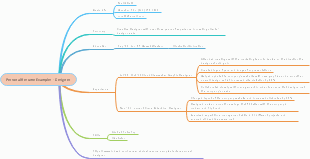
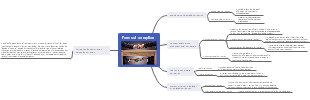
这张使用EdrawMind绘制的概念图展示了DLC(类金刚石碳)的分类及其工艺类型。DLC根据其杂化类型(sp³、sp²)和氢含量被分为四个主要区域:ta-C、a-C、a-C:H和ta-C:H。此外,图中还展示了单一PLC区域。在工艺类型方面,介绍了CVD(化学气相沉积)和PVD(物理气相沉积)两种主要方法及其对应的密度。右上角的图示显示了不同纳米压痕硬度值在杂化类型和氢含量空间中的分布,帮助理解DLC材料的性能特点。
Edited at 2025-06-19 11:34:00
DLC (Diamond-Like Carbon) 分类与工艺类型
- Recommended to you
- Outline
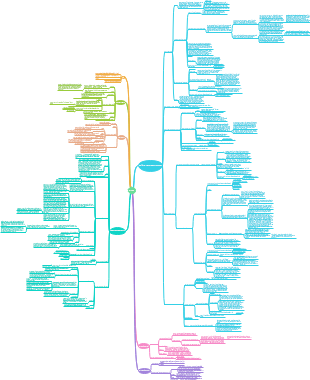
DLC
Classification
Four DLC region
ta-C
sp3 ratio exceeded 50% H ration is
a-C
sp3 ration
a-C:H
a-C:H was classified as the region where hydrogen was introduced into a-C
ta-C:H
sp3 ratio exceeded 50% H ration is high
One PLC region
Polymer-like carbon film Linear structure: Hydrogen content at 40% hardness level 9 GPa
process type
CVD
density: 1.86 g/cm3
PVD
density:2.37 g/cm3
Doping DLC films
doping techniques
Ion implantation
Ion implantation: This involves using an ion beam to introduce dopant atoms into the DLC coating. The ions are accelerated to high speeds and directed at the surface of the coating, where they embed themselves in the DLC matrix. This process can be used to introduce elements like nitrogen, boron, or silicon into the DLC coating to modify its properties.
PACVD
Plasma-assisted chemical vapor deposition (PACVD): This is a process that involves depositing a DLC coating onto a substrate using a plasma. During the process, dopant gases are introduced into the plasma to modify the properties of the DLC coating. This process is often used to introduce hydrogen into the DLC coating to improve its adhesion properties.
Co-sputtering
Co-sputtering: This involves depositing a DLC coating onto a substrate using a sputtering process. During the process, dopant materials are also sputtered onto the substrate to modify the properties of the DLC coating. This process is often used to introduce metals like titanium or aluminum into the DLC coating to improve its wear resistance.
PLD
**Pulsed laser deposition (PLD)**: **Pulsed laser deposition (PLD)**: This technique uses a high-power laser to ablate a target material and deposit it on a substrate. PLD can be used to dope DLC films with boron, which can improve their electrical and optical properties².
HiPIMS
As compared to conventional magnetron sputtering technique, high power impulse magnetron sputtering (HiPIMS) can provide larger fractions of ionized atoms in argon-metal discharges combined with high plasma densities (1019 m−3) [16].
Used gases
DLCs are usually deposited using precursors of carbon such as ethane (C2H6), methane (CH4), acetylene (C2H2), iso-butane (C4H10), propane (C3H8), benzene (C6H6), and n-butane (C4H10)
Ar/CH4
CH4: methane
C2H2 acetylene
acetylene
O2
Materials
Al
Au
Ta
Cr
CrN
CrN-doped DLC (Chromium Nitride-doped Diamond-Like Carbon) is a type of thin film coating that combines the properties of DLC and chromium nitride. DLC is a carbon-based coating known for its hardness, low friction, and high wear resistance, while chromium nitride is a ceramic material with excellent thermal stability and chemical resistance. By incorporating chromium nitride into the DLC matrix, the resulting CrN-doped DLC coating can offer enhanced performance in various applications. The addition of chromium nitride in DLC films can modify their properties in several ways: 1. Hardness and Wear Resistance: The presence of chromium nitride increases the hardness and wear resistance of the DLC coating. This makes it suitable for applications where the coating needs to withstand abrasive or erosive forces. 2. Friction and Lubricity: DLC coatings already have low friction properties, but the addition of chromium nitride can further reduce friction and improve lubricity. This can be beneficial in applications where reduced friction and improved sliding properties are required. 3. Thermal Stability: Chromium nitride provides excellent thermal stability, allowing the CrN-doped DLC coating to withstand high temperatures without significant degradation. This makes it suitable for applications involving high-temperature environments. 4. Chemical Resistance: Chromium nitride enhances the chemical resistance of DLC coatings, making them more resistant to corrosive substances and chemical reactions. This can be advantageous in environments where the coating may come into contact with aggressive chemicals or corrosive agents. Applications of CrN-doped DLC coatings can be found in various industries, including automotive, aerospace, cutting tools, molds, biomedical devices, and more. The combination of hardness, low friction, wear resistance, thermal stability, and chemical resistance makes CrN-doped DLC a versatile and desirable coating for many demanding applications.
CrC
CrC-doped DLC refers to the deposition of chromium carbide (CrC) nanoparticles within a diamond-like carbon (DLC) matrix. DLC is a thin film coating composed primarily of carbon, which exhibits properties such as high hardness, low friction, and excellent wear resistance. By incorporating CrC nanoparticles into the DLC structure, the resulting material combines the desirable characteristics of both materials. The process of CrC-doped DLC deposition typically involves physical vapor deposition (PVD) or chemical vapor deposition (CVD) techniques. In PVD, a target containing chromium and carbon is bombarded with high-energy ions, causing atoms to be ejected from the target and deposit onto the substrate as a thin film. CVD involves the reaction of precursor gases containing chromium and carbon in a high-temperature environment to form a solid coating on the substrate. The addition of CrC nanoparticles to DLC offers several advantages. Chromium carbide provides increased hardness and wear resistance, enhancing the durability and lifespan of the DLC coating. It also improves the material's thermal stability and chemical resistance, making it suitable for applications in harsh environments. CrC-doped DLC coatings find applications in various industries, including automotive, aerospace, cutting tools, and medical devices. In automotive and aerospace applications, the coatings can be used to reduce friction and wear on engine components, resulting in improved fuel efficiency and increased lifespan. In cutting tools, the enhanced hardness and wear resistance of CrC-doped DLC coatings enable them to withstand high-speed machining and extend tool life. In the medical field, these coatings can be utilized for biocompatible implants to reduce friction and wear, thereby enhancing the performance and longevity of the implants. Overall, CrC-doped DLC combines the desirable properties of DLC and chromium carbide, resulting in a versatile coating with superior wear resistance, hardness, and thermal stability, making it suitable for a wide range of industrial applications.
CrCN
The statement you provided describes a study that focuses on investigating the microstructure, electrochemical properties, and tribocorrosion behaviors of a CrCN nanocomposite coating with varying carbon content. Microstructure refers to the arrangement, distribution, and characteristics of the materials at a microscopic level. In this study, the researchers are interested in examining the microstructure of a coating composed of chromium carbonitride (CrCN) with the addition of carbon. By altering the carbon content within the coating, they aim to understand how it affects the arrangement and distribution of the different components in the coating at the microstructural level. Electrochemical behavior refers to the interaction between the coating and an electrolyte solution. By studying the electrochemical properties of the CrCN nanocomposite coating, the researchers aim to evaluate its corrosion resistance and how the varying carbon content influences its performance in different electrochemical environments. Tribocorrosion behavior refers to the combined effect of mechanical wear (tribology) and corrosion that occurs when a material is subjected to both mechanical forces and corrosive environments simultaneously. The researchers aim to assess how the CrCN nanocomposite coating with different carbon contents performs under tribocorrosion conditions. This evaluation helps determine the coating's resistance to wear and corrosion when it is subjected to frictional forces in corrosive environments. By conducting experiments, measurements, and analyses, the study aims to establish correlations between the carbon content, microstructure, electrochemical behavior, and tribocorrosion performance of the CrCN nanocomposite coating. The findings can provide insights into the relationship between the composition of the coating and its properties, guiding the development and optimization of coatings for applications where wear resistance, corrosion resistance, and tribocorrosion resistance are critical factors.
F,Si
Si-F
In this study, the anti-bacterial performance of modified diamond-like carbon (DLC) coatings with Si and F was investigated and compared with standard DLC coatings and stainless steel using Klebsiella pneumoniae as test bacterium. The experimental results indicated that the F and Si doped DLC coatings reduced the surface energy and improved anti-bacterial ability of DLC coatings. The extended DLVO theory was used to calculate the interaction energy between the coatings and the bacterium. The anti-bacterial mechanism was explained using the extended theory.
Nb
Niobium (Nb)-doped diamond-like carbon (Nb-DLC) films were deposited on Si and stainless steel substrates
W
WO3
10.1016/J.MATLET.2020.128645
Composite materials
ALCrN a-C:Ag
Carbide forming
Subtopic 1
rare earth materials
Gd (gadolinium)
Eu-DLC (Europium)
Ce, Cerium (Cu, Ce)/Ti co-doping
Ce - cerium
CeO2-cerium oxide
Tb, terbium
Er, Erbium
Subtopic
Si, N (Si-DLC, SI-BN-DLC)
GaN- gallium nitride
SiC -silicon carbie
Cu/Cu-Ni co doping
Cu2 (copper oxide)
various ceramics
Al2O3, YSZ, Al2O3Cr, and B
Ti
Doped on low carbon steel
Multi layer doped Ti
Ti/Al
Ag
B (Boron)
Effects on DLC films
B4C
Boron carbide
W doping
Effects on DLC films
The adhesion and hardness of DLC film improved significantly by W doping. -hardness -adhesion - Besides, the deposition rate and wear resistance also improved.
Ni
Properties
Structural
microstructural
Tribological
CoF
Wear rate
Electrical
Mechanical
Optical
Thermal stability
Adhesion
Applications
Optimization
Aspects of optimization of deposition parameters, doping, constructing the gradient and multilayer structure are considered.
Doping
Deposition prameters
multi-layer coating
Doping/Deposition Parameters
Effect Of Coating Thickness
Dopant Concentration
Optimization Of Deposition Parameters
Various deposition parameters, such as substrate temperature, gas composition, deposition time, and pressure, play a crucial role in determining the quality and performance of REE doped DLC films. Optimizing these parameters is essential to achieve the desired film properties and avoid issues like defects, high residual stress, or poor adhesion. Several studies have explored the effects of different deposition conditions on the film properties and have proposed guidelines for parameter optimization. - substrate tem - gas composition - deposition time - pressure -
Deposition temperature
Gas Composition During Film Growth
Ion Energy of the Depositing Carbon Atoms
Sputtering current
Bias voltage
working pressure
Ar, CxHx flow rate
Central Topic
Central Topic
Central Topic
Central Topic
Central Topic
Central Topic
Central Topic
Central Topic
Central Topic
Central Topic
Central Topic
Central Topic
Central Topic
Central Topic
Central Topic
Central Topic
Central Topic