MindMap Gallery Mind Map: University of Michigan Medical, Center for Consciousness Science
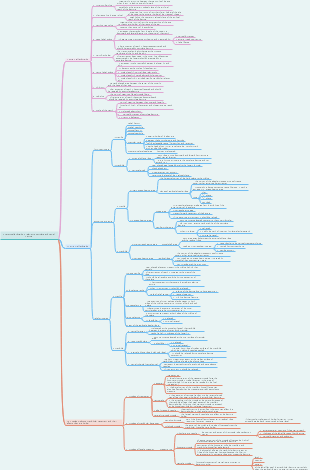
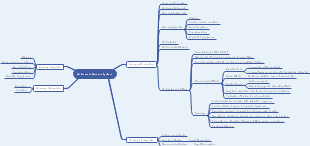
This mind map, created using EdrawMind, appears to outline the structure, research areas, and possibly the educational or organizational aspects of the Center for Consciousness Science at the University of Michigan Medical School. The central node is "University of Michigan Medical, Center for Consciousness Science," and it branches out into numerous sub-nodes, each containing detailed text. These sub-nodes likely cover various research topics, faculty, projects, publications, or educational programs related to consciousness science.
Edited at 2025-07-06 23:47:44University of Michigan Medical, Center for Consciousness Science
People
Dua Li
Specifically, a major focus of her work is on the development of electrophysiological signal analysis methods
study the brain dynamics and attempt to understand the neural mechanisms of altered states of consciousness, such as anesthesia, sleep, and psychedelic states.
UnCheol Lee
identify a physical or mathematical principle of the emergence of consciousness
large-scale brain network models
Develop quantitative methods to define brain states in altered states of consciousness.
Research main
EEG, Network, Functional Connectivity and etc
Measuring the dynamic balance of integration and segregation underlying consciousness, anesthesia, and sleep
Snapshot
This study introduces a new measure, the integration-segregation difference (ISD), to quantify the dynamic balance of integration and segregation in functional brain networks, which can differentiate among conscious and unconscious states.
Key findings
The study found that the integration-segregation balance, measured by ISD, can differentiate among conscious and unconscious states, including anesthesia and sleep. The ISD values showed significant changes across states, and random forest machine learning models trained with integration and segregation of brain networks identified awake vs. unresponsive states and their transitions with accuracy up to 93%.
The study found that pattern complexity is related to consciousness, with higher complexity during wakefulness and lower complexity during sleep stages. Additionally, the study found that pattern complexity is correlated with integration and segregation, and that metastability is related to integration and segregation.
Objectives
The objective of the study was to develop a new measure to quantify the dynamic balance of integration and segregation in functional brain networks and to investigate its relationship with conscious and unconscious states.
Methods
The study used functional magnetic resonance imaging (fMRI) to collect brain activity data from two datasets. The integration-segregation difference (ISD) was calculated as the difference between integration (global efficiency) and segregation (clustering coefficient) of brain networks. Random forest machine learning models were trained to identify awake vs. unresponsive states and their transitions. The study used BOLD signals, k-means clustering, and entropy values to calculate pattern complexity. The study also used a paired two-sided Wilcoxon signed rank test to compare pattern complexity between wakefulness and sleep stages.
Conclusions
The study demonstrates that the integration-segregation balance, measured by ISD, is a useful index that can differentiate among conscious and unconscious states. The results suggest that the ISD can be used to predict consciousness state transitions and to investigate the neural mechanisms underlying anesthesia and sleep.
The study concludes that pattern complexity is related to consciousness and is affected by changes in brain activity during sleep stages.
Relationship of critical dynamics, functional connectivity, and states of consciousness in large scale human brain networks
Snapshot
This study investigates the relationship between criticality and functional connectivity in large-scale brain networks, proposing partial phase locking as the underlying mechanism and demonstrating its potential to differentiate various states of consciousness.
Key findings
The study found that partial phase locking at criticality shapes the functional connectivity and asymmetric anterior-posterior PLE topography, with low (high) PLE for high (low) degree nodes. The topographical similarity and the strength of PLE differentiate various pharmacologic and pathologic states of consciousness.
Similar functional connectivity patterns derived from resting state empirical data and brain network models at criticality provide further support
We hypothesized that the network science concept of partial phase locking is the underlying mechanism of optimal functional connectivity in the resting state
We further hypothesized that the characteristic connectivity of the critical state provides a theoretical boundary to quantify how far pharmacologically or pathologically perturbed brain connectivity deviates from its critical state, which could enable the differentiation of various states of consciousness with a theory-based metric
We demonstrate that the partial phase locking at criticality shapes the functional connectivity and asymmetric anterior-posterior Phase lag entropy (PLE) topography, with low PLE for high degree nodes
Objectives
The objectives of the study were to test the hypothesis that partial phase locking is the underlying mechanism of optimal functional connectivity in the resting state and to demonstrate the potential of this approach to differentiate various states of consciousness.
Methods
The study used a neuroanatomically informed brain network model with source signals projected to EEG like sensor signals using a forward model. Phase lag entropy (PLE), a measure of phase relation diversity, was estimated and the topography of PLE was analyzed.
results
The results of the study show that the model-based EEG network analysis provides a novel metric to quantify how far a pharmacologically or pathologically perturbed brain network is away from critical state, rather than merely determining whether it is in a critical or non-critical state.
Conclusions
The study concludes that partial phase locking is the underlying mechanism of optimal functional connectivity in the resting state and that this approach has the potential to differentiate various states of consciousness.
Level of Consciousness Is Dissociable from Electroencephalographic Measures of Cortical Connectivity, Slow Oscillations, and Complexity
abstract
This study investigates the relationship between level of consciousness and various electroencephalographic (EEG) measures, including cortical connectivity, slow oscillations, and complexity. The researchers used a novel rat model where cholinergic stimulation of the [5] prefrontal cortex (PFC) restored wakefulness despite continuous administration of the general anesthetic sevoflurane. This allowed them to differentiate between state-related (conscious vs unconscious) and drug-related (anesthetic vs no anesthetic) effects.
Key Findings
Cortical Connectivity: Sevoflurane anesthesia significantly reduced cortical gamma connectivity, but this reduction persisted even after wakefulness was restored by carbachol delivery to the PFC. This suggests that cortical connectivity is not a reliable indicator of consciousness.
Slow Oscillations: The power of slow oscillations decreased during both wakefulness induced by carbachol and EEG activation without wakefulness induced by carbachol or noradrenaline. This indicates that slow oscillation power is more closely associated with EEG activation than with behavioral arousal.
Complexity: Temporal and spatiotemporal complexity increased during both wakefulness and EEG activation without wakefulness. This suggests that complexity is also more closely associated with EEG activation than with behavioral arousal.
Brain network motifs are markers of loss and recovery of consciousness
TL; DR
This study investigates the re-organization of 3-node motifs during loss and recovery of consciousness using EEG data from nine subjects.
Significant changes in motif topology were observed between responsive and unresponsive states, indicating a relationship with consciousness.
The research highlights motifs as fundamental building blocks of directed networks, contributing to understanding neural correlates of consciousness.
Anesthetic-induced unconsciousness was associated with topological re-organization of network motifs, suggesting their role in information processing.
Conclusions
the study concludes that anesthetic-induced unconsciousness is linked to a topological re organization of network motifs.
Motifs 1 and 5 showed significant changes between responsive and unresponsive states.
The findings suggest motifs could help understand neural correlates of consciousness.
The research emphasizes the importance of analyzing motif distributions in relation to consciousness states.
Limitations include the small sample size and potential non-generalizability to diverse patient populations.
Differential classification of states of consciousness using envelope- and phase-based functional connectivity
TL; DR
This study compares amplitude envelope correlation (AEC) and weighted phase lag index (wPLI) in classifying states of consciousness.
Nine participants underwent a three-hour anesthetic protocol, recording EEG across various consciousness states.
AEC demonstrated higher classification accuracy, particularly distinguishing unconsciousness from baseline.
The research highlights the importance of different functional connectivity measures in understanding consciousness.
Results suggest that both AEC and wPLI provide unique insights into brain connectivity dynamics .
Conclusion:
The study highlights significant implications of connectivity types in functional brain networks related to consciousness.
AEC outperformed wPLI in classifying states of anesthetic-induced unconsciousness.
Distinct connectivity patterns were observed between AEC and wPLI across consciousness states.
Future studies should integrate envelope and phase-based coupling for better brain dynamics analysis.
The study's findings are robust across different brain atlases and classifier methods.
The posterior dominant rhythm: an electroencephalographic biomarker for cognitive recovery after general anesthesia
Summarized Introduction:
The paper investigates the posterior dominant rhythm (PDR) as a biomarker for cognitive impairments after anaesthetic-induced loss of consciousness.
It explores the stability of PDR peak frequency over time and its correlation with cognitive task performance.
The study involved 60 adult volunteers undergoing isoflurane general anaesthesia or resting wakefulness, assessing EEG power and cognitive performance.
Findings suggest PDR peak frequency could serve as a useful perioperative marker for tracking cognitive dysfunction.
Conclusions:
The PDR peak frequency decreases after isoflurane anaesthesia, with recovery correlating to cognitive function metrics.
Monitoring post-anaesthesia cognitive recovery could help mitigate postoperative neurocognitive dysfunction.
The PDR peak frequency serves as a potential EEG biomarker for cognitive performance assessments.
The study highlights the need for further investigation into the perioperative utility of PDR monitoring.
Neuronal Mechanism, PFC
Differential Role of Prefrontal and Parietal Cortices in Controlling Level of Consciousness
TL; DR
The study investigates cholinergic stimulation in the parietal cortex during anesthesia and its effects on consciousness levels in rats.
Sevoflurane anesthesia was used, highlighting its relevance in surgical procedures.
Findings suggest that noradrenaline does not significantly alter behavioral states despite its role in wakefulness.
The research emphasizes the importance of targeting neural nodes for reversing anesthesia effects
conclusions
The prefrontal cortex regulates consciousness and can reverse anesthetized states.
Cholinergic stimulation in the prefrontal cortex is sufficient to restore consciousness.
Cortical dynamics can exist independently of behavioral wakefulness.
Noradrenaline does not induce behavioral changes despite its role in wakefulness.
The study highlights the importance of the prefrontal cortex in conscious experience.