MindMap Gallery Understanding Platform Capitalism: A Comprehensive Mind Map
This mind map delves into the multifaceted concept of platform capitalism. It explores its definition and theoretical foundations, examines the real - world impact and critiques, discusses future challenges and potential solutions, and identifies core thinkers and operational mechanisms. By presenting information in a structured and visual way, it helps readers grasp the complexities of platform capitalism, from its economic and social implications to the key scholars and how these platforms function in the modern digital landscape.
Edited at 2025-09-12 03:55:29Platform Capitalism
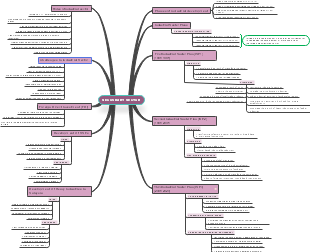
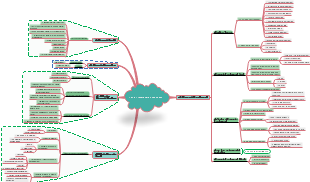
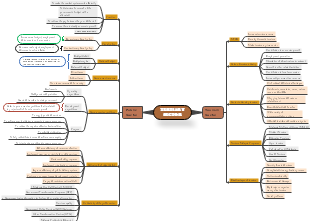
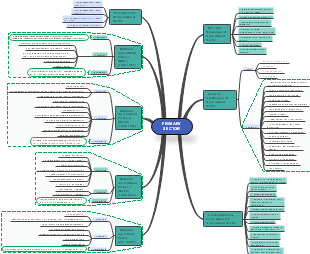
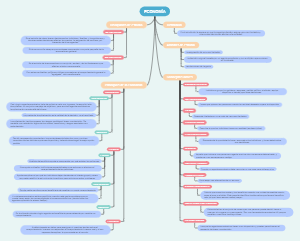
Denifition & Theory
Digital Intermediaries: Platforms are digital intermediaries that acquire monopolistic power through positive network effects, and they cross-subsidise free services with ones that cost (e.g. Amazon Web Services subsidises Amazon Prime; Google AdSense subsidises Gmail)
Data-driven accumulation: Value creation depends on the collection, processing and monetisation of data rather than traditional industrial capitalism that relies on manufacturing or financial capital accumulation.
New firm model: Platforms are a new kind of firm and the dominant business model of contemporary capitalism, and platform capitalism is a new kind of capitalism (Srnicek, 2017, p.43)
Core thinkers
Nick Srnicek
<Platform Capitalism> (Srnicek, 2017)
Defined platform as a new type of enterprise
Stated that data extraction is the core of platform capitalism
Explained how platforms make money by acting as the agency and owning the data
Analysed the types and business models of the platforms
Shoshana Zuboff
<Surveillance Capitalism> (Zuboff, 2020)
Platforms unilaterally use human experience as free raw materials (Zuboff, 2020, p. 94)
Behavioural Surplus
Platforms profit by using addtion data that generated by users to predict and influence behaviour
Evgeny Morozov
<The Net Delusion> (Morozov, 2011, p. xiii)
Criticism on technological solutionism and naive optimism about the internet's role
Cyber-utopianism
This concept states that technology will bring democracy and liberation while ignoring the negative impact of technology
Other Thinkers (Lina Khan, Nick Couldry, Ulises Mejias ➡️anti-monopoly & data colonialism)
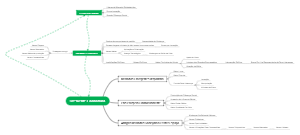
Operational Mechanism
Business Logic
Network Effects (Srnicek, 2017, p. 45)
More users
Stronger monopoly
User Lock-in
Data Extraction (Zuboff, 2020, p. 76)
search
click
position
cosuming behaviour
Cross-Subsidisation
Free Services
Free social media services are subsidised by revenue from targeted ads.
Platform Types (Flew, 2025)
Advertising Platforms (e.g., Google, Facebook)
Earn money by selling user data to advertisers
Lean Platforms (e.g., Airbnb, Uber, Hungry Panda)
Only act as middleman between service providers while have no property
Cloud platforms (e.g., Apple)
Provide the infrastructure for other platforms to operate on
Industrial platforms (e.g., GE, Siemens)
Product platforms (e.g., Spotify, Netflix)
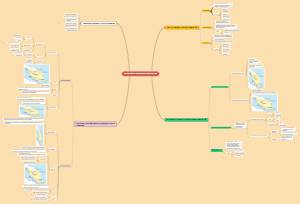
Real-World Impact & Critique
Social Impact
Data Colonialism (Couldry & Mejias, 2019)
large-scale extraction of personal data
Regards data as a resource that can be deprived
Forms the attention economy and aesthetic standards and thus affecting people's consumption, identity and values
Privacy Loss
Users cannot control their personal information due to platforms collect huge amounts of data
Gig Economy (Srnicek, 2017, p.89)
Platforms provide flexible and short-term work for freelancers such as food delivery riders, ride-hailing drivers, and gig economy workers
Workers' rights and interests are difficult to guarantee which leads to the instability and casualisation of labour
Economic Impact
Information Monopolies (Khan, 2017)
Platforms use network effects to create monopolies that dominate markets
Narrow competition and restict innovation
Digital Dominance (Barwise & Watkins, 2018)
Platforms are able to intensify pressure on traditional industries
Control the market and influence policies
Critique
The 'Techlash' (Flew, 2019)
Privacy infringement, misinformation, monopoly and so on lead to public resistance and trust crisis towards technology companies.
Challenges to Cyber-utopianism (Morozov, 2011)
Technological progress does not equal to positive social changes
Future Challenges & Solutions
Challenges
Data Regulation
Governments face challenge of regulating data collection while users and users encounter difficulties in protecting their privacy
Algorithmic Bias
Algorithms could perpetuate and reinforce existing social inequalities and biases
Disinformation
Platforms struggle to control the spread of false and harmful information
Solutions
Whistleblowing
Everyone should expose unethical practices within tech companies
New Legislation (Flew, 2019)
Governments are developing new laws to regulate platforms and their power
🔍Critical Analysis: Srnicek (business model) + Zuboff (behaviour manipulation) + Morozov (critical perspective) = comprehensive platform understanding
💡Conceptual Bridge: Platform capitalism theory that pointed by Srnicek (2017) explains why platforms dominant, while operational mechanisms exhibit how they realise dominance
Reference List:
Ahmad, R. (2025). ARIN1001 The Past and Futures of Digital Cultures, Week 3 Tutorial Slides: Critical imaginariesand ‘The Techlash’ (powerpoint slides). School of digital culture, University of Sydney Canvas: https://canvas.sydney.edu.au/courses/65559/pages/week-3-critical-imaginaries-and-the-techlash?module_item_id=2714829
Couldry, N. & Mejias, U. (2019). The Costs of Connection: How Data Is Colonizing Human Life and Appropriating It for Capitalism. Redwood City: Stanford University Press. https://doi.org/10.1515/9781503609754
Flew, T. (2019). Guarding the gatekeepers: Trust, truth and digital platforms. GriffithReview. https://doi.org/10.3316/ielapa.341846195519524
Flew, T. (2025). ARIN1001 The Past and Futures of Digital Cultures, Week 3 Lecture Slides: Critical Imaginaries, the ‘Techlash’ and AI Futures (powerpoint slides). School of digital culture, University of Sydney Canvas: https://canvas.sydney.edu.au/courses/65559/pages/week-3-critical-imaginaries-and-the-techlash?module_item_id=2714829
Flew, T., & Su, C. (2022). Mapping International Enquiries into the Power of Digital Platforms. Zenodo. https://doi.org/10.5281/zenodo.5913069
Kleinman, Z. (2018). Cambridge Analytica: The story so far. BBC News. https://www.bbc.com/news/technology-43465968
Khan, L. M. (2017). Amazon’s Antitrust Paradox. https://www.yalelawjournal.org/note/amazons-antitrust-paradox
Morozov, E. (2011) The net delusion : how not to liberate the world (pp. ix–xvii). Allen Lane. https://doi.org/10.1177/1461444812444415b
Srnicek, N. (2017). Platform capitalism. John Wiley & Sons. https://ebookcentral.proquest.com/lib/usyd/detail.action?docID=4773843
Wolford, B. (n.d). What is GDPR, the eu’s new data protection law? GDPR.EU. https://gdpr.eu/what-is-gdpr/
Zuboff, S. (2020). The age of surveillance capitalism : the fight for a human future at the new frontier of power (First Trade Paperback Edition.). PublicAffairs. https://doi.org/10.1007/s00146-020-01100-0

The GDPR regulations of the European Union 🤔Theory vs Practice Gap: Current theories cleaerly demonstrate issues but hard to provide implementable solutions. GDPR is a rare successful regulatory response.
It is a data privacy regulation of the European Union which aims to grant EU citizens more control over their own data. This regulation requires enterprises to handle personal data in a transparent, legal and secure method and imposes severe fines on violations (Wolford, n.d).
Cambridge Analytica incident
In 2014, the company illegally obtained millions of Facebook users' personal data through a third-party application. During the 2016 US presidential election, it used this data for targeted advertising activities to influence voter behavior. It revealed the bugs in the platform's data privacy protection and the serious consequences brought about through data abusion.