MindMap Gallery PSM Knowledge Base Mind Map
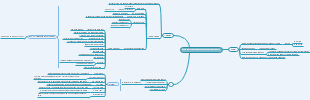
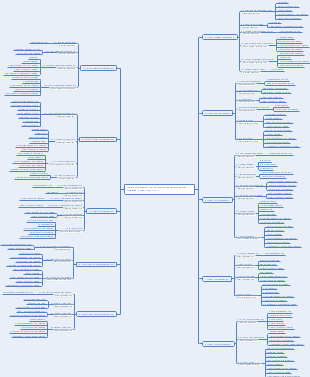
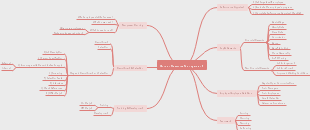
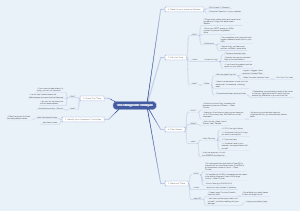
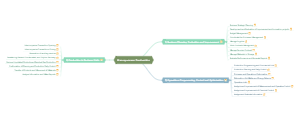
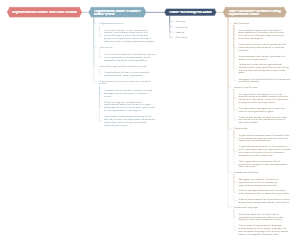
This mind map, created using EdrawMind, provides a comprehensive overview of Process Safety Management (PSM) knowledge. It covers key areas such as Problem Solving, Process Excellence, Risk Analysis, and Incident Investigation and Learning. Each section details essential components: from problem statements and root cause analysis to risk assessment methods like HAZID and HAZOP, and incident reporting protocols. This structured approach aids in understanding and implementing PSM practices effectively, ensuring safety and compliance in industrial environments.
Edited at 2025-12-29 09:40:05PSM Knowledge Base

PSM focuses on implementing a management system that prevents incidents PSM is not a collection of tools — it is a management system that makes those tools effective.
Problem Solving
The most important resource in problem solving is not money, but competent people with sufficient time and proper support. The most common challenge organizations face is a shortage of skilled individuals who are actually available to work on the problem. Enable people. Remove obstacles. Solve problems. Time and support are the real enablers of improvement. Skilled people are the most valuable resource in every organization. Free the problem solvers to focus on what truly matters.
Problem Statement
Describe what is happening and why it matters, using facts and measurable data — without assuming any causes.
Goal Statement
Define what success looks like: the desired state, measurable targets, boundaries and timeframe, all aligned with organizational priorities.
Root Cause Analysis
Investigate why the problem occurs by exploring underlying process and system weaknesses, not just visible symptoms.
Decision Making
Evaluate and select the best actions based on effectiveness, feasibility, risks, costs, and impact on stakeholders.
Implementation and Follow-Up
Execute the chosen solution, verify that it works as intended, and ensure controls are in place to prevent recurrence.
Process Excellence
Organizations do not rise to the level of their goals — they fall to the level of their processes. Excellence means raising that level. • Excellent processes deliver consistent value — every time, without exceptions. • Improvements must be systematic, not accidental or dependent on individual effort. • When processes improve, performance, safety, and people’s success improve with them.
Standardization and Reliability
When processes are clearly defined and consistently followed, performance becomes predictable and failures become rare.
Continuous Improvement and Learning
Excellence is sustained by small, ongoing improvements driven by data, reflection, and lessons learned.
Customer Value Alignment
Processes must reliably deliver what customers need — value, quality, safety, and efficiency, without waste.
People Engagement and Discretionary Effort
The greatest improvements come when people willingly contribute their knowledge, passion, and creativity — not just execute tasks.
Human Error Prevention
Designing processes and work environments that make it easy to do the right thing and difficult to make mistakes. The goal is to remove error traps rather than expecting people to be perfect.
Poka-Yoke
Error-Proofing Design tasks and equipment so mistakes are physically impossible or immediately visible.
Standard Work
Clear, simple and visual work methods that reduce variability and cognitive load.
Checklists and Cognitive Aids
Memory support for critical steps to prevent slips and lapses during routine or high-stress work.
Alarm Management
Reduce alarm noise to ensure operators can detect and react to real safety-critical deviations.
Workload and Fatigue Management
Adapt staffing, shift patterns and task complexity to human cognitive limits.
Training and Simulation for Non-Routine Tasks
Prepare operators for unexpected scenarios where experience may be limited.
First Time Right
A proactive approach that ensures the job is prepared, executed, and verified correctly from the first attempt, preventing rework, waste, and human errors.
Risk Analysis
Finding the root cause means looking beyond the obvious symptoms and uncovering the hidden weaknesses within the system. • Problems do not repeat because of bad luck — they repeat because their causes remain untouched. • The goal is not to fix what happened yesterday, but to prevent it from happening tomorrow.
Risk Assessment
Identify hazards, understand consequences and likelihood, and determine the level of risk using structured methods. What can go wrong, how bad and how likely?
HAZID
Hazard Identification - A structured brainstorming method used to identify potential hazards early in the lifecycle. Use in early design or planning stages to quickly identify potential hazards before detailed analysis. Focus: What could go wrong?
Risk Matrix
A simple method to estimate risk by combining consequence and likelihood ratings. Use after hazards are identified to prioritize which risks require action first. Focus: How big is the risk and what needs attention now?
Bowtie
A visual model showing how causes can lead to a hazardous event and what controls prevent or mitigate it. Use when you need to visualize how causes lead to an incident and whether current barriers are sufficient. Focus: Are our controls strong enough, and where are the gaps?
HAZOP
Hazard and Operability Study - A systematic, multidisciplinary analysis of deviations in process parameters to reveal hidden hazards and operability issues. Use for complex processes, typically before start-up or after major changes, to analyze deviations in operating parameters. Focus: How and why could a process deviation lead to a hazardous event?
LOPA
Layer of Protection Analysis - A semi-quantitative method used to determine if existing safeguards provide enough risk reduction. It calculates the likelihood of a hazardous event by evaluating independent protection layers. Use when HAZOP identifies high-severity scenarios, or when a more detailed evaluation of safeguards and their effectiveness is required. Key question: Are our protection layers strong and independent enough to make the risk acceptable?
Risk Treatment
Select and apply controls that reduce risk to an acceptable level while maintaining operational effectiveness. How do we reduce the risk to an acceptable level?
Hierarchy of Controls
Use first to determine the most effective type of control — eliminate or reduce the hazard at its source before relying on administrative actions or PPE. Focus: What is the strongest control we can apply?
ALARP Principle
As Low As Reasonably Practicable - Use to justify that risk has been reduced to a tolerable level considering the cost, effort, and benefit of further controls. Focus: Is the residual risk as low as it can reasonably be?
SIL Assessment
Use when automated protection or safety instrumented systems are required — defines the reliability needed to prevent catastrophic events. Focus: What level of performance must the safety system achieve?
Monitoring and Review
Continuously verify that risk controls are working as intended and adapt to changes in systems or conditions. Are the controls working and do we need to adjust?
KPIs and Risk Performance Indicators
Use to continuously track whether risk controls are effective and whether the level of risk is changing over time. Focus: Are risks under control and trending in the right direction?
Audits and Inspections
Use to verify that controls are correctly implemented and functioning as intended in the field. Focus: Are we doing what we said we would do?
MOC
Management of Change - Use whenever a process, equipment, materials, or organization changes — ensures risks are reassessed before changes take effect. Focus: Have risks changed because something else has changed?
Communication and Consultation
Engage stakeholders and ensure shared understanding of risks, controls, responsibilities, and expectations. Who needs to know and be involved?
Risk Register
Use to document identified risks, control measures, responsibilities, and follow-up actions in one visible place. Focus: Does everyone know the current risk status?
Safety Briefings / Toolbox Talks
Use to clearly communicate specific risks and required precautions to frontline personnel before work begins. Focus: Do people who do the work understand the risks?
RACI Matrix
Use to define roles in risk control implementation — who is Responsible, Accountable, Consulted, and Informed. Focus: Who owns which actions?
Incident Investigation and Learning
Investigating incidents is not about assigning blame — it is about learning why controls failed so we can prevent future harm.
Incident Reporting & Classification
Reliable reporting and correct severity classification ensure the right level of response and learning.
API RP 754 (Tier 1–4 Process Safety Events)
Key question: What happened and how serious could it have been?
Near Miss Reporting
Reporting events that did not result in harm but could have under slightly different circumstances, in order to identify weaknesses and prevent future incidents. Near misses are free lessons — they show where the next incident could happen if nothing changes.
Root Cause Analysis and Evidence Collection
Structured investigation, based on facts and system causes — not opinions or blame.
5 Whys
A simple root cause analysis method that repeatedly asks “why?” to move past symptoms and uncover the underlying system causes of a problem. Stop asking why the person failed — start asking why the system allowed the failure.
Ishikawa
A structured root cause analysis tool that organizes potential causes into logical categories to help teams understand how different factors contribute to a problem. It helps you see the whole system — not just the most obvious cause.
Corrective and Preventive Actions
Actions must directly address the root causes and strengthen barriers to prevent recurrence.
Corective Actions
Actions implemented to eliminate the root causes of an existing problem or incident and prevent its recurrence.
Preventive Actions
Actions implemented to eliminate the causes of a potential problem or incident before it can occur.
Hierarchy of Controls
Hierarchy of Controls helps us choose actions that fix the causes of incidents by starting with the strongest and most permanent solutions.
Lessons Learned and Knowledge Sharing
What we learn must be communicated and applied across the organization — not stay in a report.
Learning Bulletin
A concise communication tool used to share key findings and lessons learned from incidents or near misses, ensuring that the same mistakes are not repeated elsewhere in the organization. The value of a lesson is zero until it is shared and applied.
Case-based Training
A learning method that uses real incidents and practical examples to help people recognize risks, understand causes, and apply the right controls in similar situations. People remember stories better than instructions — real cases create real learning.