MindMap Gallery Hero's Journey Explained
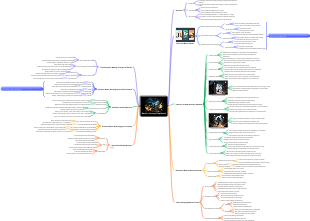
The Hero's Journey Explained is a narrative toolkit for writers, screenwriters, and storytelling enthusiasts, mastering this mythological narrative archetype across millennia. Based on Joseph Campbell's "The Hero with a Thousand Faces," this framework deconstructs three macro phases: Departure (Act I)—hero receives call to adventure, may refuse, meets mentor, crosses first threshold; Trials (Initiation) (Act II)—hero undergoes tests, gains allies, faces enemies, experiences midpoint crisis or revelation; Transformation (Return) (Act III)—hero confronts final ordeal, claims reward, returns with "elixir" to ordinary world, complete transformation. The template also includes: Common Subversions & Modern Variants showing contemporary reversals and refactoring; Practical Writing Checklist for authorship verification; Quick Mini-Template for filling personal story structures; Common Structural Mappings clearly linking three acts to three phases, with midpoint's crucial position. This guide unlocks the "monomyth's" deep code, enabling creators to craft stories with archetypal power—whether following tradition or deliberately subverting it.
Edited at 2026-03-20 01:39:11Mappa mentale per il piano di inserimento dei nuovi dipendenti nella prima settimana. Strutturata per giorni: Giorno 1 – benvenuto, configurazione strumenti, presentazione team. Secondo giorno – formazione su policy aziendali e obiettivi del ruolo. Terzo giorno – affiancamento e primi task guidati. Il quarto giorno – riunioni con dipartimenti chiave e feedback intermedio. Il quinto giorno – revisione settimanale, definizione obiettivi a breve termine e integrazione culturale.

Mappa mentale per l’analisi della formazione francese ai Mondiali 2026. Punti chiave: attacco stellare guidato da Mbappé, con triplice minaccia (profondità, taglio, sponda). Criticità: centrocampo poco creativo – la costruzione offensiva dipende dagli attaccanti che arretrano. Difesa solida (Upamecano, Saliba, Koundé). Portiere Maignan. Variabili: gestione infortuni e condizione fisica dei big. Ideale per scout, giornalisti e tifosi.
Mappa mentale per il piano di inserimento dei nuovi dipendenti nella prima settimana. Strutturata per giorni: Giorno 1 – benvenuto, configurazione strumenti, presentazione team. Secondo giorno – formazione su policy aziendali e obiettivi del ruolo. Terzo giorno – affiancamento e primi task guidati. Il quarto giorno – riunioni con dipartimenti chiave e feedback intermedio. Il quinto giorno – revisione settimanale, definizione obiettivi a breve termine e integrazione culturale.
Mappa mentale per l’analisi della formazione francese ai Mondiali 2026. Punti chiave: attacco stellare guidato da Mbappé, con triplice minaccia (profondità, taglio, sponda). Criticità: centrocampo poco creativo – la costruzione offensiva dipende dagli attaccanti che arretrano. Difesa solida (Upamecano, Saliba, Koundé). Portiere Maignan. Variabili: gestione infortuni e condizione fisica dei big. Ideale per scout, giornalisti e tifosi.
Hero’s Journey Explained
Overview
What it is
A storytelling framework describing a protagonist’s arc through change
Commonly associated with Joseph Campbell’s “monomyth”
Often adapted for modern screenwriting (e.g., Vogler’s structure)
Core promise
A character leaves the familiar, faces escalating challenges, transforms, and returns changed
Why it works
Mirrors human experiences of growth, fear, risk, and meaning-making
Provides a clear emotional rhythm: comfort → uncertainty → struggle → insight → renewal
Common misconceptions
Not a rigid formula; it’s a flexible pattern
Not every story needs every step or in the same order
Can apply to ensembles, antiheroes, and tragedies (with variations)
The Three Macro Phases
1) Departure (Separation)
Narrative function
Moves the hero from stability into the unknown
Establishes stakes, desire/need, and the “point of no return”
Key beats (common sub-stages)
Ordinary World
Shows normal life, relationships, and baseline flaws
Sets what the hero values and what is missing
Call to Adventure
An inciting disruption: opportunity, threat, mystery, loss, or desire
Establishes external goal and hints at inner need
Refusal of the Call
Fear, obligation, doubt, or attachment to comfort
Demonstrates cost of change and raises tension
Meeting the Mentor (or gaining guidance)
Mentor provides tools, insight, training, or moral framing
Can be a person, a memory, a book, an institution, or inner voice
Crossing the First Threshold
Hero commits to the journey
Enters a new world with new rules (physical, social, psychological)
Often includes a “threshold guardian” test or gatekeeper moment
Craft considerations
Make the “why now” urgent and believable
Clarify external stakes (what can be lost) and internal stakes (what must change)
Establish a clear contrast between the old world and the new
2) Trials (Initiation)
Narrative function
Builds competence, relationships, and pressure
Forces the hero to confront escalating obstacles and inner limitations
Key beats (common sub-stages)
Tests, Allies, Enemies
Series of challenges that teach rules of the new world
Ally dynamics reveal values and coping styles
Enemies embody opposition (ideological, personal, systemic)
Approach to the Inmost Cave
Preparation for a major ordeal
The “cave” can be a literal place or a dreaded truth
Heightens suspense and clarifies what must be risked
The Ordeal (Crisis / Death-Rebirth moment)
The most intense confrontation so far
Symbolic “death” of old identity or beliefs
Often includes a major loss, failure, sacrifice, or revelation
Reward (Seizing the Sword)
After surviving the ordeal, the hero gains something valuable
Can be an object, knowledge, power, ally, self-respect, or clarity
Typical trial patterns
Escalation ladder
Easy win → mixed outcome → setback → costly victory → near-defeat
Reversals and revelations
New information changes the meaning of earlier events
Moral tests
The hero must choose values over convenience (or vice versa)
Internal arc during trials
The hero’s flaw is pressured until it breaks
Coping strategies fail; new mindset or skill is required
Identity shifts from “reacting” to “choosing”
Craft considerations
Each trial should change something (relationship, plan, belief, resources)
Tie external obstacles to internal weakness
Keep stakes compounding rather than repeating
3) Transformation (Return)
Narrative function
Converts hard-won insight into decisive action
Demonstrates lasting change and restores or redefines order
Key beats (common sub-stages)
The Road Back
The hero recommits with a clearer purpose
Pursuit, consequences, or ticking clock drives momentum
Resurrection (Final Test / Climax)
The ultimate confrontation with the central antagonist or core fear
The hero applies the lesson fully under maximum pressure
Often involves self-sacrifice, vulnerability, or moral courage
Return with the Elixir
The hero brings back something that benefits the community/self
Elixir can be a cure, peace, truth, freedom, reconciliation, or wisdom
Shows the “new normal” shaped by transformation
Variations of return
Successful integration
Hero belongs in both worlds, bridging old and new
Redefined home
Home is changed, or hero chooses a different “home”
Costly victory
The world is saved but something irreplaceable is lost
Failed return (tragic arc)
The hero cannot integrate; transformation is incomplete or destructive
Craft considerations
Prove change through action, not speeches
Resolve internal and external arcs with a unified choice
Show ripple effects on relationships and world rules
The journey progresses from leaving stability, through escalating pressure that breaks old identity, to a final decisive test that proves lasting change and defines what returns to the world.
Key Roles & Archetypes (Flexible Functions)
Hero
Drives choice and change; may be reluctant, flawed, or morally gray
Mentor
Offers guidance/tools; may leave to force independence
Threshold Guardian
Tests commitment; can be a person, rule, fear, or bureaucracy
Ally/Companion
Provides support and contrast; can challenge the hero’s worldview
Trickster
Disrupts, exposes hypocrisy, sparks creativity or humility
Shapeshifter
Uncertain loyalty; adds ambiguity and tension
Shadow (Antagonistic force)
Embodies what the hero fears or denies
Can be a person, institution, nature, time, or inner compulsion
Herald
Brings the call; signals change is unavoidable
Archetypes are functions that apply pressure, provide aid, test commitment, and personify inner conflict—not fixed character types.
The Inner vs. Outer Journey
Outer journey (plot)
Goal, obstacles, pursuit, escalation, climax, resolution
Inner journey (character)
Need vs. want
Belief → doubt → breakdown → insight → new belief
From fear-based choices to value-based choices
Alignment techniques
Make the antagonist pressure the hero’s core flaw
Ensure “victory” requires internal change, not just skill
Common Structural Mappings
Departure ↔ Act I
Setup, inciting incident, first turning point
Trials ↔ Act II
Progressive complications, midpoint shift, crisis
Transformation ↔ Act III
Climax, falling action, denouement
Midpoint (often within Trials)
A major reversal or revelation that redefines the goal
Can be a false victory or false defeat
Practical Writing Checklist (Using the Framework)
Clarify foundations
What does the hero want (external)?
What does the hero need (internal)?
What is the cost of refusal?
What is the “unknown world” and its rules?
Design trials with purpose
Each trial teaches a skill or truth needed for the climax
Each trial increases stakes and narrows options
Allies and enemies complicate choices, not just help/hinder
Build the transformation
Define the old self (belief/behavior) and new self (belief/behavior)
Make the final test demand the new self
Decide what “elixir” returns to the world and who benefits
Keep it flexible
Combine steps, reorder beats, or subvert expectations intentionally
Common Subversions & Modern Variants
Anti-hero journey
Transformation may be partial, cynical, or morally compromised
Collective/ensemble journey
Different characters occupy different stages simultaneously
Internal/psychological journey
The “world” is mental or emotional; battles are identity conflicts
Villain-as-hero inversion
Departure and trials lead to corrupt transformation
No return / open-ended return
The hero moves forward rather than restoring the past
Quick Mini-Template (Fill-in)
Departure
Ordinary World: ___
Call to Adventure: ___
Refusal: ___
Mentor/Guidance: ___
First Threshold: ___
Trials
Tests/Allies/Enemies: ___
Approach: ___
Ordeal: ___
Reward: ___
Transformation
Road Back: ___
Resurrection/Climax: ___
Return with Elixir: ___