MindMap Gallery Feminist Literature Explained
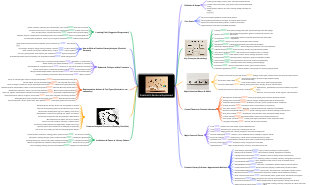
This mind map, titled Feminist Literature, provides a structured overview of the theoretical foundations, critical methods, creative strategies, and cultural impact of feminist literary practice. The mind map begins with central concepts and vocabulary, covering patriarchy, gender performativity, écriture féminine, the gaze, intersectionality, otherness, and body politics. Major branches of feminist literary criticism include liberal feminism, socialist feminism, radical feminism, postcolonial feminism, poststructuralist feminism, Black feminism, and intersectional criticism, each attending to different dimensions of power structures, class, race, and gender identity. Key strategies feminist authors use encompass subverting gender roles, reclaiming female narrative voice, rewriting myth and history, employing nonlinear and fragmentary forms, exploring female body and desire, and constructing female communities. Influential thinkers and critical touchstones list theorists from Virginia Woolf and Simone de Beauvoir to bell hooks, Judith Butler, and Gayatri Spivak, along with their key contributions. How to read a text through a feminist lens offers practical methods: analyzing gender power relations, questioning who speaks and who is silenced, examining how language shapes gender, and assessing how texts participate in or resist dominant ideology. Common misconceptions clarify that feminist literature is not “only about women,” “only for women,” or limited to victim narratives. Impact on literary culture includes canon revaluation, literary history revision, creative norm disruption, and shifts in reader consciousness. Suggested entry points provide reading recommendations from foundational texts to contemporary works. Designed for literature students, gender studies scholars, and general readers, this template offers a clear conceptual framework for understanding feminist literary practice as both critical method and creative intervention.
Edited at 2026-03-20 01:45:09中国のDouyin(抖音)ECサイトにおけるユーザープロファイル分析を深掘りします。本分析では、ユーザー属性を年齢層(Z世代、ミレニアル世代、中壮年層、シルバー層)や都市ランクに基づいて層別化し、消費能力と購買行動を多角的に考察します。興味タグや関心事(美容、グルメ、テクノロジー、ライフスタイル)を明らかにし、ユーザーのアクティブ時間帯や購買動機を分析します。また、コンテンツ嗜好やスタイル、コンバージョンパス、短動画の企画方向性についても詳述し、効果的なマーケティング戦略を探ります

天猫美妆の「価格が高い」という異議に対処し、商品の価値を再構築するための戦略をご紹介します。まず、顧客の心理的障壁を取り除くために、価格への共感とフレーミングを行います。次に、商品の機能的価値と情緒的価値を最大化し、具体的な効果を可視化します。プロモーションによるお得感を強調し、会員特典や期間限定の希少性も活用します。最後に、リスクを払拭し、購入の緊急性を促すことで成約を促進します。このアプローチにより、顧客は価格以上の価値を実感できるでしょう
淘宝(Taobao)の検索流量転化漏斗分析では、効果的なマーケティング戦略を探るための重要なステージを紹介します。まず、検索露出ステージでは、キーワードマッチングやユーザー属性タグの最適化が鍵となります。次に、クリックスルーステージでは、視覚的な要素や価格戦略がクリック率に影響します。続いて、検討・関心ステージでは、商品詳細ページの説得力やユーザーレビューが重要です。最終的なコンバージョンステージでは、決済プロセスの心理的障壁を取り除く工夫が求められます。また、最適化ノードとフィードバック構造により、データ分析を活用した継続的な改善が可能です
中国のDouyin(抖音)ECサイトにおけるユーザープロファイル分析を深掘りします。本分析では、ユーザー属性を年齢層(Z世代、ミレニアル世代、中壮年層、シルバー層)や都市ランクに基づいて層別化し、消費能力と購買行動を多角的に考察します。興味タグや関心事(美容、グルメ、テクノロジー、ライフスタイル)を明らかにし、ユーザーのアクティブ時間帯や購買動機を分析します。また、コンテンツ嗜好やスタイル、コンバージョンパス、短動画の企画方向性についても詳述し、効果的なマーケティング戦略を探ります
天猫美妆の「価格が高い」という異議に対処し、商品の価値を再構築するための戦略をご紹介します。まず、顧客の心理的障壁を取り除くために、価格への共感とフレーミングを行います。次に、商品の機能的価値と情緒的価値を最大化し、具体的な効果を可視化します。プロモーションによるお得感を強調し、会員特典や期間限定の希少性も活用します。最後に、リスクを払拭し、購入の緊急性を促すことで成約を促進します。このアプローチにより、顧客は価格以上の価値を実感できるでしょう
淘宝(Taobao)の検索流量転化漏斗分析では、効果的なマーケティング戦略を探るための重要なステージを紹介します。まず、検索露出ステージでは、キーワードマッチングやユーザー属性タグの最適化が鍵となります。次に、クリックスルーステージでは、視覚的な要素や価格戦略がクリック率に影響します。続いて、検討・関心ステージでは、商品詳細ページの説得力やユーザーレビューが重要です。最終的なコンバージョンステージでは、決済プロセスの心理的障壁を取り除く工夫が求められます。また、最適化ノードとフィードバック構造により、データ分析を活用した継続的な改善が可能です
Feminist Literature Explained
Definition & Core Idea
Literature and criticism that center gender equality, women’s voices, and the power structures shaping identity
Examines how texts reflect, reinforce, or resist patriarchy and gendered norms
Expands “literature” to include marginalized genres, authors, languages, and forms
Key Goals
Recover and amplify women’s writing and neglected literary histories
Critique representations of gender, sexuality, power, labor, and embodiment
Challenge canons and institutions that exclude or devalue women and marginalized genders
Connect personal experience to political and social systems (“the personal is political”)
Promote intersectional equality across race, class, disability, nationality, and sexuality
Historical Overview (Waves & Shifts)
Early Foundations (18th–19th c.)
Advocacy for women’s education and rights; proto-feminist critique of marriage and property
Expansion of women’s authorship in the novel, letters, diaries, and poetry
First-Wave Context (late 19th–early 20th c.)
Suffrage-era writing, social reform novels, journalism, and political pamphlets
Focus on legal rights, citizenship, and public participation
Second-Wave Feminism (1960s–1980s)
Strong development of feminist literary criticism and theory in universities
Focus on patriarchy, domesticity, sexuality, reproduction, workplace inequality
Consciousness-raising influences memoir, poetry, and experimental prose
Third-Wave and Beyond (1990s–present)
Emphasis on diversity, multiplicity, and identity complexity
Critiques of universal “woman” category; greater attention to pop culture and new media
Contemporary Directions
Transnational and decolonial feminisms; climate justice; digital feminisms
Renewed activism around consent, harassment, and gender-based violence
Major Branches of Feminist Literary Criticism
Liberal Feminist Criticism
Seeks equality within existing institutions
Focus on access, representation, and fair evaluation of women writers
Radical Feminist Criticism
Analyzes patriarchy as a foundational system shaping culture and sexuality
Critiques gendered violence, objectification, and control of bodies
Marxist/Socialist Feminist Criticism
Links gender oppression to class, labor, capitalism, and unpaid domestic work
Reads texts for economic structures behind family and romance plots
Psychoanalytic Feminist Criticism
Reinterprets Freud/Lacan and theories of subject formation
Focus on desire, repression, motherhood, language, and identity formation
French Feminism (écriture féminine and related approaches)
Emphasizes language, the body, and writing that disrupts masculine symbolic order
Investigates how style and form can resist patriarchal meaning-making
Black Feminist Criticism
Centers Black women’s experience; critiques racism within feminism and sexism within racial politics
Highlights cultural memory, voice, survival, and community
Womanist Criticism
Rooted in Black women’s cultural traditions; emphasizes family/community wholeness and spirituality
Explores resilience, joy, and collective flourishing alongside critique
Postcolonial Feminist Criticism
Examines empire, nationalism, cultural translation, and “saving women” narratives
Challenges Western-centric frameworks and stereotypes of “Third World women”
Queer and Feminist Criticism
Analyzes gender as performance; critiques heteronormativity
Explores fluidity of sexuality and the policing of desire and identity
Ecofeminist Criticism
Connects exploitation of nature with oppression of women and marginalized groups
Reads environments, land, and resources as gendered political sites
Disability Feminist Criticism
Investigates norms of body/mind, care, dependence, and autonomy
Examines how narratives stigmatize or empower disabled characters and authors
Transfeminist Criticism
Centers trans experiences and critiques biological essentialism
Studies how texts construct gender categories and gatekeeping
Central Concepts & Vocabulary
Patriarchy
Social system privileging men/masculinity; shapes institutions, norms, and representation
Gender vs. Sex
Gender as social/cultural construction; sex as contested biological category with social meaning
Intersectionality
Overlapping systems of oppression and privilege (race, class, gender, sexuality, disability, etc.)
Agency and Voice
Who speaks, who is silenced, and how narrative authority is distributed
The Male Gaze / Objectification
Depiction of women as objects for male desire; cinematic and literary applications
Canon Formation
How institutions decide “great literature”; biases in preservation and teaching
The Public/Private Split
Domestic sphere vs. public life; how texts naturalize or critique this division
Embodiment
The body as site of power, shame, desire, control, labor, and identity
Reproductive Politics
Motherhood, childbirth, abortion, contraception, and the regulation of women’s bodies
Domestic Labor and Care Work
Unpaid/underpaid work; emotional labor; family as economic structure
Consent and Sexual Violence
Narratives of coercion, trauma, testimony, justice, and social complicity
Representation and Stereotypes
Tropes like “angel in the house,” femme fatale, madwoman, damsel, hysteric
What Feminist Critics Analyze in Texts
Characterization
Complexity vs. flat stereotypes; moral double standards; interiority for women characters
Plot and Conflict
Marriage, inheritance, sexuality, education, work; constraints shaping choices
Narrative Voice and Point of View
Reliability, authority, confession, silence, fragmentation, multiperspectival narration
Language and Style
Gendered metaphors; euphemisms; taboo; experimental forms as resistance
Symbolism and Imagery
Houses, mirrors, clothing, food, blood, water, gardens, borders as gendered symbols
Setting and Social Institutions
Family, school, church, workplace, law, medicine, prisons as gender-regulating forces
Genre Conventions
Romance, gothic, domestic fiction, bildungsroman, tragedy, satire, speculative fiction
Intertextuality and Rewriting
Retellings that reclaim marginalized perspectives and challenge original authority
Reception History
How audiences, critics, and publishers have praised, censored, or ignored women’s work
Major Genres & Forms in Feminist Writing
The Novel
Social critique through domestic and public life narratives; development of female consciousness
Poetry
Intimate voice, body politics, myth revision, experimental syntax, confessional modes
Drama
Public staging of private issues; gender roles, performance, and collective debate
Memoir, Autobiography, and Testimony
Lived experience as evidence; trauma narratives; self-fashioning against norms
Letters, Diaries, and Journals
Private forms that preserve women’s perspectives and daily realities
Essays and Manifestos
Direct political argument; theory-building; cultural critique
Speculative Fiction (SF, fantasy, dystopia)
Thought experiments on gender systems, reproduction, governance, and technology
Gothic and Horror
Domestic spaces as sites of terror; madness, confinement, and hidden violence
Romance and Popular Fiction
Negotiation of desire, consent, power; critique of market-driven gender scripts
Children’s and Young Adult Literature
Socialization, role models, coming-of-age, body image, and agency
Themes Commonly Explored
Education and Intellectual Freedom
Access to learning; women’s authorship; authority to interpret the world
Marriage, Family, and Kinship
Companionate ideals vs. coercion; divorce; chosen families; caregiving pressures
Work, Money, and Class
Economic dependence; professional barriers; exploitation; ambition and respectability
Sexuality and Desire
Pleasure, shame, sexual double standards; queer desire; sex work debates
Motherhood and Reproduction
Maternal ambivalence; infertility; childlessness; reproductive autonomy
Violence and Survival
Domestic abuse, harassment, war, colonial violence; resilience and community support
Identity and Selfhood
Becoming a subject; resisting imposed roles; names, masks, and self-definition
Body Politics
Beauty standards; eating; illness; disability; aging; reproductive health
Space and Mobility
Confinement vs. freedom; travel; migration; borders; home as refuge/prison
Speech, Silence, and Censorship
Voice as power; taboo topics; testimony; strategic silence
Key Strategies Feminist Authors Use
Re-centering Perspective
Narrating from women’s viewpoints; recovering the marginalized character’s inner life
Subverting Genre
Twisting romance/gothic/detective conventions to expose gendered assumptions
Rewriting Myths and Classics
Retellings that challenge patriarchal origin stories and hero narratives
Experimenting with Form
Fragmentation, nonlinear time, multiple voices, hybrid genres, unreliable narrators
Creating Counter-Archives
Preserving histories through letters, family stories, community memory, oral narratives
Naming the Unspoken
Bringing taboo experiences (abuse, abortion, desire) into public discourse
Influential Thinkers & Critical Touchstones
Canon and Recovery Work
Mapping lost/ignored women writers; building alternative literary histories
Gender as Performance and Social Construction
How norms are repeated and enforced; instability of categories
Power/Knowledge and Discourse
Institutions shaping what can be said about bodies, sexuality, and identity
Intersectional Frameworks
Reading texts through linked structures of racism, sexism, classism, colonialism
Poststructural and Linguistic Approaches
How language constructs subjectivity; ambiguity and multiplicity in meaning
How to Read a Text Through a Feminist Lens (Practical Guide)
Step 1: Identify Gendered Structures
Who holds authority (legal, economic, narrative)? Who is dependent?
Step 2: Examine Representation
Stereotypes, complexity, interiority, and character arcs by gender
Step 3: Track Voice and Silence
Who narrates? Who is interrupted, dismissed, or erased?
Step 4: Analyze Institutions
Family, marriage, work, religion, medicine, law as forces shaping choices
Step 5: Consider Intersectionality
Race, class, sexuality, disability, nationality: whose feminism is centered?
Step 6: Study Form and Genre
How structure and style reinforce or resist gender norms
Step 7: Compare Contexts
Publication history, censorship, reception, author biography (with care)
Step 8: Ask Ethical Questions
What harms are normalized? What alternatives are imagined?
Common Misconceptions (Clarifications)
“Feminist literature is anti-men”
Focus is on equality and dismantling oppressive systems, not hostility toward individuals
“It only includes books written by women”
Can include any author; the lens and concerns define the approach
“It’s only about gender”
Strong feminist criticism is often intersectional and attentive to multiple power systems
“It rejects aesthetics”
Many feminist critics analyze form, craft, and beauty alongside politics
Feminist reading is an analytic lens for power and representation, not a narrow author category or an anti-aesthetic stance.
Impact on Literary Culture
Canon Expansion
Inclusion of women and marginalized authors; revaluation of genres like diaries and romance
Academic and Teaching Practices
New syllabi, methodologies, and research fields (gender studies, queer studies)
Publishing and Readership
Increased visibility for diverse voices; debates over market categories and labeling
Social and Political Influence
Stories shaping public understanding of consent, work, family, and rights
Suggested Entry Points (What to Explore Next)
Start with Core Questions
Who gets to speak? Who is believed? What roles are available to women characters?
Try Comparative Reading
Pair a classic with a feminist retelling or response text
Explore Global Feminisms
Read across regions and languages to avoid a single cultural model
Mix Theory and Literature
Alternate novels/poems with accessible critical essays to build analytical tools