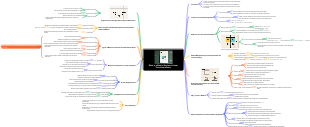
MindMap Gallery What is a Matrix
Unlock the power of linear transformations with a deep dive into matrices! This comprehensive overview explores the fundamental concepts of matrices as structured tables of numbers that represent transformations between vector spaces. Discover how matrices function as linear maps, encode transformations through their columns, and visualize effects in 2D and 3D. Learn about key matrix types, including diagonal, rotation, and projection matrices, and grasp essential concepts like determinants, rank, and eigenvalues. Whether you’re interested in scaling, rotating, or projecting, this guide offers insights into the geometric and algebraic nature of matrices, making complex ideas accessible and engaging.
Edited at 2026-03-20 02:54:34Explore the fascinating world of limits, a fundamental concept in calculus that underpins derivatives and integrals. This overview delves into the core idea of limits, emphasizing how they describe the value a function approaches as the input nears a certain point. Learn about intuitive understandings through approaches versus equals, and the formal ε–δ definition that rigorously defines limits. Discover various types of limits, including one-sided and limits at infinity, and when limits exist or fail. Uncover key properties, their relationship to continuity, and techniques for evaluating limits. Join us in mastering the foundational concepts that shape mathematical analysis!

Explore the fundamental concepts of work and power, essential for understanding energy dynamics in physics. This overview covers core definitions, including work as energy transfer and power as the rate of work done. Delve into the work-energy relation, examining the work-kinetic energy theorem and the distinctions between conservative and nonconservative forces. Learn how to calculate work under various conditions, from constant forces to variable forces and multiple interactions. The mechanical energy framework explains energy conservation principles, while power calculations provide insight into energy transfer rates. Utilize graphical tools and diagrams to visualize these concepts, avoiding common pitfalls in understanding work and its implications.
Discover the fascinating world of isotopes, the variants of chemical elements that share the same number of protons but differ in neutrons, leading to unique properties. This overview covers the core definitions and atomic structure basics of isotopes, including their notation and abundance. Learn about examples like hydrogen, carbon, and oxygen, and differentiate between stable isotopes and radioisotopes. Understand the significance of isotopic variation, its origins in stellar processes and fractionation, and how we measure isotopes using advanced techniques like mass spectrometry. Join us in exploring the critical role isotopes play in science and nature.
Explore the fascinating world of limits, a fundamental concept in calculus that underpins derivatives and integrals. This overview delves into the core idea of limits, emphasizing how they describe the value a function approaches as the input nears a certain point. Learn about intuitive understandings through approaches versus equals, and the formal ε–δ definition that rigorously defines limits. Discover various types of limits, including one-sided and limits at infinity, and when limits exist or fail. Uncover key properties, their relationship to continuity, and techniques for evaluating limits. Join us in mastering the foundational concepts that shape mathematical analysis!
Explore the fundamental concepts of work and power, essential for understanding energy dynamics in physics. This overview covers core definitions, including work as energy transfer and power as the rate of work done. Delve into the work-energy relation, examining the work-kinetic energy theorem and the distinctions between conservative and nonconservative forces. Learn how to calculate work under various conditions, from constant forces to variable forces and multiple interactions. The mechanical energy framework explains energy conservation principles, while power calculations provide insight into energy transfer rates. Utilize graphical tools and diagrams to visualize these concepts, avoiding common pitfalls in understanding work and its implications.
Discover the fascinating world of isotopes, the variants of chemical elements that share the same number of protons but differ in neutrons, leading to unique properties. This overview covers the core definitions and atomic structure basics of isotopes, including their notation and abundance. Learn about examples like hydrogen, carbon, and oxygen, and differentiate between stable isotopes and radioisotopes. Understand the significance of isotopic variation, its origins in stellar processes and fractionation, and how we measure isotopes using advanced techniques like mass spectrometry. Join us in exploring the critical role isotopes play in science and nature.
What is a Matrix (Explains Linear Transformations)
Core Idea
A matrix is a structured table of numbers that represents a linear transformation between vector spaces
It encodes how to map input vectors to output vectors using linear rules
In finite-dimensional spaces, every linear transformation can be represented by a matrix once bases are chosen
Matrices as Functions (Linear Maps)
Function view
A matrix A defines a function T(x)=Ax
Domain/codomain examples
A in R^{m×n} maps R^n to R^m
Linearity properties
Additivity: A(u+v)=Au+Av
Homogeneity: A(cu)=c(Au)
Why this matters
Knowing the output for basis vectors determines the output for all vectors
Dimensions and Notation
Shape and meaning
m×n matrix: m rows, n columns
Inputs have length n; outputs have length m
Column-vector convention
Vectors x are typically n×1
Multiplication Ax produces an m×1 vector
Entries
A=[a_ij] where a_ij is row i, column j
How a Matrix Encodes a Transformation
Columns as images of basis vectors
In the standard basis, the j-th column of A equals Ae_j
Interpretation: each column shows where a unit axis vector lands after transformation
Building the transformation from columns
If x=Σ_{j=1..n} x_j e_j, then
Ax=Σ_{j=1..n} x_j (Ae_j)
Meaning: output is a weighted combination of the columns of A
Row view (dot-product perspective)
Each output component is a dot product of a row of A with x
(Ax)_i = row_i(A) · x
Linear Transformations in 2D and 3D (Geometric Intuition)
What linear transformations can do
Scale (stretch/shrink)
Rotate (in 2D/3D with special matrices)
Reflect
Shear
Project (onto a line/plane)
Change coordinate systems (basis changes)
What linear transformations cannot do
Translation (moving everything by a fixed vector) is not linear
To include translations, use affine transformations and homogeneous coordinates
Visualizing via unit vectors
2D: columns show where (1,0) and (0,1) go
Parallelogram interpretation
A unit square maps to a parallelogram defined by the column vectors
Matrix Multiplication as Composition of Transformations
Composition rule
Applying B then A: A(Bx)=(AB)x
So AB represents the combined transformation
Order matters (non-commutativity)
Generally AB≠BA
Geometric reason: doing two transformations in different orders can yield different results
Identity and inverse
Identity matrix I: Ix=x (does nothing)
Inverse matrix A^{-1} (if it exists): A^{-1}(Ax)=x
If A is not invertible, information is lost (e.g., projection)
Key Types of Matrices and Their Transformations
Diagonal matrices
Scale each axis independently
diag(d1,...,dn) scales coordinate i by d_i
Scalar multiples of identity
Uniform scaling by c: cI
Rotation matrices
Preserve lengths and angles
2D rotation by θ: [[cosθ, -sinθ],[sinθ, cosθ]]
Reflection matrices
Flip across a line/plane
Determinant often -1 in 2D/3D orthogonal reflections
Shear matrices
Slide one axis proportional to another
Example in 2D: [[1, k],[0, 1]]
Projection matrices
Map onto a subspace
Idempotent property: P^2=P
Orthogonal matrices
Q^TQ=I
Preserve dot products, lengths, angles (rigid motions without scaling)
Symmetric matrices
A^T=A
Often represent energy/quadratic forms; have orthogonal eigenvectors in real case
Common matrix families correspond to recognizable geometric actions (scaling/rotation/reflection/shear/projection) and structural constraints (orthogonal/symmetric).
Determinant (Area/Volume Scaling)
Geometric meaning (square matrices)
In 2D: |det(A)| scales area
In 3D: |det(A)| scales volume
Sign indicates orientation (flip if negative)
Connection to invertibility
A is invertible iff det(A)≠0
det(A)=0 implies collapse into a lower dimension (non-invertible)
Rank and Null Space (Information Loss)
Rank
Dimension of the output subspace (how many independent directions remain)
Max possible rank is min(m,n)
Null space (kernel)
Set of vectors mapped to zero: {x: Ax=0}
Nontrivial null space implies loss of information
Fundamental relationship
Rank-nullity theorem: rank(A)+nullity(A)=n (for m×n)
Eigenvalues and Eigenvectors (Special Directions)
Definition
v≠0 is an eigenvector if Av=λv
λ is the eigenvalue (scaling factor along that direction)
Geometric interpretation
Certain directions stay on their span; only scaled (and possibly flipped if λ<0)
Helps describe repeated application A^k
Uses
Stability analysis, differential equations, principal components, diagonalization
Matrices and Coordinate Systems (Basis Dependence)
Same transformation, different matrices
A linear transformation is abstract; the matrix depends on chosen bases
Change of basis
If P changes coordinates, transformed matrix often becomes P^{-1}AP
Similar matrices represent the same linear map in different bases
Why choose special bases
Simplify the matrix (diagonal, block-diagonal)
Reveal invariant subspaces and eigen-structure
Systems of Linear Equations as Matrix Transformations
Matrix form
Ax=b describes inputs x that map to a target b
Solution interpretation
Unique solution: invertible square A
No solution: b not in the column space of A
Infinite solutions: nontrivial null space
Augmented matrix and elimination
Gaussian elimination performs row operations to solve and understand structure
Beyond Linear: Affine Transformations (Where Matrices Still Help)
Translation issue
Pure matrices cannot represent translation as a linear map in R^n
Homogeneous coordinates
Use (n+1)×(n+1) matrices to combine rotation/scale/shear with translation
Common in computer graphics and robotics
Practical Interpretation Checklist (How to “Read” a Matrix)
Look at columns
Understand where basis directions go
Predict deformation of shapes
Check determinant (square)
Magnitude: scaling of area/volume
Sign: orientation flip
Check rank/null space
Whether the transformation collapses dimensions
Check symmetry/orthogonality
Whether it preserves lengths/angles or has special spectral properties
Identify common patterns
Diagonal → scaling
Orthogonal → rotation/reflection
Upper triangular → stepwise dependency
Summary
A matrix is a concrete representation of a linear transformation
Multiplying by a matrix applies the transformation; multiplying matrices composes transformations
Structural properties (determinant, rank, eigenvalues) describe how the transformation stretches, rotates, collapses, or preserves space