MindMap Gallery What is Algorithm Complexity
Unlock the secrets of algorithm efficiency with our comprehensive guide to Algorithm Complexity. This overview covers key concepts such as the definition of complexity, the main resources measured (time and space), and why it matters for scalability and algorithm comparison. We delve into the common interpretations of input size and various analysis types, including worst-case, average-case, and amortized analysis. Learn about Big-O notation and its significance in understanding growth rates, along with common complexity classes like O(1), O(n), and O(2ⁿ). Finally, discover practical insights into time and space complexity as they apply to real-world scenarios and data structures.
Edited at 2026-03-20 03:51:15Discover the ultimate Douyin Food "Shop-Visit" Account Matrix designed for comprehensive local food exploration! This strategy focuses on achieving full local food traffic coverage through a multi-account approach, enhancing reach, frequency, and conversion for restaurants. Our structure includes a Main Account, Regional Accounts, Category Accounts, and Price-Tier Accounts, each serving distinct roles from authoritative recommendations to hyperlocal insights. We ensure engaging content across various formats, from high-quality reviews to quick-hit discoveries. With a strong branding system and a commitment to trust and transparency, we aim to connect food lovers with their next great dining experience while driving traffic and conversions for local eateries. Join us in exploring the best food options in your city!

Discover the ultimate guide to beauty with our Douyin Beauty Review Account Matrix! This comprehensive strategy aims to help users make informed beauty purchases through objective testing and tailored recommendations. Our main account serves as the traffic hub, delivering cross-category reviews and in-depth testing reports. Supporting sub-accounts focus on ingredient analysis, budget-friendly picks, and luxury product reviews. Engage with content tailored for various audiences, from beginners to skincare enthusiasts, ensuring there's something for everyone. Key formats include quick ingredient decodes, budget hauls, and luxury trials, all designed to build trust and improve conversions. Join us in navigating the beauty landscape with clarity and confidence!
Welcome to our TikTok Outfit & Fashion Account Matrix, where we empower your style journey! Our goal is to build brand authority in outfit styling while catering to diverse audiences through segmented content. With a focus on gender, age, budget, and geography, we provide tailored fashion solutions. Our structure includes a Main Account as the brand face, along with specialized Style, Body-Type, and Scenario Accounts. Each vertical channel offers unique themes, visuals, and audience needs, from minimalist basics to travel outfits. We emphasize collaboration and content reuse, ensuring a scalable system that keeps your wardrobe fresh and stylish. Join us to elevate your fashion game!
Discover the ultimate Douyin Food "Shop-Visit" Account Matrix designed for comprehensive local food exploration! This strategy focuses on achieving full local food traffic coverage through a multi-account approach, enhancing reach, frequency, and conversion for restaurants. Our structure includes a Main Account, Regional Accounts, Category Accounts, and Price-Tier Accounts, each serving distinct roles from authoritative recommendations to hyperlocal insights. We ensure engaging content across various formats, from high-quality reviews to quick-hit discoveries. With a strong branding system and a commitment to trust and transparency, we aim to connect food lovers with their next great dining experience while driving traffic and conversions for local eateries. Join us in exploring the best food options in your city!
Discover the ultimate guide to beauty with our Douyin Beauty Review Account Matrix! This comprehensive strategy aims to help users make informed beauty purchases through objective testing and tailored recommendations. Our main account serves as the traffic hub, delivering cross-category reviews and in-depth testing reports. Supporting sub-accounts focus on ingredient analysis, budget-friendly picks, and luxury product reviews. Engage with content tailored for various audiences, from beginners to skincare enthusiasts, ensuring there's something for everyone. Key formats include quick ingredient decodes, budget hauls, and luxury trials, all designed to build trust and improve conversions. Join us in navigating the beauty landscape with clarity and confidence!
Welcome to our TikTok Outfit & Fashion Account Matrix, where we empower your style journey! Our goal is to build brand authority in outfit styling while catering to diverse audiences through segmented content. With a focus on gender, age, budget, and geography, we provide tailored fashion solutions. Our structure includes a Main Account as the brand face, along with specialized Style, Body-Type, and Scenario Accounts. Each vertical channel offers unique themes, visuals, and audience needs, from minimalist basics to travel outfits. We emphasize collaboration and content reuse, ensuring a scalable system that keeps your wardrobe fresh and stylish. Join us to elevate your fashion game!
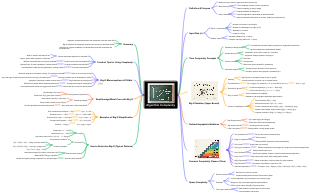
What is Algorithm Complexity
Definition
A way to describe how an algorithm’s resource usage grows as input size increases
Main resources measured
Time complexity (number of basic operations)
Space complexity (extra memory used)
Why it matters
Predicts scalability (small inputs vs large inputs)
Helps compare algorithms independent of hardware and implementation details
Guides design trade-offs (speed vs memory, simplicity vs performance)
Input size (n)
Common interpretations of n
Number of elements in an array/list
Number of nodes/edges in a graph (n, m)
Number of digits/bits in a number
Length of a string
Notes
Clearly define n for the problem to avoid misleading complexity claims
Types of analysis
Worst-case
Maximum cost over all inputs of size n
Most common in guarantees and Big-O discussions
Average-case
Expected cost under an assumed input distribution
Useful but depends on realistic assumptions
Best-case
Minimum cost over inputs of size n
Often less informative unless it occurs frequently
Amortized analysis
Average cost per operation over a sequence (e.g., dynamic array append)
Smooths occasional expensive operations
Different “cases” describe max/expected/min costs, while amortized smooths spikes across a sequence.
Big-O notation (Upper bound)
Purpose
Describes an asymptotic upper bound on growth rate as n becomes large
Focuses on how runtime/space scales, not exact counts
Formal definition
f(n) ∈ O(g(n)) if there exist constants c > 0 and n₀ such that
0 ≤ f(n) ≤ c·g(n) for all n ≥ n₀
Intuition
Ignore constant factors (×10) and lower-order terms (+ n) for large n
Keep the dominant term that grows fastest as n increases
How to compute Big-O (common rules)
Drop constants
O(3n) → O(n)
Drop lower-order terms
O(n² + n + 100) → O(n²)
Sequential steps add
O(f(n) + g(n)) → O(max(f(n), g(n)))
Nested loops multiply
Outer O(n) and inner O(n) → O(n²)
Conditionals take the worst branch (for worst-case analysis)
Logarithms: base doesn’t matter in Big-O
O(log₂ n) = O(log₁₀ n) = O(log n)
Big-O vs Big-Θ vs Big-Ω
Big-O (O): upper bound (at most)
Big-Ω (Ω): lower bound (at least)
Big-Θ (Θ): tight bound (both upper and lower; “exact” asymptotic class)
Big-O and “worst-case”
Big-O is not inherently “worst-case,” but it’s frequently used to express worst-case bounds
Always clarify the case (worst/average/best/amortized)
Common complexity classes (with examples)
O(1) Constant
Array index access
Push/pop on stack (typical)
O(log n) Logarithmic
Binary search in a sorted array
Operations on balanced BSTs (search/insert/delete)
O(n) Linear
Single pass through an array (sum, max)
Linear search
O(n log n) Linearithmic
Efficient comparison-based sorting (merge sort, heapsort, average quicksort)
Many divide-and-conquer algorithms
O(n²) Quadratic
Double nested loops over n items
Simple sorts (bubble, selection, insertion worst-case)
O(n³) Cubic
Triple nested loops (basic matrix multiplication)
O(2ⁿ) Exponential
Brute-force subsets, naive Fibonacci recursion
O(n!) Factorial
Brute-force permutations (traveling salesman naive)
Time complexity in practice
Dominant term vs real performance
Big-O describes growth, but constant factors still matter for moderate n
Cache behavior, language overhead, and I/O can dominate
Typical “basic operation” counting
Comparisons in sorting/searching
Arithmetic operations
Pointer/array accesses
Example patterns
Single loop over n → O(n)
Nested loop i=1..n, j=1..n → O(n²)
Nested loop i=1..n, j=1..i → O(n²) (about n(n+1)/2)
Divide-and-conquer halves input each step → O(log n) levels
Space complexity
Definitions
Auxiliary space: extra memory beyond input storage
Total space: input + auxiliary
Examples
In-place algorithms: O(1) auxiliary space (e.g., heapsort)
Recursion stack
Depth O(log n) for balanced divide-and-conquer
Depth O(n) for linear recursion or worst-case quicksort recursion
Data structures
Hash table: O(n) space for n entries
Big-O for common data structures (typical)
Array
Access by index: O(1)
Search unsorted: O(n)
Insert/delete in middle: O(n) due to shifting
Linked list
Insert/delete at known node/head: O(1)
Search: O(n)
Random access: O(n)
Hash table (average-case)
Insert/search/delete: O(1) average, O(n) worst (collisions/adversarial)
Balanced BST (e.g., AVL/Red-Black)
Insert/search/delete: O(log n)
Heap (binary heap)
Find min/max: O(1)
Insert: O(log n)
Extract min/max: O(log n)
Build heap: O(n)
Interpreting Big-O graphs (growth intuition)
As n grows large
O(1) stays flat
O(log n) grows slowly
O(n) grows proportionally
O(n log n) grows faster than linear but much slower than quadratic
O(n²), O(n³) quickly become impractical
O(2ⁿ), O(n!) explode rapidly even for modest n
Common pitfalls and clarifications
“O(n)” doesn’t mean “fast”
For huge n or big constants, it can still be slow
Confusing O with Θ
Saying an algorithm is O(n²) can be true even if it is Θ(n)
Prefer Θ when you know a tight bound
Ignoring worst-case vs average-case
Quicksort average O(n log n), worst O(n²)
Hash tables average O(1), worst O(n)
Not specifying multiple parameters
Graph algorithms often use O(n + m) rather than O(n²)
Matrix operations can be expressed in terms of rows and columns
Treating Big-O as exact runtime
Big-O is asymptotic; real runtime includes constants and lower-order terms
Mini worked examples (Big-O classification)
Example 1: Single loop
For i in 1..n do constant work → O(n)
Example 2: Two independent loops
Loop n + loop n → O(n + n) = O(n)
Example 3: Nested loops
For i in 1..n
For j in 1..n do constant work → O(n·n) = O(n²)
Example 4: Binary search
Each step halves the search space → O(log n)
Example 5: Merge sort
Split into halves (log n levels) + merge costs O(n) each level → O(n log n)
Summary
Algorithm complexity describes how time/space grow with input size n
Big-O expresses an asymptotic upper bound, focusing on dominant growth
Common classes range from O(1) to O(n!) with dramatically different scalability
Always clarify the case (worst/average/amortized) and what n represents